
Key Takeaways
-
Inspect anchor sockets in the pool deck regularly for cracks or looseness, as compromised anchors are a major safety hazard that often require professional attention to reset or replace.
-
Replace worn ladder treads and corroded bolts immediately with marine-grade stainless steel hardware, as these inexpensive preventive fixes dramatically improve safety and extend ladder lifespan in Florida’s humid climate.
-
Maintain proper water chemistry (pH 7.4-7.6, alkalinity 80-120 ppm, free chlorine 1-3 ppm) to prevent premature corrosion of metal ladders and pool equipment caused by acidic or imbalanced water.
-
Perform a weekly wobble test by firmly shaking the ladder to catch loose fittings early, and include professional ladder inspections quarterly as part of routine pool maintenance to prevent minor issues from becoming major repairs.
-
Know when to replace rather than repair: if the main frame is deeply corroded, bent, or structurally compromised, or if repairs keep failing, full replacement is usually safer and more cost-effective than continued patching.
-
Choose 316-grade stainless steel for ladder replacements in Tampa’s year-round pool season, as it provides superior rust resistance compared to aluminum or coated steel in high-chlorine and humid environments.
Your pool ladder might be the last thing on your mind — until someone grabs it and it wobbles. A damaged pool ladder is more than just an inconvenience. It’s a real safety risk for your family, your guests, and anyone who uses your pool. In Tampa’s hot, humid climate, pool hardware takes a beating year-round. Between constant chemical exposure, Florida’s intense sun, and daily use, ladders can rust, loosen, or crack faster than you’d expect.
The good news? Pool ladder repair doesn’t have to be overwhelming. Whether you’re dealing with a wobbly step, surface rust, or a cracked anchor socket, understanding the basics can help you act quickly and keep your pool safe. This guide walks you through 12 practical tips to identify, fix, and prevent pool ladder damage — so your pool stays fun, functional, and safe for everyone.
Why Pool Ladder Repair Matters for Safety
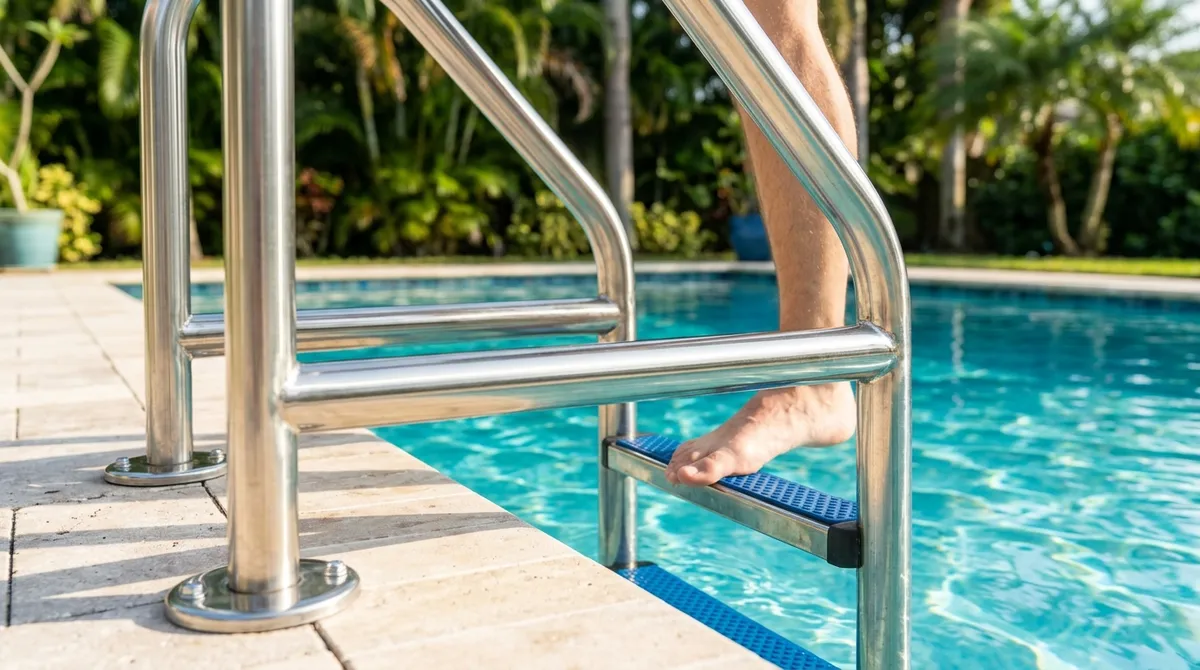
A loose or damaged pool ladder is a genuine hazard. Children, older adults, and anyone with limited mobility rely on the ladder to enter and exit the pool safely. According to EPA Pool Resources, maintaining pool equipment properly is a key part of responsible pool ownership. A ladder that shifts or gives way under pressure can cause slips, falls, and serious injuries.
Beyond safety, a neglected ladder can signal broader problems. Corrosion on the ladder often means corrosion is happening in other parts of your pool system too. If you’re seeing rust streaks near your ladder, it’s a good idea to check out 9 Pool Repairs Every Tampa Homeowner Should Know In 2026 for a fuller picture of what else might need attention.
The 12 Pool Ladder Repair Tips You Need
1. Check for Wobble During Every Service Visit
The easiest way to catch a problem early is to grab your ladder and give it a firm shake. If it moves, something is loose. This simple check takes about five seconds and can prevent a much bigger problem down the road. Make it a habit every time you’re near the pool.
2. Inspect Anchor Sockets in the Pool Deck
Most pool ladders are held in place by anchor sockets embedded in the deck. Over time, these sockets can loosen, crack, or shift as the deck settles. Look for cracks in the concrete around each anchor point. If the surrounding deck looks damaged, the anchor itself may be compromised and will need professional attention.
3. Tighten Loose Bolts and Fittings Right Away
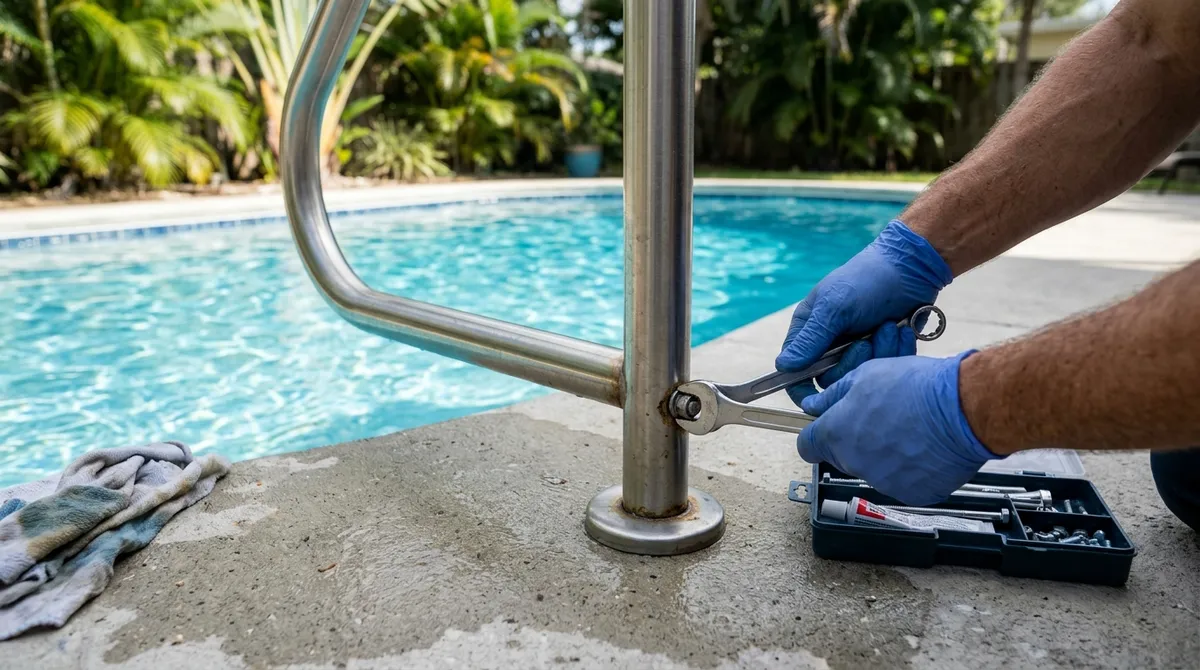
Sometimes a wobbly ladder just needs a tighten. Use the right wrench for the bolt material — stainless steel bolts are common and resistant to rust. Don’t overtighten, though. Too much torque can strip threads or crack plastic components. Snug and firm is the goal.
4. Replace Worn Ladder Treads Before They Break
Ladder treads are the steps you actually stand on. They take direct pressure and constant chemical exposure. Look for cracks, discoloration, or surfaces that feel slippery even when you’d expect grip. Replacing a worn tread is a simple fix that dramatically improves safety.
Here’s what to look for when inspecting your treads:
- Surface cracking or splitting
- Discoloration from chemical exposure
- Slippery texture that won’t grip wet feet
- Loose or missing anti-slip coating
- Visible bending or warping of the step
5. Address Rust and Corrosion Immediately
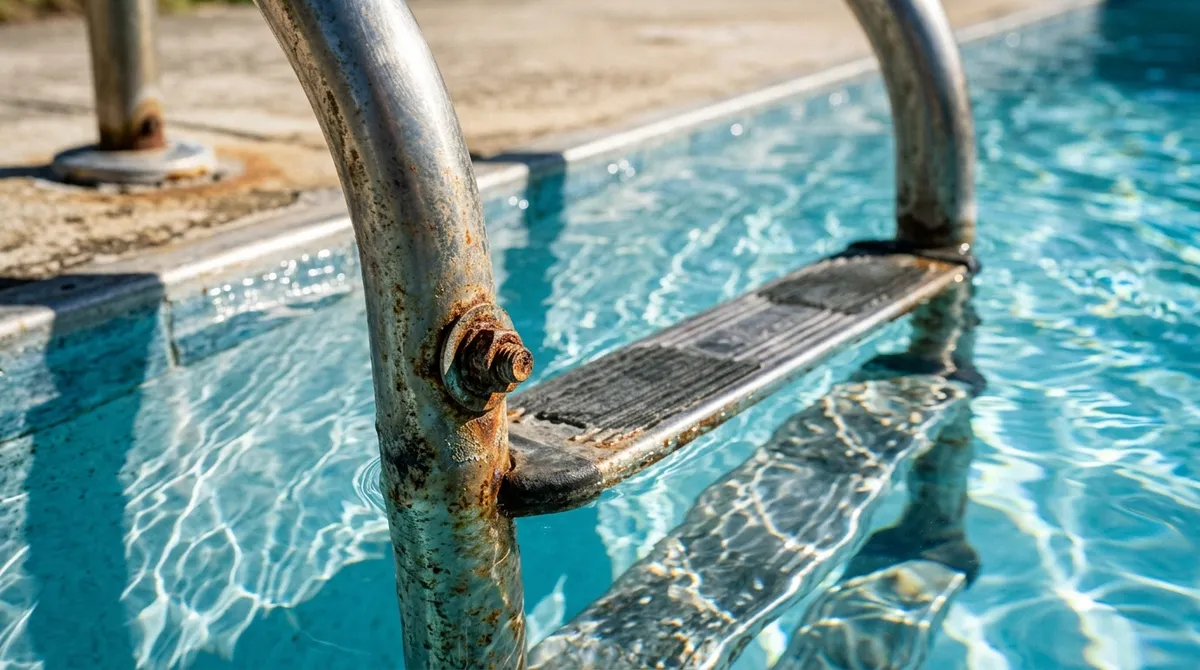
Rust is the enemy of metal pool ladders. Once corrosion starts, it spreads quickly — especially in Florida’s heat and humidity. Small rust spots can be sanded down and treated with a rust-inhibiting primer. But if the frame shows deep corrosion or pitting, repair may not be enough. Replacement could be the safer option.
6. Swap Out Corroded Bolts for Stainless Steel
Not all bolts are created equal. If your ladder uses low-grade hardware, chlorine and moisture will corrode it fast. Replace any corroded bolts with marine-grade stainless steel versions. They cost a little more upfront but last significantly longer in a pool environment.
7. Replace Rubber Bumpers That Protect Your Pool Wall
Where your ladder rests against the pool wall, there should be rubber or plastic bumpers in place. These protect both the ladder and your pool’s interior surface. When bumpers wear down or fall off, metal can scrape against plaster or tile, causing damage. Bumper replacement is inexpensive and easy to overlook until the damage is already done.
8. Know When to Replace Instead of Repair
There’s a point where repair no longer makes sense. If the main frame of the ladder is heavily corroded, bent, or structurally compromised, patching it up is just delaying the inevitable. A full replacement is often the safer and more cost-effective long-term choice. Your pool service professional can help you assess which route is right for your situation.
Signs it’s time for a full replacement:
- Deep rust or corrosion through the frame
- Bent or cracked structural tubes
- Anchor sockets that have completely failed
- Steps that cannot be adequately secured
- Repeated repairs that keep failing
9. Choose the Right Ladder Material From the Start
If you’re replacing your ladder, material matters. Here’s a quick comparison of the most common options:
| Material | Durability | Rust Resistance | Best For |
|---|---|---|---|
| Stainless Steel (316 grade) | Excellent | Very High | All pool types, long-term use |
| Aluminum | Good | High | Residential pools, budget-conscious owners |
| Resin/Plastic | Moderate | Excellent | Saltwater pools, low-maintenance preference |
| Coated Steel | Moderate | Moderate | Short-term or seasonal use |
For Tampa’s year-round pool season, 316-grade stainless steel is the gold standard. It resists chlorine and saltwater corrosion better than any other option. If you have a saltwater pool, check out 12 Saltwater Pool Maintenance Tips Every Owner Needs for more guidance on protecting your equipment.
10. Balance Your Pool Chemistry to Protect Hardware
Improper water chemistry is one of the leading causes of premature ladder damage. Water that’s too acidic eats away at metal. Water that’s too basic causes scale buildup and can lock fittings in place. Keeping your pH, alkalinity, and chlorine levels balanced protects not just your ladder but every piece of metal and equipment in your pool.
Key water chemistry targets to protect pool hardware:
- pH: 7.4 to 7.6
- Total Alkalinity: 80 to 120 ppm
- Free Chlorine: 1 to 3 ppm
- Calcium Hardness: 200 to 400 ppm
The IPSSA recommends consistent water testing as a foundation of good pool maintenance. For a deeper dive into keeping your water balanced, visit 10 Pool Water Balancing Tips Every Tampa Owner Needs.
11. Include Ladder Inspection in Every Routine Service
Pool ladder repair is easiest when problems are caught early. Professional pool technicians include ladder and equipment checks as part of a thorough service visit. They look for loose fittings, surface corrosion, unstable steps, and anchor issues — all before a small problem becomes a big repair bill.
Here’s what a thorough ladder inspection covers:
- Grab test for stability (push and pull the frame)
- Visual check of all welds and joints
- Inspection of each tread for cracks or wear
- Check of rubber bumpers and end caps
- Examination of deck anchors and surrounding concrete
- Review of all bolts and hardware for corrosion
At Panther Pools, our certified technicians make this kind of thorough check part of every service visit. We believe small details like a secure, safe ladder matter as much as sparkling clean water. Learn more about what a professional service covers at Pool Maintenance Services: What Every Tampa Pool Owner Needs to Know.
12. Pair Ladder Repairs With Broader Equipment Checks
A wobbling ladder is often the first visible sign of a bigger issue. When you schedule a pool ladder repair, it’s the perfect opportunity to have the rest of your equipment inspected at the same time. Check your pump, filter, and any deck hardware for similar signs of wear.
The FSPA emphasizes that regular equipment inspections are a key part of keeping Florida pools safe and compliant. Bundling ladder repair with broader service keeps your pool in top shape and avoids multiple service visits. For a full picture of equipment health, explore Pool Equipment Repair: What Tampa Owners Need to Know.
How Pool Ladder Repair Fits Into Regular Maintenance
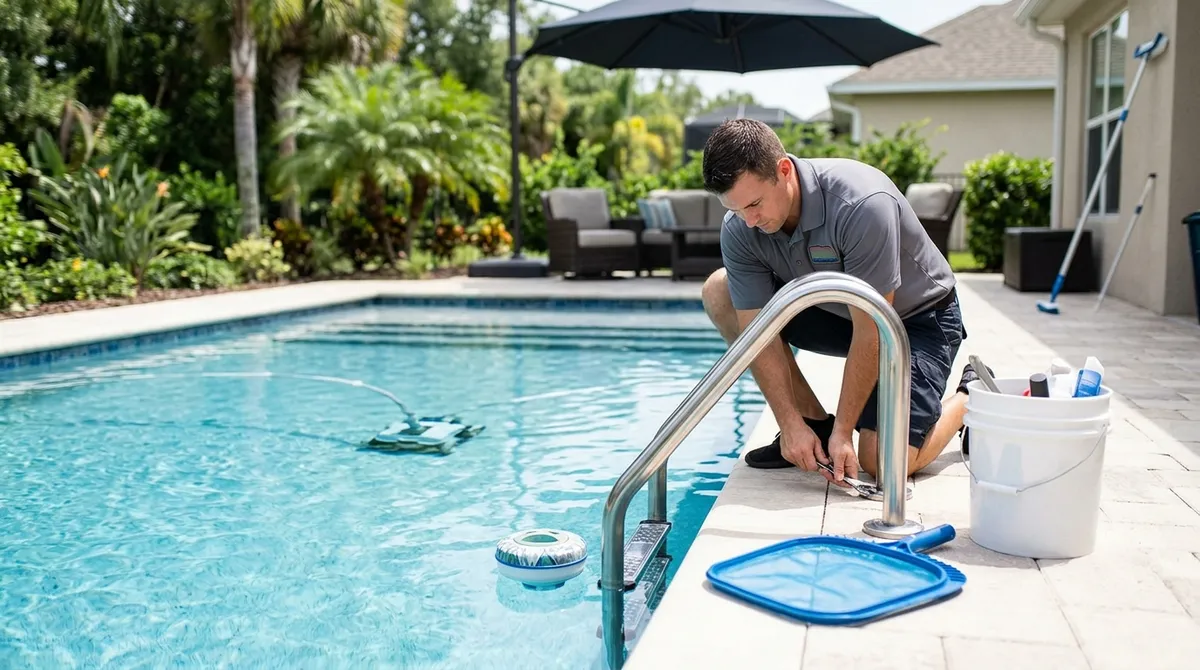
Many Tampa pool owners think of ladder repair as a one-off fix. In reality, it’s part of an ongoing maintenance cycle. Every component of your pool — from the filter to the tile to the ladder — needs regular attention to stay safe and functional.
Here’s how ladder care fits into a broader routine:
- Weekly: Quick visual check during pool cleaning
- Monthly: Grab test and hardware inspection
- Quarterly: Full inspection of anchors, treads, and bumpers
- Annually: Professional evaluation and any needed replacements
If you’re not sure what your weekly pool service should include, Weekly Pool Maintenance: Keep Your Pool Clean All Year is a great resource. And if you’re thinking about upgrading your overall pool care, browse Pool Cleaning Services Tampa to see what’s available.
Common Pool Ladder Problems and Quick Fixes
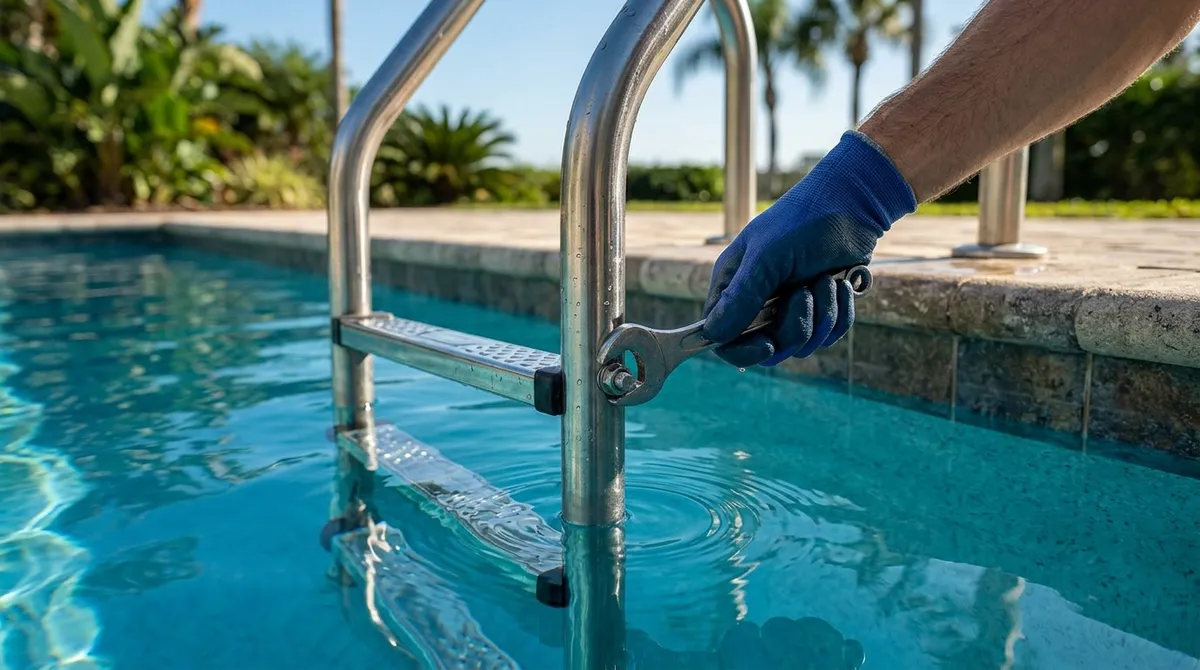
| Problem | Likely Cause | Suggested Fix |
|---|---|---|
| Wobbling ladder | Loose anchor or bolts | Tighten hardware, inspect anchor socket |
| Surface rust on frame | Chlorine exposure, poor-grade metal | Sand, treat with rust inhibitor, consider replacement |
| Cracked or slippery treads | UV damage, chemical degradation | Replace individual treads |
| Missing rubber bumpers | Normal wear and tear | Install new bumpers to protect pool wall |
| Deck cracks around anchor | Ground movement, anchor failure | Professional evaluation and anchor resetting |
When to Call a Pool Professional for Ladder Repair
Some ladder repairs are DIY-friendly. Tightening a bolt or swapping a tread? Totally manageable. But if your anchor sockets are failing, your deck is cracking, or your ladder frame is structurally compromised, it’s time to bring in a pro.
A professional pool service technician has the tools, experience, and knowledge to assess the full picture. They can tell you whether a repair will hold or whether a replacement is the smarter move. If you’re unsure about any aspect of your pool’s condition, reach out to our team at Panther Pools for a free estimate and professional guidance. We’re here seven days a week to help Tampa pool owners keep their pools safe and beautiful.
For more resources on keeping your entire pool in great shape, explore 9 Pool Maintenance Tips Every Tampa Owner Needs in 2026 and 7 Pool Cleaning Service Benefits Every Tampa Homeowner Needs 2026.
Final Thoughts on Pool Ladder Repair
Your pool ladder is small but mighty. It’s one of the most frequently used parts of your pool, and when it fails, it fails in a very visible and potentially dangerous way. The good news is that pool ladder repair is usually straightforward when you catch problems early.
From tightening loose bolts to replacing corroded hardware, from choosing the right materials to keeping your water chemistry balanced — every tip in this list helps you get more life out of your ladder and keep your pool safer for everyone who uses it. Stay proactive, schedule regular inspections, and don’t hesitate to call in a professional when the job calls for it.
Ready to get your pool — ladders and all — in perfect shape? Get your free pool estimate from Panther Pools today and let Tampa’s premier pool cleaning team take care of the rest.
FAQs
Q: How do you repair a pool ladder that’s wobbly?
A: Start by checking all the bolts and anchor sockets — a loose fitting is usually the culprit! Tighten any loose hardware with the appropriate wrench, and inspect the deck anchors for cracks or movement. If the anchor socket itself is failing, a professional pool technician can reset or replace it safely.
Q: When should a pool ladder be replaced instead of repaired?
A: If the main frame is deeply corroded, bent, or structurally compromised, replacement is usually the safer and smarter choice. Repeated repairs that keep failing are also a strong sign that it’s time for a new ladder. A pool service professional can help you make the call during a routine inspection.
Q: What causes a pool ladder to rust or corrode?
A: Rust and corrosion are usually caused by a combination of pool chemicals, especially chlorine, and Florida’s heat and humidity. Poor water chemistry — particularly water that’s too acidic — can speed up metal breakdown significantly. Using marine-grade stainless steel hardware and keeping your water balanced are the best ways to slow corrosion down.
Q: Can a pool cleaning service fix a loose or damaged pool ladder?
A: Absolutely! Pool service technicians regularly handle ladder repairs as part of broader equipment maintenance. From tightening anchor bolts to replacing treads and bumpers, a qualified technician can assess and fix most common ladder issues during a service visit. It’s always a good idea to mention any concerns when you schedule your next pool service appointment.
Q: How often should pool ladders be inspected?
A: Ideally, you should do a quick grab test weekly and a more thorough visual inspection monthly. A full professional inspection — covering anchors, treads, bumpers, and hardware — is recommended quarterly or as part of your regular pool service visits. Catching small issues early makes pool ladder repair much simpler and less costly.