
Key Takeaways
-
Run your pump 8-12 hours daily and set it on a timer; poor circulation can shut down your salt system entirely and prevent proper chlorine generation.
-
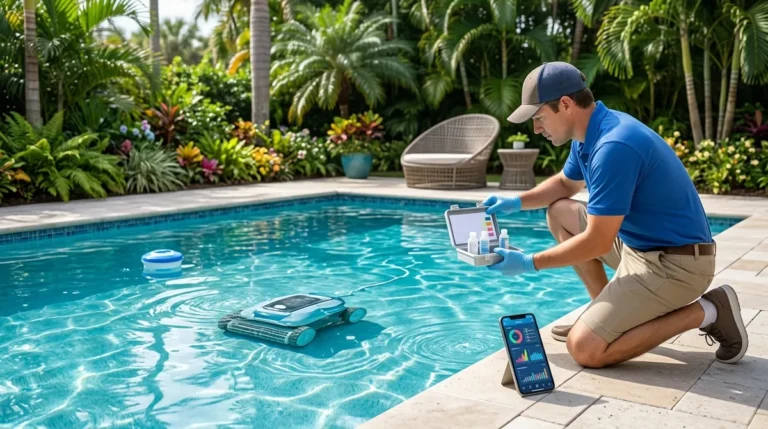
Test water chemistry weekly focusing on free chlorine (1-4 ppm), pH (7.2-7.6), alkalinity (80-120 ppm), and cyanuric acid (50-100 ppm) to catch imbalances early.
-
Check and adjust pH weekly using pH reducer like muriatic acid, as the electrolysis process naturally raises pH over time, causing cloudy water and reduced chlorine effectiveness.
-
Clean or backwash your filter every 2-4 weeks depending on type; a clogged filter reduces water flow and can trigger automatic shutdown of your salt chlorine generator.
-
Inspect and deep clean the salt cell every 3 months using diluted muriatic acid solution to remove calcium scale buildup that reduces chlorine production efficiency.
-
Skim debris daily, brush walls and floor weekly, and shock your pool after heavy rain or high use to prevent algae and maintain proper water chemistry balance.
Owning a saltwater pool in Tampa is a true luxury. The water feels softer, your eyes don’t sting, and you spend less time hauling bags of chlorine. But here’s the thing — saltwater pools still need regular care to stay sparkling clean and safe.
The good news? Saltwater pool maintenance is very manageable once you know the basics. Whether you’re a busy parent trying to keep the kids’ pool safe, a retiree who just wants to relax poolside, or a new homeowner figuring this all out for the first time, this guide is for you. We’ll walk through 12 practical, easy-to-follow tips to keep your saltwater pool in perfect shape all year long.
Let’s dive in!
What Makes Saltwater Pools Different?
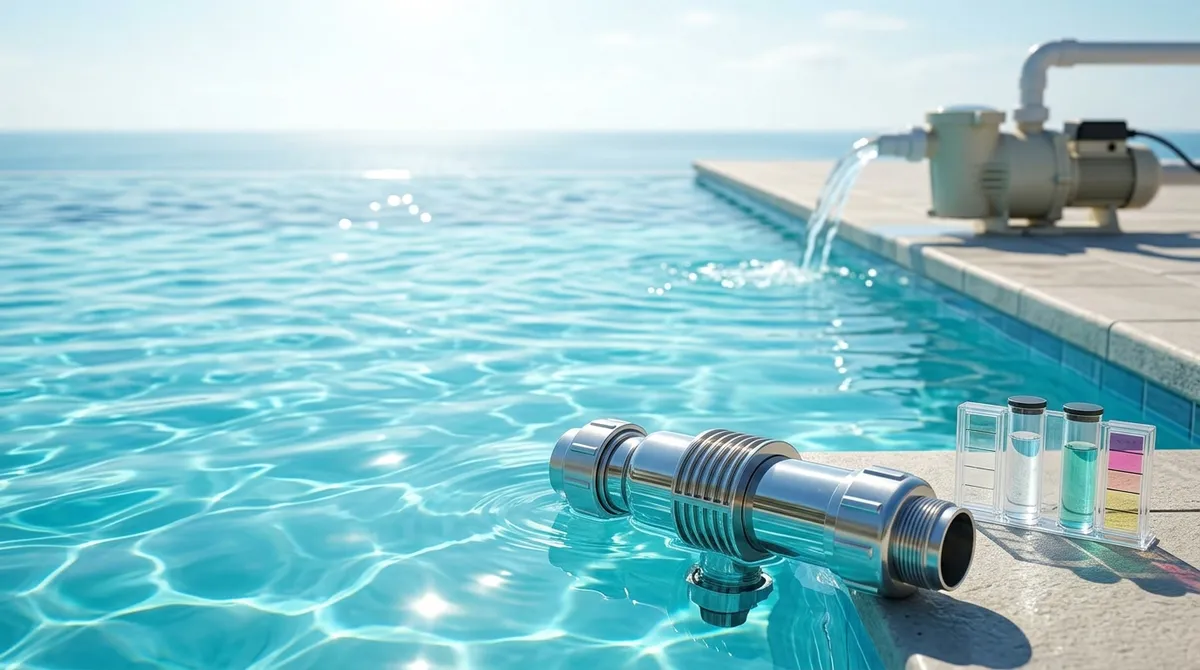
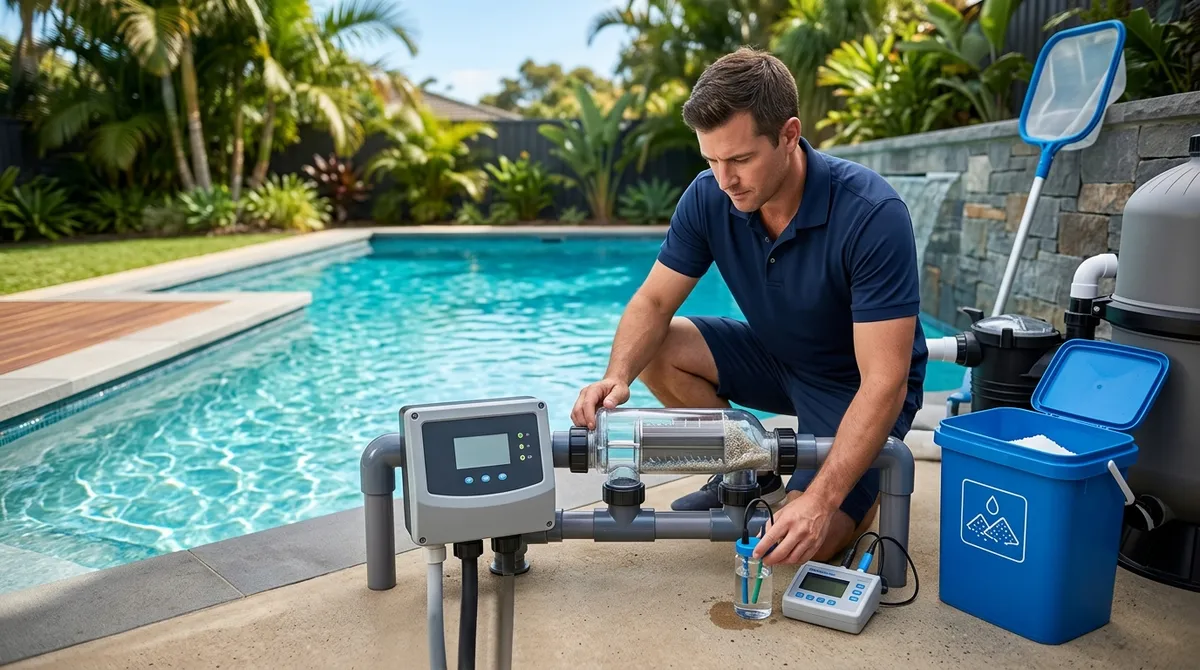
Before we get into the tips, let’s clear something up. A saltwater pool isn’t chlorine-free. Instead, it uses a salt chlorine generator (SCG) to convert dissolved salt into chlorine automatically. This means your pool is constantly being sanitized without you adding chlorine manually.
This system is gentler on skin and hair. It’s also easier to manage day to day. However, the equipment and chemistry still need regular attention. Without proper care, you can end up with scaling, cloudy water, or even algae — and nobody wants that. For trusted guidance on pool standards, the Florida Swimming Pool Association (FSPA) is a great resource for Florida pool owners.
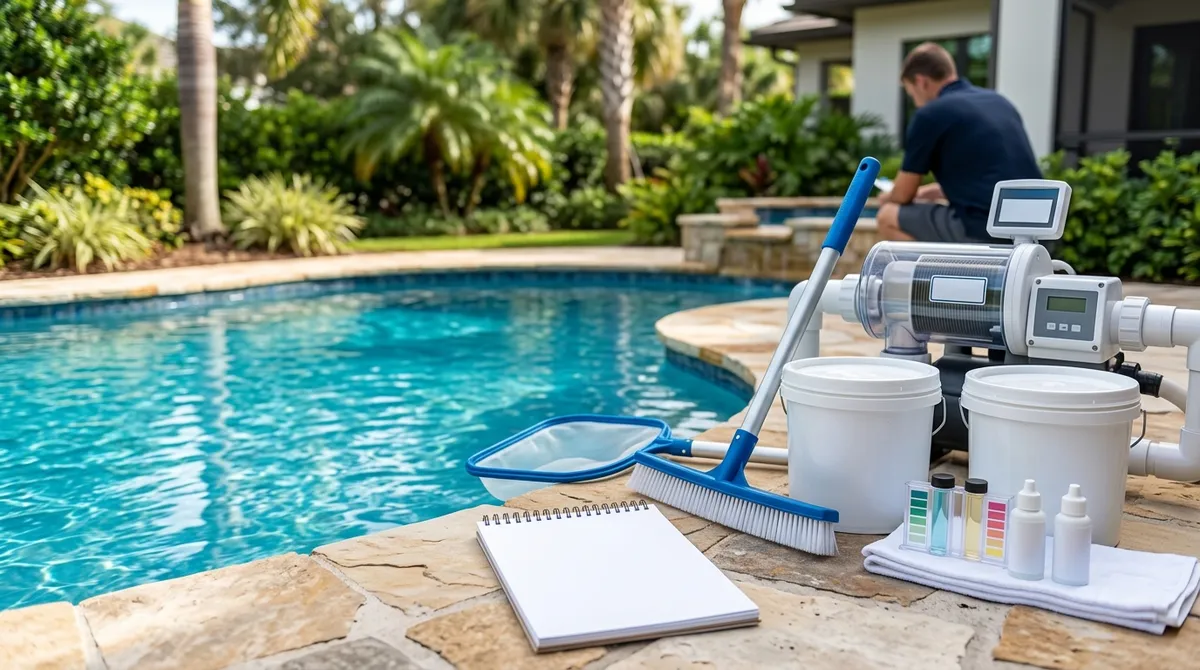
Your Saltwater Pool Maintenance Cheat Sheet
Before diving into each tip, here’s a quick overview of the key water chemistry targets you should always aim for:
| Parameter | Ideal Range |
|---|---|
| Salinity | 3,000–3,500 ppm (max 5,000 ppm) |
| Free Chlorine | 1–4 ppm |
| pH Level | 7.2–7.6 |
| Total Alkalinity | 80–120 ppm |
| Cyanuric Acid (Stabilizer) | 50–100 ppm |
| Calcium Hardness | 200–400 ppm |
Keep these numbers in range and your pool will reward you with clear, comfortable water every single day.
12 Essential Saltwater Pool Maintenance Tips
1. Skim the Pool Every Single Day
Daily skimming is one of the simplest things you can do. Leaves, bugs, and debris can throw off your water chemistry if left too long. Just a few minutes with a skimmer net each morning makes a huge difference. Think of it as your pool’s daily refresh!
2. Run Your Pump 8–12 Hours a Day
Your pump keeps water circulating, which helps the salt cell do its job. In Tampa’s warm climate, aim to run your pump and filter for 8 to 12 hours daily. Poor circulation can shut down your salt system entirely to prevent damage. Set it on a timer so you never have to think about it.
3. Test Your Water Chemistry Every Week
Weekly water testing is non-negotiable. Use a reliable test kit or test strips to check:
- Free chlorine (target: 1–4 ppm)
- pH (target: 7.2–7.6)
- Total alkalinity (target: 80–120 ppm)
- Cyanuric acid (target: 50–100 ppm)
Catching imbalances early saves you from bigger problems down the road. It’s a small habit that pays off big time.
4. Keep a Close Eye on pH Levels
Here’s a fun (and slightly frustrating) fact about saltwater pools: pH tends to drift upward naturally. The electrolysis process in the salt cell raises pH over time. High pH leads to cloudy water, scaling on equipment, and reduced chlorine effectiveness.
Check pH weekly and use pH reducer (muriatic acid or sodium bisulfate) to bring it back into the 7.2–7.6 sweet spot when needed. The EPA’s pool water efficiency guidelines also highlight the importance of proper chemical balance for health and sustainability.
5. Brush the Walls and Floor Weekly
Even saltwater pools get algae and calcium buildup along the walls and floor. Brushing once a week loosens debris before it can take hold. Pay special attention to corners, steps, and behind ladders — those spots love to hide grime. A simple pool brush and 10 minutes is all it takes.
6. Clean or Backwash Your Filter Regularly
Your filter is your pool’s best friend. A clogged filter reduces water flow, which can trigger your salt chlorine generator to shut down automatically. Depending on your filter type:
- Sand filters — Backwash every 2–4 weeks or when pressure rises 8–10 psi above normal
- Cartridge filters — Rinse every 2–4 weeks and deep clean every 3–6 months
- DE filters — Backwash and recharge DE powder every 4–6 weeks
Keeping your filter clean ensures smooth water flow and protects your equipment investment.
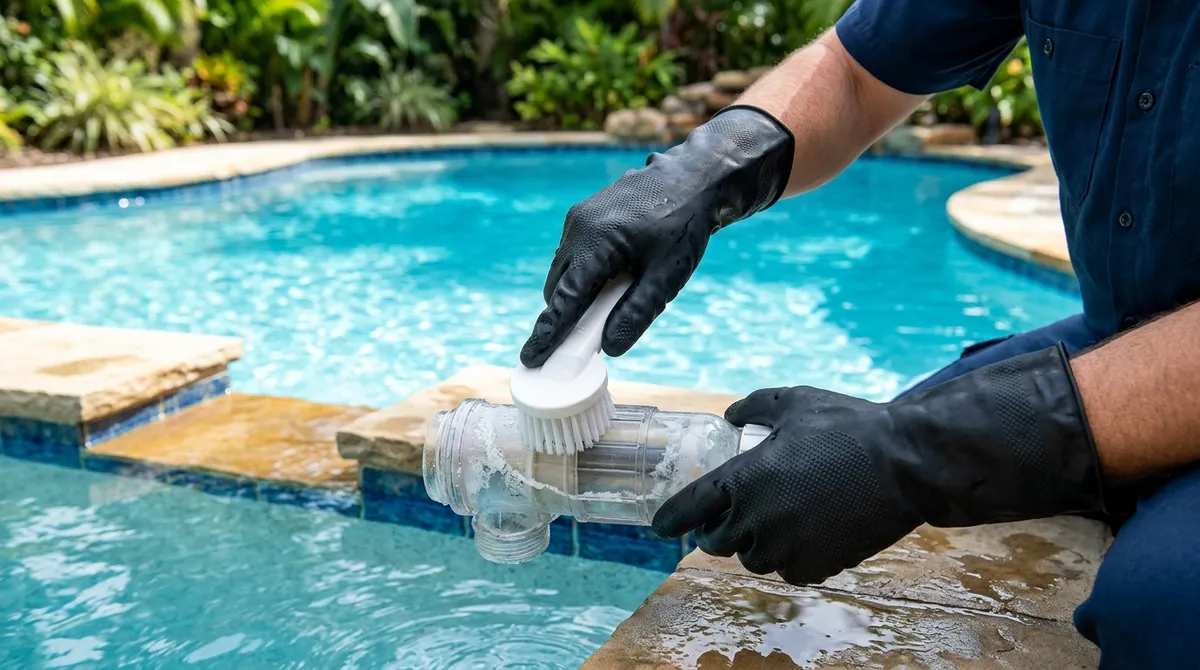
7. Clean the Salt Cell Every 3 Months
The salt cell is the heart of your saltwater system. Over time, calcium scale builds up on the cell’s plates, reducing its efficiency. Inspect it monthly and deep clean it every three months using a diluted muriatic acid solution or a cell cleaning stand.
Signs your cell needs cleaning include reduced chlorine output or visible white scale deposits. Some systems have a self-cleaning feature, but a manual inspection is always a good idea. This is a task many Tampa pool owners hand off to a professional — and for good reason.
8. Check and Maintain Salinity Levels Monthly
Salt doesn’t evaporate, but it does get diluted by rain and splash-out. Test salinity manually every month using a dedicated salt test kit or digital meter. You’re aiming for 3,000–3,500 ppm for most systems (with a maximum of around 5,000 ppm).
If levels are low, add pool-grade salt directly to the water. Always add salt in small amounts and retest before adding more. Too much salt can damage equipment and irritate swimmers.
9. Shock the Pool After Heavy Use or Rain
Tampa’s summer thunderstorms are legendary — and they can dilute your pool chemistry in a hurry. After heavy rain, a big pool party, or signs of algae, shock your pool to boost chlorine levels quickly. Many saltwater systems have a “super chlorinate” or boost mode that temporarily ramps up chlorine production. Use it regularly to stay ahead of algae and bacteria. The Independent Pool and Spa Service Association (IPSSA) recommends consistent shock treatments as part of a healthy maintenance routine.
10. Inspect Equipment and O-Rings Monthly
Monthly equipment checks are a smart habit. Look for:
- Cracks or corrosion on the salt cell housing
- Worn or dry O-rings on pump lids and filter housings
- Leaks around fittings and valves
- Unusual noises from the pump or motor
Catching a small issue early prevents a costly repair later. If you’re not sure what you’re looking for, a professional pool technician can handle this inspection quickly and thoroughly.
11. Monitor Calcium Hardness Every Season
Calcium hardness might be the most overlooked part of saltwater pool maintenance. Too little calcium (below 200 ppm) and your water gets aggressive, eating away at pool surfaces and equipment. Too much (above 400 ppm) causes scale to build up on your salt cell, tiles, and pipes.
Test calcium hardness at least once per season — or quarterly. In Florida’s climate, this number can shift with seasonal rain and evaporation. Adjust with calcium chloride (to raise) or a partial drain-and-refill (to lower).
12. Schedule Professional Pool Service Regularly
Even the most dedicated pool owners benefit from professional help. A trained technician can spot problems you might miss, perform deep cleans, recalibrate salt systems, and handle equipment repairs. Pool cleaning services in Tampa from a qualified team take the guesswork out of maintenance and give you more time to actually enjoy your pool.
At Panther Pools, our certified technicians are available seven days a week to keep your saltwater pool performing at its best. Whether you need pool maintenance in West Chase or anywhere across Tampa, we’ve got you covered with reliable, professional service every time.
Common Saltwater Pool Maintenance Mistakes to Avoid
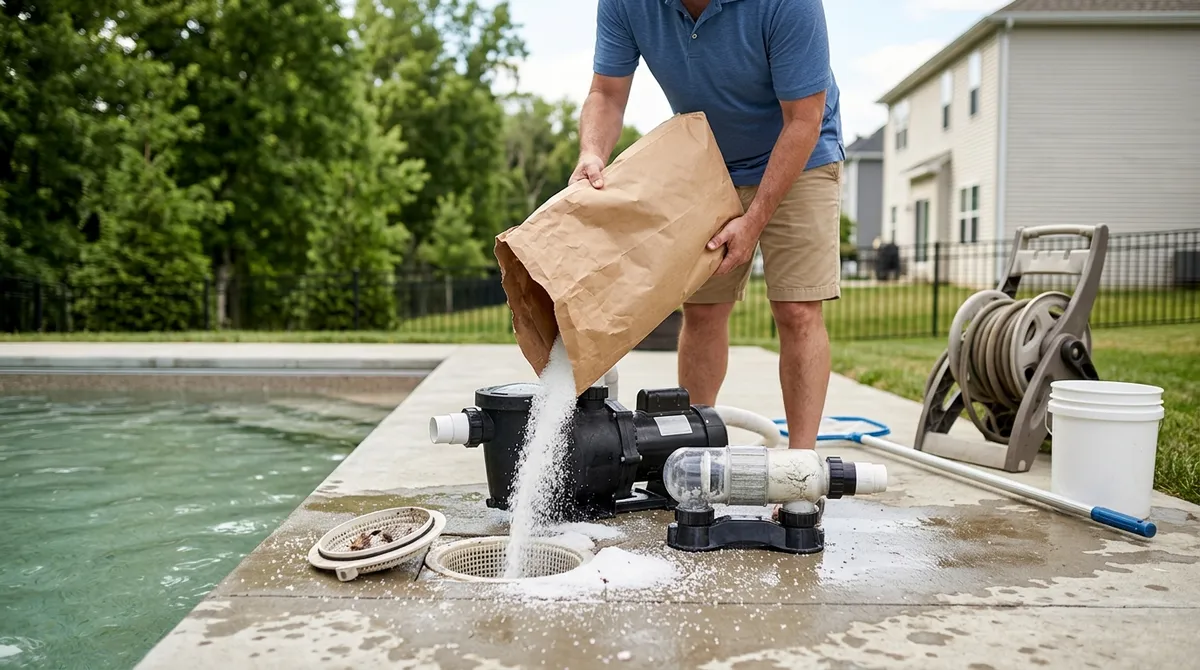
Even well-intentioned pool owners slip up sometimes. Here are the most common mistakes and how to sidestep them:
- Ignoring pH drift: High pH is the #1 issue in saltwater pools. Check it weekly without fail.
- Skipping salt cell inspections: A scaled-up cell can’t produce enough chlorine, leading to green water fast.
- Adding too much salt at once: Always test first. Over-salting is hard to fix and can damage your system.
- Running the pump too few hours: Less than 8 hours of daily circulation in Tampa’s heat is asking for trouble.
- Forgetting to shock after rain: Heavy Florida rain dilutes everything. Shocking restores balance quickly.
When to Call a Professional Pool Service
Some tasks are perfect for DIY. Others are better left to the pros. Here’s a quick breakdown:
| Task | DIY Friendly? | Professional Recommended? |
|---|---|---|
| Daily skimming | Yes | Optional |
| Weekly chemical testing | Yes | For accuracy |
| Salt cell cleaning | Yes (with care) | Recommended quarterly |
| Equipment repairs | No | Always |
| Deep cleaning & algae removal | Difficult | Strongly recommended |
| Salt system recalibration | No | Always |
If you’re in Tampa and want dependable help, our team at Westchase pool service is just a call away. We bring expertise, certified credentials, and genuine care to every single visit.
A Simple Weekly and Monthly Maintenance Schedule
Staying on track is easier with a clear schedule. Here’s one you can follow starting today:
Every Week
- Skim debris from the surface daily
- Test pH, chlorine, alkalinity, and cyanuric acid
- Adjust chemical levels as needed
- Brush walls, steps, and floor
- Empty skimmer and pump baskets
- Check filter pressure and backwash if needed
Every Month
- Test salinity with a dedicated salt meter
- Inspect salt cell for calcium scale buildup
- Check all O-rings and equipment seals
- Verify pump is running 8–12 hours daily
- Shock the pool if heavy use or rain occurred
Enjoy Your Pool — Without the Stress
Saltwater pool maintenance doesn’t have to be overwhelming. With the right routine and a little help when needed, your pool can stay crystal clear and inviting all year long. Whether you follow these tips on your own or partner with a trusted local team, consistency is the key to a healthy pool.
Ready to take the stress out of pool care? Get in touch with the Panther Pools team today and let our certified experts handle the hard work so you can focus on making memories in your pool. We serve Tampa and surrounding communities seven days a week — because your pool shouldn’t have to wait.
FAQs
Q: What are the ideal chemical levels for a saltwater pool?
A: Great question! You’ll want to aim for a salinity of 3,000–3,500 ppm, free chlorine at 1–4 ppm, pH between 7.2–7.6, alkalinity at 80–120 ppm, cyanuric acid at 50–100 ppm, and calcium hardness at 200–400 ppm. Keeping these in range means happy swimmers and a happy pool!
Q: How often should I clean the salt cell in my pool?
A: We recommend inspecting your salt cell every month and doing a thorough deep clean every three months. Calcium scale loves to build up on those plates, and a clean cell means your system keeps producing chlorine efficiently — no green water surprises!
Q: Why does pH rise in saltwater pools and how do I fix it?
A: The electrolysis process inside your salt chlorine generator naturally pushes pH upward over time — it’s just how the chemistry works. Check your pH weekly and use pH reducer (like muriatic acid or sodium bisulfate) to bring it back into the ideal 7.2–7.6 range. Easy fix once you make it a habit!
Q: Can saltwater pools still get algae?
A: Absolutely, yes — saltwater pools can get algae just like any other pool, especially if chlorine levels drop or water circulation slows down. The best defense is consistent weekly testing, regular brushing, and shocking the pool after heavy rain or high swimmer loads. Stay consistent and algae won’t stand a chance!
Q: When should I call a professional for saltwater pool service?
A: If you notice persistent cloudy water, green algae, equipment issues, or your salt system isn’t producing enough chlorine, it’s time to call in the pros. Professional technicians can diagnose problems quickly, perform deep cleans, and handle repairs safely — giving you total peace of mind and a pool you’re proud of.