
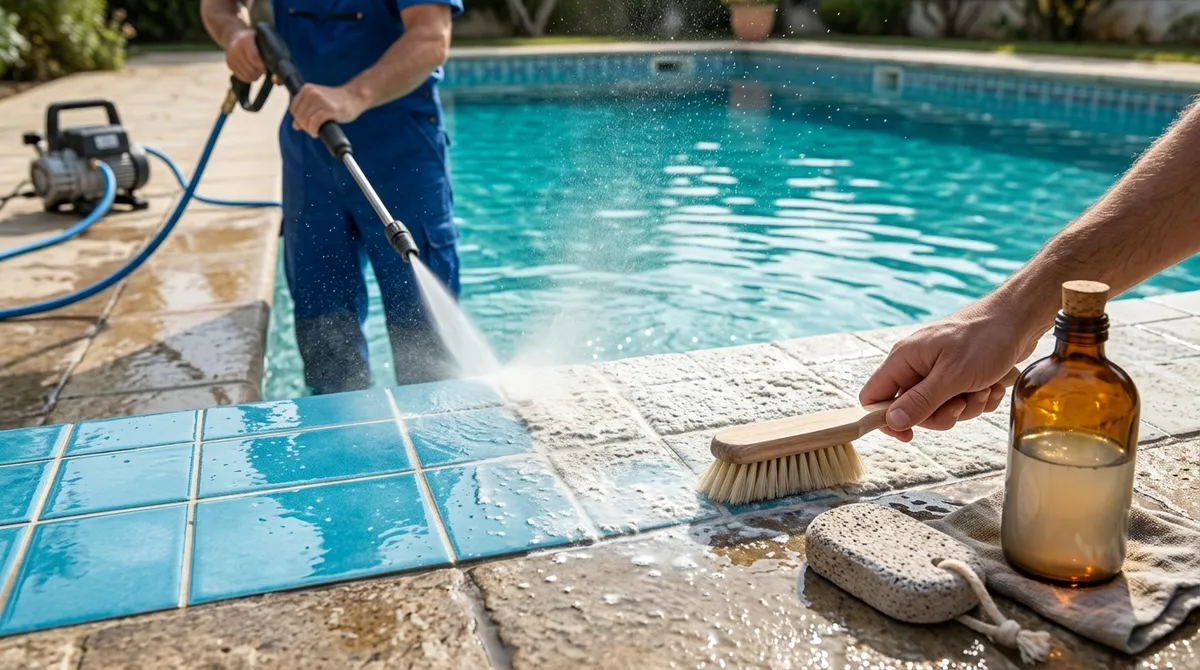
Key Takeaways
-
Professional blasting methods (glass bead, salt, or soda blasting) cost $5.25-$6 per linear foot and deliver superior results for heavy calcium deposits that DIY scrubbing cannot remove.
-
Weekly waterline maintenance with vinegar-water solution or pumice stones prevents calcium buildup from hardening, making professional deep cleaning necessary only every 1-2 years instead of annually.
-
In Florida’s hard water climate, calcium deposits form faster at the waterline as water evaporates, requiring consistent maintenance and balanced water chemistry to reduce mineral settlement on tiles.
-
DIY cleaning works well for routine light staining using vinegar solutions and melamine sponges, but risks tile damage if improper tools or harsh chemicals like muriatic acid are used directly on glass or ceramic.
-
The smartest approach combines both methods: handle weekly spot cleaning yourself, and schedule professional deep cleaning annually or when visible heavy deposits, staining in grout lines, or etched surfaces appear.
-
Pressure washing requires low-pressure settings and professional expertise to avoid damaging delicate tiles and grout lines, using 120-240 gallons of water per hour that must be managed responsibly.
Your pool is your happy place. But have you noticed that grayish-white crust creeping along your waterline tiles? That stubborn buildup can make even the most beautiful pool look neglected. Pool tile cleaning is one of those maintenance tasks that every Tampa pool owner eventually faces — and the big question is always the same: should you grab a scrub brush and handle it yourself, or call in the pros?
In this article, we break down both approaches honestly and clearly. Whether you’re a busy parent, a retiree enjoying your backyard oasis, or a commercial property manager keeping a community pool in top shape, this guide is for you. Let’s dive in and find out which option actually wins.
What Causes Pool Tile Buildup?
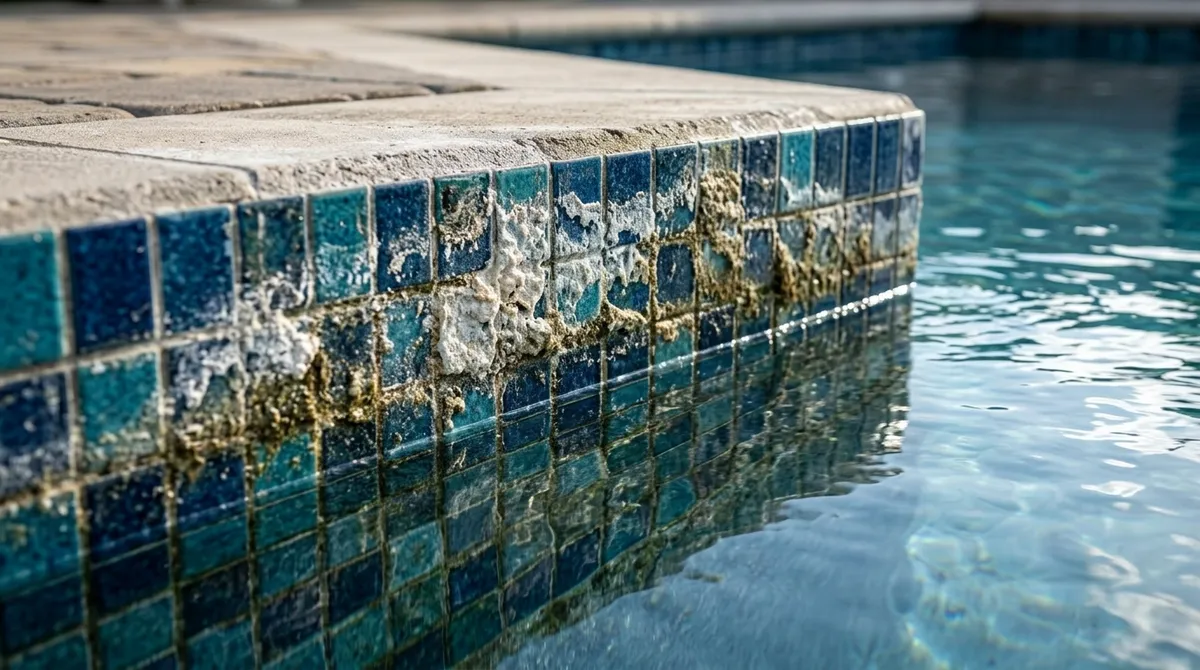
Before picking a cleaning method, it helps to know what you’re fighting. That crusty white or gray line on your pool tiles is usually calcium deposits. In Florida, hard water is very common, and as pool water evaporates, it leaves behind calcium and mineral residue right at the waterline.
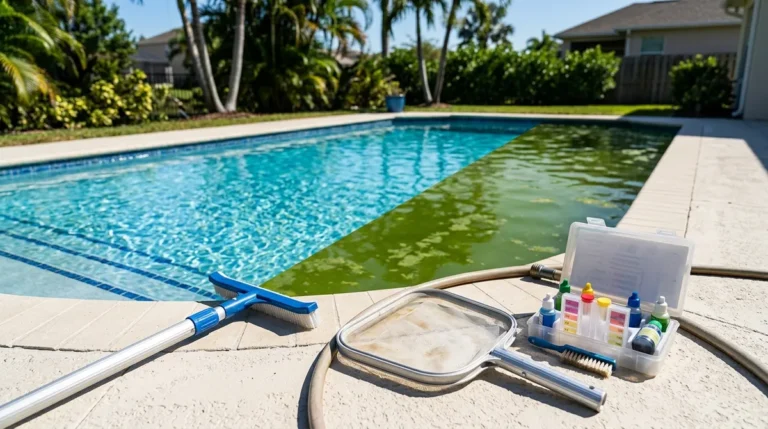
Other common culprits include algae growth, body oils, sunscreen residue, and general grime. Over time, these substances bond with your tile surface and become increasingly harder to remove. The longer you wait, the tougher the job gets — for both you and your tiles.
DIY Pool Tile Cleaning: What You Can Do at Home
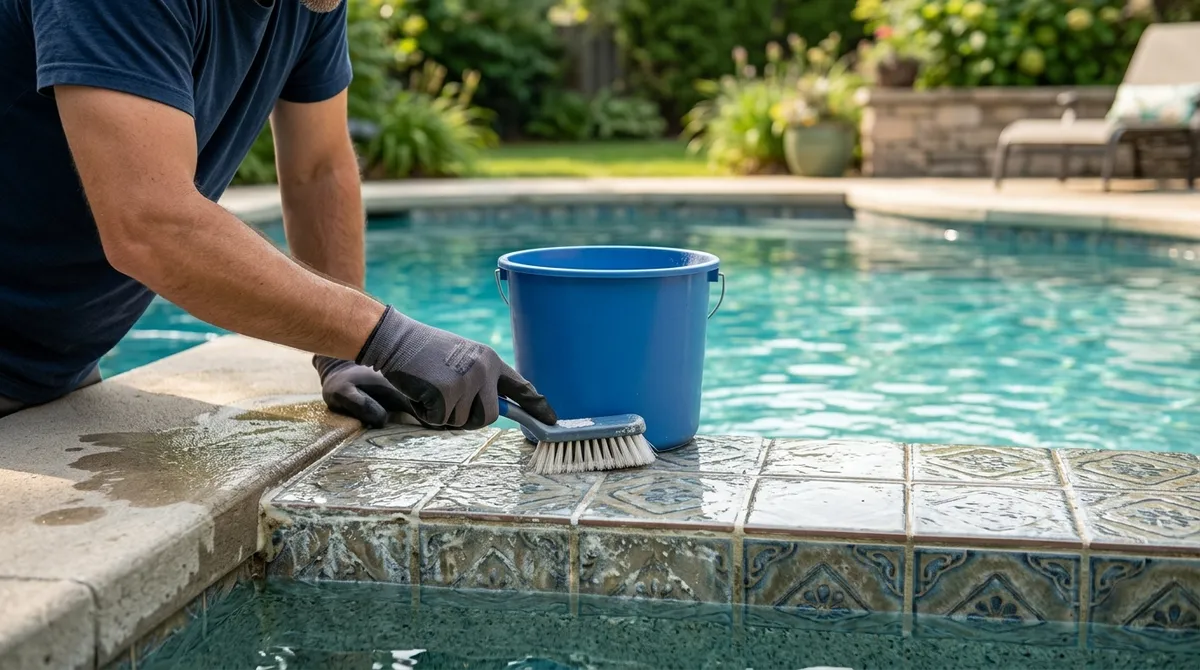
Many pool owners start with a do-it-yourself approach, and honestly, it can work well for mild buildup. The key is using the right tools and staying consistent. Here’s what most homeowners reach for:
- Vinegar and water solution — A natural, gentle option for early-stage calcium deposits and light staining
- Pumice stones — Effective for scrubbing away mineral crust without scratching most tile surfaces
- Melamine sponges (Magic Erasers) — Great for quick spot cleaning along the waterline
- Plastic scrapers — Helpful for carefully lifting stubborn deposits without damaging the tile
- Mild tile cleaning solutions — Available at pool supply stores and safe for regular maintenance
These DIY methods work best for routine upkeep and light staining. If you stay on top of it weekly or bi-weekly, you can keep your tiles looking pretty clean with minimal effort. For helpful guidance on regular upkeep, check out the pool cleaning services Tampa page for a full picture of what professional maintenance covers.
Step-by-Step Guide to Basic DIY Pool Tile Cleaning
- Choose your cleaner — Start with a vinegar-water mix (equal parts) for light deposits or a dedicated tile cleaner for moderate buildup
- Apply the solution — Use a spray bottle or apply directly with a sponge to the affected tiles, focusing on the waterline
- Scrub gently — Use a pumice stone or melamine sponge in small circular motions to break up deposits
- Rinse thoroughly — Make sure no cleaning residue enters the pool water
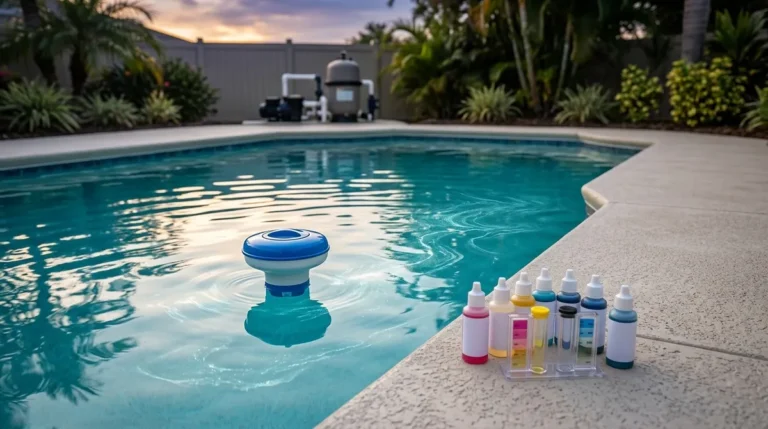
- Check your water chemistry — After cleaning, test and balance your pool water as needed
Pros and Cons of DIY Pool Tile Cleaning
- ✅ Low cost — most supplies are inexpensive or already at home
- ✅ Convenient — you can clean on your own schedule
- ✅ Good for routine maintenance and light staining
- ❌ Time-consuming — scrubbing tiles by hand takes effort
- ❌ Limited effectiveness on heavy calcium buildup or deep staining
- ❌ Risk of tile damage if wrong products or tools are used
- ❌ Chemical cleaners like muriatic acid are dangerous and should never be applied directly to glass or ceramic tiles
Professional Pool Tile Cleaning: What the Experts Bring
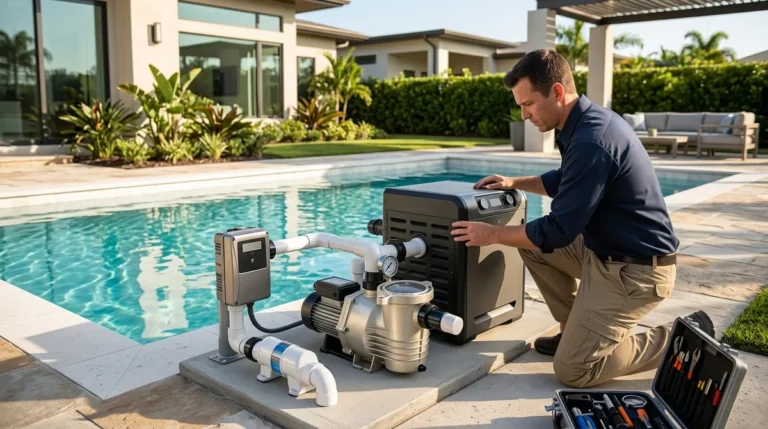
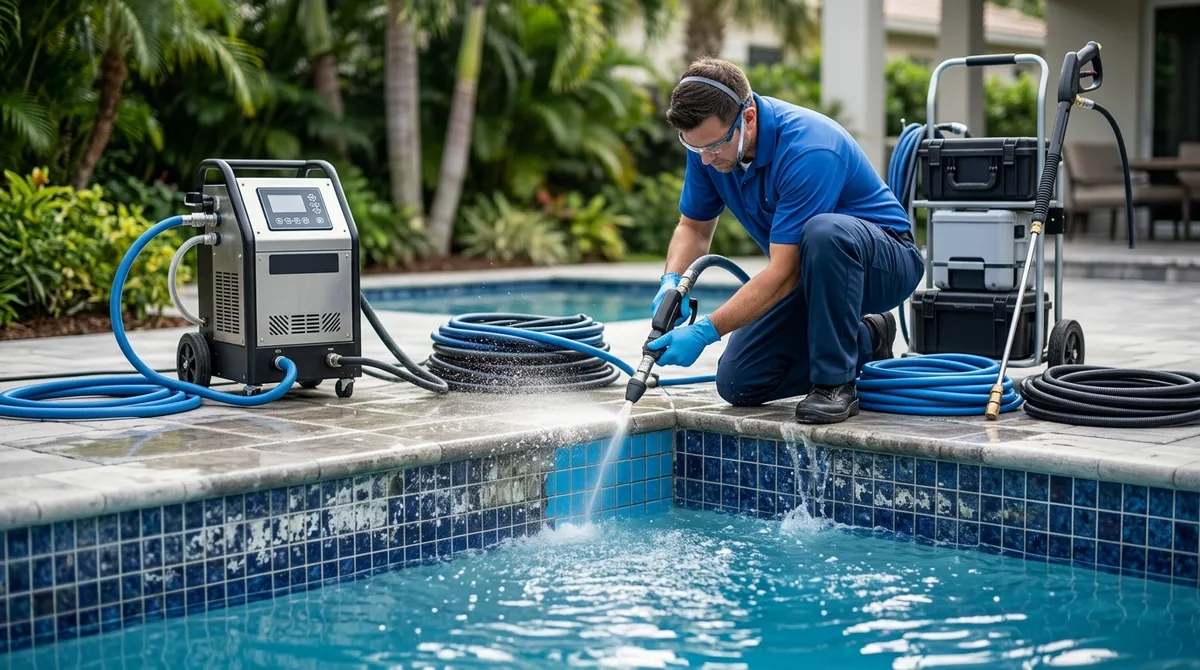
When buildup gets serious, professional pool tile cleaning is where you really see a difference. Trained technicians use specialized equipment and techniques that simply aren’t available to most homeowners. In 2026, the most effective professional methods include blasting techniques and professional-grade pressure washing.
The IPSSA (Independent Pool and Spa Service Association) supports ongoing education for pool service professionals, ensuring technicians stay up to date on the safest and most effective cleaning methods available.
The Three Main Professional Blasting Methods
- Glass Bead Blasting — Uses ultra-fine glass beads (approximately 10 microns in size) to blast away calcium deposits, oils, and grime. It’s especially popular for Pebble Tec pools and does not significantly affect water chemistry.
- Salt Blasting — Uses natural mined mineral salt (Kieserite) shot at low pressure. This is the most environmentally friendly blasting option. It polishes tiles while cleaning, leaving a smooth finish.
- Soda Blasting — Uses sodium bicarbonate (baking soda) for a gentler clean. It’s effective but can raise pool pH levels since baking soda has a pH of 8.3, compared to the ideal pool pH range of 7.2–7.6. This is worth noting for larger pools.
These professional blasting methods typically cost between $5.25 and $6 per linear foot and deliver results that are nearly impossible to replicate with DIY scrubbing alone. For Tampa homeowners in areas like Westchase, professional Westchase pool service is readily available and makes a noticeable difference in pool appearance.
What About Pressure Washing?
Pressure washing is another professional option for stubborn tile buildup. It can be very effective, but it must be done carefully. High pressure can damage delicate tiles and grout lines. Professionals know to use low-pressure settings, and they manage water usage responsibly — pressure washers use approximately 120 to 240 gallons of water per hour, so proper technique matters. The EPA Pool Water Efficiency resources offer helpful information on managing water use during pool maintenance.
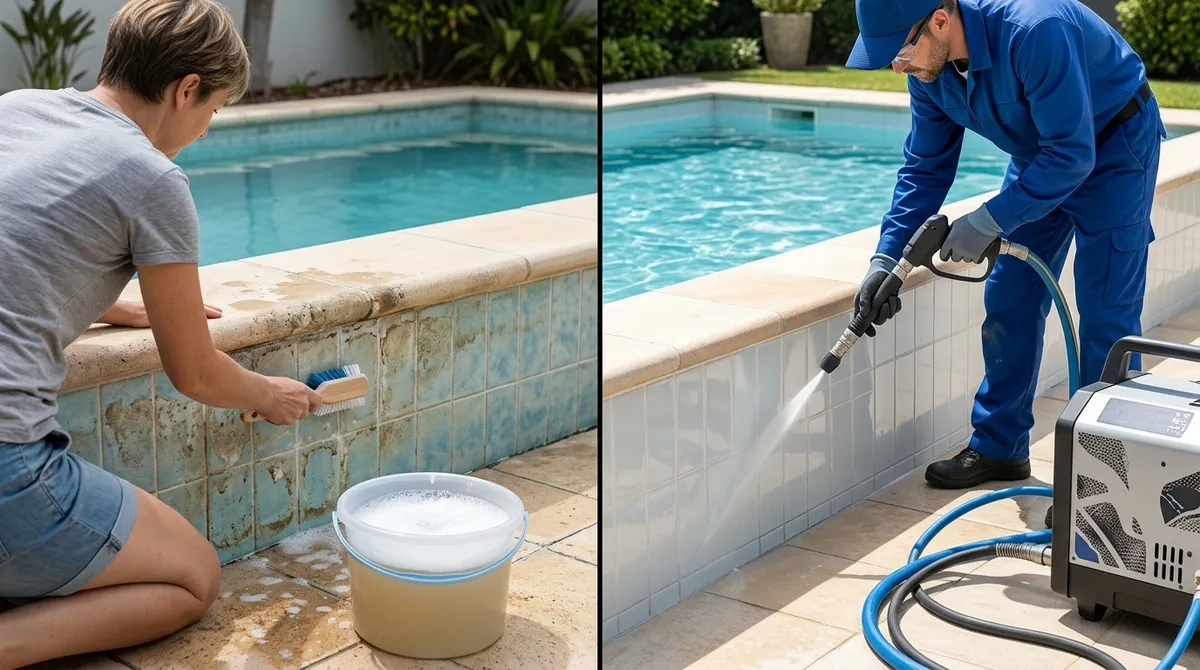
Side-by-Side Comparison: DIY vs. Professional Pool Tile Cleaning
| Factor | DIY Cleaning | Professional Cleaning |
|---|---|---|
| Cost | Low (household supplies) | $5.25–$6 per linear foot |
| Effectiveness | Good for light buildup | Excellent for heavy deposits |
| Time Required | High (manual scrubbing) | Low (efficient equipment) |
| Tile Safety | Moderate (risk if wrong tools used) | High (trained technicians) |
| Water Chemistry Impact | Variable | Managed professionally |
| Best For | Regular maintenance | Deep cleaning and heavy buildup |
How Often Should Pool Tiles Be Cleaned?
This is one of the most common questions pool owners ask. The honest answer depends on your pool usage, water chemistry, and local water hardness. Here’s a simple guideline:
- Weekly — Quick wipe-down of waterline tiles as part of regular pool maintenance
- Monthly — More thorough scrubbing to prevent calcium buildup from accumulating
- Every 1–2 years — Professional deep cleaning using blasting or advanced techniques
- Immediately — When you notice visible staining, heavy deposits, or algae growth
In Tampa’s warm climate, algae and mineral deposits can develop faster than in cooler regions. Staying consistent is your best defense. The Florida Swimming Pool Association (FSPA) is a great resource for Florida-specific pool care guidance and industry standards.
Tips for Keeping Pool Tiles Clean Longer
No matter which cleaning method you choose, prevention is always easier than a deep clean. Here are some smart habits to protect your tiles:
- Balance your water chemistry regularly — Proper pH and calcium hardness levels dramatically reduce deposit buildup
- Brush tiles weekly — A quick brush during routine maintenance prevents buildup from hardening
- Use a pool clarifier — Helps keep minerals suspended in the water rather than settling on tiles
- Monitor water levels — Fluctuating water levels expose tiles to more evaporation and mineral deposit cycles
If you’d like help making this part of a regular routine, the team at pool maintenance in West Chase can build a customized maintenance plan that keeps your tiles spotless year-round.
When DIY Just Isn’t Enough
There are situations where scrubbing with a pumice stone simply won’t cut it. If you’re dealing with any of the following, it’s time to call a professional:
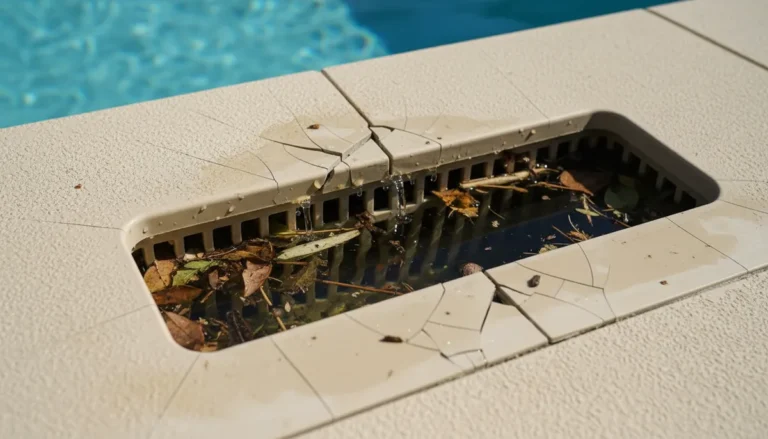
- Thick, crusty calcium deposits that don’t respond to manual scrubbing
- Staining that goes deep into grout lines
- Discolored or etched tile surfaces
- Large pool surfaces (like commercial pools) where DIY would take days
- Tiles showing signs of damage from previous improper cleaning attempts
Trying to force a DIY fix in these situations can actually make things worse — and more expensive. Knowing when to call in the experts is part of being a smart pool owner. Learn more about what’s available through professional pool cleaning services in Tampa to see how easy it is to get the right help.
The Verdict: Which One Wins?
Here’s the honest truth — both approaches have their place. DIY pool tile cleaning is perfect for regular, light-duty maintenance. It keeps things looking fresh between professional visits and helps you stay on top of buildup before it gets serious. It’s a great habit to build into your weekly routine.
But when it comes to heavy calcium deposits, stubborn staining, or annual deep cleaning, professional pool tile cleaning wins every time. The results are simply better, faster, and safer for your tiles. Professionals have the equipment, training, and experience to handle what scrubbing brushes can’t.
The smartest approach? Use both. Handle the light stuff yourself week to week, and schedule a professional deep clean once a year or whenever things get beyond what home tools can fix.
Get Your Pool Tiles Looking Brand New
Whether your pool tiles need a quick touch-up or a serious deep clean, Panther Pools is here to help. As Tampa’s trusted pool cleaning professionals, our certified team provides thorough, reliable pool maintenance — including tile cleaning — for residential and commercial pools throughout the area. We’re proud to offer seven-days-a-week support and free estimates so you can always get the help you need without the wait.
Ready to make your pool sparkle again? Reach out to our friendly team today and let’s get your pool looking its absolute best. You deserve a clean, beautiful pool — and we’re here to make that happen.
FAQs
Q: What is the best method for cleaning pool tiles with heavy calcium buildup?
A: For heavy calcium buildup, professional blasting methods — like glass bead or salt blasting — are the most effective options. These techniques remove tough deposits without damaging your tile surface, delivering results that DIY scrubbing simply can’t match.
Q: Can I safely use vinegar and baking soda to clean my pool tiles?
A: Yes! A vinegar-and-water solution is a safe, gentle option for light staining and routine waterline maintenance. Just keep in mind that baking soda has a pH of 8.3, so rinse well and check your water chemistry afterward to keep your pool balanced.
Q: How often should pool tiles be professionally cleaned?
A: Most pool owners benefit from a professional deep cleaning every one to two years, depending on water hardness and usage. In Florida’s warm climate, mineral deposits can build up faster, so staying consistent with both DIY upkeep and professional visits is the way to go.
Q: What is the difference between glass bead blasting and salt blasting for pool tiles?
A: Glass bead blasting uses ultra-fine glass beads (about 10 microns) to remove calcium and grime — it’s especially great for Pebble Tec pools. Salt blasting uses natural mineral salt at low pressure, which is gentler and more eco-friendly, and it leaves tiles with a polished finish.
Q: Is pressure washing safe for all types of pool tiles?
A: Pressure washing can be safe when done correctly at low-pressure settings, but it’s not ideal for all tile types. Delicate or older tiles and grout lines can be damaged by high pressure, which is why we always recommend having a trained professional handle pressure washing for pool tile cleaning.