
Key Takeaways
-
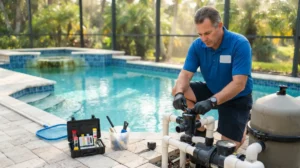
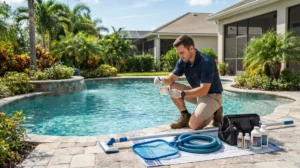
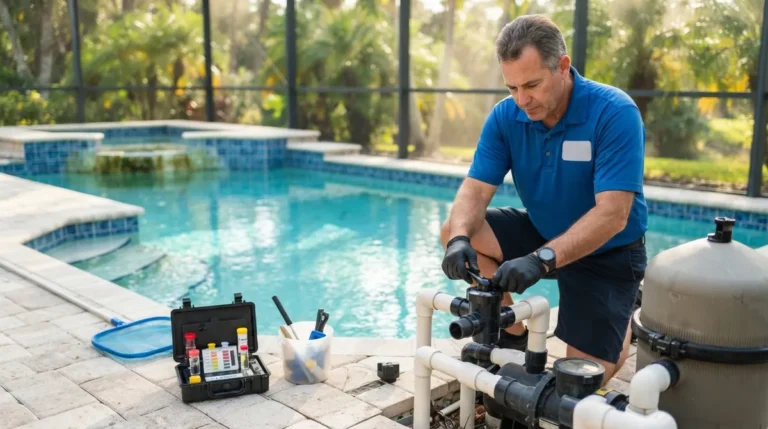
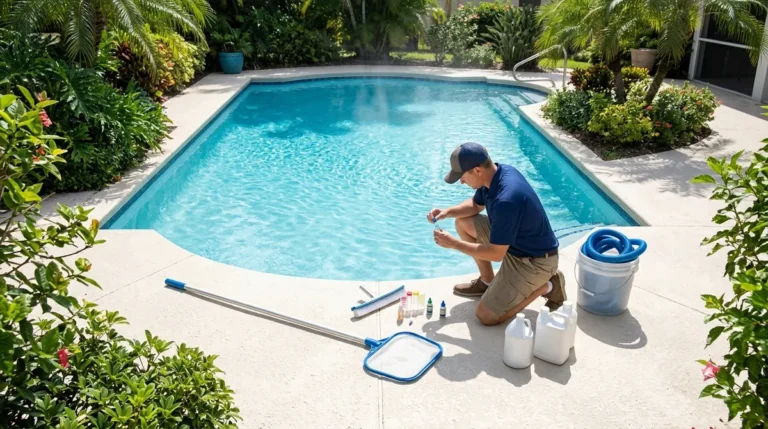
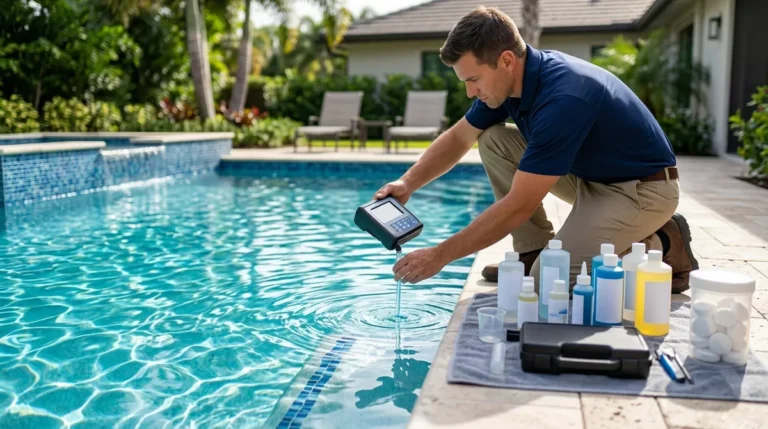
Test and balance water chemistry weekly with specific targets: pH 7.2-7.6, free chlorine 1-3 ppm, and total alkalinity 80-150 ppm to prevent skin irritation, equipment damage, and unsafe swimming conditions.
-
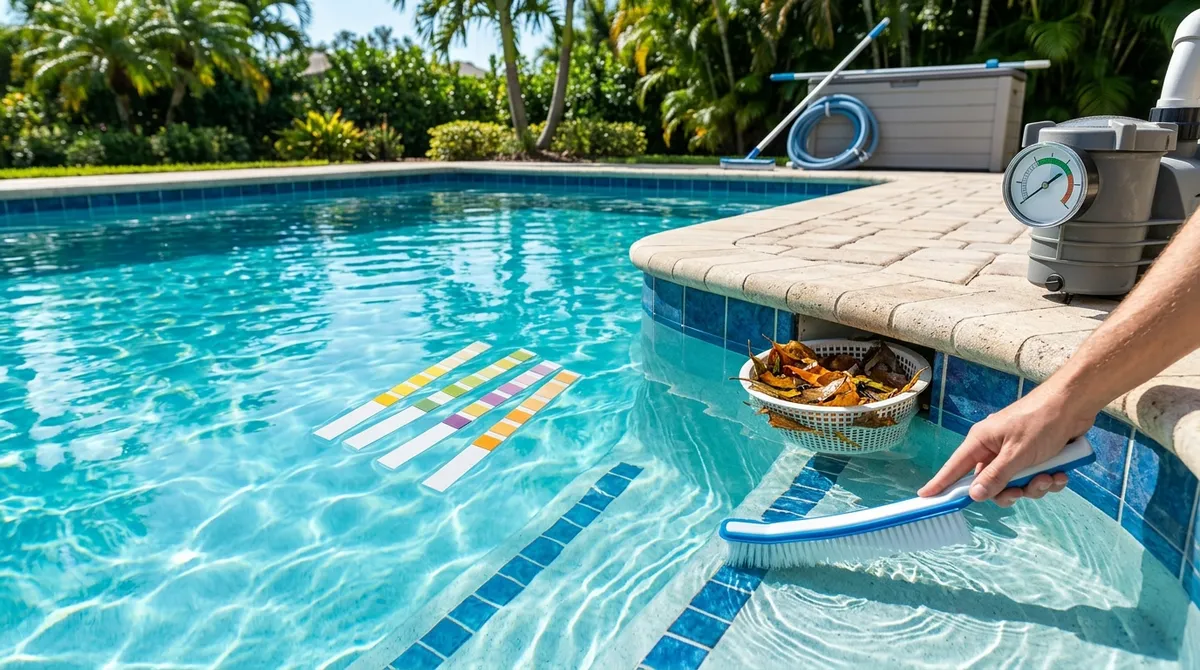
Brush pool walls, steps, and corners every week to stop algae before it becomes visible—algae clings to these surfaces before spreading, making weekly brushing crucial for preventing green water problems.
-
Tampa’s warm climate accelerates algae growth and evaporates water quickly, making weekly maintenance non-negotiable; skipping just one or two weeks can lead to cloudy water, green walls, and costly equipment strain.
-
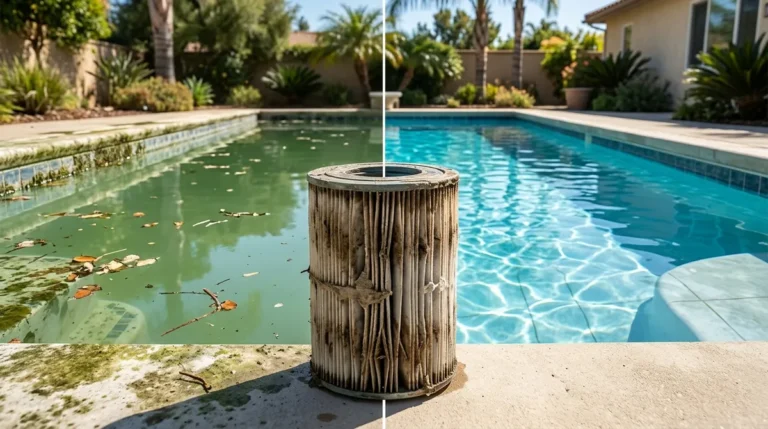
Check filter pressure gauge weekly and clean when readings exceed 15 psi; high pressure indicates a clogged filter working overtime, which strains your pump and reduces water quality.
-
Skim the surface and empty skimmer and pump baskets weekly to prevent debris from sinking and decomposing, which feeds algae and disrupts chemistry while clogged baskets restrict water flow.
-
Pool filters last 2-10 years depending on maintenance quality; consistent weekly care helps you reach the upper range and extends the life of all pool equipment by reducing stress from dirty, unbalanced water.
Owning a pool in Tampa is one of life’s great joys. The Florida sun is almost always shining, and a sparkling clean pool is the perfect way to enjoy it. But that sparkling water doesn’t happen by accident. It takes consistent, reliable weekly pool maintenance to keep things looking and feeling great.
Whether you’re a busy parent managing school schedules, a retiree who just wants to relax poolside, or a property manager keeping a commercial facility compliant, a good weekly routine makes all the difference. Skip a week, and you might find green water, cloudy chemistry, or worse — algae that takes serious effort to fix. Stay on top of it, and your pool stays beautiful, safe, and ready for any occasion.
In this guide, we’ll walk you through exactly what weekly pool maintenance involves, why each step matters, and how professional services can take the whole process off your plate. Let’s dive in!
Why Weekly Pool Maintenance Matters So Much
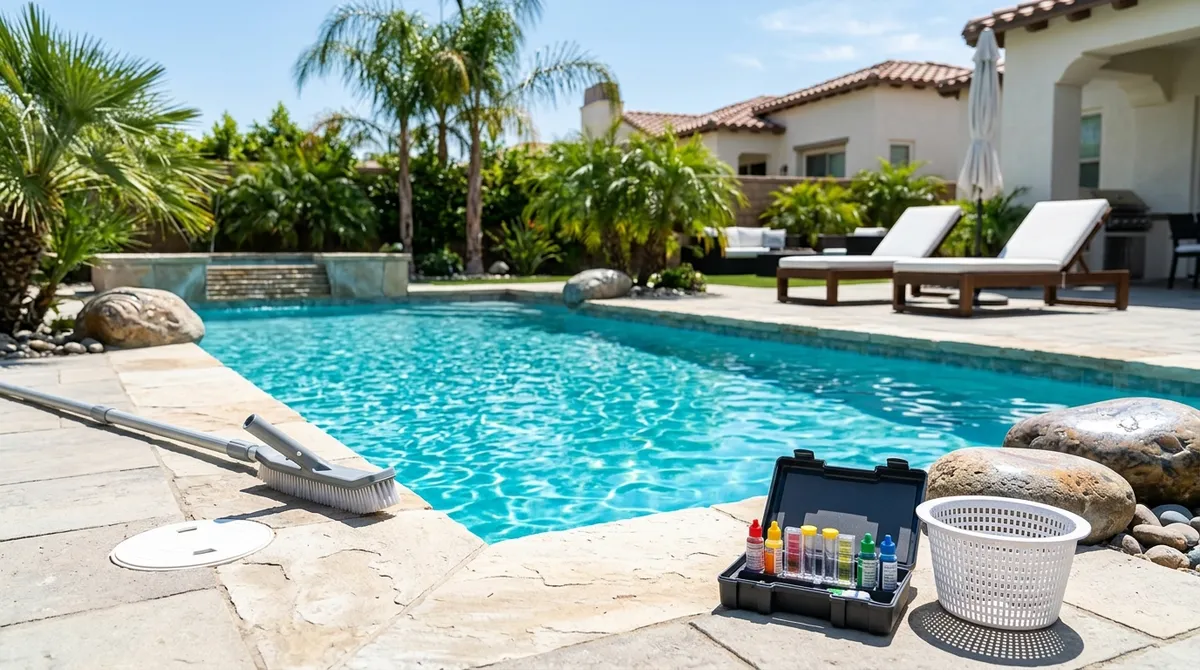
Tampa’s warm climate is amazing for swimming. But that same heat and sunshine also accelerates algae growth, evaporates water quickly, and puts constant stress on your pool’s chemical balance. Weekly pool maintenance isn’t just a good idea — it’s a necessity in Florida.
Skipping even one or two weeks can lead to cloudy water, green walls, and equipment strain. Regular upkeep protects your investment and keeps your family safe. Discover the top pool cleaning service benefits every Tampa homeowner needs to understand just how much consistent care adds up over time.
Consistent weekly care also extends the life of your pool equipment. Filters, pumps, and heaters all perform better and last longer when they’re not fighting against dirty, unbalanced water. According to industry data, pool filters can last anywhere from 2 to 10 years depending on maintenance quality — regular weekly care helps you hit that upper range.
The Complete Weekly Pool Maintenance Checklist
A solid weekly routine covers several key areas. Here’s what a thorough weekly service looks like from start to finish:
Step 1: Skim the Surface and Remove Debris
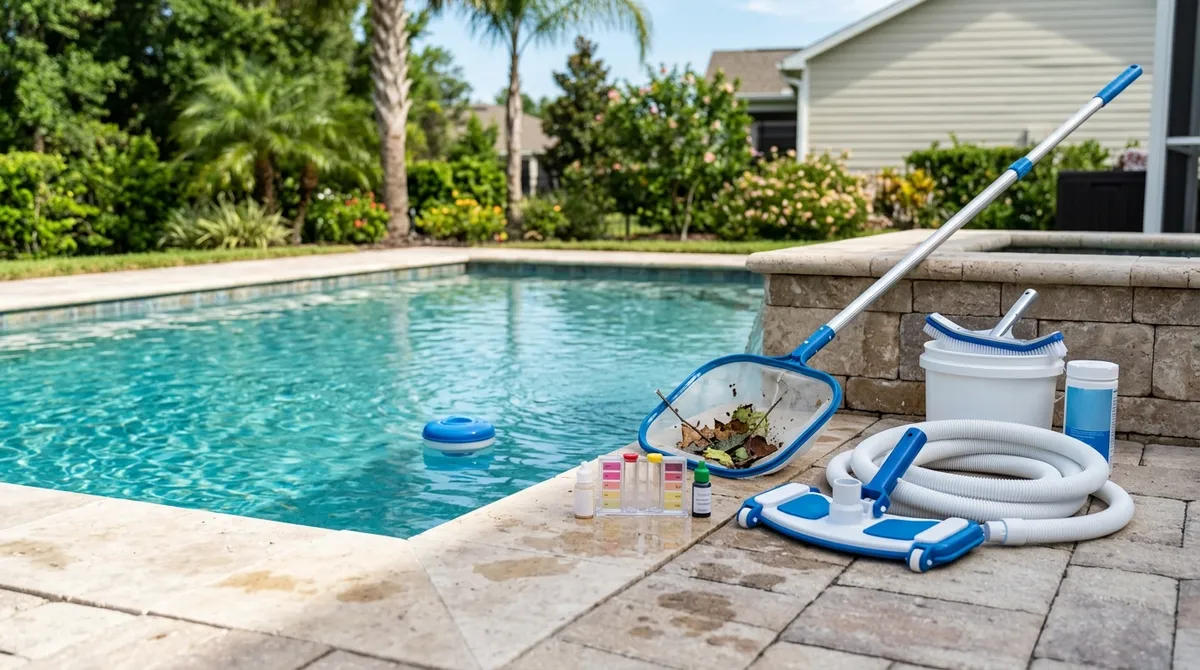
The first step is always skimming. Use a leaf net to remove leaves, bugs, and floating debris from the water’s surface. This prevents organic matter from sinking and decomposing, which feeds algae and disrupts water chemistry.
Don’t forget to empty the skimmer basket and pump basket too. Clogged baskets restrict water flow and put unnecessary strain on your pump. This small task makes a big difference in how efficiently your entire system runs.
Step 2: Brush Pool Walls, Steps, and Corners
Brushing is one of the most important — and most often skipped — steps in weekly pool maintenance. Algae loves to cling to walls, steps, corners, and tile lines before it becomes visible. Weekly brushing removes contaminants before they take hold.
Use a nylon brush for plaster pools and a softer brush for vinyl liners. Pay special attention to corners, behind ladders, and along the waterline. If you’re curious about keeping your tile looking its best, check out this helpful guide on how to handle pool tile repair the right way.
Step 3: Vacuum the Pool Floor
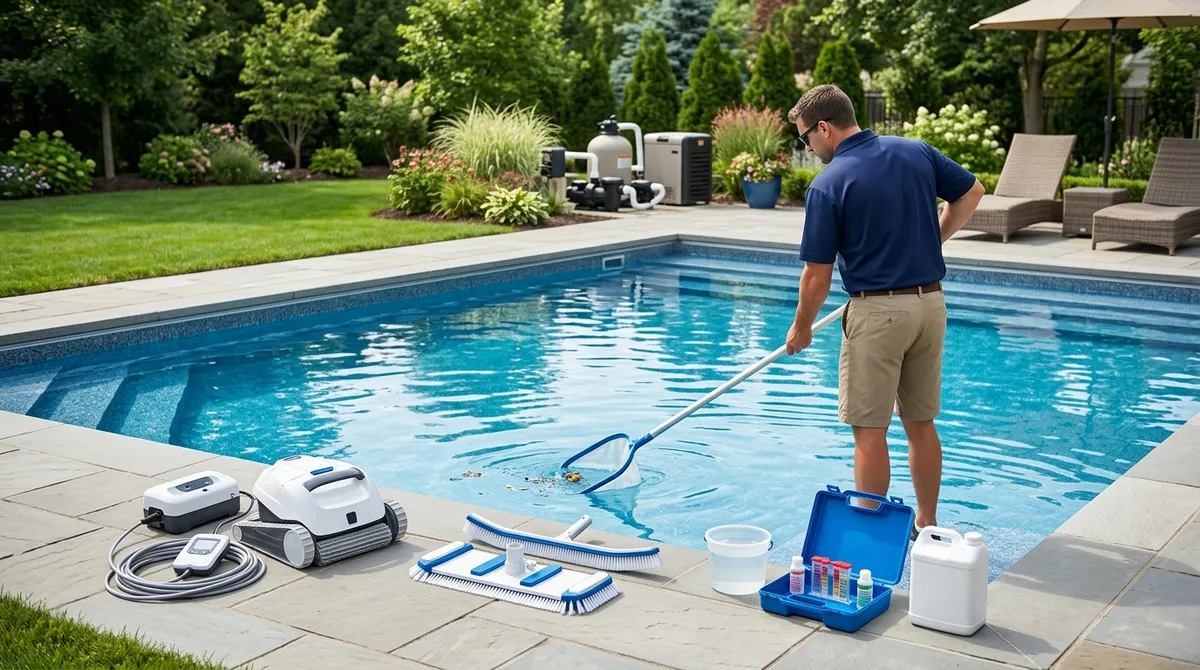
After brushing, debris settles on the pool floor. Vacuuming removes it before it decomposes and causes water quality issues. You can use a manual vacuum head or an automated robotic pool cleaner to get the job done.
Robotic vacuums have become increasingly popular because they reduce manual effort significantly. They’re great tools for routine maintenance between professional visits. For thorough, weekly service though, a professional eye catches what machines miss.
Step 4: Test and Balance Water Chemistry
Water chemistry is the heart of weekly pool maintenance. Imbalanced water causes skin and eye irritation, damages pool surfaces, and accelerates equipment wear. Test your water at least once a week using test strips or a liquid test kit.
Here are the ideal chemical ranges to target:
- pH: 7.2 – 7.6 (slightly alkaline)
- Total Alkalinity: 80 – 150 ppm
- Calcium Hardness: 175 – 275 ppm
- Free Chlorine: 1 – 3 ppm
- Cyanuric Acid (Stabilizer): 30 – 50 ppm
Adjusting these levels requires adding the right chemicals in the right order. It’s a process that takes practice to get right consistently — one reason many Tampa homeowners prefer to leave it to certified professionals. The EPA Pool Resources also offers guidance on responsible water use and chemical management for pool owners.
Step 5: Check and Clean the Filter
Your pool filter works hard every single day. Weekly pool maintenance includes checking the filter pressure gauge. The ideal reading is between 8 and 15 psi. If the gauge reads higher than normal, it’s time to clean or backwash the filter.
There are three common filter types — sand, cartridge, and DE (diatomaceous earth). Each requires a slightly different cleaning approach. Learn more about keeping this crucial equipment running smoothly with our guide on maintaining your pool’s filters. And if you ever need repairs, pool filter repairs can actually save you money in the long run.
Step 6: Inspect Equipment and Water Level
A quick visual inspection of your pool equipment goes a long way. Check the pump for unusual sounds or leaks. Inspect jets for proper flow. Make sure the water level sits at the midpoint of the skimmer opening — too low and your pump can run dry, too high and skimming becomes ineffective.
Also take a moment to walk around the deck and fencing. Look for any damage, loose tiles, or safety hazards. Early detection prevents costly repairs. If you notice pump irregularities, don’t wait — learn the 7 pool pump repair signs that mean you need help now.
Step 7: Shock the Pool When Needed
Sometimes your pool needs a little extra help. If the water looks cloudy or slightly green, shocking the pool restores clarity fast. The standard rule is to use 1 pound of shock per 5,000 gallons of water.
Shock is also recommended after heavy rain, a big pool party, or extreme heat. Adding shock at dusk helps prevent the sun from burning it off before it can work. This is a reactive but important part of weekly pool maintenance when conditions call for it.
Weekly Pool Maintenance at a Glance
| Task | Frequency | Why It Matters |
|---|---|---|
| Skim surface and empty baskets | Weekly (or more) | Prevents debris buildup and pump strain |
| Brush walls, steps, and corners | Weekly | Stops algae before it starts |
| Vacuum pool floor | Weekly | Removes settled debris and contaminants |
| Test and balance water chemistry | Weekly | Keeps water safe and comfortable |
| Check and clean filter | Weekly (clean as needed) | Maintains efficient filtration |
| Inspect equipment and water level | Weekly | Catches issues before they escalate |
| Shock treatment | As needed | Restores clarity after heavy use or weather |
Common Weekly Pool Maintenance Mistakes to Avoid
Even well-intentioned pool owners make mistakes. Here are some of the most common ones — and how to avoid them:
- Skipping water testing: Guessing at chemistry is one of the fastest ways to damage your pool and irritate swimmers. Test every week without fail.
- Adding chemicals all at once: Each chemical needs time to disperse before the next one is added. Rushing this process causes reactions and inaccurate readings.
- Ignoring the filter gauge: A high pressure reading means a clogged filter is working overtime. Clean it promptly to protect your pump and water quality.
- Forgetting to brush: It’s easy to skip brushing when the water looks clear. But algae builds up in unseen spots. Brush every week — no exceptions.
- Letting water levels drop too low: Running your pump without enough water causes serious damage. Check water levels every visit.
DIY vs. Professional Weekly Pool Maintenance
Many pool owners start out doing their own maintenance. And that’s totally fine! But over time, most discover that the time, effort, and cost of doing it right adds up quickly. Professional pool technicians typically manage 30 to 50 pools every single week. That experience means they spot problems fast and fix them before they become expensive.
Here’s a quick comparison to help you decide what’s right for you:
| Factor | DIY Maintenance | Professional Service |
|---|---|---|
| Time required | 1–2+ hours per week | None on your end |
| Chemical expertise | Learning curve required | Certified professionals handle it |
| Equipment monitoring | Easy to miss issues | Expert eye catches problems early |
| Consistency | Depends on your schedule | Reliable, scheduled visits |
| Peace of mind | Moderate | High |
If you’re leaning toward professional help, read more about why hiring a pool cleaning service is a smart idea. And if you’re searching for local support, see weekly pool service near me in Tampa for 2026 — help is closer than you think.
How Panther Pools Handles Weekly Maintenance in Tampa
At Panther Pools, weekly pool maintenance is what we do best. Our certified technicians — backed by CPO License #648855 — visit your pool on a consistent schedule, handling every step on the checklist from skimming and brushing to chemistry balancing and equipment inspection. We serve both residential and commercial customers throughout Tampa, and we’re available seven days a week because pool problems don’t wait for Monday.
We never rush jobs. We believe every pool deserves proper care every single visit. If something needs attention — whether it’s a filter issue, a pump concern, or a water chemistry problem — we flag it and fix it. You can also explore our full range of pool cleaning services in Tampa to see everything we offer. The Florida Swimming Pool Association (FSPA) and the Independent Pool and Spa Service Association (IPSSA) both set high standards for pool service professionals — standards our team takes seriously every day.
Additional Services That Support Weekly Care
Great weekly pool maintenance doesn’t exist in isolation. Sometimes your pool needs a little more attention beyond the weekly routine. Here are some additional services that pair perfectly with regular upkeep:
- Acid washes: Deep cleaning for pools with stubborn stains or algae buildup. Learn more about what to know about pool acid wash in Tampa.
- Pool resurfacing: If you notice cracks or rough spots, it may be time to resurface. Check out 15 pool resurfacing signs every Tampa owner should know.
- Leak detection: Unexplained water loss needs immediate attention. Avoid the costly errors outlined in our guide on pool leak detection mistakes that cost homeowners thousands.
- Pump maintenance: Keep your pump in peak condition with 9 pool pump maintenance tips every Tampa owner needs.
- Heater services: Don’t let a faulty heater ruin your swim season. Learn how to fix pool heater issues fast and keep your pool warm.
Signs Your Pool Needs More Than Weekly Maintenance
Sometimes a pool’s issues go beyond what weekly service alone can address. Watch for these warning signs that something bigger might be going on:
- Persistent green or cloudy water despite proper chemical treatment
- Unusual drop in water level each week
- Loud or unusual noises from the pump motor
- Visible cracks on the pool surface or tile
- Algae returning within days of a shock treatment
If any of these sound familiar, don’t wait. Check out 7 signs you need pool service near you in Tampa and get ahead of the problem before it grows.
Wrapping It All Up
Weekly pool maintenance is the foundation of a healthy, beautiful pool. From skimming and brushing to balancing chemicals and inspecting equipment, every step works together to keep your water safe, clear, and inviting. In Tampa’s warm climate, consistency isn’t optional — it’s essential.
Whether you choose to tackle your weekly routine yourself or hand it off to a trusted professional team, the important thing is that it gets done — every single week, without fail. Your pool is a big investment and a source of joy for your family or guests. Treat it that way!
Ready to hand off the hard work to a team that loves pools as much as you do? Reach out to our friendly team at Panther Pools today for a free estimate and let us keep your Tampa pool sparkling all year long.
FAQs
Q: What does weekly pool maintenance include?
A: Weekly pool maintenance covers skimming surface debris, brushing walls and steps, vacuuming the pool floor, testing and balancing water chemistry, checking filter pressure, and inspecting equipment. It’s a full routine that keeps your pool safe, clear, and ready to enjoy every single day!
Q: How often should I test my pool water chemistry?
A: You should test your pool water at least once a week. In Tampa’s warm climate, the sun and heat can shift your chemical levels faster than you’d expect — so weekly testing helps you catch and correct imbalances before they become bigger problems.
Q: What are the ideal pH and chlorine levels for a pool?
A: The sweet spot for pH is between 7.2 and 7.6, and chlorine should stay between 1 and 3 ppm. Keeping these levels balanced means comfortable swimming, effective sanitation, and no damage to your pool surfaces or equipment.
Q: When should I shock my pool?
A: Shock your pool when the water looks cloudy or slightly green, after heavy rain, following a big pool party, or during extreme heat. The general guideline is 1 pound of shock per 5,000 gallons of water, and it works best when added at dusk.
Q: Is it worth hiring a professional for weekly pool maintenance?
A: Absolutely — especially in Tampa where the heat and sunshine make consistent care essential. Professional technicians bring experience, the right tools, and a trained eye for catching issues early. It saves you time and often prevents costly repairs down the road!