
Key Takeaways
-
Tampa’s warm climate, hard water, and year-round pool use create ideal conditions for stains; professional identification of stain type (iron, copper, algae, minerals) is crucial because each responds to different treatments.
-
Acid washing is highly effective for embedded stains in plaster and gunite pools but should only be handled by professionals; no-drain acid washing offers a safer alternative that removes stains without full pool drainage.
-
Maintaining balanced water chemistry is the #1 defense against staining; test water regularly and use metal sequestrants in Tampa’s mineral-rich water to prevent iron and copper stains from forming.
-
Pool stain removal addresses discoloration on structurally intact surfaces, while resurfacing is needed for cracked or deteriorating surfaces; stain removal is the more affordable first step.
-
Professional assessment prevents costly mistakes; DIY stain removal attempts often use wrong products, waste money, or damage pool surfaces, making expert technicians the smarter choice.
-
Weekly brushing, prompt debris removal, and routine professional maintenance catch stain problems early before they embed into surfaces, saving time and money on aggressive treatments later.
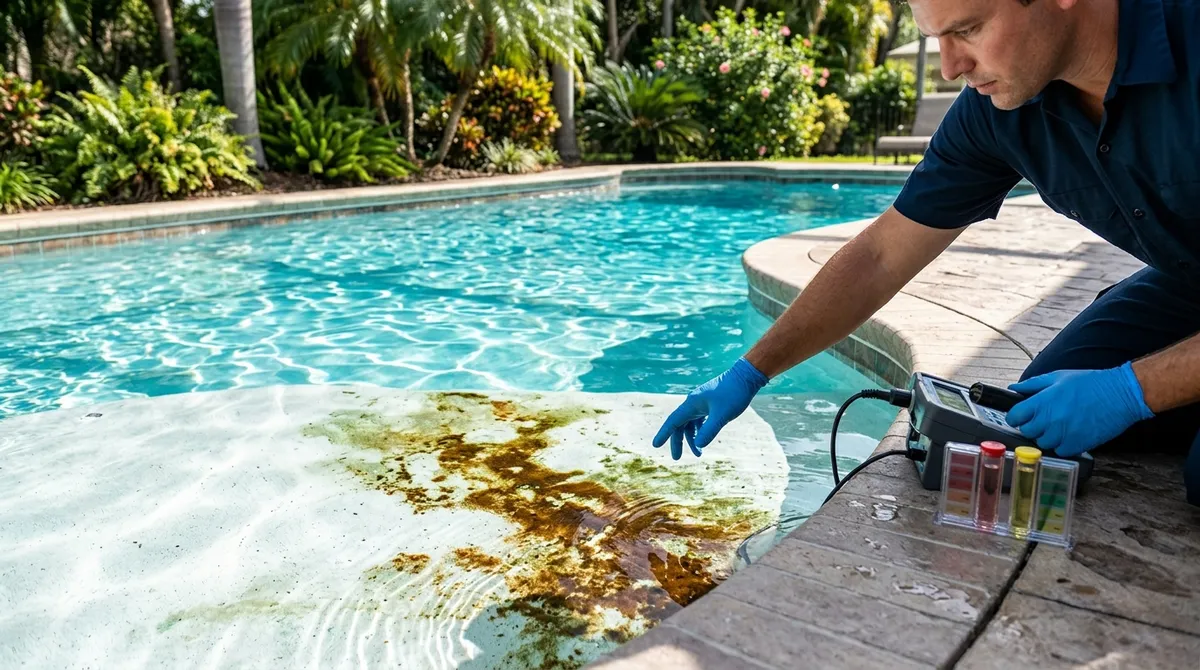
Picture this: you walk out to your backyard, ready for a relaxing swim, and you notice dark spots, rusty streaks, or greenish patches covering your pool’s surface. Not exactly the inviting oasis you had in mind, right? Pool stain removal in Tampa is one of the most common concerns homeowners face — and for good reason. Tampa’s warm climate, hard water, and year-round pool use create the perfect conditions for stubborn stains to form. Whether you’re a busy parent, a retiree who loves a peaceful afternoon dip, or a commercial property manager keeping guests happy, stained pool surfaces are a problem that simply can’t be ignored.
The good news? Most pool stains are completely treatable. With the right knowledge and professional help, your pool can look bright, clean, and welcoming again. Let’s dive into everything you need to know about pool stain removal in Tampa, from what causes those pesky discolorations to how the pros tackle them effectively.
What Causes Pool Stains in Tampa Pools?
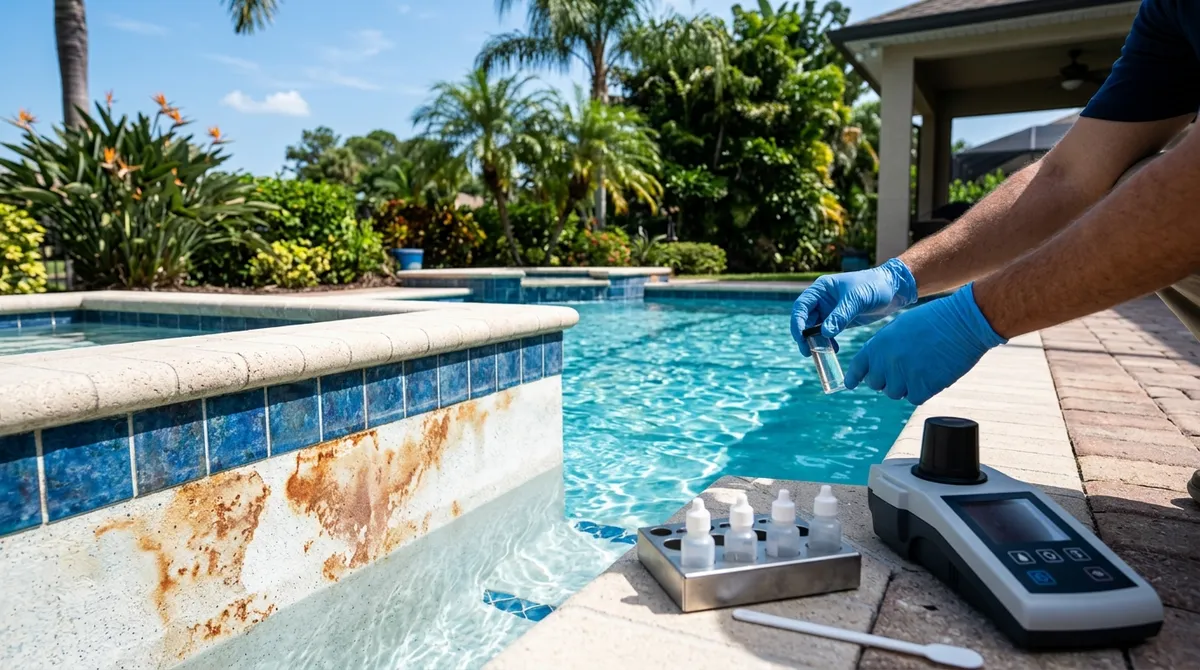
Tampa pools deal with a unique set of staining challenges. The local water supply tends to be high in minerals, and the Florida heat accelerates chemical reactions that lead to discoloration. Understanding what’s behind those stains is the first step to getting rid of them for good.
Here are the most common causes of pool stains in Tampa:
- Minerals and metals — Iron, copper, and manganese in the water can leave reddish-brown, blue-green, or black stains on pool surfaces.
- Algae growth — Green, yellow, or black algae can embed into plaster and gunite surfaces, leaving behind stubborn discoloration even after the algae is killed. Learn more in our guide on how to remove pool algae and restore crystal-clear water.
- Organic debris — Leaves, berries, and other plant material left sitting in the pool can stain surfaces quickly, especially in Florida’s lush landscape.
- Rusting equipment — Old or corroding pool equipment can release rust particles that settle on the pool floor and walls.
- Poor water chemistry — Imbalanced pH, low chlorine levels, or high calcium hardness can accelerate stain formation and mineral deposits.
- Stagnant water — Extended periods without proper circulation allow contaminants to settle and bond to surfaces.
Knowing which type of stain you’re dealing with matters because each one responds to different treatments. A professional can quickly identify the stain type and recommend the most effective solution. You can also review common pool water chemistry mistakes to understand how imbalanced water contributes to staining.
Types of Pool Stains You Might See
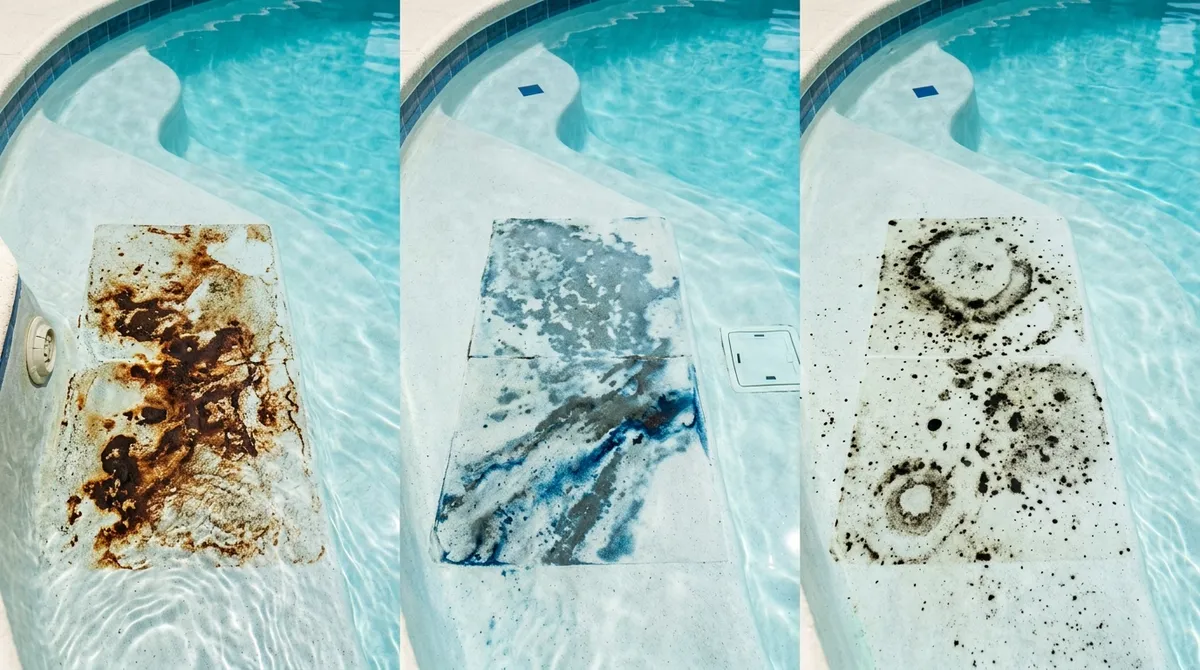
Not all pool stains look the same, and that’s actually helpful when it comes to diagnosis. The color and location of a stain can tell you a lot about its origin.
| Stain Color | Likely Cause | Common Location |
|---|---|---|
| Green / Blue-Green | Copper or algae | Walls, floor, waterline |
| Brown / Reddish-Brown | Iron or rust from equipment | Floor, near fittings |
| Black / Dark Gray | Black algae or manganese | Shaded areas, grout lines |
| Yellow / Tan | Pollen, dirt, or mustard algae | Walls and floor |
| White / Gray Scale | Calcium deposits (scaling) | Waterline tiles, surfaces |
If you’re unsure what’s causing your pool’s discoloration, a professional assessment is always the smartest move. Misidentifying the stain type can lead to treatments that don’t work — or worse, treatments that damage your pool’s surface.
How Do Professionals Remove Pool Stains in Tampa?
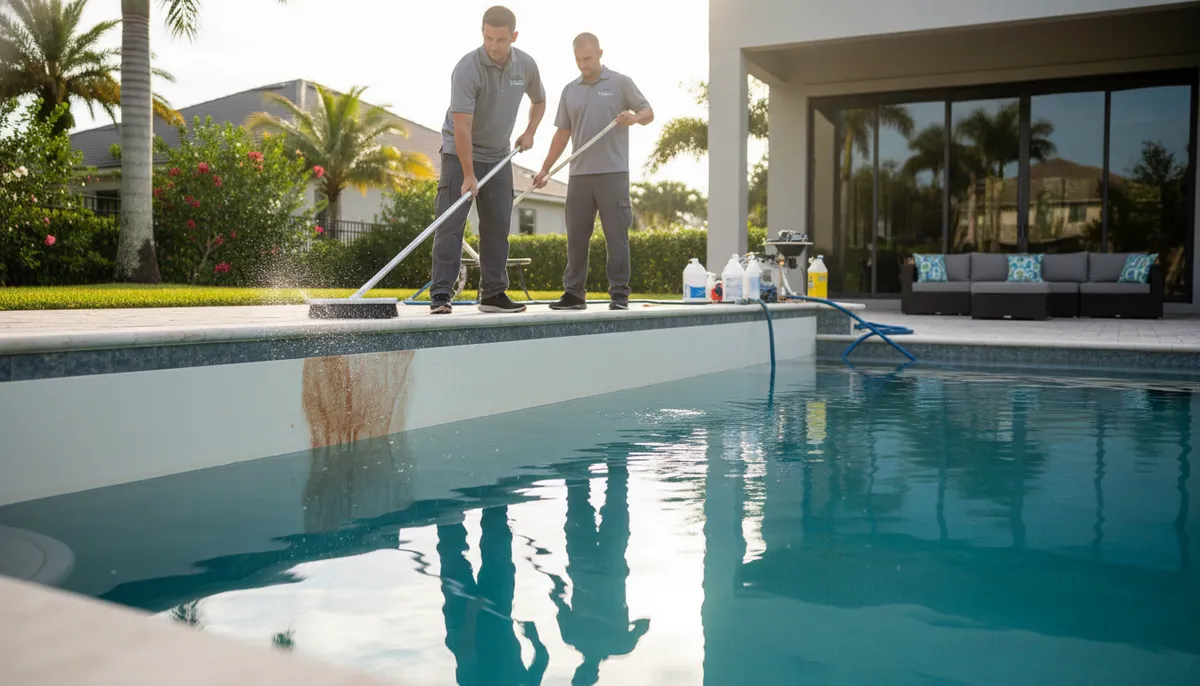
Professional pool stain removal in Tampa typically involves one of several proven methods, depending on the severity and type of stain. Here’s how the pros approach the process:
Step 1: Identify the Stain Type
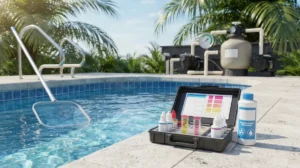
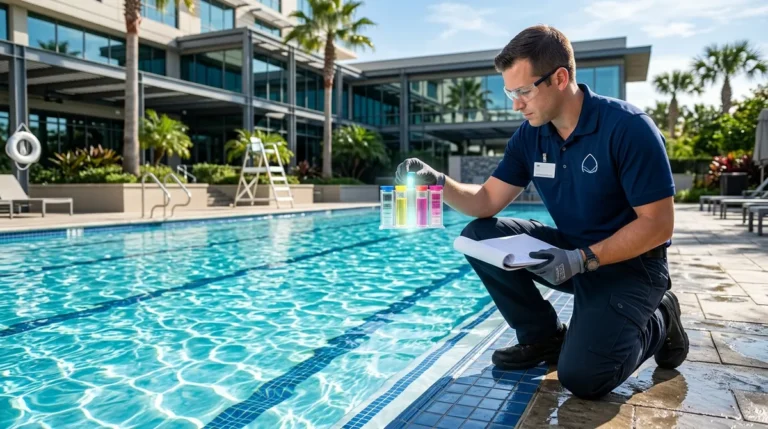
A trained pool technician will inspect the pool and may perform simple spot tests using vitamin C tablets or chlorine-based products. This helps determine whether the stain is organic or metal-based, which guides the treatment plan.
Step 2: Adjust Water Chemistry
Before any stain treatment begins, the water chemistry needs to be balanced. Proper pH, alkalinity, and sanitizer levels ensure that treatments work effectively and don’t cause additional problems. Check out our resource on 10 pool water balancing tips every Tampa owner needs for more insight.
Step 3: Apply the Right Treatment
Depending on the stain, your pool technician may use one of the following approaches:
- Chemical stain removers — Specially formulated products that target specific stain types, such as metal sequestrants for iron and copper stains.
- Stain erasers and brushing — Physical scrubbing combined with targeted chemicals for surface-level stains.
- Acid washing — A powerful method that involves applying a diluted acid solution to the pool surface to dissolve and lift embedded stains and mineral buildup.
- No-drain acid wash — A newer approach that removes mineral, metal, and organic stains without fully draining the pool, saving time and water.
Step 4: Post-Treatment Balancing and Prevention
After stain removal, the water is re-balanced and treated with preventative products to slow future staining. Your technician may recommend stain and scale preventatives as part of an ongoing maintenance plan.
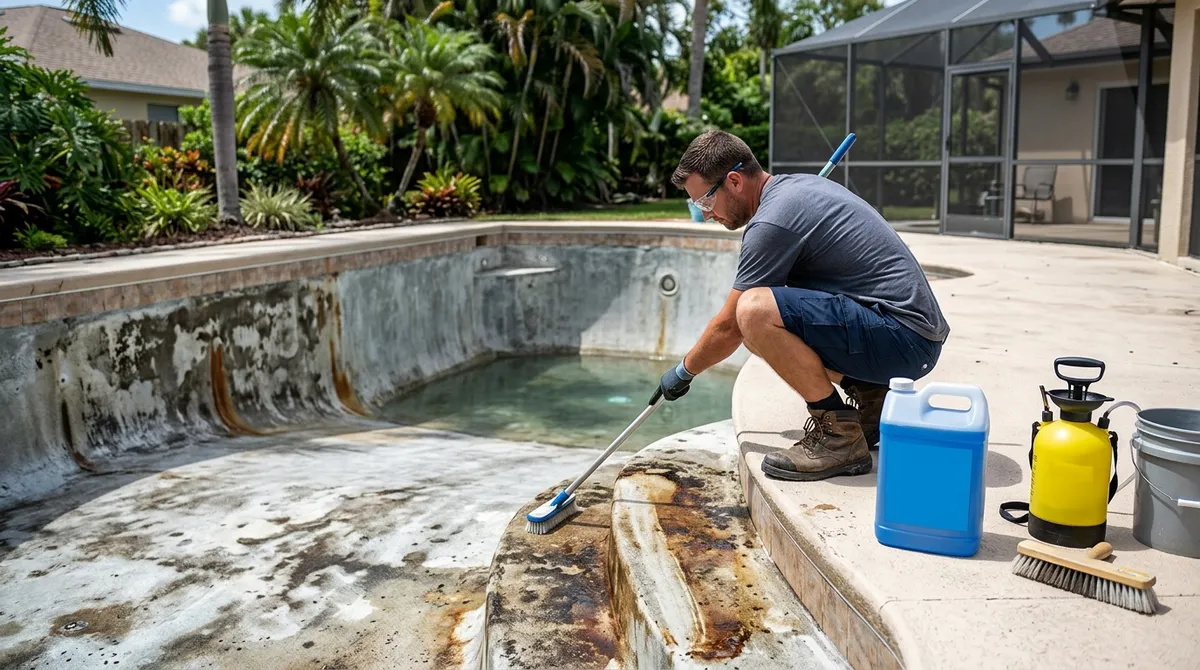
What Is Acid Washing and When Do You Need It?
Acid washing is one of the most talked-about pool stain removal methods in Tampa. It’s especially popular for plaster and gunite pools with deep, embedded stains that simple chemical treatments can’t touch. For a deep dive into this topic, our article on 9 things to know about pool acid wash in Tampa covers everything you need to know.
Here’s a quick look at when acid washing makes sense:
- The pool has been neglected for an extended period and has widespread, deep staining.
- Standard stain treatments haven’t produced results.
- There’s heavy algae staining that has penetrated the plaster surface.
- Mineral deposits and scale are covering large portions of the pool.
- The pool surface is discolored but still structurally sound — meaning resurfacing isn’t yet necessary.
Acid washing works by removing a thin layer of the pool’s plaster surface, which literally takes the stains with it. It’s a highly effective method, but it does require professional handling because the chemicals involved are strong and must be managed safely. The EPA Pool Resources highlights the importance of responsible chemical use around pools, which is exactly why professional acid washing is the safer, smarter choice.
Pool Stain Removal vs. Pool Resurfacing
A common question Tampa pool owners ask is whether they need stain removal or full resurfacing. These are two very different services, and understanding the difference can save you time and money.
| Factor | Stain Removal | Pool Resurfacing |
|---|---|---|
| Surface condition | Stained but structurally intact | Rough, cracked, or deteriorating |
| Treatment depth | Surface-level cleaning and treatment | Full removal and reapplication of surface material |
| Time required | Hours to a day or two | Multiple days to a week |
| Best for | Discoloration, mineral deposits, algae stains | Structural damage, widespread deterioration |
If your pool surface feels rough or shows signs of structural wear, you may want to explore our guide on 15 pool resurfacing signs every Tampa pool owner must know to see if it’s time for a bigger intervention. For most stained pools, though, professional stain removal is the right first step — and a much more affordable one. You can also review pool resurfacing vs. regular cleaning: which does your pool need? to help you decide.
How to Prevent Pool Stains from Coming Back
Treating stains is great. But preventing them from returning is even better. Here are the top ways Tampa pool owners can keep their pools looking spotless year-round:
- Maintain balanced water chemistry consistently. Test your water regularly and keep pH, alkalinity, and sanitizer levels in the correct range. This is your number-one defense against staining.
- Use a metal sequestrant regularly. If your water has high metal content (common in Tampa), a sequestrant helps bind metals before they can stain surfaces.
- Brush your pool walls and floor weekly. Regular brushing prevents algae and mineral deposits from bonding to the surface.
- Keep your pool clean of organic debris. Skim leaves, flowers, and other debris promptly to prevent organic staining. Our tips on pool leaf removal can help you stay on top of this.
- Schedule routine professional maintenance. Regular visits from a qualified pool technician catch problems early before stains have time to set in.
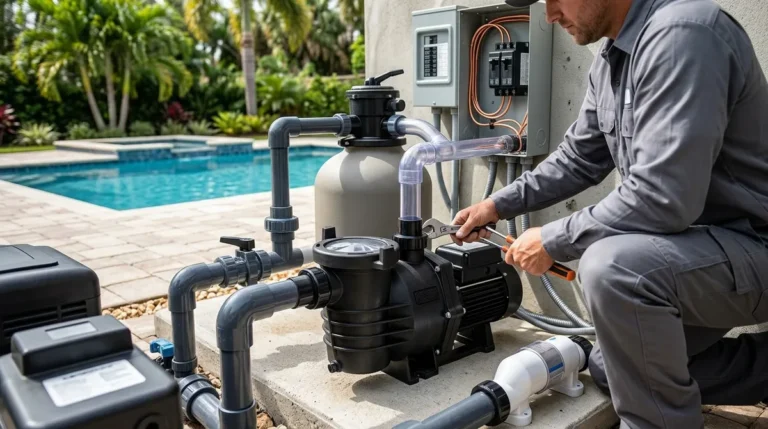
- Inspect and maintain your pool equipment. Rusting or corroding equipment can introduce metal into the water. Staying on top of pool equipment repair is essential for stain prevention.
Industry groups like the Florida Swimming Pool Association (FSPA) and the Independent Pool and Spa Service Association (IPSSA) both emphasize that consistent water care and professional maintenance are the most effective strategies for keeping pool surfaces clean and stain-free.
Why Tampa Pools Are Especially Stain-Prone
Tampa’s climate creates a unique environment that makes pool staining more likely than in cooler, drier parts of the country. Here’s why:
- High temperatures speed up chemical reactions and evaporation, concentrating minerals in the water faster.
- Heavy rainfall introduces organic debris and can disrupt water chemistry rapidly.
- Year-round use means pools rarely get a break from heavy activity, increasing the demand for consistent maintenance.
- Lush landscaping throughout Tampa neighborhoods adds leaves, pollen, and organic matter to pools regularly.
This is exactly why professional pool cleaning services in Tampa are so valuable. A regular service plan keeps your water balanced, your surfaces clean, and your pool protected from the stain-causing conditions that Tampa’s environment naturally creates. Our guide on why regular pool cleaning is essential for Tampa pools breaks this down in even more detail.
Trust the Pros for Pool Stain Removal in Tampa
When stains show up in your pool, it’s tempting to grab a brush and some store-bought cleaner and go to town. But DIY stain removal attempts often fall short — and sometimes make things worse by using the wrong products on the wrong stain type or damaging the pool surface in the process.
That’s where a professional team makes all the difference. Panther Pools is Tampa’s premier pool cleaning company, serving residential and commercial customers with expert care, seven days a week. As a Certified Pool Operator (CPO #648855), Panther Pools brings the training, tools, and experience needed to identify and eliminate pool stains safely and effectively — whether it’s a minor mineral ring at the waterline or widespread discoloration across a gunite surface.
From acid washing to routine chemical treatments and full-service maintenance plans, Panther Pools handles it all with on-time, courteous technicians and free estimates. If you’re dealing with stubborn pool stains or just want to prevent them from showing up in the first place, explore the full range of pool maintenance services available to Tampa pool owners.
Conclusion
Pool stains are more than just an eyesore. They’re a sign that your pool’s water chemistry, equipment, or maintenance routine needs attention. In Tampa, where pools work hard year-round, staining is a common challenge — but it’s absolutely not one you have to live with. From identifying the stain type to choosing the right professional treatment, the path to a sparkling clean pool is clear.
Don’t let stains steal the joy from your pool. Whether you need a one-time acid wash or ongoing stain prevention through a monthly service plan, professional help is just a call away. Reach out to the Panther Pools team today and get a free estimate for pool stain removal in Tampa — because your pool deserves to shine.
FAQs
Q: What causes pool stains in Tampa pools?
A: Tampa pool stains are most commonly caused by metals like iron and copper in the water, algae growth, organic debris like leaves and pollen, corroding equipment, and imbalanced water chemistry. Tampa’s warm climate and mineral-rich water make local pools especially prone to staining, which is why regular maintenance is so important!
Q: How does acid washing remove pool stains?
A: Acid washing works by applying a diluted acid solution to the pool’s plaster or gunite surface, which dissolves and lifts embedded stains and mineral buildup by removing a very thin layer of plaster. It’s a highly effective method for stubborn stains that don’t respond to standard chemical treatments, and it should always be handled by a professional for safety.
Q: Is no-drain acid washing safe for all pool surfaces?
A: No-drain acid washing is a great option for removing mineral, metal, and organic stains without fully draining the pool, but it works best on plaster and gunite surfaces. It’s not suitable for all pool types, so we always recommend having a professional assess your pool’s surface before choosing a treatment method.
Q: What is the difference between pool stain removal and pool resurfacing?
A: Pool stain removal treats discoloration on a surface that is still structurally intact, using chemical treatments or acid washing to clean the existing surface. Pool resurfacing is a bigger project needed when the surface itself is cracked, rough, or deteriorating — it involves completely removing and reapplying the surface material. Stain removal is usually the right first step before considering resurfacing.
Q: How can I prevent pool stains from coming back after treatment?
A: The best way to prevent stains from returning is to maintain balanced water chemistry consistently, use a metal sequestrant if your water has high mineral content, brush your pool weekly, remove organic debris promptly, and stick to a regular professional maintenance schedule. A qualified pool technician can also recommend stain and scale preventative products tailored to your pool’s specific needs.