
Key Takeaways
-
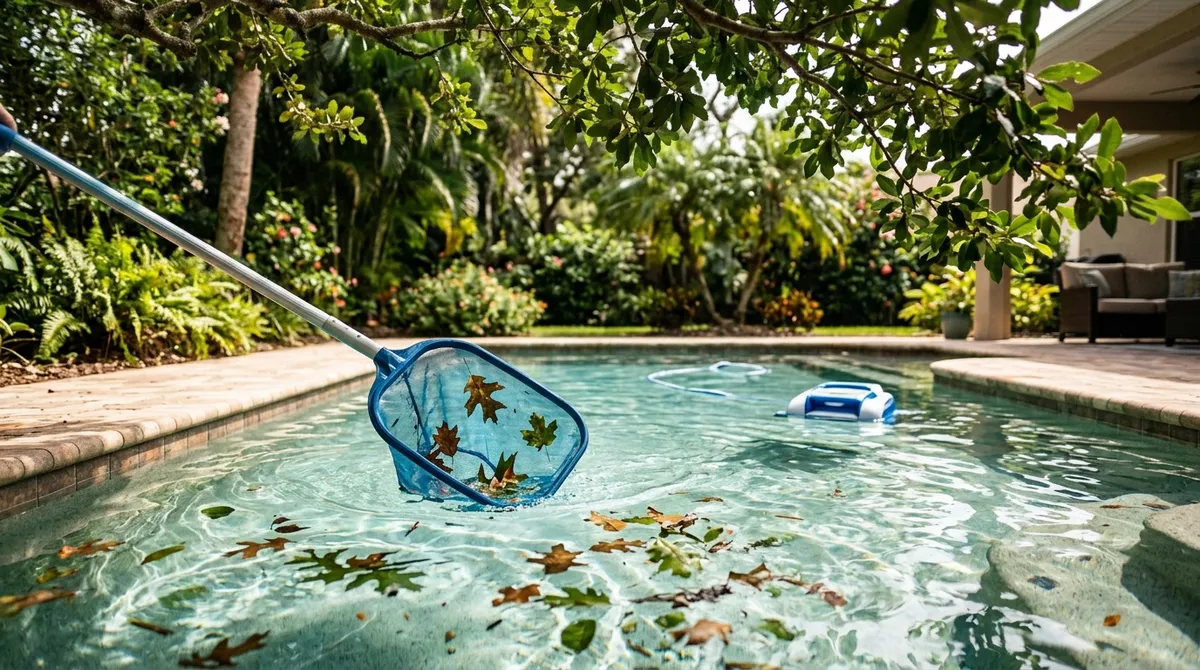
Daily surface skimming with a leaf net takes just 5 minutes and prevents leaves from sinking to the bottom where they decompose, consume chlorine, and stain pool surfaces.
-
Clogged skimmer and pump baskets reduce water circulation and strain your filtration system, so check baskets daily during heavy leaf season to avoid costly equipment repairs.
-
Sunken leaves must be vacuumed systematically off the pool floor using a two-step method: skim first, wait 30 minutes for debris to settle, then vacuum slowly in overlapping rows.
-
Installing a mesh safety cover when the pool is unused and trimming overhanging tree branches dramatically reduces leaf debris year-round, especially important in Tampa’s lush climate.
-
Robotic solar-powered surface skimmers provide hands-free continuous debris collection and now account for 51% of the pool cleaner market, offering a practical automation alternative.
-
Running your pool pump 8-12 hours daily keeps water circulating to push leaf fragments into the filter, while professional weekly services provide complete maintenance at a 7.4% growing market rate.
Picture this: you walk out to your beautiful backyard pool on a sunny Tampa morning, ready for a swim. But instead of sparkling blue water, you find a layer of leaves floating on the surface. Sound familiar? Pool leaf removal is one of those tasks that seems simple but can quickly get out of hand if you ignore it. Leaves don’t just look messy — they can clog your equipment, cloud your water, and even trigger algae growth. The good news? With the right approach, keeping your pool leaf-free is totally manageable. Whether you’re a busy parent, a new homeowner, or a retiree who just wants to enjoy their pool stress-free, these nine tips will make a real difference. Let’s dive in!
Why Pool Leaf Removal Matters More Than You Think
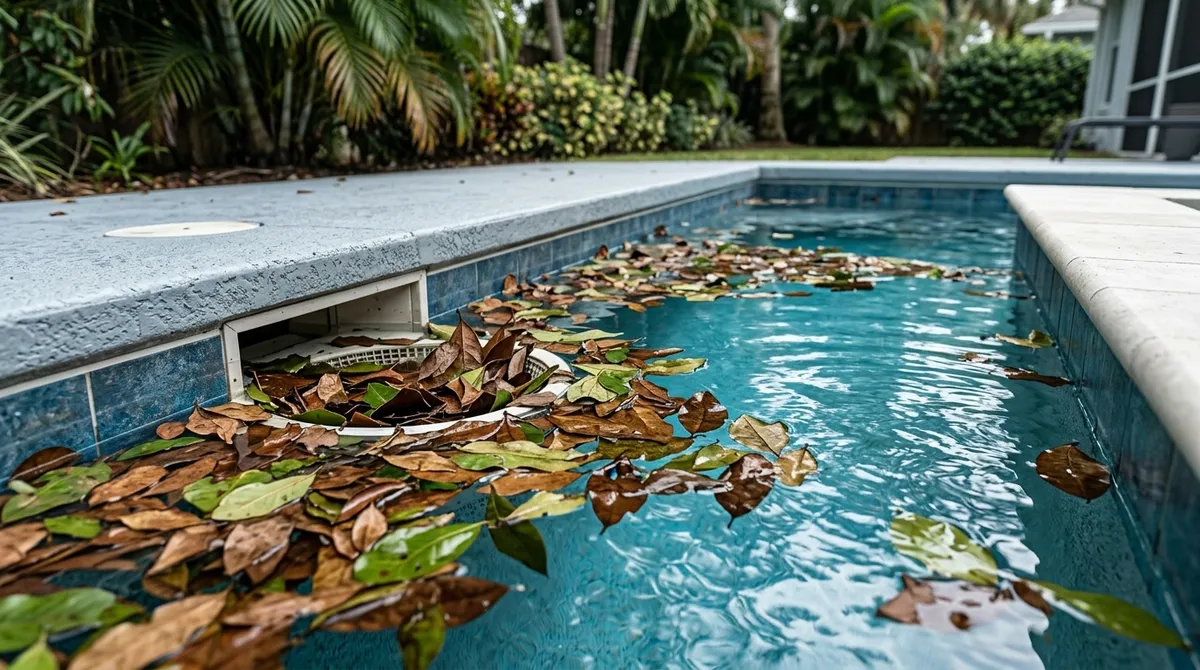
Leaves are sneaky troublemakers. When they first land on the water, they float harmlessly on the surface. But give them a few hours, and they start to sink. Once they hit the bottom, they decompose, release tannins, and stain your pool surfaces. They also consume chlorine rapidly, leaving your water unbalanced. For more on keeping your water chemistry right, check out these helpful pool water balancing tips every Tampa owner needs.
Beyond water quality, leaves are hard on your equipment. A clogged skimmer basket or pump basket reduces water circulation and puts extra strain on your filtration system. The EPA Pool Resources notes that well-maintained circulation systems are key to both pool health and energy efficiency. In short, staying on top of leaf removal protects your pool and your wallet.
9 Pool Leaf Removal Tips That Actually Work
1. Skim the Surface Every Single Day
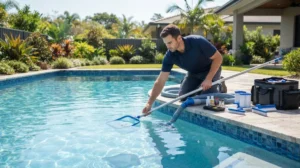
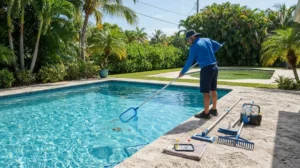
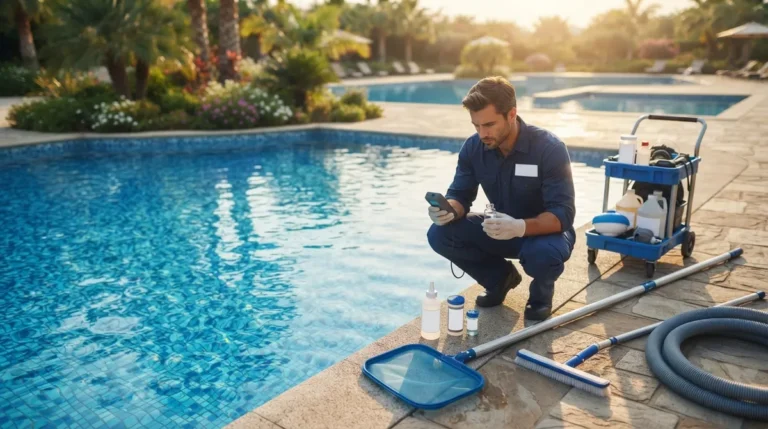
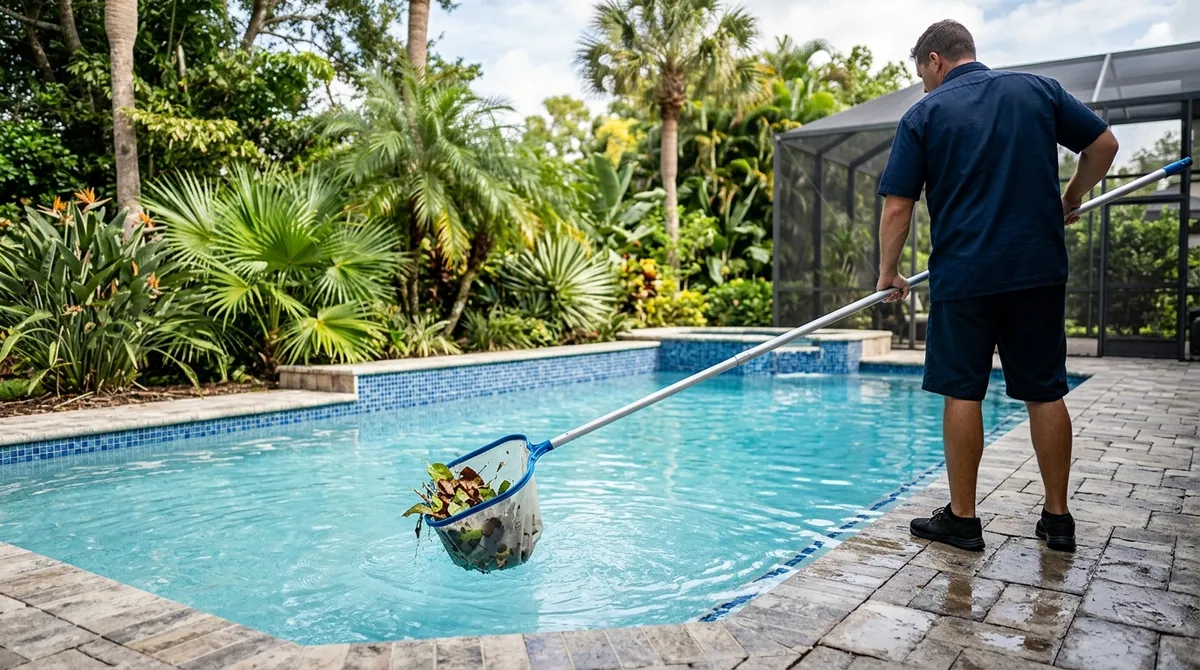
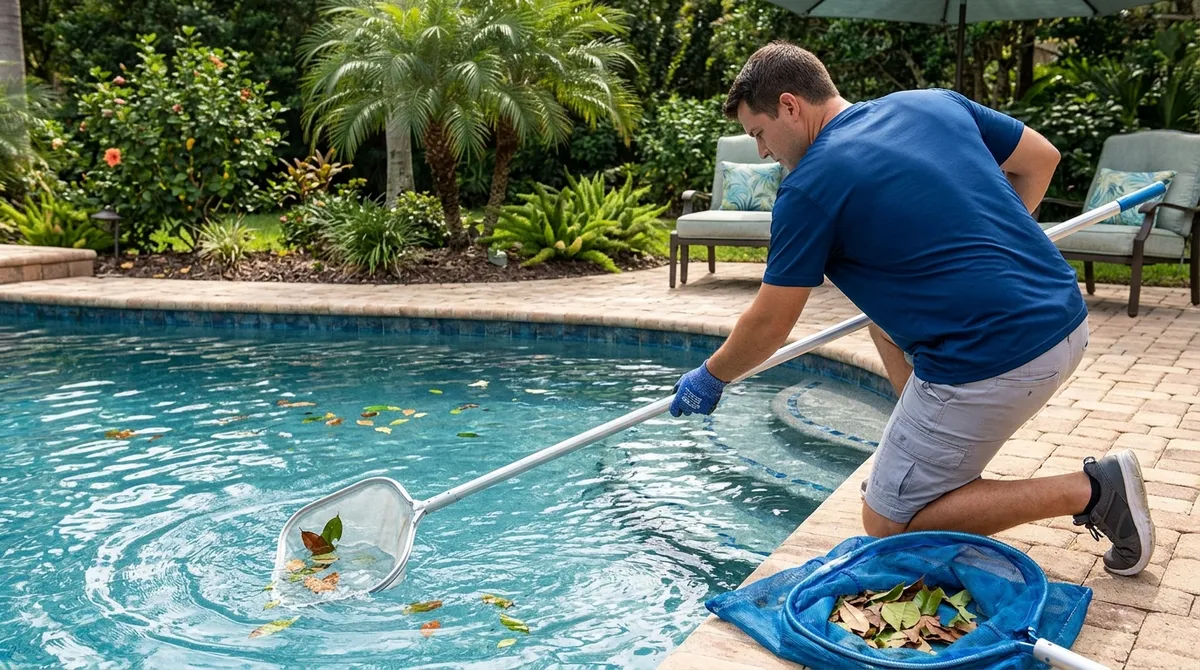
This is the golden rule of pool leaf removal. Grab a leaf skimmer net attached to a telescopic pole and skim your pool’s surface daily. It takes just five minutes and prevents leaves from sinking. Think of it like wiping the kitchen counter — a quick daily habit prevents a big weekend mess.
For pools near trees, daily skimming is even more important. Tampa’s lush landscaping is gorgeous, but it means more debris year-round, especially during windy days and after afternoon storms. Make it part of your morning routine, and you’ll be amazed at the difference.
2. Use a Deep-Bag Leaf Rake for Heavy Loads
A standard flat skimmer net is great for light debris. But after a storm or during heavy leaf fall, you need a deep-bag leaf rake. These tools have a mesh bag instead of a flat net, so they hold far more leaves per pass. You’ll spend less time re-emptying and more time actually cleaning.
Here’s what to look for in a good leaf rake:
- Deep mesh bag (at least 8–10 inches deep)
- Fine mesh to catch small debris
- Sturdy frame that won’t bend
- Compatible with a standard telescopic pole
- Lightweight enough for comfortable use
3. Empty Your Skimmer Baskets Frequently
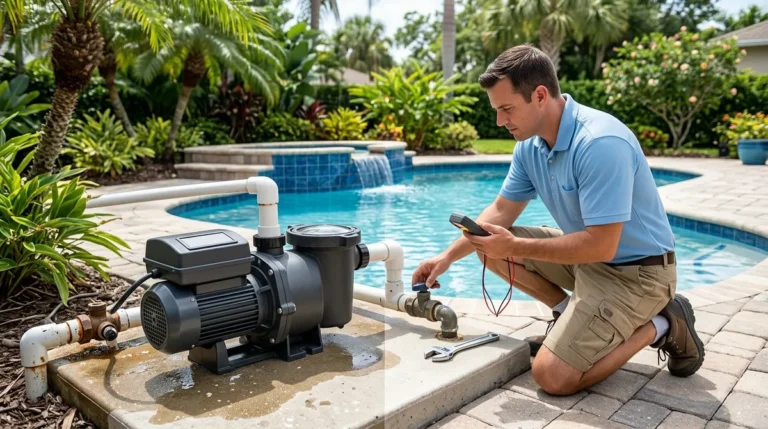
Your skimmer baskets are your pool’s first line of defense. They catch floating debris before it reaches the pump. But a full skimmer basket is useless — water can’t flow through it properly, and your pump has to work harder. Maintaining your pool’s filters starts with keeping those baskets clear.
During heavy leaf season, check your skimmer baskets daily or even twice a day. It’s a 30-second job that saves you from expensive pump repairs down the road. You should also check your pump basket weekly to make sure it’s not backed up with debris that slipped past the skimmer.
4. Vacuum Sunken Leaves Off the Pool Floor
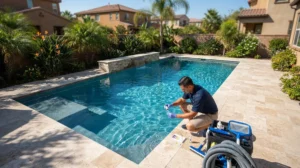
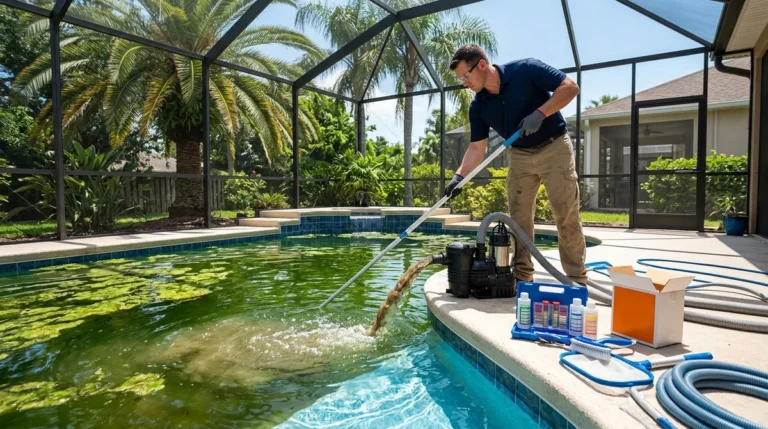
Even with daily skimming, some leaves will sink to the bottom. That’s when you need a pool vacuum. Manual pool vacuums connect to your skimmer line and let you systematically clean the floor of your pool. Move slowly and methodically for best results — rushing just stirs debris back up into the water.
For heavily leaf-covered pools, a two-step approach works best:
- Skim the surface first to remove floating leaves
- Wait 30 minutes for disturbed debris to settle
- Vacuum the bottom slowly in overlapping rows
This method keeps the water clearer and makes vacuuming much more effective. You can learn more about this process at how inground pool cleaning actually works.
5. Consider a Robotic or Solar-Powered Surface Skimmer
Technology has come a long way in the pool world. Robotic surface skimmers float on the water and continuously collect debris before it sinks. They’re solar-powered or battery-operated, which means they run without adding to your energy bill. According to recent industry data, robotic pool cleaners accounted for 51% of the pool cleaners market in 2025 — a clear sign that pool owners love the hands-free convenience.
Over 6.5 million residential pools in the U.S. were already equipped with automated or robotic cleaners by 2023. If you’re curious about smart pool technology, explore the latest pool automation systems every Tampa pool owner needs.
6. Install a Pool Cover When the Pool Is Not in Use
Prevention is always easier than cleanup. A good pool cover keeps leaves out entirely when you’re not swimming. This is especially useful during stormy weather or when you’re going on vacation. Mesh safety covers let rainwater through but block leaves and debris — a smart choice for Tampa families.
Proper pool cover installation matters just as much as the cover itself. A poorly fitted cover can sag, collect standing water, and actually create more work. Check out these pool cover installation tips every Tampa owner needs to get it right the first time.
7. Trim Trees and Shrubs Around Your Pool
This one sounds obvious, but many pool owners overlook it. Regularly trimming overhanging branches dramatically reduces the number of leaves that fall into your pool. You don’t have to remove your beautiful landscaping — just keep it well-maintained and trimmed back from the pool’s edge.
The FSPA (Florida Swimming Pool Association) recommends thoughtful landscaping as a practical strategy for reducing pool debris and lowering overall maintenance needs. A little pruning goes a long way toward keeping your pool clean.
8. Run Your Pool Pump and Filter Consistently
Your filtration system is your best friend when it comes to pool leaf removal. Running your pump for 8–12 hours a day keeps water circulating and pushes small leaf fragments and debris into the filter where they belong. A well-running pump also distributes chemicals evenly so your water stays balanced.
If your pump isn’t running at peak performance, leaf debris tends to settle rather than circulate to the skimmer. Keep an eye out for warning signs like weak flow or unusual noises. These pool pump maintenance tips every Tampa owner needs will help you stay ahead of any issues.
9. Schedule a Professional Weekly Pool Cleaning Service
Sometimes the best tip is the simplest one: let the pros handle it. A professional weekly pool service includes thorough leaf skimming, basket emptying, vacuuming, brushing, and water chemistry checks — all done by trained technicians who know exactly what your pool needs. This is especially valuable for busy families, luxury homeowners, and commercial property managers who need their pools in perfect shape without the hassle.
The pool cleaning and maintenance services market is growing at a 7.4% annual rate globally, and it’s easy to see why. More and more pool owners recognize that professional care keeps pools in better condition and actually saves money on repairs over time. If you’re curious about what regular service really involves, find out what a residential pool service actually does for you.
Leaf Removal Tools: A Quick Comparison
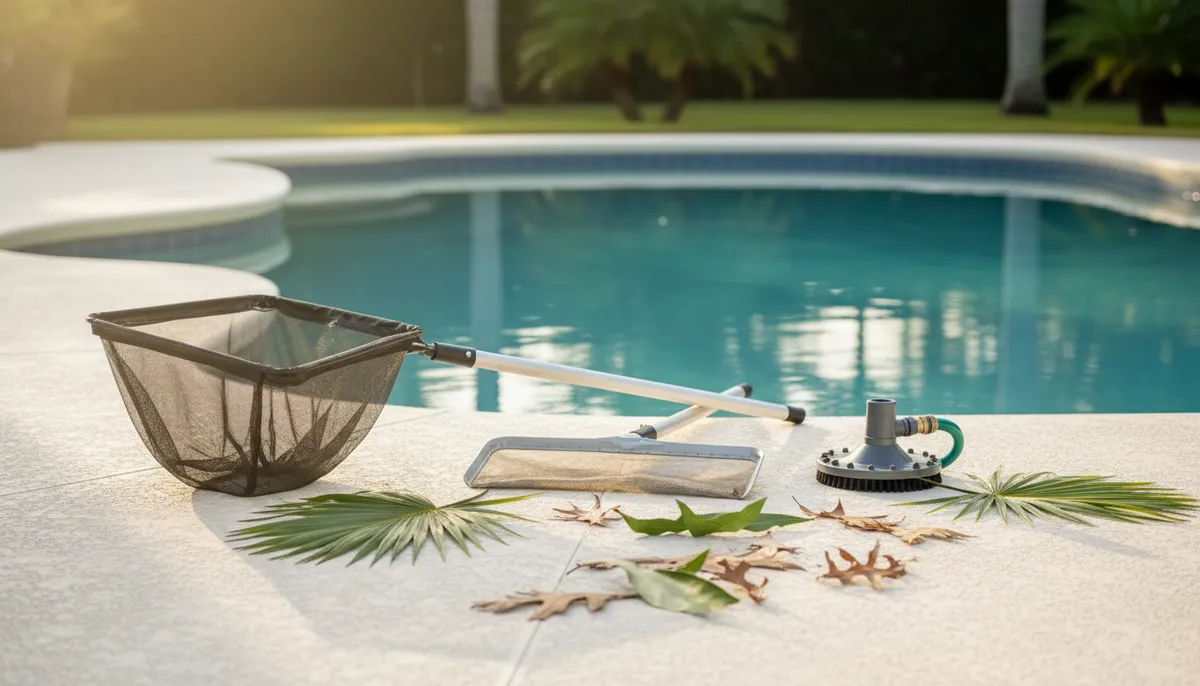
Not sure which tools are right for your pool? Here’s a simple breakdown to help you choose:
| Tool | Best For | Effort Level | Cost Range |
|---|---|---|---|
| Flat Skimmer Net | Light daily surface debris | Low | $10–$30 |
| Deep-Bag Leaf Rake | Heavy leaf loads after storms | Medium | $20–$50 |
| Manual Pool Vacuum | Sunken leaves on the floor | Medium-High | $30–$80 |
| Robotic Surface Skimmer | Continuous hands-free cleaning | Very Low | $100–$300 |
| Leaf Canister Attachment | Protecting pump during vacuuming | Low | $25–$60 |
How Often Should You Remove Leaves From Your Pool?
The honest answer depends on your yard. Here are general guidelines that work for most Tampa pool owners:
- Surface skimming: Daily, or at minimum every other day
- Skimmer basket checks: Every 1–2 days during heavy leaf season
- Pool vacuuming: Weekly for most pools, more often after storms
- Pump basket checks: Weekly
- Professional full-service cleaning: Weekly for best results
Pools surrounded by oak, palm, or other leafy trees may need more frequent attention. The IPSSA (Independent Pool and Spa Service Association) recommends consistent maintenance schedules as the most effective way to prevent debris-related water quality problems.
What Happens When You Ignore Pool Leaf Removal?
Skipping leaf removal even for a few days can lead to a chain reaction of problems. Here’s what tends to happen:
- Leaves sink and begin to decompose within 24–48 hours
- Decomposing leaves release organic matter that consumes chlorine
- Low chlorine allows algae to take hold quickly
- Water turns cloudy, then green
- Staining appears on pool surfaces and tile
- Skimmer and pump baskets clog, reducing circulation
- Filtration system becomes overloaded and may require repairs
That’s a lot of consequences from a few overlooked leaves! If algae has already taken over your pool, don’t panic — read about how to remove pool algae and restore crystal-clear water to get your pool back on track.
Why Tampa Pool Owners Trust Panther Pools
At Panther Pools, we understand that Tampa’s warm climate and lush landscapes mean pool leaf removal is a year-round concern — not just a fall chore. Our professional technicians handle everything from surface skimming and vacuuming to full water balancing and equipment checks. We’re proud to hold our Certified Pool Operator credential (CPO 648855) and serve both residential and commercial clients seven days a week.
Whether you need help after a big storm or just want the peace of mind that comes with a reliable pool cleaning service in Tampa, we’re here to help. No rush jobs, no shortcuts — just clean, sparkling water every time you look out your back door.
Final Thoughts on Pool Leaf Removal
Keeping your pool free of leaves doesn’t have to feel like a chore. With the right tools, a consistent routine, and maybe a little help from the pros, your pool can stay clean and inviting no matter how many trees surround it. Remember: the sooner you remove leaves, the easier the job is. Daily skimming, regular vacuuming, and smart prevention strategies like covers and tree trimming all work together to protect your pool’s water quality and equipment.
Ready to stop chasing leaves and start enjoying your pool? Get in touch with our team at Panther Pools for a free estimate and find out how our weekly service plans take the work completely off your plate. You deserve a pool that’s always ready when you are!
FAQs
Q: What is the best way to remove leaves from a pool?
A: The best approach is to skim the surface daily with a leaf net or deep-bag rake before leaves sink, then vacuum the pool floor weekly to pick up any debris that settled. Staying consistent with this routine keeps your pool looking great and protects your equipment from clogs!
Q: Can leaves really damage my pool filter or pump?
A: Absolutely — leaves are one of the most common causes of clogged skimmer baskets and pump baskets, which reduces water flow and puts extra strain on your filtration system. Catching and removing leaves early is one of the easiest ways to protect your pool equipment and avoid costly repairs.
Q: How often should I remove leaves from my pool?
A: For most Tampa pools, daily surface skimming and weekly vacuuming is the sweet spot. If your yard has lots of trees or you’ve had a big storm recently, bump that up to skimming every day and checking your baskets every couple of days — your pool will thank you!
Q: Do robotic skimmers actually work for pool leaf removal?
A: Yes, robotic and solar-powered surface skimmers are a fantastic hands-free option that continuously collect floating debris before it sinks. They work best as a complement to your regular skimming routine rather than a complete replacement, especially after heavy leaf fall or storms.
Q: Should pool leaf removal be part of a weekly professional service?
A: Yes! A professional weekly pool cleaning service always includes thorough leaf skimming, basket emptying, and vacuuming as part of the full routine. It’s one of the best investments you can make to keep your pool clean, safe, and ready to enjoy without any of the effort on your end.