
Key Takeaways
-
Test your pool water 2-3 times per week, especially during peak season, as chemistry can shift quickly due to rain, heat, and heavy use—you cannot manage what you do not measure.
-
Balance total alkalinity (80-120 ppm) before adjusting pH, as alkalinity acts as a buffer that keeps pH stable and easier to control.
-
Maintain free chlorine at 1-3 ppm and use cyanuric acid stabilizer (30-50 ppm) in outdoor pools to protect chlorine from UV rays that break it down faster in Tampa’s warm climate.
-
Add pool chemicals in the correct order: test water, adjust alkalinity, adjust pH, add calcium hardness, add chlorine/shock, then algaecide—waiting 15 minutes between each addition.
-
Perform regular shock treatments after heavy rain or pool parties to destroy chloramines and early-stage algae, not just when the pool turns green.
-
Store pool chemicals in a cool, dry, separated location away from oxidizers and chlorine products, and call a professional if you notice persistent cloudiness, recurring algae, or equipment issues.
Your pool looks sparkling clean, but something feels off. Maybe the water is a little cloudy. Maybe your eyes sting after a swim. Or perhaps a green tinge is creeping along the walls. Sound familiar? These are classic signs that your pool water chemistry is out of balance — and trust us, you are not alone.
Getting pool chemistry right might seem complicated at first. But once you understand the basics, it becomes second nature. The good news is that most pool problems come from the same handful of mistakes. In this guide, we will walk you through the 11 most common pool water chemistry mistakes Tampa pool owners make — and exactly how to fix them. Whether you are a new pool owner or a seasoned backyard swimmer, there is something here for everyone.
Why Pool Water Chemistry Matters So Much
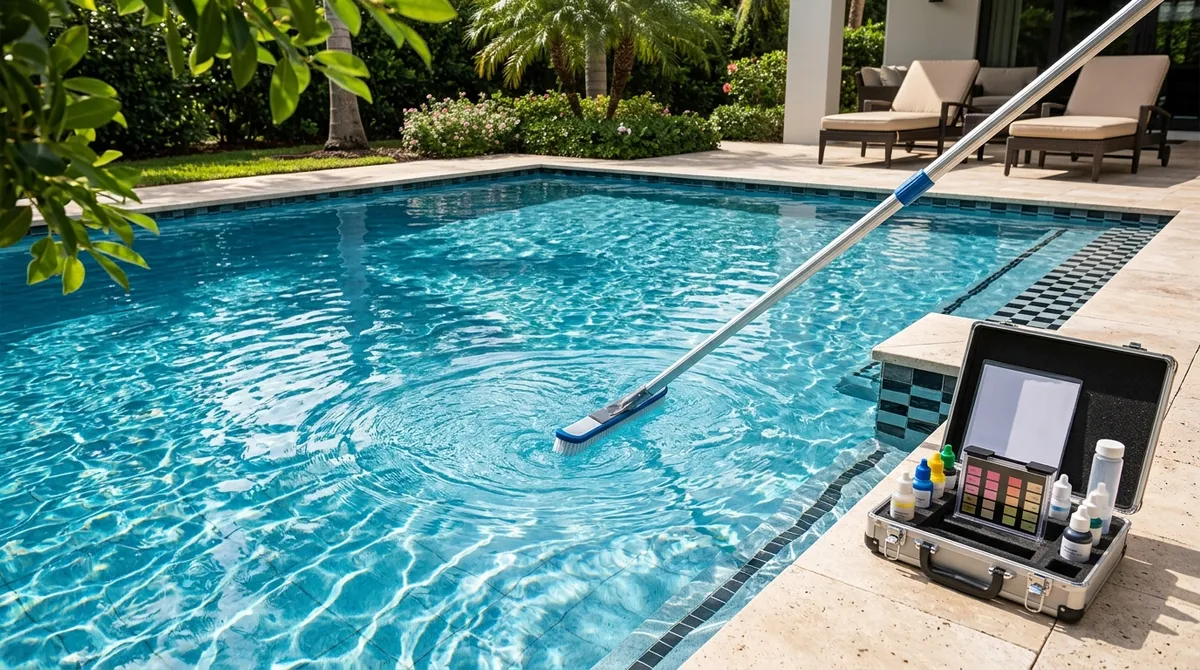
Balanced pool water is not just about looks. It protects your health, your equipment, and your investment. When chemistry is off, bacteria and algae thrive. Corrosion can damage pumps, heaters, and filters. Skin and eye irritation become common complaints. Staying on top of your pool water balancing is one of the most important things you can do as a pool owner.
According to the EPA Pool Resources, properly balanced pool water also helps reduce water waste and unnecessary chemical use. That is a win for your wallet and the environment.
The 11 Pool Water Chemistry Mistakes to Stop Making
Mistake 1: Never Testing Your Water Regularly
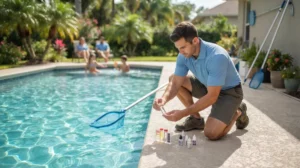
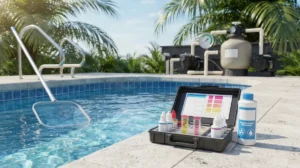
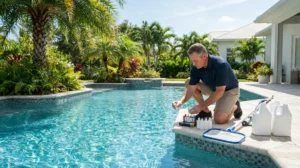
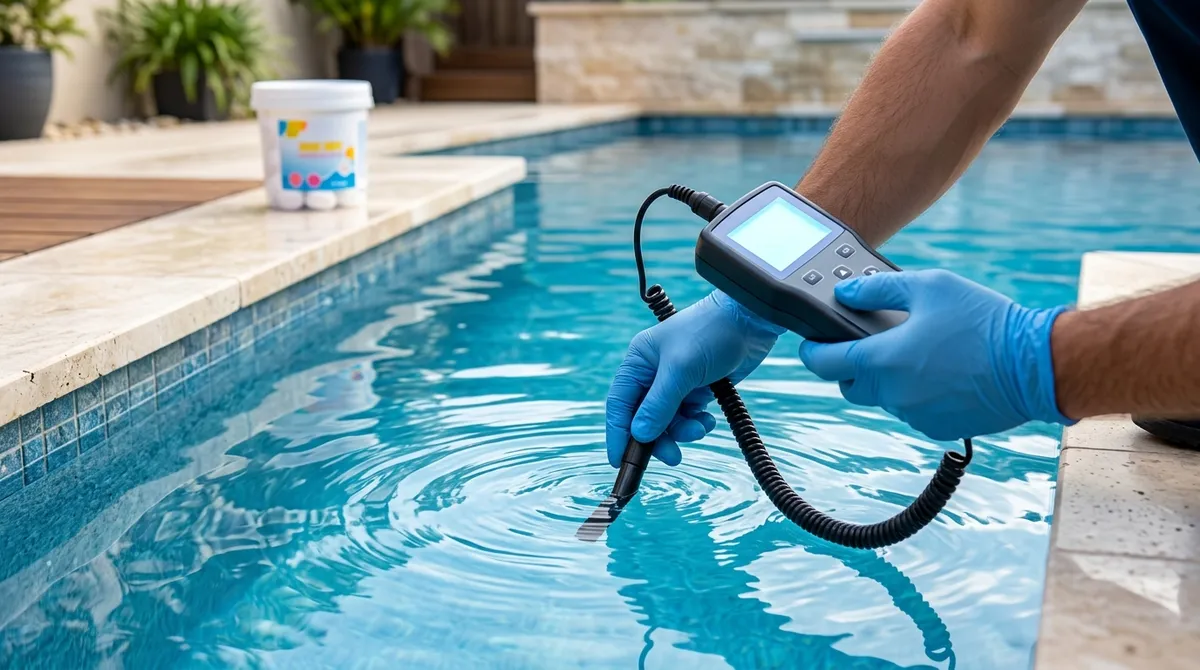
This is the number one mistake pool owners make. You cannot manage what you do not measure. Pool water chemistry can shift quickly, especially after heavy rain, hot Tampa sun, or a pool party. Testing just once a week at minimum is essential. Ideally, test two to three times per week during peak swim season.
Not sure which testing method is best for you? Check out this helpful comparison of test strips vs. liquid kits to find the right fit for your routine.
Mistake 2: Ignoring pH Levels
pH is the backbone of pool water chemistry. The ideal pH range is 7.2 to 7.8. Too low, and your water becomes acidic — corroding metal parts and irritating skin. Too high, and chlorine loses its ability to sanitize effectively. Use soda ash to raise pH and muriatic acid to lower it. Keep a close eye on this number every single week.
Mistake 3: Not Balancing Total Alkalinity First
Many pool owners try to fix pH without first adjusting total alkalinity. This is a big mistake. Alkalinity acts as a buffer for pH. When it is in the right range (80 to 120 ppm), pH stays stable and easier to control. Use sodium bicarbonate (baking soda) to raise low alkalinity. Always balance alkalinity before tweaking your pH.
Mistake 4: Letting Chlorine Levels Drop Too Low
Chlorine is your pool’s primary defense against bacteria and algae. The ideal free chlorine level is between 1 and 3 ppm. When it drops below 1 ppm, harmful microorganisms can multiply rapidly. This is especially risky in Florida’s warm climate, where heat and UV rays burn off chlorine faster than in cooler states.
Here is a quick reference for ideal pool water chemistry levels:
| Parameter | Ideal Range | Common Adjuster |
|---|---|---|
| Free Chlorine | 1–3 ppm | Chlorine tablets or liquid chlorine |
| pH | 7.2–7.8 | Soda ash (raise) / Muriatic acid (lower) |
| Total Alkalinity | 80–120 ppm | Sodium bicarbonate (raise) |
| Calcium Hardness | 200–400 ppm | Calcium chloride (raise) |
| Cyanuric Acid (CYA) | 30–50 ppm | Stabilizer / conditioner |
Mistake 5: Forgetting Cyanuric Acid in Outdoor Pools
Tampa pools get a lot of sunshine. That UV exposure destroys chlorine fast. Cyanuric acid (CYA), also called pool stabilizer or conditioner, protects chlorine from breaking down in sunlight. The ideal CYA level for outdoor pools is 30 to 50 ppm. Too little and your chlorine disappears quickly. Too much and chlorine becomes less effective at killing bacteria.
Mistake 6: Skipping Pool Shock Treatments
Pool shocking is not just for green pools. It should be a regular part of your maintenance routine. Shock treatments use oxidizers like calcium hypochlorite (cal-hypo) to destroy chloramines, contaminants, and early-stage algae. Shock your pool after heavy rain, a big swim party, or whenever the water starts to look dull or hazy. Learn more about how to remove pool algae when things get out of hand.
Mistake 7: Neglecting Calcium Hardness
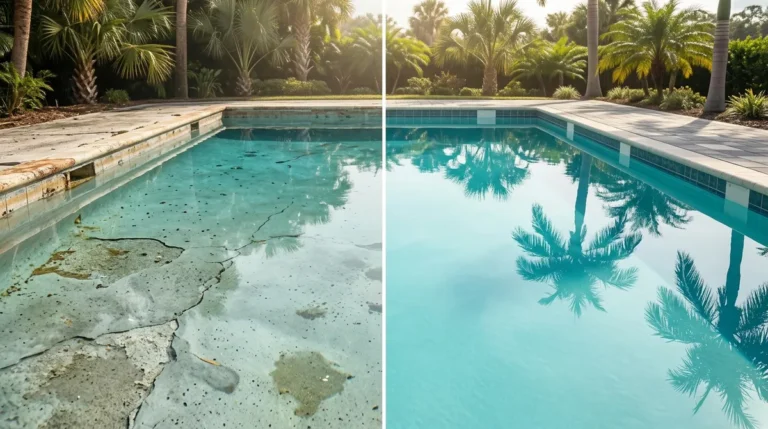
Calcium hardness often gets overlooked, but it plays a huge role in protecting your pool. The ideal range is 200 to 400 ppm. When levels drop below 150 ppm, water becomes aggressive and starts pulling calcium from your plaster, tiles, and equipment — causing serious damage over time. When levels get too high, you end up with cloudy water and stubborn scaling.
If you are noticing unusual wear on your pool surfaces, it might be time to explore pool resurfacing signs before the damage gets worse.
Mistake 8: Ignoring Phosphate Levels
Phosphates are a hidden enemy in pool water chemistry. They are introduced through rainwater, debris, fertilizers, and even some pool chemicals. Phosphates are essentially food for algae. When levels rise, algae blooms become more likely and harder to control. Use a phosphate remover to keep levels low and stay ahead of algae problems before they start.
Mistake 9: Adding Chemicals in the Wrong Order
The order in which you add pool chemicals matters a lot. Adding them in the wrong sequence can cause dangerous reactions and reduce their effectiveness. Here is the correct order to follow:
- Test water to identify what needs adjusting
- Adjust total alkalinity first
- Adjust pH to the correct range
- Add calcium hardness increaser if needed
- Add chlorine or shock treatment
- Add algaecide or clarifier last if needed
Always add chemicals one at a time and wait at least 15 minutes between additions. Never mix chemicals together before adding them to the pool. For more guidance on this, the IPSSA (Independent Pool and Spa Service Association) offers excellent resources for pool care best practices.
Mistake 10: Poor Chemical Storage Habits
How you store your pool chemicals is just as important as how you use them. Improper storage can cause chemical degradation, hazardous reactions, and safety risks for your family. Here are the key storage rules to follow:
- Store chemicals in a cool, dry, well-ventilated area
- Keep different chemicals separated from each other
- Never store oxidizers near chlorine products
- Keep containers tightly sealed to prevent moisture exposure
- Store chemicals out of reach of children and pets
- Check expiration dates regularly and dispose of old products safely
Want a deeper look at this topic? Read about DIY vs. pro pool chemical storage for a full comparison of safe practices.
Mistake 11: Waiting Too Long to Call a Professional
There is no shame in asking for help. In fact, getting a professional to manage your pool water chemistry regularly is one of the smartest moves a Tampa pool owner can make. Persistent cloudy water, recurring algae, equipment issues, and stubborn imbalances are signs that it is time to bring in the experts.
The Florida Swimming Pool Association (FSPA) recommends professional pool inspections and service to ensure water safety and equipment longevity. A trained eye catches problems early — before they become expensive headaches.
How Often Should You Test and Treat Your Pool?
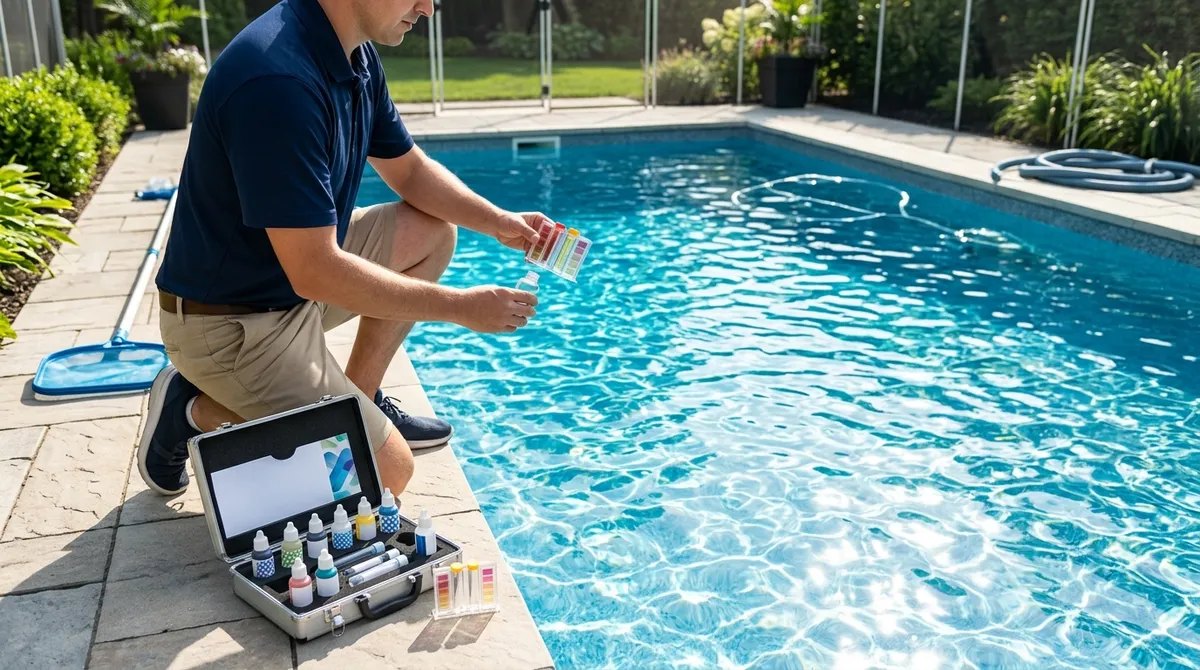
Creating a consistent schedule makes pool water chemistry much easier to manage. Here is a simple routine that works well for most Tampa pool owners:
- 2–3 times per week: Test pH and free chlorine levels
- Weekly: Test total alkalinity, calcium hardness, and CYA
- Weekly: Add chemicals as needed based on test results
- Bi-weekly: Shock the pool, especially after heavy use or rain
- Monthly: Have a professional perform a full water analysis
Sticking to a schedule prevents small problems from turning into big ones. If you want to get more organized with your overall pool care, explore these helpful pool maintenance tips every Tampa owner needs in 2026.
Signs Your Pool Water Chemistry Is Off
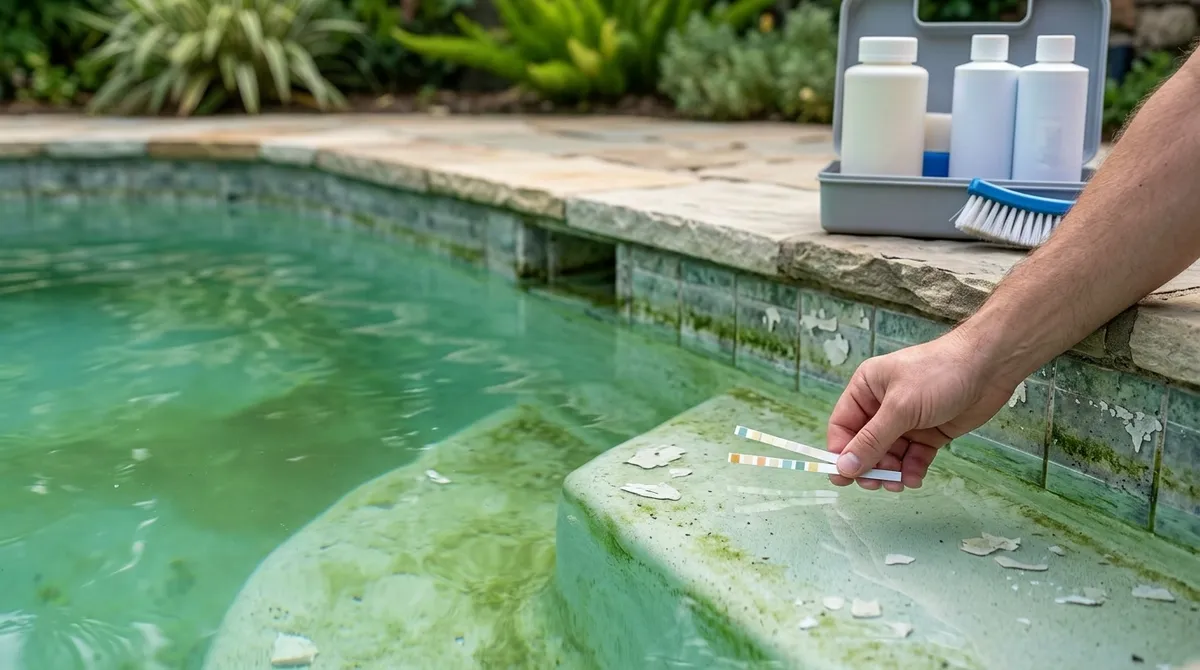
Sometimes the water tells you something is wrong before you even test it. Watch for these warning signs:
- Cloudy or murky water that will not clear up
- Green, yellow, or black algae growth on walls or floors
- Strong chemical smell (often a sign of too many chloramines)
- Skin and eye irritation after swimming
- Visible scaling or staining on pool surfaces
- Foamy water on the surface
If you are dealing with cloudy water or persistent algae, your pool water chemistry is almost certainly the root cause. A professional service visit can quickly identify and fix the issue. You can also learn more about what proper swimming pool maintenance really involves to set the right expectations.
The Role of Pool Equipment in Water Chemistry
Good pool water chemistry does not happen in isolation. Your filtration system, pump, and other equipment play a major role in keeping water clean and balanced. A clogged filter reduces circulation, which means chemicals do not distribute evenly. A faulty pump means water sits stagnant — a perfect breeding ground for bacteria.
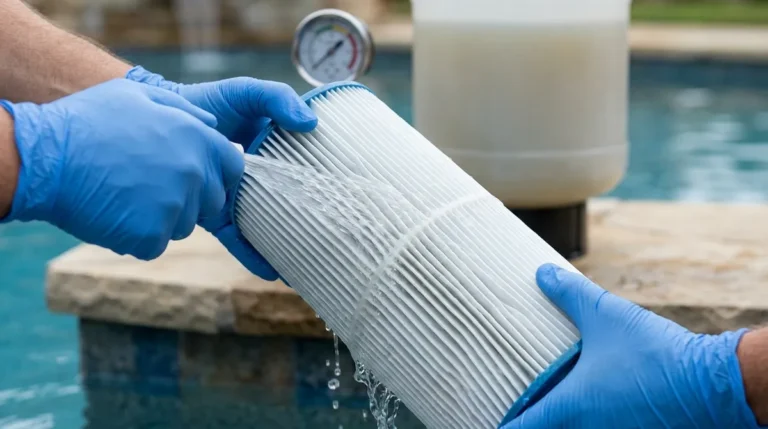
Make sure your pool filters are properly maintained and your pool pump is in good working order. Equipment health and water chemistry go hand in hand. Neglect one, and the other suffers.
When to Consider Professional Pool Water Chemistry Services
Managing pool water chemistry on your own is totally doable — but it does take time, attention, and consistency. Many Tampa homeowners find that a monthly or weekly professional service takes the guesswork out of pool care entirely.
At Panther Pools, our certified technicians handle everything from water testing to chemical balancing, equipment checks, and full cleanings. We serve residential and commercial pools throughout Tampa with 7-days-a-week support and free estimates. You get peace of mind and a beautiful, safe pool without the stress.
Whether you need weekly service or just want an occasional professional check-in, our pool cleaning services in Tampa are designed to fit your lifestyle and schedule.
Quick Comparison: DIY vs. Professional Pool Chemistry Management
| Factor | DIY Approach | Professional Service |
|---|---|---|
| Testing Frequency | Depends on owner commitment | Consistent, scheduled visits |
| Chemical Accuracy | Varies by experience | Precise, professional-grade testing |
| Equipment Monitoring | Often overlooked | Included with every visit |
| Problem Detection | May catch issues late | Early identification and resolution |
| Time Commitment | High (multiple hours per week) | None for the homeowner |
Final Thoughts and Next Steps
Pool water chemistry does not have to be overwhelming. By avoiding these 11 common mistakes, you set yourself up for a clean, safe, and enjoyable pool all year long. Test regularly, balance your chemicals in the right order, keep your equipment in top shape, and do not wait too long to call in a pro when you need one.
Tampa’s warm climate means your pool gets a serious workout every single month. That makes regular attention to pool water chemistry even more important here than in most parts of the country. The effort you put in now saves you from expensive repairs and frustrating problems down the road.
Ready to take the stress out of pool care? Get in touch with our team at Panther Pools for a free estimate and find out how our expert technicians can keep your pool water chemistry perfectly balanced all year long. Your family deserves a clean, safe, and beautiful pool — and we are here to make that happen.
FAQs
Q: What are the ideal chemical levels for pool water?
A: Great question! The key targets to aim for are: free chlorine at 1–3 ppm, pH between 7.2 and 7.8, total alkalinity at 80–120 ppm, calcium hardness at 200–400 ppm, and cyanuric acid at 30–50 ppm for outdoor pools. Keeping all of these in range keeps your water safe, clear, and comfortable to swim in.
Q: How often should I test my pool water chemistry?
A: We recommend testing pH and free chlorine at least two to three times per week, especially during Tampa’s hot swim season. Test alkalinity, calcium hardness, and CYA once a week. A monthly professional water analysis is also a smart idea to catch anything you might have missed.
Q: Why is my chlorine not working even though I am adding it regularly?
A: This is a really common frustration! The most likely culprits are high pH (above 7.8), low cyanuric acid allowing UV to destroy chlorine, or high phosphate levels fueling algae growth. Test all your levels, not just chlorine, and address pH and stabilizer first — then your chlorine should start working much more effectively.
Q: What causes cloudy pool water and how can I fix it?
A: Cloudy water is usually caused by imbalanced chemistry — most often high pH, low chlorine, or high calcium hardness. It can also result from a dirty filter or poor circulation. Start by testing your water, correcting any imbalances, shocking the pool if needed, and making sure your filter and pump are running properly.
Q: How do I lower high calcium hardness in my pool?
A: Unfortunately, there is no chemical you can add to directly lower calcium hardness — the most effective solution is to partially drain the pool and refill it with fresh water that has lower calcium content. A professional pool service can help you determine how much water to replace and rebalance all your chemistry afterward.