
Key Takeaways
-
Brush pool walls at least twice a week to prevent algae and debris buildup; more frequent brushing is needed in warm climates where algae grows faster.
-
Always match your brush type to your pool surface: use soft polypropylene for vinyl and fiberglass, and stainless steel or nylon combo for concrete and plaster to avoid damage.
-
Follow the correct cleaning sequence: brush walls before vacuuming, as brushing dislodges debris into the water for the vacuum to collect from the pool floor.
-
Don’t neglect overlooked areas like the waterline, corners, steps, and crevices where algae loves to hide; use smaller corner brushes for tight spots.
-
Apply firm, consistent pressure when brushing and use a systematic top-to-bottom approach to guide debris toward your drain, not random strokes that spread it around.
-
Brush immediately after treating algae with shock or algaecide to dramatically improve treatment effectiveness, as chemicals need direct contact with broken-up algae on surfaces.
Your pool walls might look clean from the outside, but appearances can be deceiving. Hidden algae, slimy buildup, and stubborn debris love to cling to pool surfaces — and if you’re not brushing your pool walls correctly, you could be making things worse without even knowing it. Whether you’re a brand-new pool owner or you’ve had a backyard pool for years, brushing mistakes are incredibly common and can lead to costly repairs down the road.
The good news? Every single one of these mistakes is totally avoidable. In this guide, we’re breaking down the 14 most damaging pool wall brushing mistakes so you can protect your investment, keep your water sparkling, and actually enjoy your pool all season long. Let’s dive in!
Why Brushing Pool Walls Actually Matters
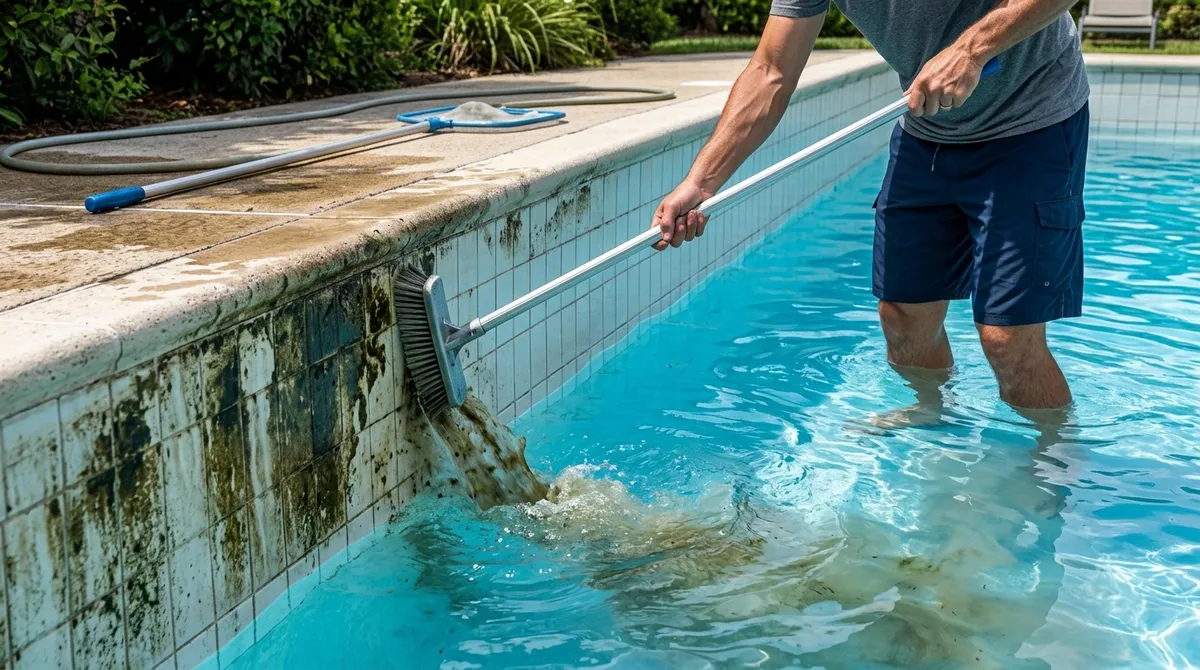
Before we get into the mistakes, let’s talk about why brushing your pool walls is such a big deal. Algae, dirt, and slimy residue don’t just float in your water — they attach themselves to surfaces. Pool walls, steps, corners, and the waterline are prime real estate for buildup. According to PoolSupplies.com, brushing your pool at least twice a week is the best way to prevent algae and debris from gaining a foothold on your surfaces.
Regular brushing also helps your pool chemicals work more effectively. When you break up surface buildup, sanitizers like chlorine can do their job far more efficiently. Skipping this step forces your pool’s filtration system to work harder — which means more wear on your equipment over time. For more on keeping your equipment in great shape, check out this helpful guide on maintaining your pool’s filters.
The 14 Pool Wall Brushing Mistakes to Stop Making
Mistake 1: Not Brushing Often Enough
Many pool owners brush their walls once a week — or even less. Experts recommend brushing at least twice a week. In Tampa’s warm climate, algae can grow surprisingly fast, so more frequent brushing is always better.
Mistake 2: Using the Wrong Brush for Your Pool Surface
This is one of the most damaging mistakes you can make. Different pool surfaces need different brushes. Here’s a simple breakdown:
| Pool Surface Type | Recommended Brush | Why It Matters |
|---|---|---|
| Vinyl Liner | Soft polypropylene bristle brush | Prevents tears and punctures |
| Fiberglass | Soft polypropylene bristle brush | Avoids scratching the gel coat |
| Concrete / Plaster | Stainless steel or nylon combo brush | Tough enough to remove embedded algae |
Using a stainless steel bristle brush on a vinyl liner pool can tear right through the surface. Always match your brush type to your pool material. If you’re unsure what kind of surface your pool has, the team at Panther Pools’ Tampa cleaning services can help you figure it out quickly.
Mistake 3: Skipping the Corners and Steps
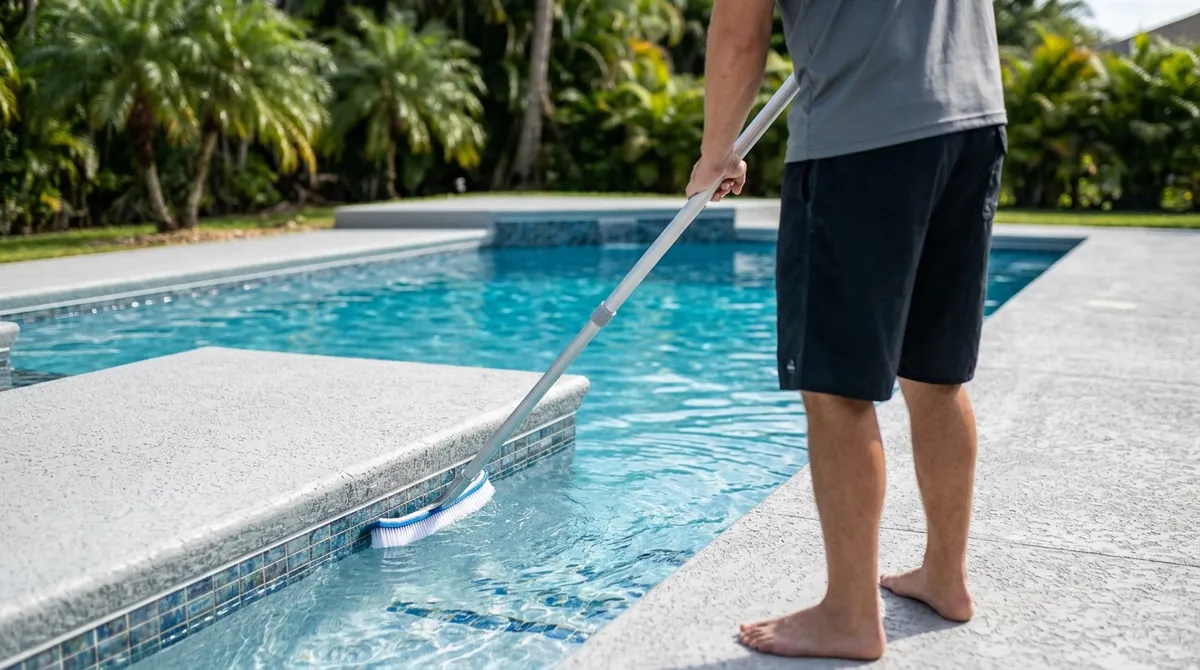
Pool walls get most of the attention, but corners, steps, and crevices are where algae really loves to hide. A rectangular wall brush can’t always reach these tight spots. You’ll want a smaller corner brush designed for these areas to make sure nothing gets missed.
Mistake 4: Brushing After Vacuuming
The order matters more than most people realize. You should always brush pool walls before you vacuum. Brushing dislodges debris and sends it into the water — and then vacuuming picks it all up. If you vacuum first and then brush, you’re just creating more work for yourself.
Here’s the correct cleaning order to follow:
- Test and balance your water chemistry first
- Skim the surface to remove floating debris
- Brush all pool walls, steps, and corners
- Vacuum the pool floor to remove settled debris
- Check and clean your pool filter
Mistake 5: Not Attaching the Brush to a Telescoping Pole
A pool brush without a telescoping pole is basically useless for reaching the far walls and the deep end. Always use a sturdy telescoping pole to ensure full coverage. A standard wall brush — like the popular 17-inch polypropylene models — is designed to attach easily to these poles for faster surface coverage.
Mistake 6: Brushing Too Gently
Light, casual strokes won’t cut it when you’re dealing with algae or buildup. You need to apply firm, consistent pressure to actually dislodge what’s clinging to your pool walls. Think of it like scrubbing a dirty dish — a gentle wipe won’t get the grime off.
Mistake 7: Ignoring the Waterline
The waterline is one of the dirtiest spots on your entire pool. Body oils, sunscreen, and mineral deposits collect right at the water’s surface. Many pool owners brush the walls below the waterline but completely forget this zone. Make sure your brush strokes always include the waterline area to prevent unsightly buildup and staining. Learn more about tackling tough buildup in our guide on how to remove pool stains and restore crystal-clear water.
Mistake 8: Assuming a Robotic Cleaner Does the Job
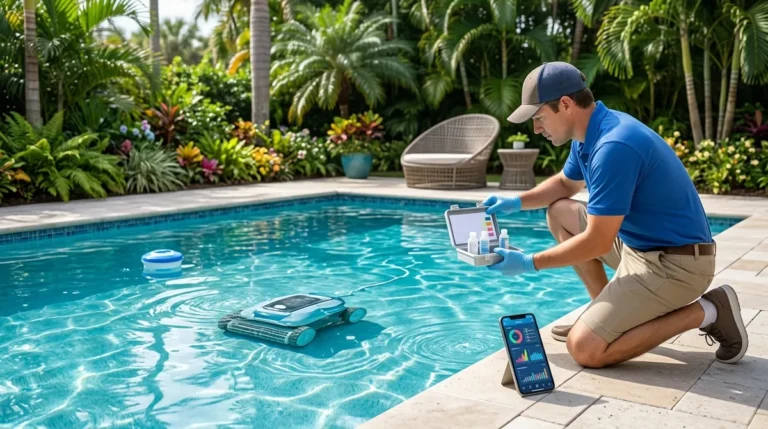
Robotic pool cleaners are fantastic tools, but they are not a replacement for manual brushing. Most robotic cleaners focus on the pool floor and may not reach upper walls, corners, or steps effectively. Manual brushing is still essential — even if you own a robot. For more on what automatic cleaners can and can’t do, check out this overview of automatic pool cleaners near me that actually work.
Mistake 9: Brushing with an Old, Worn-Out Brush
Bristles wear down over time. A flat, splayed brush won’t clean effectively and may even scratch delicate pool surfaces. Inspect your brush regularly and replace it when the bristles show obvious wear. This is a small investment that saves you bigger headaches later.
Mistake 10: Not Brushing After Treating for Algae
When you shock your pool or add algaecide, brushing your pool walls immediately afterward dramatically improves treatment effectiveness. The chemicals need direct contact with algae on the surface. Brushing breaks it up and allows the treatment to fully penetrate. Skipping this step can lead to persistent algae problems that are tough to beat. For a deeper look at this topic, read our guide on how to remove pool algae and restore crystal-clear water.
Mistake 11: Using a Brush That’s Too Small
Smaller brushes mean more passes to cover the same surface area. For large pool walls and floors, a wider brush — like a 17-inch model — is far more efficient and saves you significant time. Use smaller brushes only for tight corners and steps where a larger brush can’t fit.
Mistake 12: Brushing in Random Directions
Random brushing spreads debris everywhere without guiding it toward your drain or skimmer. Use a systematic approach instead:
- Start at the top of the wall near the waterline and work downward
- Use long, overlapping strokes for consistent coverage
- Work your way around the pool in one direction
- Brush steps and corners last, pushing debris toward the main drain
- Finish with a few passes across the pool floor
This method keeps debris moving toward your filtration system where it belongs. The Florida Swimming Pool Association (FSPA) recommends structured maintenance routines for optimal pool hygiene — and that includes systematic brushing techniques.
Mistake 13: Skipping Brushing During Off-Season or Winter Months
In Tampa, pools are used year-round — but even if you’re using your pool less during cooler months, algae and biofilm don’t take a vacation. Cutting back on brushing during quieter months invites buildup that becomes a major headache when swim season picks back up. Consistent brushing throughout the year is the smart play. If you want to know more about year-round pool care, our article on weekly pool maintenance to keep your pool clean all year is a great resource.
Mistake 14: Neglecting Professional Maintenance Altogether
Even the most dedicated DIY pool owners can miss spots, use the wrong technique, or simply run out of time. Skipping professional pool maintenance entirely is one of the biggest long-term mistakes you can make. Certified pool professionals know exactly how to brush pool walls correctly, identify early signs of algae or surface damage, and keep your pool in top-tier condition. According to the Independent Pool and Spa Service Association (IPSSA), regular professional maintenance dramatically extends the life of pool surfaces and equipment.
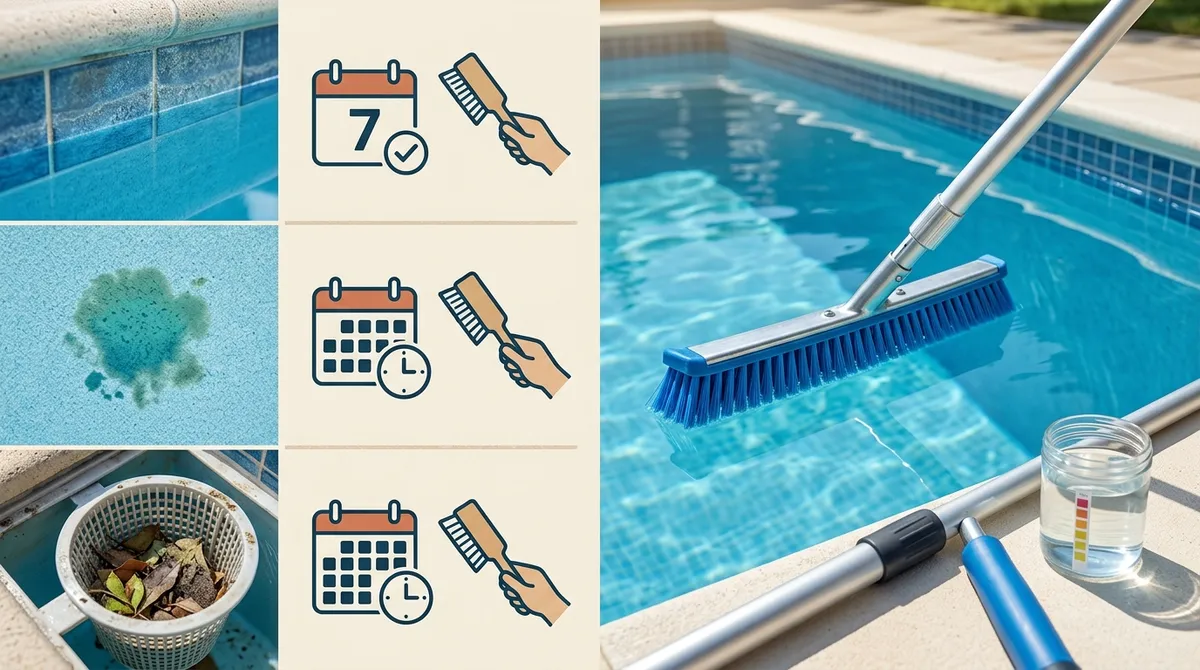
Quick Reference: What to Brush and How Often
| Pool Area | Recommended Frequency | Tool to Use |
|---|---|---|
| Main pool walls | 2x per week | 17-inch wall brush on telescoping pole |
| Waterline | 2x per week | Wall brush or waterline brush |
| Steps and stairs | 2x per week | Corner or step brush |
| Corners and crevices | 2x per week | Small corner brush |
| Pool floor | Weekly (at minimum) | Flat brush or vacuum head |
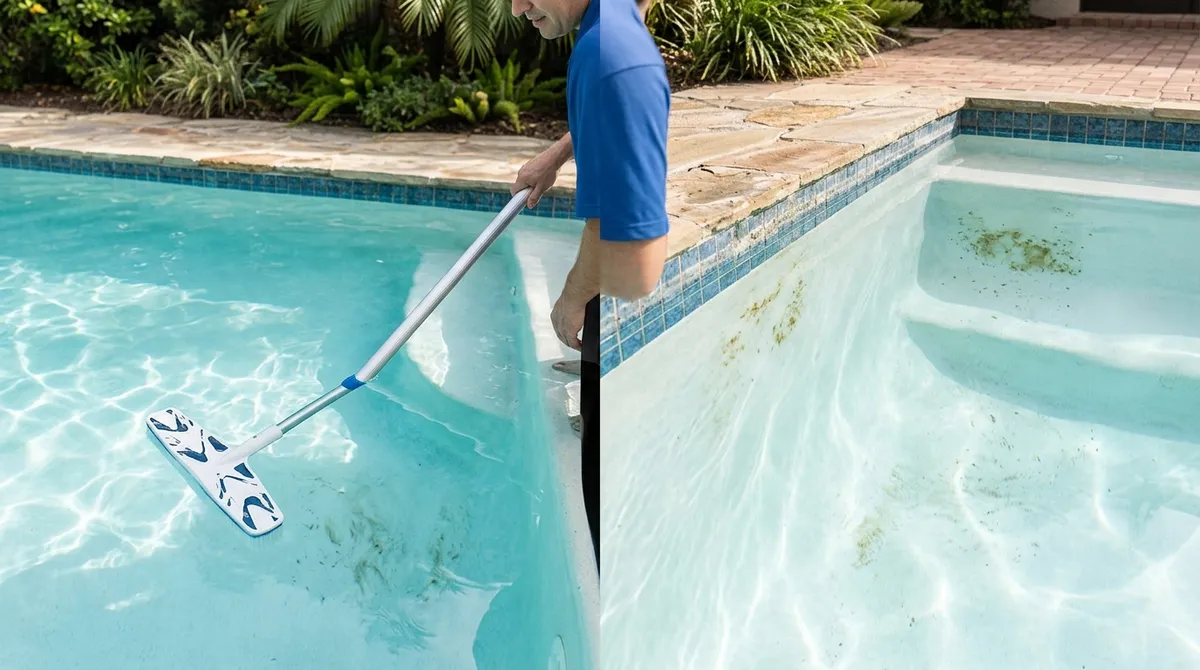
Common Signs You’re Not Brushing Pool Walls Correctly
Not sure if your current routine is working? Watch for these warning signs that your brushing habits need improvement:
- Green or yellowish patches forming on pool walls or steps
- Slimy or slippery surfaces when you touch the pool walls
- Persistent cloudiness even after chemical treatments
- Visible waterline scum or mineral deposits
- Algae returning quickly after treatment and shocking
- Staining or discoloration on plaster or concrete surfaces
If you’re seeing any of these signs, it’s time to rethink your brushing routine — and possibly call in the pros. You can also dive deeper into understanding water clarity issues with our guide on pool water chemistry mistakes you must stop making.
Tips for Getting the Most Out of Every Brushing Session
Want to make your pool wall brushing as effective as possible? Here are some practical tips to level up your routine:
- Brush on a schedule — same days each week — so it becomes a habit
- Always brush after heavy rain or a big pool party when more debris enters the water
- Run your pool pump while brushing to help filter out the loosened debris faster
- Check your pool chemistry before brushing to ensure sanitizer levels are correct
- Pair brushing with a quick visual inspection of your pool surface for cracks, stains, or damage
Good brushing habits work hand-in-hand with proper water chemistry. The EPA’s pool water efficiency guidelines also highlight the importance of regular maintenance routines in keeping pool water clean and safe for swimmers.
How Panther Pools Handles Pool Wall Brushing the Right Way
At Panther Pools, brushing pool walls is a core part of every professional maintenance visit. Our certified technicians (CPO #648855) know which brush to use for every surface type, follow a systematic cleaning sequence, and never cut corners. We serve residential and commercial pool owners across Tampa seven days a week, so your pool always gets the attention it deserves. Whether you need weekly service or a one-time deep clean, we’re here to help. You can explore our pool cleaning services in Tampa to find the right plan for your pool.
Regular brushing is just one piece of the puzzle. Pairing it with proper filtration, water balancing, and professional inspections gives you a pool that stays clean, safe, and beautiful all year long. If you’d like to learn more about the full scope of professional pool care, our article on what proper swimming pool maintenance really involves is a great starting point.
Conclusion: Don’t Let Brushing Mistakes Cost You
Brushing your pool walls seems simple — and it is, once you know what you’re doing. But the 14 mistakes covered in this guide can silently damage your pool surfaces, invite algae, and force expensive repairs that could have been easily avoided. The fix is straightforward: brush the right way, with the right tools, at the right frequency, and cover every surface — walls, steps, corners, and the waterline.
If you’d rather leave the hard work to someone you can trust, we’re just a call away. Get in touch with our team at Panther Pools for a free estimate and let Tampa’s premier pool cleaning professionals take brushing — and everything else — off your plate for good.
FAQs
Q: How often should you brush pool walls?
A: Brushing your pool walls at least twice a week is the sweet spot for most pools — and even more often in warm climates like Tampa where algae grows quickly. Making it a regular habit keeps buildup from ever getting out of hand, which means less work for you in the long run!
Q: What type of brush is best for pool walls?
A: It really depends on your pool surface! Soft polypropylene bristle brushes are perfect for vinyl liner and fiberglass pools, while stainless steel or combo brushes work great for concrete and plaster surfaces. Using the wrong brush can actually damage your pool, so always match the brush to your surface type.
Q: Should you brush pool walls before or after vacuuming?
A: Always brush first, then vacuum! Brushing dislodges dirt and algae from the walls and sends it into the water, and then vacuuming picks it all up from the pool floor. Doing it in reverse order just makes extra work for you — and nobody wants that!
Q: Can a robotic pool cleaner replace manual wall brushing?
A: Not quite! Robotic cleaners are wonderful helpers for the pool floor, but they typically can’t reach upper walls, corners, or steps effectively. Manual brushing of pool walls is still a must even if you own a robot cleaner — think of the robot as a great teammate, not a full replacement.
Q: What areas of the pool should be brushed besides the walls?
A: Great question! Besides the main pool walls, you should also brush the waterline, steps, stairs, corners, and crevices — these spots are algae’s favorite hiding places. Even the pool floor benefits from a good brushing before you vacuum, so don’t leave any surface untouched!