
Key Takeaways
-
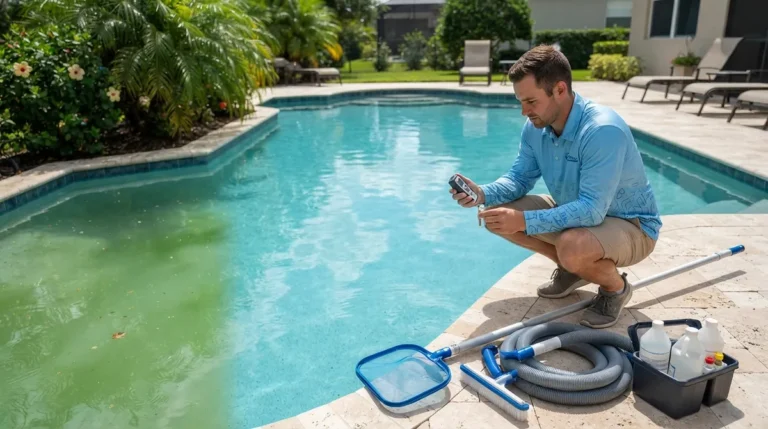
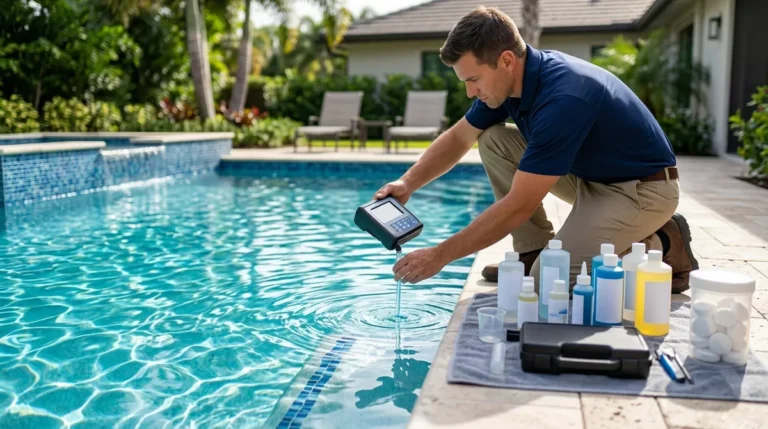
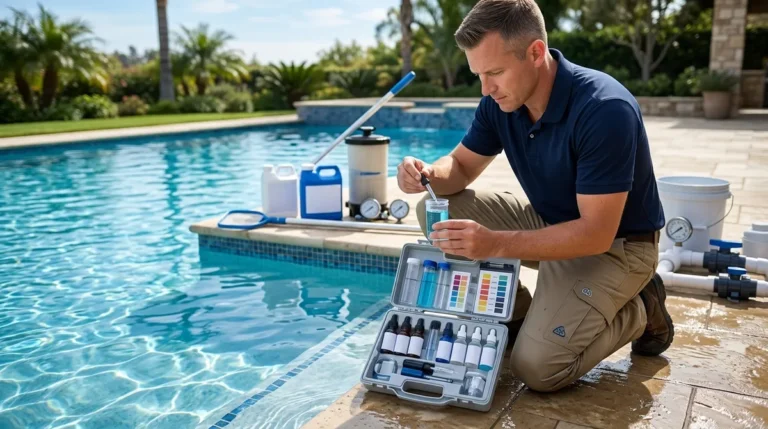
Test water chemistry weekly (pH 7.4-7.6, chlorine 1-3 ppm, alkalinity 80-120 ppm) to prevent bacterial growth and algae; this takes less than 5 minutes and is the foundation of pool maintenance.
-
Brush pool walls, floor, and steps weekly before vacuuming to dislodge algae and debris; vacuuming after brushing prevents settled material from returning to the bottom.
-
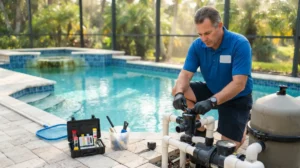
Backwash filters when pressure gauge reads 8-10 psi above baseline and rinse cartridge filters weekly; filter neglect strains pumps, increases energy bills, and causes expensive equipment failure.
-
Shock your pool in the evening after heavy use (parties, rain, cloudy water) with high-dose chlorine treatment; wait at least 8 hours before swimming to allow shock to work effectively.
-
Maintain water level at halfway up the skimmer opening weekly to prevent pump cavitation, which can destroy pump motors in minutes; Tampa’s heat causes 1+ inch evaporation weekly.
-
Run your pump 8-12 hours daily and inspect equipment weekly for leaks or unusual noises; consistent maintenance prevents algae blooms, equipment damage, and costly emergency repairs.
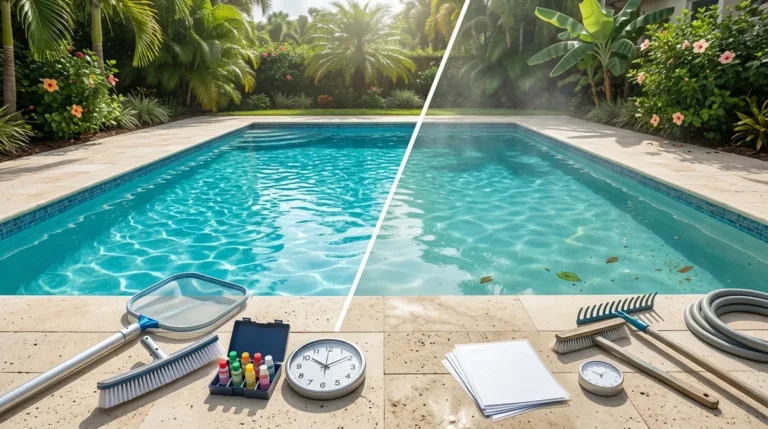
Owning a pool in Tampa is one of life’s great joys. Sunny days, backyard barbecues, and cool water on a hot Florida afternoon — it doesn’t get better than that. But here’s the thing: a pool that isn’t properly cared for can quickly go from paradise to problem. And most of the issues pool owners face? They trace right back to mistakes made during weekly pool cleaning.
Whether you’re a new pool owner still learning the ropes or a seasoned homeowner who’s been managing your pool for years, it’s easy to fall into habits that slowly damage your pool, waste your money, or create health hazards for your family. The good news is that these mistakes are totally avoidable. In this article, we’ll walk you through seven of the most common weekly pool cleaning mistakes and show you how to fix them — before they cost you big.
Mistake 1: Skipping Water Chemistry Testing
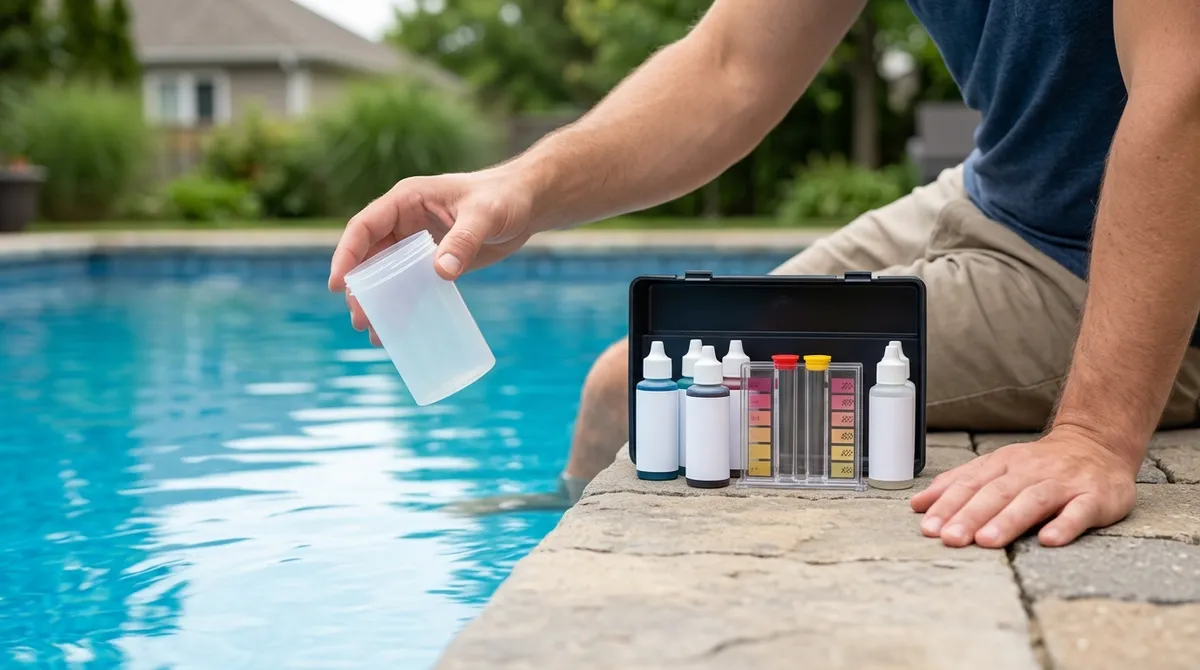
This is the number one mistake pool owners make. Skipping your water chemistry test even once a week can lead to unbalanced water fast. And unbalanced water doesn’t just look bad — it’s a breeding ground for bacteria and algae.
Here are the ideal water chemistry targets you should hit every week:
- pH level: 7.4–7.6
- Free chlorine: 1–3 ppm
- Total alkalinity: 80–120 ppm
- Calcium hardness: 200–400 ppm
- Cyanuric acid (stabilizer): 30–50 ppm
Testing your water should take less than five minutes. You can use test strips or a liquid test kit. For pools with heavy use — like during summer parties or after rain — consider testing twice a week. The EPA Pool Resources page offers helpful guidance on water quality and safe swimming environments. Don’t skip this step. It’s the foundation of everything else.
Mistake 2: Only Skimming the Surface
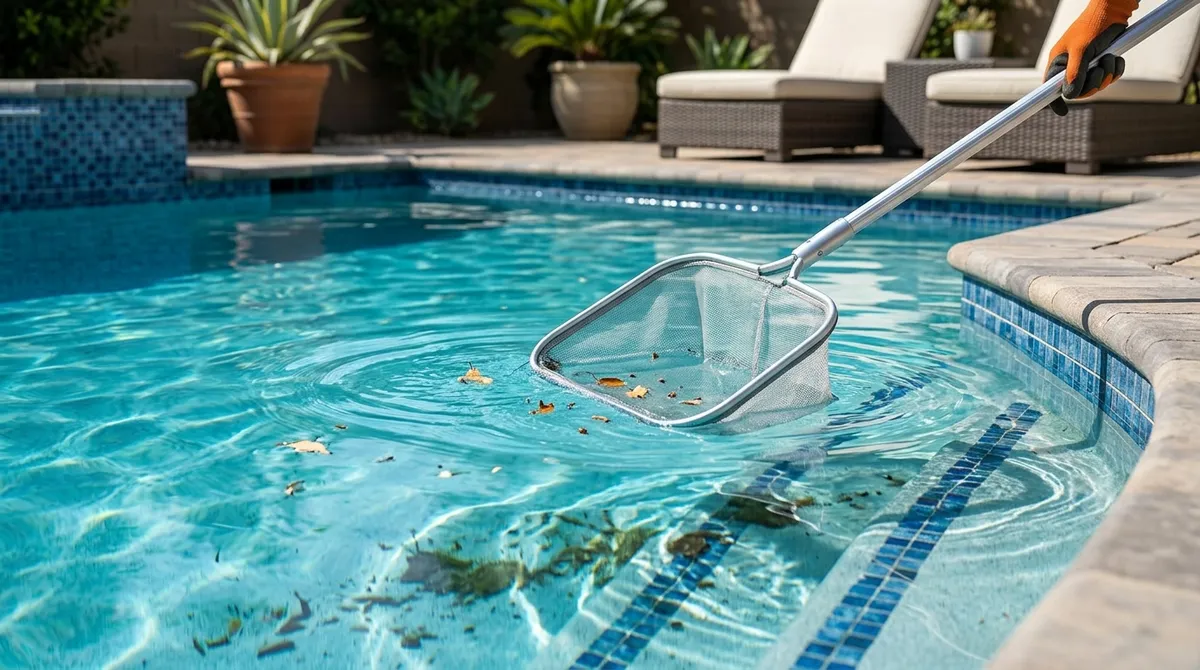
Skimming the surface is a great start, but it’s not enough on its own. Many pool owners skim the top and call it a day. Meanwhile, debris settles on the bottom and algae starts growing on the walls.
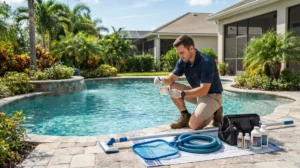
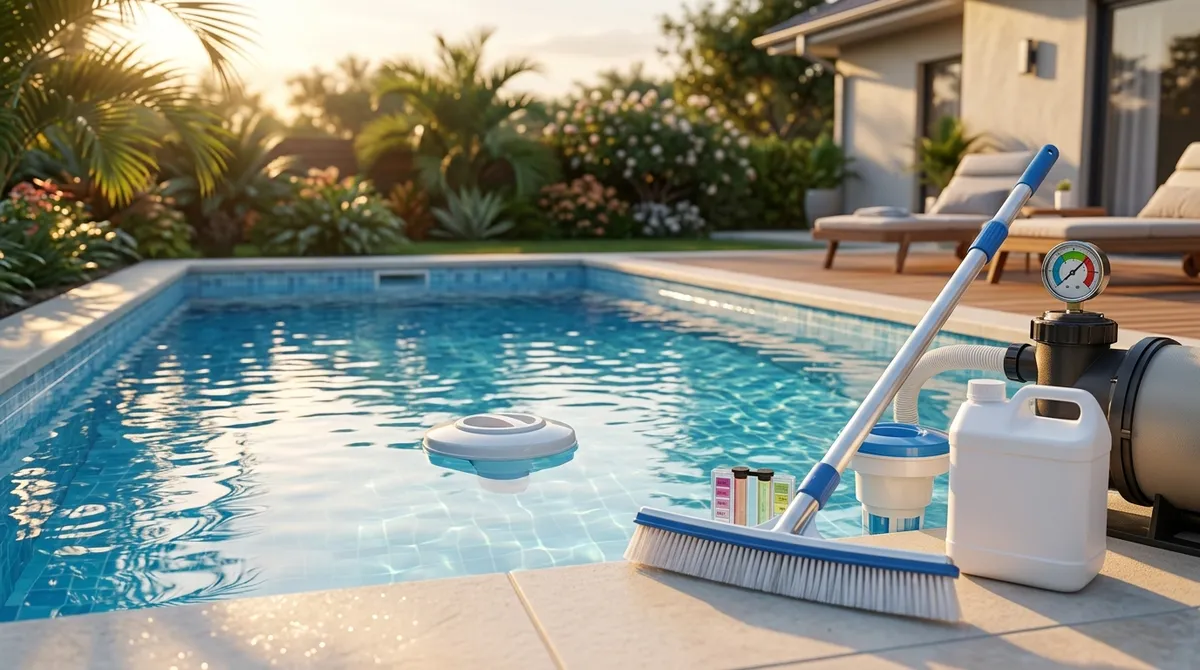
A proper weekly pool cleaning routine includes all of these steps in order:
- Skim the water surface to remove leaves, bugs, and floating debris.
- Brush the pool walls, steps, and floor to break up algae and buildup.
- Vacuum the pool floor to remove dirt and settled debris.
- Empty skimmer baskets and pump baskets to maintain water flow.
- Check and clean the filter to ensure proper filtration.
Brushing is especially important in Florida’s warm climate. Algae love heat, and Tampa pools are at constant risk. If you’re not brushing the walls weekly, you’ll be fighting green water far more often than you’d like. For more on maintaining your pool’s filters, be sure to check out that dedicated guide.
Mistake 3: Ignoring the Filter Until It Fails
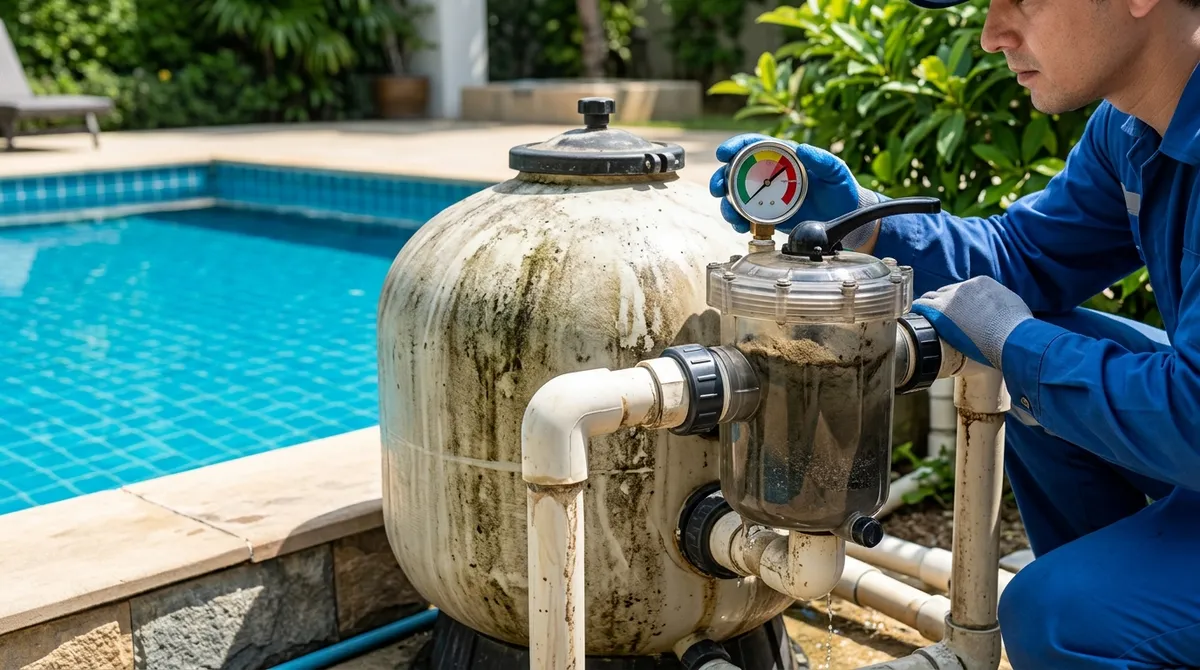
Your pool filter is working hard every single day. It catches dirt, debris, and contaminants before they make your water cloudy or unsafe. But when you ignore it during your weekly pool cleaning routine, it slowly loses its effectiveness.
Here’s a simple rule: backwash your filter when the pressure gauge reads 8–10 psi above the normal baseline. Don’t wait for the water to turn cloudy to take action. For cartridge filters, rinse them weekly and do a deep soak clean monthly.
Filter neglect is one of the most expensive mistakes you can make. A clogged or damaged filter strains your pump, raises your energy bill, and can lead to equipment failure. Learn more about pool filter repairs that save money in the long run.
Mistake 4: Not Shocking the Pool After Heavy Use
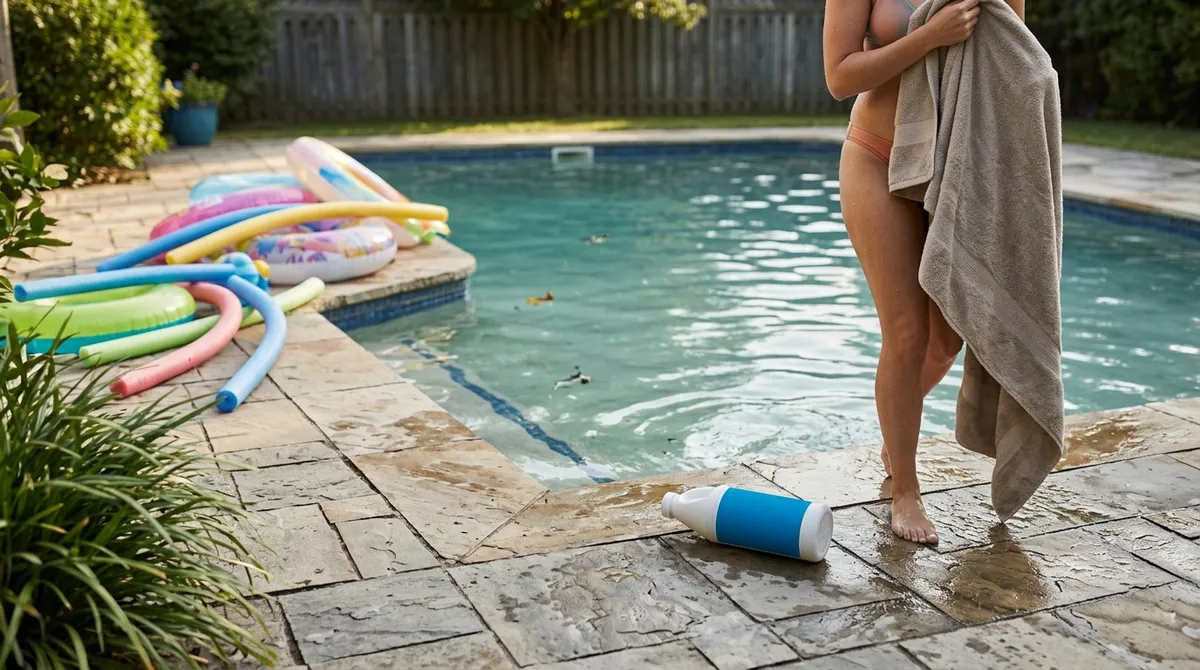
Had a pool party last weekend? A big family swim session? These are great memories — but they also introduce sweat, sunscreen, body oils, and other contaminants into your water. Regular chlorine levels often can’t keep up.
That’s why shocking your pool after heavy use is a crucial part of your weekly pool cleaning plan. Pool shock is a high-dose chlorine treatment that burns off chloramines and restores sanitizer effectiveness.
Here’s when you should shock your pool:
- After a large number of swimmers
- After heavy rain or storms
- When the water looks cloudy or smells strongly of chlorine
- After algae treatment
- At least once every 1–2 weeks during peak season
Always shock your pool in the evening or at night. Sunlight breaks down the chlorine before it can do its job. Add shock with the pump running and wait at least 8 hours before swimming.
Mistake 5: Letting the Water Level Drop Too Low
It sounds minor, but low water levels can seriously damage your pool equipment. When the water drops below the skimmer opening, your pump starts pulling in air instead of water. This is called cavitation, and it can destroy your pump motor in a matter of minutes.
Check your water level every week as part of your routine. The ideal level is halfway up the skimmer opening. If you notice your pump is making strange noises, check the water level immediately. To learn the signs you need pool pump repair, that article covers everything you need to know.
In Tampa’s hot summer months, evaporation can drop water levels by an inch or more per week. Keep a hose nearby and top off the pool as needed. Simple habit, big protection for your equipment.
Mistake 6: Brushing and Vacuuming in the Wrong Order
This one surprises a lot of pool owners. The order in which you complete your weekly tasks actually matters — a lot. Many people vacuum first and then brush the walls. This defeats the whole purpose.
When you brush the walls and floor, you dislodge algae and debris and send it floating into the water. If you’ve already vacuumed, all that loosened material just settles right back down on the bottom. You’ve done double the work for half the result.
Follow this correct order every week:
- Test water chemistry first so you know what adjustments to make.
- Add any needed chemicals and let them circulate.
- Brush all surfaces — walls, steps, corners, and floor.
- Allow brushed debris to settle for 30–60 minutes.
- Vacuum the pool floor thoroughly.
- Skim the surface last to catch anything still floating.
It’s a small adjustment, but it makes your weekly pool cleaning far more effective and saves you time in the long run.
Mistake 7: Trying to DIY Everything When Professional Help Is Needed
There’s real satisfaction in maintaining your own pool. But there are times when DIY just isn’t enough — and pushing through those moments can turn a small issue into a very expensive problem.
Here’s a quick comparison of DIY vs. professional weekly pool cleaning to help you decide what’s right for your situation:
| Factor | DIY Pool Cleaning | Professional Pool Cleaning |
|---|---|---|
| Monthly Cost | $70–$150 (chemicals + tools) | $150–$400/month |
| Time Required | 2–3 hours per week | 15–60 minutes (tech handles it) |
| Equipment Knowledge | Self-taught, trial and error | Certified expertise |
| Chemical Accuracy | Varies with experience | Precise, consistent |
| Equipment Repair | Limited, may need to outsource | Full service, in-house repairs |
| Best For | Hands-on homeowners | Busy families, luxury pools, commercial properties |
Professional services make sense for busy families who don’t have hours to spare, luxury homeowners who want consistent results, and commercial property managers who need to stay compliant. Organizations like the Florida Swimming Pool Association (FSPA) and the Independent Pool and Spa Service Association (IPSSA) set industry standards that certified professionals follow.
If you’re in Tampa, Panther Pools offers professional weekly pool cleaning with certified technicians who bring expertise, reliability, and care to every visit. From water chemistry to equipment inspections, they handle it all — seven days a week. Check out why hiring a pool cleaning service is a smart idea for Tampa homeowners.
Bonus Tips for a Better Weekly Pool Cleaning Routine
Now that you know what NOT to do, here are a few bonus habits that will take your pool maintenance to the next level.
- Inspect your pool deck weekly for cracks, slippery spots, or loose tiles that could be safety hazards.
- Clean the waterline tiles every week to prevent scum, oils, and calcium buildup.
- Run your pump 8–12 hours daily to keep water circulating and reduce algae risk.
- Keep a maintenance log so you can track chemical readings, cleanings, and equipment issues over time.
- Inspect equipment visually — look at your pump, heater, and valves for signs of wear or leaks.
These small habits add up to big savings. A pool that’s consistently maintained requires fewer emergency repairs, uses less chemicals, and lasts much longer. If you ever notice tile damage during your inspection, handling pool tile repair the right way is something worth reading up on before things get worse.
How Weekly Pool Cleaning Protects Your Investment
Your pool is one of the most valuable features of your Tampa home. Weekly cleaning isn’t just about keeping it pretty — it’s about protecting that investment for years to come.
Here’s what consistent weekly pool cleaning prevents:
- Algae blooms that require expensive treatments and acid washes
- Bacterial contamination that causes skin irritation and illness
- Equipment damage from dirty water and poor chemistry
- Cloudy or green water that makes your pool unusable
- Premature surface deterioration that leads to costly resurfacing
If you’ve seen signs of surface wear, take a look at these pool resurfacing signs every Tampa pool owner should know. Early action always saves money compared to waiting until the problem is severe.
Staying on top of weekly cleaning also gives you the chance to catch small issues — a slightly low pressure reading, a small crack in the tile, unusual pump noise — before they turn into major repairs. For a full picture of pool repairs every Tampa homeowner should know in 2026, that guide is a great resource to bookmark.
Your Weekly Pool Cleaning Checklist at a Glance
Let’s wrap things up with a simple, go-to checklist you can follow every week without fail.
- Test water chemistry (pH, chlorine, alkalinity, stabilizer)
- Add and balance chemicals as needed
- Brush pool walls, steps, and floor
- Vacuum the pool floor
- Skim the water surface
- Empty skimmer and pump baskets
- Check and backwash or rinse the filter as needed
- Check water level and top off if low
- Inspect equipment for leaks, noise, or wear
- Clean waterline tiles and pool deck area
Follow this checklist every week and you’ll avoid almost every problem pool owners face. And if any week feels overwhelming or you spot something that needs professional attention, don’t hesitate to call in help. That’s what the pros are for.
Ready to Stop Stressing About Your Pool?
Avoiding these weekly pool cleaning mistakes means your pool stays clean, safe, and beautiful all year long. For Tampa homeowners who want consistent, expert care without lifting a finger, professional weekly service is the easiest win you can make for your pool. Reach out to Panther Pools today for a free estimate and find out why so many Tampa families trust us with their most valuable backyard investment.
FAQs
Q: How often should I test my pool water chemistry?
A: We recommend testing your pool water at least once a week as part of your weekly pool cleaning routine. During periods of heavy use, hot weather, or after a big rainstorm, bump it up to twice a week — your water will thank you for it!
Q: What are the most important tasks in a weekly pool cleaning routine?
A: The essentials are testing and balancing water chemistry, brushing pool walls and floor, vacuuming debris, skimming the surface, emptying baskets, and checking your filter. Think of it as a quick health check for your pool — done right, it takes 2–3 hours and keeps everything running smoothly.
Q: How do I prevent algae growth with weekly pool care?
A: Brush your walls and floor every week without fail, keep your chlorine levels between 1–3 ppm, run your pump 8–12 hours daily, and shock the pool after heavy use. Algae love warm, neglected water — staying consistent with your weekly pool cleaning routine is your best defense.
Q: Is professional weekly pool cleaning worth it for Tampa homeowners?
A: Absolutely! Especially in Tampa’s hot, humid climate where algae and chemical imbalances happen fast. Professional weekly service means certified technicians handle everything correctly every time, protecting your equipment and keeping your water safe — so you get to enjoy your pool instead of work on it.
Q: What happens if I skip weekly pool cleaning?
A: Skipping even one or two weeks can lead to algae blooms, cloudy water, unbalanced chemistry, and debris buildup that clogs your filter and strains your pump. Over time, neglect leads to costly repairs and treatments that regular weekly cleaning would have easily prevented.