
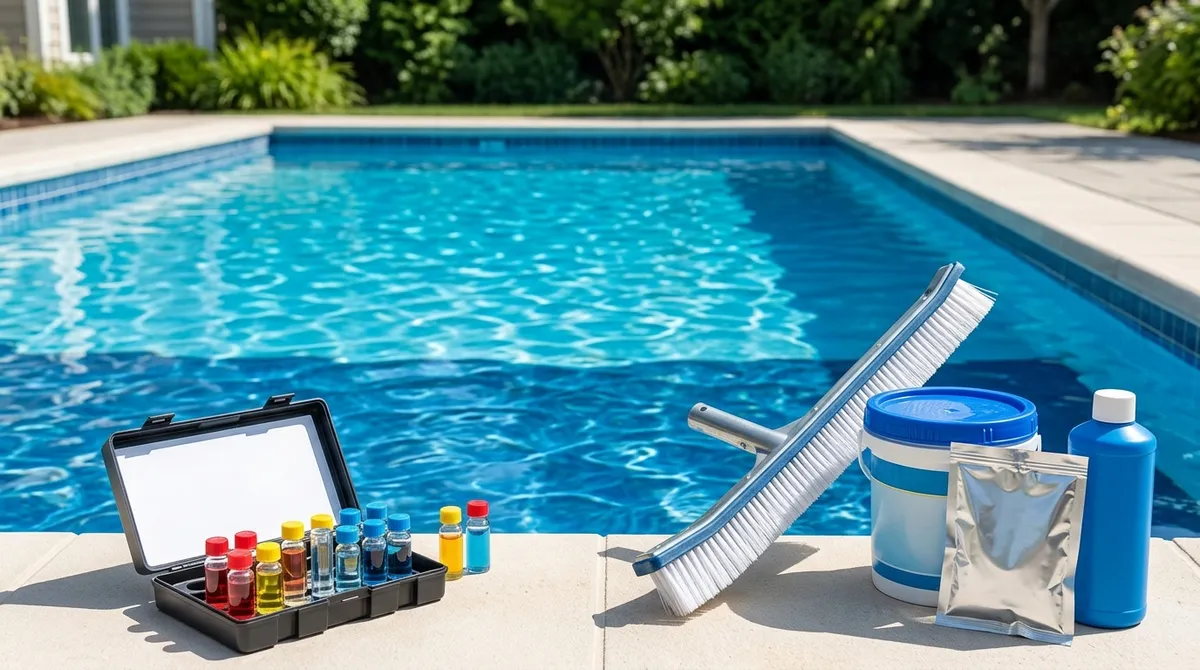
Key Takeaways
-
Balance your water chemistry (pH 7.4-7.6, alkalinity 100-150 ppm, calcium hardness 200-400 ppm) before treating any pool stain, as unbalanced water prevents treatments from working properly.
-
Identify stain type by color: green/brown/black indicates organic stains; red-orange/blue/teal indicates metal stains; white/gray indicates calcium scale—each requires completely different treatment methods.
-
Treat organic stains with pool shock (raise chlorine to 10+ ppm), brush vigorously, run circulation 8-12 hours, and add enzyme treatment (32 oz per 10,000 gallons) for effective removal.
-
Remove iron and metal stains using ascorbic acid (vitamin C powder) applied directly on stains—lower chlorine below 1 ppm first, as high chlorine neutralizes the treatment and worsens metal stains.
-
Prevent stains long-term through weekly maintenance: test water, brush surfaces, shock regularly, use metal sequestrant, apply enzyme treatments, and remove debris promptly to stop stains before they form.
-
Call a professional if stains cover large areas, DIY treatments fail after 2-3 attempts, you’re unsure of stain type, or scale buildup requires acid washing—incorrect treatment can damage pool surfaces permanently.
You walk outside on a sunny Tampa morning, ready for a swim. Then you spot it — an ugly brown or green stain on your pool’s floor or walls. It can really put a damper on your day! Pool stain removal is one of the most common challenges pool owners face, and the good news is that most stains are completely fixable without draining your pool. Whether you’re a busy parent, a new homeowner, or managing a commercial property, knowing how to tackle pool stains can save you time, money, and frustration. In this guide, we’ll walk you through exactly how to identify different types of stains, treat them effectively, and prevent them from coming back. Let’s get your pool looking beautiful again!
Why Pool Stains Happen in the First Place
Pool stains don’t just appear out of nowhere. They usually develop when something in or around your pool reacts with the water or the pool surface. Tampa’s warm, humid climate can speed up this process, making regular Pool Cleaning Services Tampa even more important for local pool owners.
There are two main categories of pool stains. Understanding which type you’re dealing with is the very first step to getting rid of them for good.
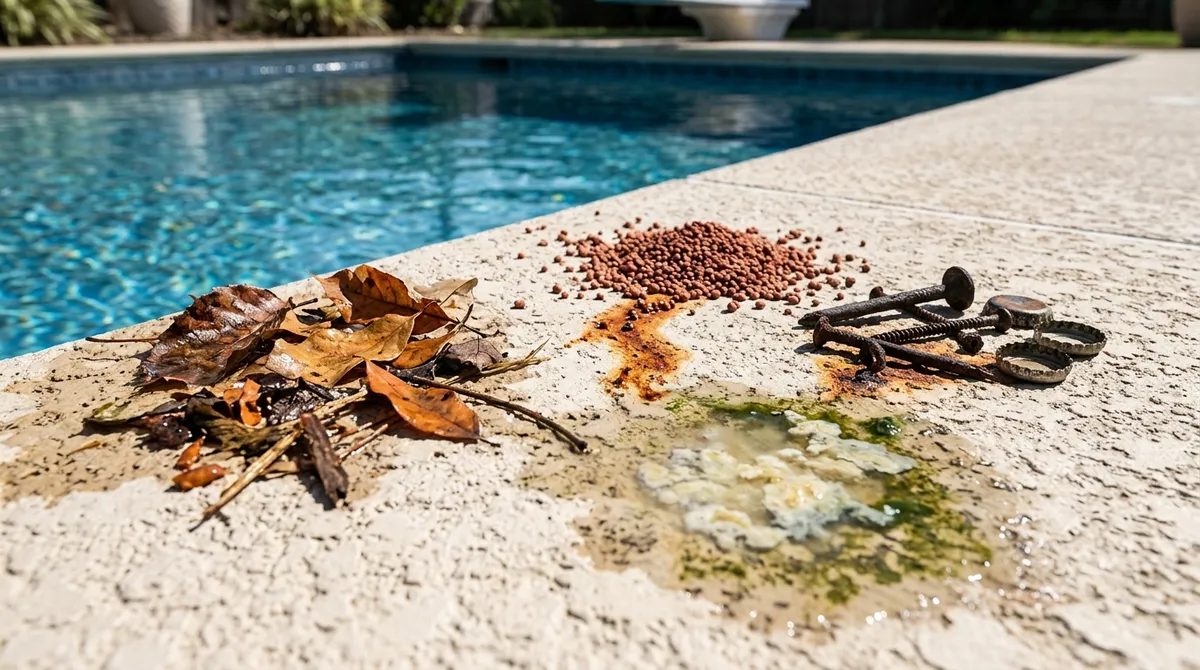
- Organic stains — caused by leaves, algae, berries, worms, or other natural debris
- Metal and scale stains — caused by iron, copper, calcium, or minerals in the water
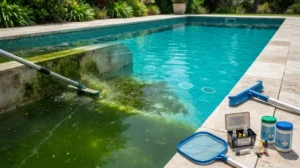
- Algae stains — a specific type of organic stain that leaves green, black, or yellow marks
- Tannin stains — brownish stains from tree leaves and plant material soaking in your pool
Understanding what caused your stain helps you choose the right treatment. The wrong treatment won’t just fail — it can sometimes make things worse. So let’s figure out what you’re working with first.
Step 1: Identify Your Pool Stain Type
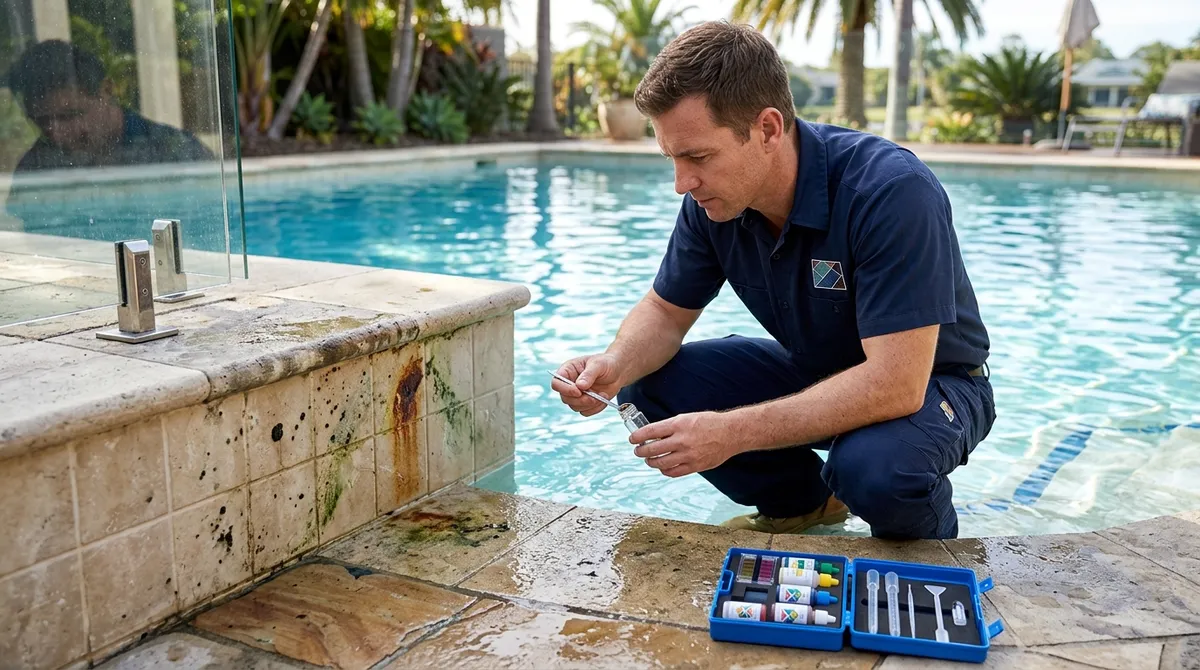
Identifying your stain is easier than you might think. Color is your best clue. Here’s a simple breakdown to help you figure it out quickly.
| Stain Color | Likely Cause | Type |
|---|---|---|
| Green, brown, or black | Algae, leaves, organic debris | Organic |
| Brown or red-orange | Iron in the water | Metal |
| Blue, black, or teal | Copper (from pipes or algaecides) | Metal |
| White or gray | Calcium carbonate buildup | Scale |
| Pink or red | Iron or manganese | Metal |
You can also use a simple trick to confirm your suspicion. Place a trichlor tablet directly on the stain for about 30 seconds. If the stain lightens, it’s organic. If nothing happens, it’s likely a metal or scale stain. You can also try rubbing a vitamin C tablet on the stain — if it fades, you’ve got iron or another metal issue.
Step 2: Balance Your Water Chemistry First
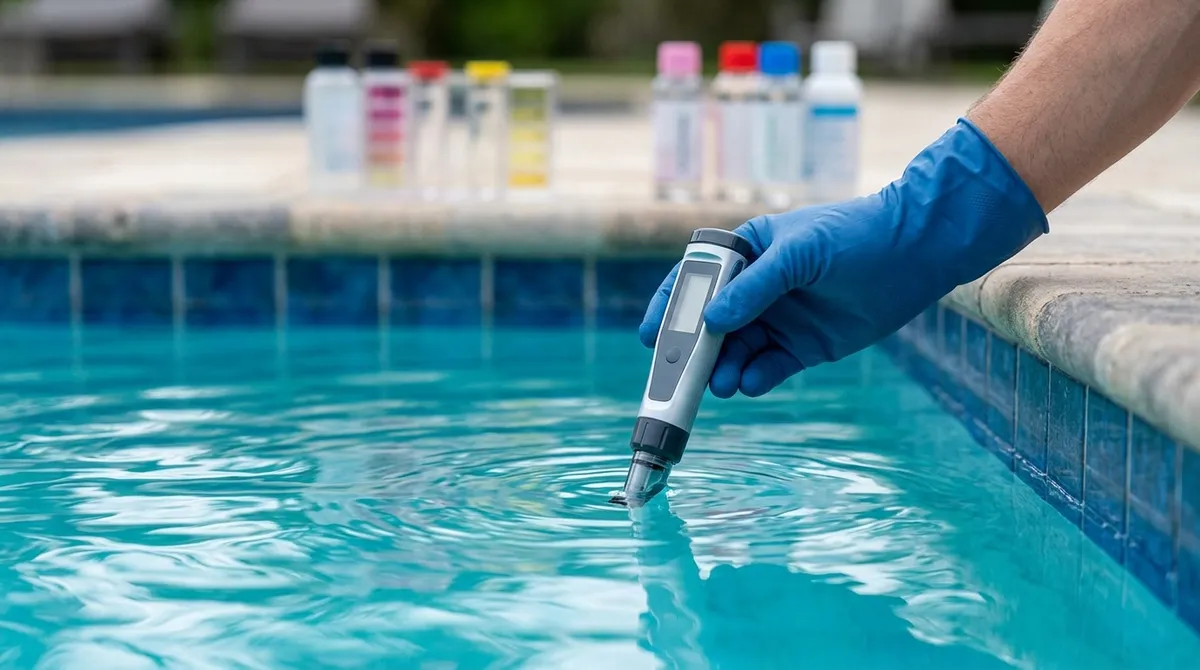
Before you start any pool stain removal treatment, you need to balance your water. Trying to treat stains in unbalanced water is like trying to paint a wet wall — it just won’t stick properly. This step is non-negotiable.
Here are the ideal water chemistry targets to hit before treatment:
- pH: 7.4 to 7.6
- Total alkalinity: 100 to 150 ppm
- Calcium hardness: 200 to 400 ppm
- Chlorine: 1 to 3 ppm (for regular maintenance)
Test your water before and after any treatment. If you’re not sure how to interpret your test results, check out our guide on Testing Your Pool’s Water for a clear breakdown. You can also learn more about 10 Pool Water Balancing Tips Every Tampa Owner Needs to keep your chemistry in check all year long.
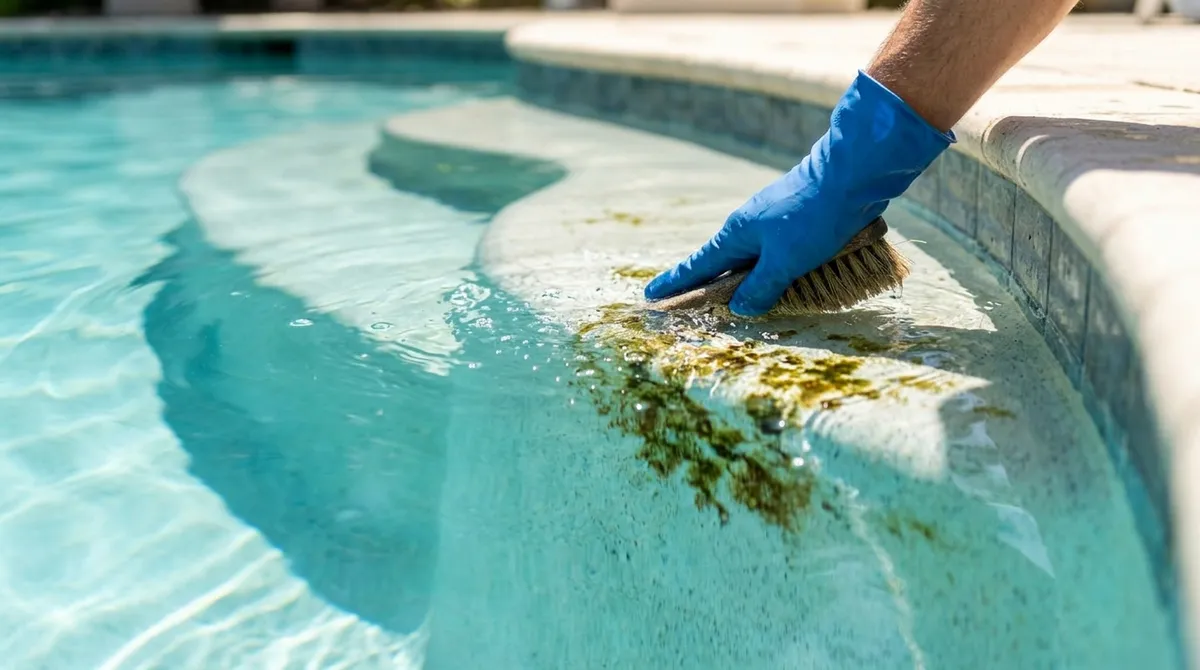
Step 3: Remove Organic Pool Stains
Organic stains are usually the easier type to treat. The key ingredient here is chlorine — used at a higher-than-normal level to break down the organic matter causing the stain.
Follow these steps to remove organic pool stains effectively:
- Shock the pool — Raise chlorine levels to at least 10 ppm using calcium hypochlorite (cal hypo) or liquid chlorine. This high chlorine shock targets organic material directly.
- Brush the stained areas — Use a pool brush to scrub the stained surfaces thoroughly while the shock is active. This helps break the stain loose from the pool surface.
- Run the pump overnight — Keep your circulation system running for 8 to 12 hours to distribute the treated water evenly throughout the pool.
- Add an enzyme treatment — Products containing enzymes (like CV-600) help digest organic material. Use about 32 fl. oz. per 10,000 gallons for a deeper organic purge.
- Re-test and repeat if needed — Some stubborn stains may need a second round of treatment. That’s totally normal!
If algae stains are the culprit, you may also want to read our detailed guide on How to Remove Pool Algae and Restore Crystal Clear Water. Algae stains can be persistent, but with the right approach, they’re very manageable.
Step 4: Remove Metal Pool Stains
Metal stains — especially from iron and copper — need a completely different approach. Using high chlorine on metal stains can actually make them worse, so skip the shocking for this type.
Here’s how to handle metal pool stain removal:
- Lower your chlorine levels first — Bring chlorine below 1 ppm before applying any metal treatment. High chlorine neutralizes the products you need.
- Apply ascorbic acid — Also known as vitamin C powder, this is the go-to treatment for iron stains. Fill an old sock with ascorbic acid and rub it directly on the stain. You’ll often see it disappear in seconds!
- Broadcast ascorbic acid across the pool — For widespread iron staining, sprinkle the powder over the entire affected surface and let it circulate for 30 minutes.
- Add a metal sequestrant — This product bonds to dissolved metals and keeps them from re-staining your pool surface. It’s essential after any metal stain treatment.
- Gradually restore chlorine levels — Bring chlorine back up slowly over a few days to avoid shocking the metals back out of solution.
According to the Independent Pool and Spa Service Association (IPSSA), metal staining is among the top water quality complaints from pool owners nationwide. The good news? With the right products and patience, these stains respond very well to treatment.
Step 5: Treat Calcium Scale Stains
White or gray crusty buildup around your waterline or on pool surfaces is usually calcium scale. This is especially common in Tampa, where hard water and high evaporation rates accelerate mineral buildup. Scale stains don’t respond to chlorine or ascorbic acid — they need their own solution.
- Use a dedicated scale-removal product like Leslie’s Stain and Scale Remove — it typically clears scale stains within 2 to 4 weeks of regular use
- For thicker deposits on tile, a pumice stone used with gentle, even pressure can physically remove the buildup without damaging the surface
- Avoid acid washing on vinyl liners or delicate pool finishes — it can cause permanent damage
- For serious calcium scale on plaster or tile, an acid wash service performed by a professional is often the safest and most effective option
If you’re seeing recurring tile scale, it may also be time to check your pool’s calcium hardness levels and consider a professional tile cleaning. You can explore the difference between DIY vs. Professional Pool Tile Cleaning to decide what’s best for your situation.
Pool Stain Removal Product Comparison
There are quite a few products on the market designed for pool stain removal. Here’s a quick comparison to help you choose the right one for your specific stain type.
| Product Type | Best For | Active Ingredient | Notes |
|---|---|---|---|
| Cal Hypo Shock | Organic stains | Calcium hypochlorite | Raise to 10 ppm minimum |
| Ascorbic Acid | Iron / metal stains | Vitamin C (ascorbic acid) | Use with low chlorine |
| Metal Sequestrant | All metal stains | Chelating agents | Use after metal treatment |
| Scale Remover | Calcium scale | Acid-based compounds | 2-4 weeks for full results |
| Enzyme Treatment | Organic stains | Natural enzymes | 32 oz per 10,000 gallons |
Not sure which product fits your pool? The EPA Pool Water Efficiency resources provide guidance on responsible chemical use to protect both your pool and the environment.
How to Prevent Pool Stains from Coming Back
Treating stains is satisfying, but preventing them from returning is even better. A consistent maintenance routine is truly your best defense. The Florida Swimming Pool Association (FSPA) recommends regular water testing and chemical balancing as the foundation of any good pool care program.
Here are the best prevention habits to build into your pool care routine:
- Test your water weekly — Catch chemistry imbalances early before they lead to staining
- Add a metal sequestrant regularly — This keeps dissolved metals from settling on your pool surfaces
- Shock your pool weekly — Regular shocking prevents organic material from building up and staining
- Brush your pool walls and floor — Weekly brushing dislodges early-stage staining before it sets in
- Use weekly enzyme treatments — Enzymes break down organic contaminants before they can cause staining
- Remove debris promptly — Don’t let leaves, dirt, or organic matter sit at the bottom of your pool
- Maintain proper water balance — Keeping pH, alkalinity, and hardness in range reduces scale formation
Consistent weekly pool maintenance is the single most effective strategy for keeping stains away long-term. It’s much easier to prevent a stain than to remove one!
When to Call a Professional for Pool Stain Removal
Sometimes a stain is stubborn, widespread, or tied to an underlying water chemistry problem that’s hard to diagnose on your own. That’s when bringing in a professional makes all the sense in the world. Attempting to treat a severe stain incorrectly can damage your pool’s surface — which leads to costly repairs down the road.
Consider calling a professional when:
- Stains cover a large portion of your pool floor or walls
- DIY treatments haven’t worked after two or three attempts
- You’re unsure of the stain type and don’t want to risk the wrong treatment
- Staining is paired with recurring algae problems or cloudy water
- You’re noticing scale buildup that may require an acid wash
The team at Panther Pools has years of experience diagnosing and treating all types of pool stains throughout Tampa and the surrounding areas. As a certified pool care company (CPO 648855), we know exactly what your pool needs to look its best — and we’re available seven days a week to help you get there. Whether you need a one-time stain treatment or ongoing pool maintenance services, we’re here for you.
You can also explore our 9 Pool Maintenance Tips Every Tampa Owner Needs in 2026 for a broader look at keeping your pool in top shape all year long.
Conclusion: A Clean, Stain-Free Pool Is Within Reach
Pool stain removal doesn’t have to be overwhelming. With the right identification method, the correct treatment for the stain type, and a solid prevention routine, you can keep your pool looking pristine week after week. Remember — balance your water first, match your treatment to your stain type, and be consistent with maintenance. Tampa’s sunshine is best enjoyed in a sparkling, stain-free pool!
If you’d like expert help tackling stubborn stains or want a professional eye on your pool’s water chemistry, we’d love to hear from you. Reach out to our friendly team at Panther Pools today for a free estimate and let us take the stress out of pool care for you!
FAQs
Q: How do I know if my pool stain is organic or from metal?
A: The easiest way is to look at the color — green, brown, or black stains are usually organic, while red-orange, blue, or teal stains point to metals like iron or copper. You can also rub a vitamin C tablet on the stain: if it lightens up quickly, you’re dealing with a metal stain. When in doubt, a professional pool technician can identify the stain type quickly and recommend the right fix!
Q: Can I remove pool stains without draining my pool?
A: Great news — yes, you absolutely can! Most pool stains, including organic and metal stains, can be treated with the pool full of water using the right chemicals. Shocking the pool handles organic stains, and ascorbic acid tackles iron stains, all without draining a drop. Draining is rarely necessary and is usually only considered for extreme resurfacing situations.
Q: What should I balance before starting pool stain removal?
A: Always balance your water chemistry before treating stains — it makes your treatments far more effective. Aim for a pH of 7.4 to 7.6 and alkalinity between 100 and 150 ppm. Unbalanced water can prevent stain-removal products from working properly and may even worsen the problem, so testing first is always worth the extra few minutes.
Q: Is ascorbic acid safe to use in all pool types for metal stain removal?
A: Ascorbic acid is safe to use in most pool types, including plaster, vinyl liner, and fiberglass pools. The key is to lower your chlorine below 1 ppm before applying it, since high chlorine neutralizes the treatment. It’s also best used during cooler periods or off-season since it temporarily reduces your sanitizer levels — always follow up with a metal sequestrant and gradually restore your chlorine afterward.
Q: How do I stop pool stains from coming back after treatment?
A: Prevention really comes down to consistent maintenance! Test your water weekly, add a metal sequestrant regularly, shock your pool on a routine basis, and brush the walls and floor at least once a week. Removing debris quickly and keeping your water balanced are the two biggest game-changers. A professional monthly service plan can also take the guesswork out of prevention entirely!