
Key Takeaways
-
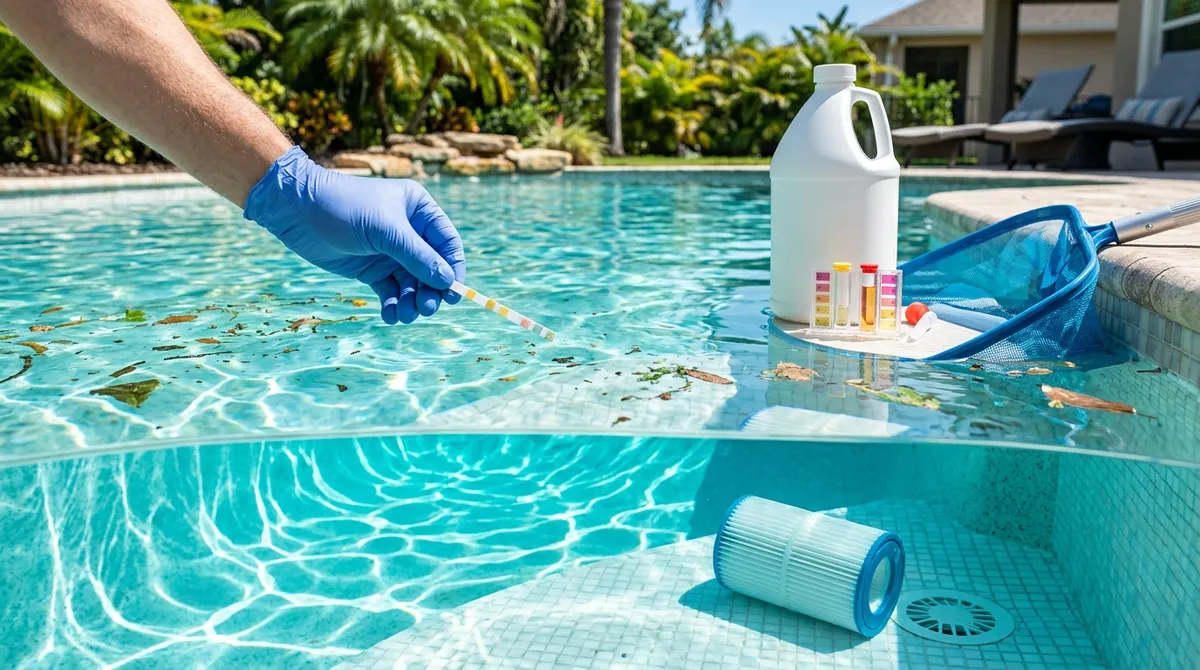
Professional pool cleaners test and balance water chemistry weekly, adjusting pH, chlorine, alkalinity, and calcium levels to prevent unsafe conditions, skin irritation, and equipment corrosion.
-
Pool cleaners perform surface skimming, brushing, and vacuuming at each visit to remove debris that decomposes and disrupts water chemistry, which is essential for both health and water balance.
-
A quality pool cleaner should be a Certified Pool Operator (CPO) with proper licensing and insurance, show up consistently on schedule, and inspect equipment regularly to catch problems early before they become expensive repairs.
-
In Tampa’s warm climate, pools need consistent weekly professional maintenance because heat accelerates chlorine loss and promotes algae growth faster than in cooler regions, making expert attention essential.
-
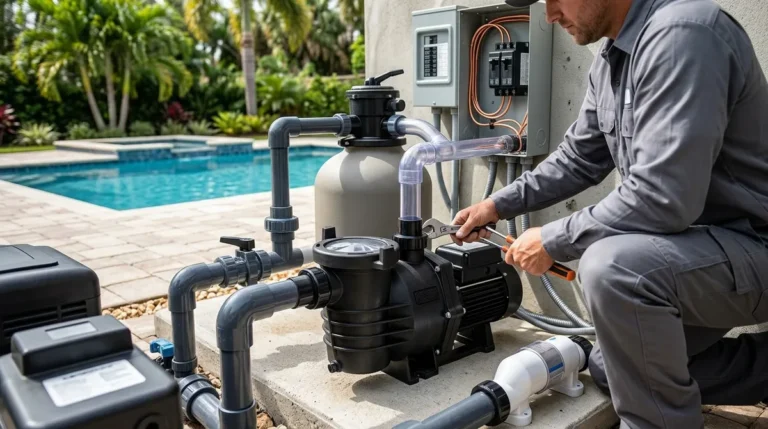
Pool cleaners maintain filters through regular cleaning and backwashing, empty skimmer and pump baskets at every visit, and inspect pumps and heaters to prevent reduced water flow and costly equipment damage.
-
Beyond routine maintenance, professional pool services should offer specialized treatments including shock applications, algae removal, leak detection, acid washing, and equipment repairs for comprehensive pool care.
You just had a pool installed — or maybe you’ve owned one for years. Either way, you may be wondering: what are pool cleaners supposed to do, exactly? It’s a fair question! Pools look simple on the surface (pun intended), but keeping one clean, safe, and swim-ready takes real skill and consistency. Whether you’re a busy Tampa parent, a retiree enjoying your backyard oasis, or a commercial property manager keeping your facility compliant, understanding what professional pool cleaners do helps you make smarter decisions. In this guide, we’ll walk you through every core responsibility of a pool cleaning professional — and show you why hiring an expert is worth every penny. Let’s dive in!
What Pool Cleaners Do: The Big Picture
At the most basic level, pool cleaners keep your pool safe and enjoyable. They handle the science, the scrubbing, and the equipment checks so you don’t have to. A trained pool technician combines chemistry knowledge with hands-on maintenance skills to prevent problems before they start. Think of them as your pool’s personal health care team — showing up regularly, running diagnostics, and keeping everything running smoothly.
If you’ve ever tried to manage your own pool and ended up with green water or a cloudy mess, you already know how quickly things can go wrong. Professional pool cleaners from a trusted service like Pool Cleaning Services Tampa bring the tools, training, and consistency needed to prevent those headaches entirely.
Core Responsibilities of a Professional Pool Cleaner
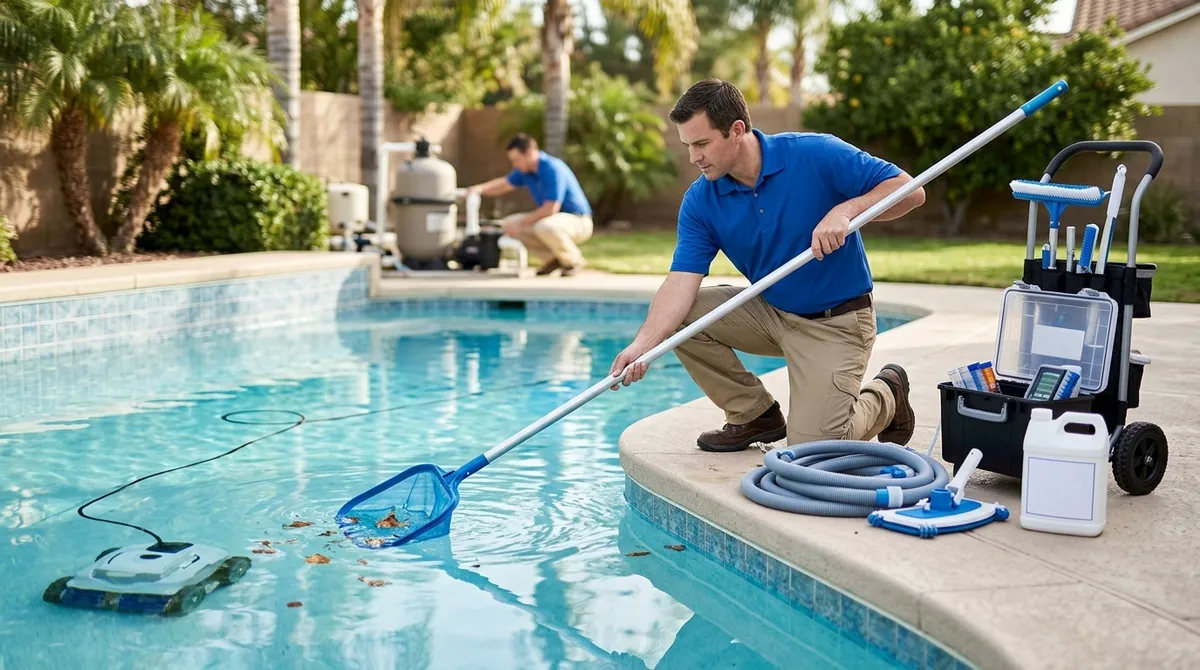
Pool cleaners wear many hats. Here’s a breakdown of what they’re expected to handle during each visit and over the course of regular maintenance cycles.
1. Surface Skimming, Brushing, and Vacuuming
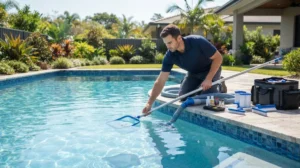
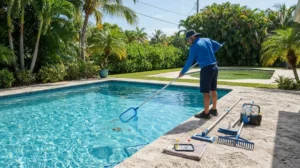
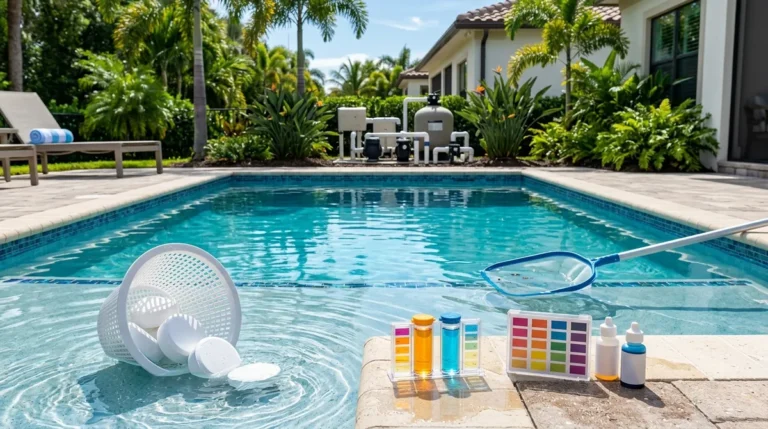
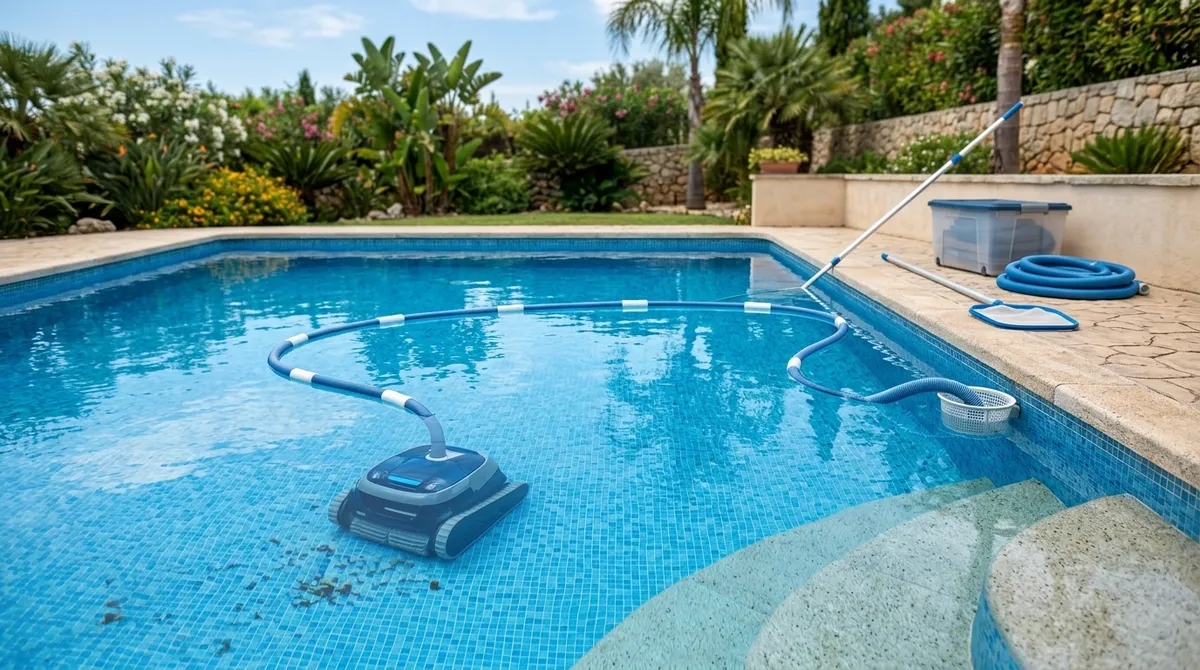
Every pool cleaning visit starts with removing visible debris. A pool cleaner will skim the water surface to collect leaves, bugs, and anything else floating around. Then they brush the walls, floors, and steps to loosen dirt and algae buildup. Finally, they vacuum the pool bottom to pick up settled debris and fine particles.
This step isn’t just about looks — it’s about health and water balance. Debris left in the pool decomposes and throws off your water chemistry. If you’re curious about what this routine looks like week to week, check out our guide on Weekly Pool Service Near Me Tampa 2026.
2. Water Chemistry Testing and Balancing
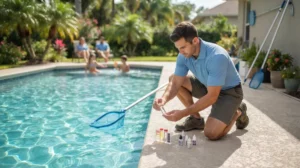
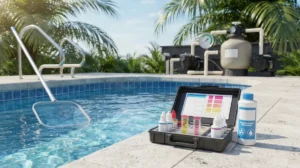
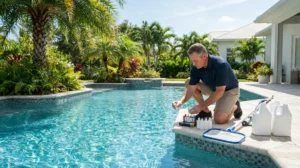
This is where the science comes in. Pool cleaners test your water regularly to check key chemical levels, including:
- pH levels — ideally between 7.2 and 7.6
- Chlorine levels — to sanitize the water effectively
- Total alkalinity — to stabilize pH fluctuations
- Calcium hardness — to protect pool surfaces and equipment
- Cyanuric acid — to protect chlorine from UV degradation
If any level is off, the technician adds the appropriate chemicals to bring things back into balance. The EPA Pool Resources highlight how proper water chemistry protects both swimmers and the environment. Imbalanced water can irritate skin and eyes, corrode equipment, and promote dangerous algae growth.
3. Filter Cleaning and Maintenance
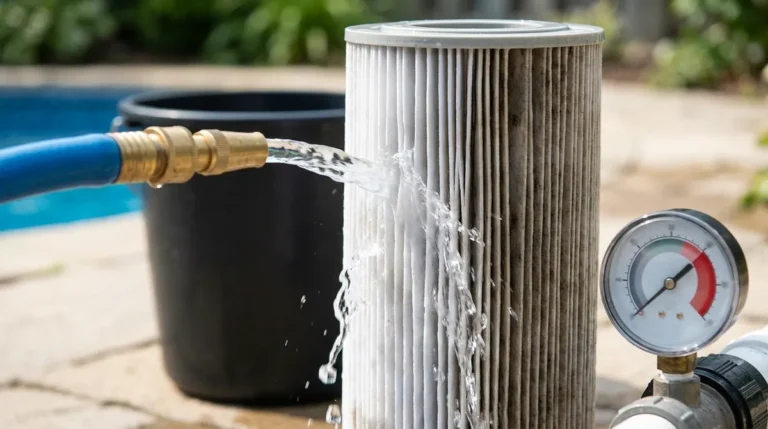
Your pool filter is one of its most important components. Pool cleaners clean or backwash filters to remove trapped debris and restore proper water flow. Neglected filters lead to poor circulation, cloudy water, and costly damage over time. For a deeper look at this topic, our article on Maintaining Your Pools Filters covers everything you need to know. If your filter ever needs repair, we also have a guide on Pool Filter Repairs That Save Money.
4. Skimmer and Pump Basket Clearing
Skimmer baskets and pump baskets catch large debris before it reaches the filter. Pool cleaners empty these baskets every visit to keep water flowing freely. A clogged basket puts strain on your pump and reduces overall system efficiency. It’s a small task with a big impact.
5. Equipment Inspection and Servicing
A thorough pool cleaner doesn’t just clean — they inspect. During each visit or scheduled maintenance check, they look over key equipment including pumps, heaters, chlorinators, and plumbing. Catching a small issue early prevents it from turning into an expensive repair. If you’ve noticed any unusual sounds from your equipment, our article on 7 Pool Pump Repair Signs You Need Help Now is a great resource.
Weekly Pool Cleaner Responsibilities at a Glance
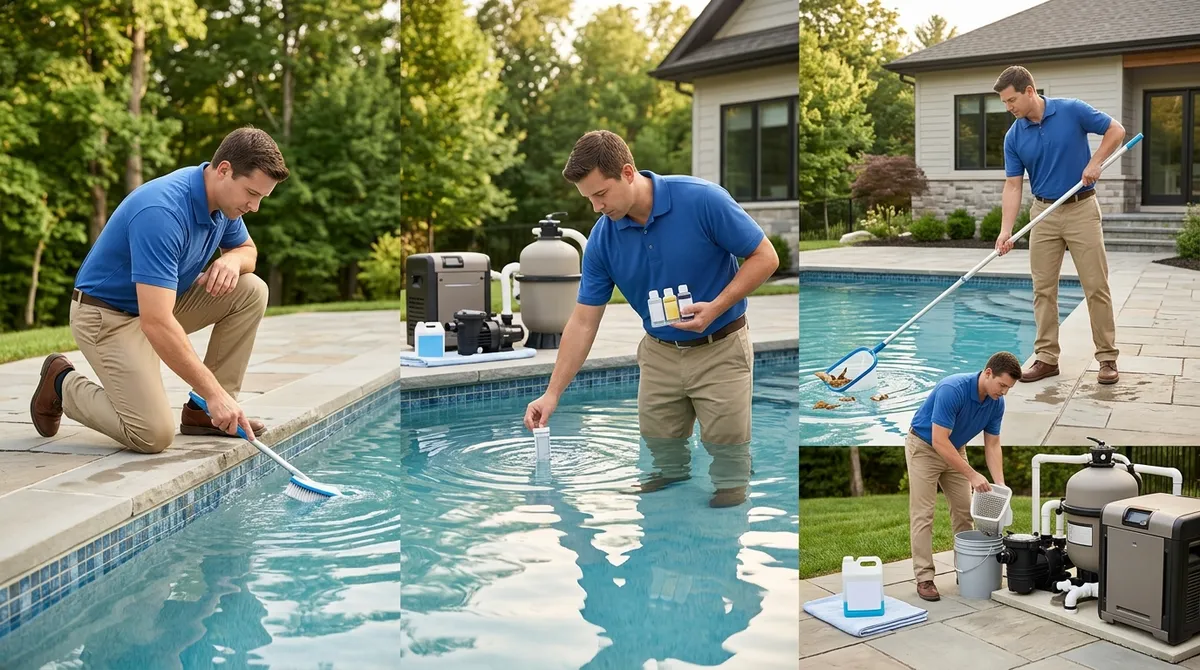
Want a quick summary of what a pool cleaner should handle each week? Here’s a clear overview:
| Task | Frequency | Why It Matters |
|---|---|---|
| Surface skimming | Every visit | Removes floating debris before it sinks |
| Brushing walls and floor | Weekly | Prevents algae and biofilm buildup |
| Vacuuming pool bottom | Weekly | Removes settled dirt and particles |
| Water chemistry testing | Weekly | Ensures safe, balanced swimming water |
| Chemical adjustment | As needed | Keeps pH, chlorine, and alkalinity in range |
| Skimmer basket emptying | Every visit | Maintains proper water flow |
| Filter backwashing/cleaning | Monthly or as needed | Restores filtration efficiency |
| Shock treatment | Weekly or bi-weekly | Eliminates contaminants and bacteria |
| Equipment inspection | Regularly | Catches problems early |
| Tile line cleaning | Weekly to monthly | Prevents scale and staining |
How to Spot a High-Quality Pool Cleaner
Not all pool cleaners are created equal. Here are the key qualities to look for when choosing a professional:
- Certified credentials — Look for a Certified Pool Operator (CPO) license. This proves the technician has formal training in water chemistry and safety.
- Consistent scheduling — A reliable pool cleaner shows up on time, every time. Inconsistency leads to gaps in maintenance and bigger problems.
- Clear communication — They should inform you about what they did, what they found, and what (if anything) needs attention.
- Thoroughness — A good technician doesn’t just skim and leave. They check equipment, test water, and document their work.
- Proper licensing and insurance — Especially important for equipment repairs and installations.
The Florida Swimming Pool Association (FSPA) sets industry standards for pool professionals in Florida. Choosing a technician who aligns with those standards protects you as a pool owner.
Additional Services Pool Cleaners Should Offer
Beyond the weekly basics, a full-service pool cleaning company should also be able to handle more specialized tasks. Here’s what to expect from a comprehensive pool service provider:
- Shock treatments — A heavy-dose chlorine application that eliminates bacteria, algae, and organic contaminants
- Algae treatment — Specialized brushing, vacuuming, and chemical applications to remove algae blooms
- Salt cell maintenance — Cleaning and checking salt cells in saltwater pools to ensure proper chlorine generation
- Pool startup services — Properly balancing a brand-new or reopened pool from scratch
- Acid washing — Deep cleaning of pool surfaces to remove stains and buildup. Learn more in our guide on 9 Things To Know About Pool Acid Wash In Tampa
- Heater servicing — Checking and repairing pool heaters for year-round comfort. See our article on How To Fix Pool Heater Issues Fast
- Leak detection — Identifying and repairing leaks before they cause structural or water loss issues. Our post on Pool Leak Detection Mistakes That Cost Tampa Homeowners Thousands is a must-read
The Independent Pool and Spa Service Association (IPSSA) also provides training and resources that the best pool technicians draw from to stay current on industry practices.
Pool Cleaning Steps: What a Typical Visit Looks Like
Wondering what actually happens when a pool technician arrives at your home? Here’s a step-by-step breakdown of a standard pool cleaning visit:
- Arrival and visual inspection — The technician scans the pool area for visible issues, hazards, or debris before starting.
- Skim the surface — All floating debris is removed from the water surface using a net.
- Brush walls, steps, and floor — A pool brush loosens algae and dirt clinging to pool surfaces.
- Empty skimmer and pump baskets — Baskets are cleared to maintain proper water flow through the system.
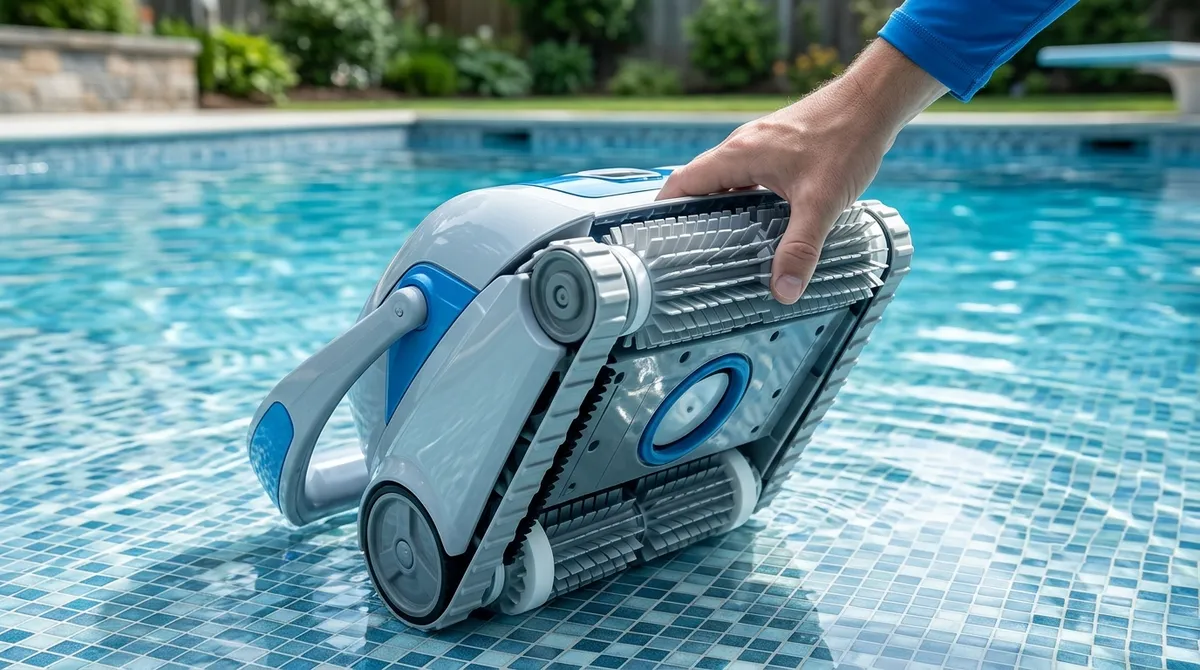
- Vacuum the pool — The bottom of the pool is vacuumed to remove settled debris.
- Test water chemistry — A water sample is tested for pH, chlorine, alkalinity, and more.
- Add chemicals as needed — The technician adjusts chemical levels based on test results.
- Inspect and clean filter — The filter is checked and cleaned or backwashed if needed.
- Check equipment — Pumps, heaters, and automation systems are inspected for proper operation.
- Document and report — The technician notes what was done and flags anything requiring follow-up.
Why Tampa Pool Owners Benefit from Professional Service
Tampa’s warm climate and year-round sunshine make pools a daily luxury — but that same climate also creates ideal conditions for algae, bacteria, and chemical imbalances. The heat accelerates chlorine loss and promotes biological growth faster than in cooler climates. This means Tampa pools need consistent, expert attention more than pools in other regions.
If you’re unsure whether your current maintenance routine is meeting the mark, check out our article on 7 Signs You Need Pool Service Near Me In Tampa 2026. You might also find it helpful to read about the 7 Pool Cleaning Service Benefits Every Tampa Homeowner Needs.
Panther Pools is a family-owned pool cleaning company serving Tampa with a team of certified, reliable technicians. With a Certified Pool Operator credential (CPO 648855) and a CPC License (CPC1461336), we bring the knowledge and accountability that Tampa pool owners deserve. Our technicians arrive on time, do the job right, and keep you informed every step of the way — no rush jobs, no shortcuts.
Common Pool Maintenance Mistakes to Avoid
Even well-intentioned pool owners can fall into some common traps. Here’s what to watch out for:
- Skipping water chemistry tests, leading to imbalanced or unsafe water
- Ignoring filter maintenance, which strains the pump and reduces water clarity
- Running the pump for too few hours, resulting in poor circulation and algae growth
- Over-shocking the pool without proper testing first
- Neglecting tile line cleaning, which allows scale and calcium buildup to form
- Putting off equipment repairs, which always cost more when left unaddressed
If you’re noticing any signs of wear on your pool surfaces, our post on 15 Pool Resurfacing Signs Every Tampa Pool Owner Must Know can help you decide if it’s time for a refresh. For pump-specific care, browse our 9 Pool Pump Maintenance Tips Every Tampa Owner Needs.
Making the Most of Your Pool Service
Knowing what pool cleaners are supposed to do puts you in the driver’s seat. You can ask the right questions, set clear expectations, and quickly identify when a service isn’t meeting the standard. A great pool cleaning company will welcome your questions and keep you in the loop at every visit.
If you’re in the Tampa area and want to explore reliable, professional pool care, visit our About page to learn more about our team and values. We also offer services throughout Tampa’s neighborhoods — including Pool Maintenance In West Chase and surrounding communities.
Conclusion
Understanding what pool cleaners are supposed to do helps you become a more informed, confident pool owner. From skimming and brushing to chemistry testing and equipment inspections, professional pool cleaners handle far more than most people realize. Their work keeps your water safe, your equipment healthy, and your pool looking beautiful all year long. In Tampa’s climate, consistent professional maintenance isn’t a luxury — it’s a smart investment in your home and your family’s well-being.
Ready to experience what truly professional pool care looks like? Get in touch with our team at Panther Pools today for a free estimate and see why so many Tampa homeowners trust us to keep their pools in perfect condition.
FAQs
Q: How often should a pool cleaner visit my pool?
A: Most residential pools benefit from weekly visits to stay clean and chemically balanced. In Tampa’s warm climate, weekly service is especially important since heat speeds up chlorine loss and encourages algae growth — so staying on a consistent schedule makes a big difference!
Q: What chemicals do pool cleaners use to balance water?
A: Pool cleaners typically use chlorine, pH increaser or decreaser, alkalinity adjusters, calcium hardness products, and cyanuric acid stabilizer. The specific chemicals and amounts depend on what your water test shows — that’s why testing comes first before any chemicals are added.
Q: Can pool cleaners fix equipment problems too?
A: Absolutely! Many professional pool cleaners also handle equipment repairs and installations, including pumps, heaters, filters, salt systems, and automation. A full-service pool company is your one-stop shop for both maintenance and repairs, saving you the hassle of calling multiple contractors.
Q: What happens if I skip regular pool cleaning?
A: Skipping regular pool cleaning can lead to algae blooms, cloudy water, chemical imbalances, and even equipment damage from clogged filters or poor circulation. What starts as a minor issue can quickly turn into a costly repair — so consistent maintenance is always the smarter (and cheaper!) choice.
Q: How do pool cleaners prevent algae from growing?
A: Pool cleaners prevent algae by maintaining proper chlorine levels, brushing pool surfaces regularly, ensuring good water circulation, and performing shock treatments as needed. Keeping your water chemistry balanced and your pool clean week after week is the best defense against any algae outbreak.