
Key Takeaways
-
Test your pool water 2-3 times per week during peak season to measure free chlorine (1-3 ppm), pH (7.2-7.6), total alkalinity (80-120 ppm), and combined chlorine (below 0.5 ppm) — testing is the foundation of proper chemical management.
-
Always adjust total alkalinity first (80-120 ppm), then pH, since alkalinity acts as a pH buffer; this order prevents constant pH swings and reduces the need for repeated chemical corrections.
-
Shock your pool weekly at dusk or night to break down chloramines and eliminate organic contaminants, especially after heavy rain, pool parties, or intense Florida sunshine — wait until chlorine drops to 1-3 ppm before swimming.
-
Run your pool pump 8-12 hours daily to ensure complete water turnover and even chemical distribution; stagnant zones breed algae and bacteria even when chemical levels appear balanced on paper.
-
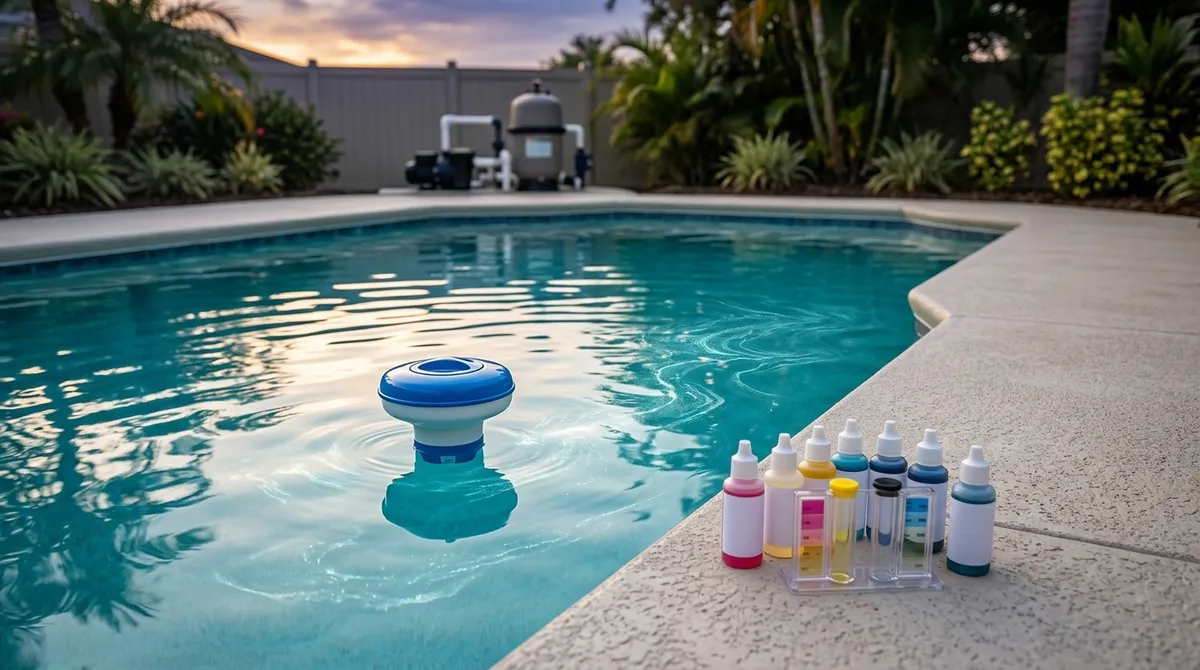
Use trichlor tablets in a floating dispenser for steady daily chlorine maintenance, add a preventive algaecide dose weekly during warm months, and maintain calcium hardness at 200-400 ppm to prevent surface damage and scaling.
-
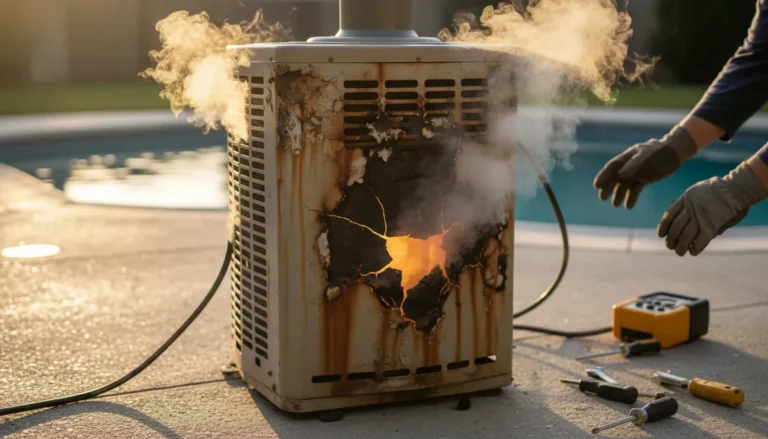
Never mix different pool chemicals together, always add chemicals to water (not water to chemicals), wear protective equipment, and store chemicals in a cool, dry, well-ventilated area away from direct sunlight to prevent dangerous reactions and injuries.
Owning a pool in Tampa is a true blessing — sunshine, backyard fun, and a great way to stay cool year-round. But behind every sparkling, inviting pool is something most swimmers never think about: careful, consistent pool chemical management. Get it right, and your pool stays crystal clear, safe, and comfortable. Get it wrong, and you’re dealing with green water, irritated eyes, or even costly equipment damage.
Whether you’re a busy parent trying to keep the kids safe, a retiree who just wants to relax poolside, or a commercial property manager keeping guests happy, understanding how pool chemicals work is essential. The good news? It’s not as complicated as it sounds. In this guide, we’ll walk you through exactly how to manage your pool chemicals step by step — and when it makes sense to call in the pros.
Why Pool Chemical Management Matters So Much
Proper pool chemical management isn’t just about clear water. It’s about safety, comfort, and protecting your investment. A chemically balanced pool prevents the growth of harmful bacteria, viruses, and algae. It also protects your pool surfaces and equipment from damage caused by water that’s too acidic or too hard. If you want to dive deeper into the basics, check out this helpful guide on what proper swimming pool maintenance really involves.
According to the EPA Pool Resources, maintaining proper water chemistry also contributes to water efficiency — an important consideration for responsible pool ownership. Simply put, balanced water means less waste, fewer chemical corrections, and a healthier pool overall.
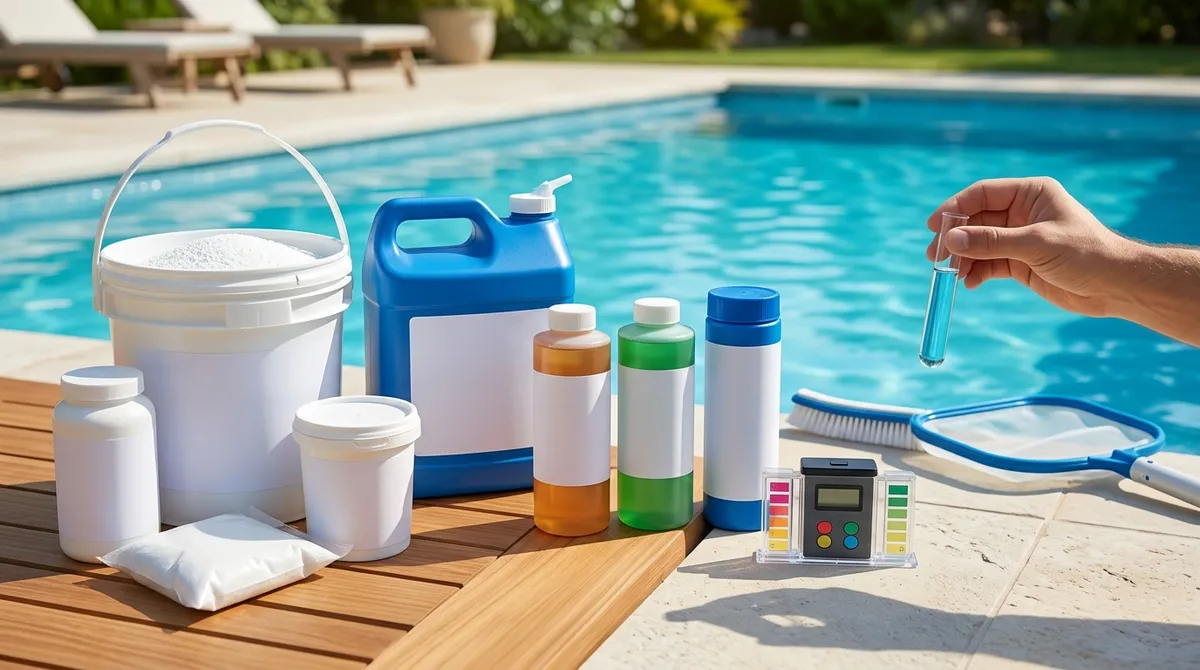
The Key Pool Chemicals You Need to Know
Before diving into the how-to steps, let’s get familiar with the essential chemicals involved in pool management. These are the building blocks of a balanced, safe swimming environment.
The Big Four: Core Chemical Parameters
- pH Levels: The measure of how acidic or basic your water is. The ideal range is 7.2–7.6 ppm.
- Free Chlorine: The active disinfectant that kills bacteria and viruses. Aim for 1–3 ppm.
- Total Alkalinity: Stabilizes your pH so it doesn’t swing wildly. Keep it between 80–120 ppm.
- Calcium Hardness: Prevents scaling and surface damage. The sweet spot is 200–400 ppm.
Supplementary Pool Chemicals
- Algaecides: Prevent and treat algae growth before it takes over.
- pH Up/Down: Sodium carbonate raises pH; muriatic acid or sodium bisulfate lowers it.
- Pool Shock (Oxidizers): Breaks down combined chlorine and organic contaminants.
- Flocculants/Coagulants: Clump tiny particles together for easier filtration removal.
- Cyanuric Acid (Stabilizer): Protects chlorine from being broken down by UV sunlight.
Want to know more about safe chemical handling? Our guide on 7 safe pool chemicals every Tampa pool owner must know is a great next read.
Pool Chemical Reference Chart
Here’s a quick reference table to keep your numbers on track. Save this — you’ll use it often!
| Chemical Parameter | Ideal Range | What Happens If Off |
|---|---|---|
| pH Level | 7.2–7.6 ppm | Irritated eyes, reduced chlorine effectiveness, corrosion or scaling |
| Free Chlorine | 1–3 ppm | Bacterial growth, algae, cloudy water |
| Combined Chlorine | Below 0.5 ppm | Chloramine odors, swimmer discomfort |
| Total Alkalinity | 80–120 ppm | pH instability, corrosion, cloudy water |
| Calcium Hardness | 200–400 ppm | Scaling on surfaces, equipment damage, or etching of plaster |
Step-by-Step Guide to Pool Chemical Management
Now let’s get into the practical steps. Follow this process consistently, and your pool will stay in great shape all year long — especially important in Tampa’s hot, humid climate.
Step 1: Test Your Pool Water Regularly
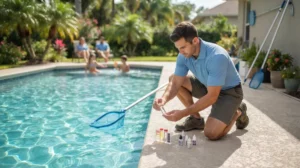
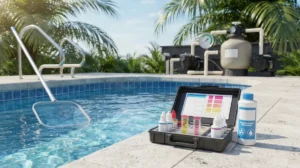
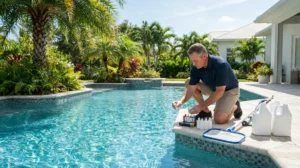
Testing is the foundation of good pool chemical management. You can’t fix what you don’t measure! Use a quality test kit or test strips to check your water 2–3 times per week during peak swimming season. For a more detailed comparison of testing methods, check out test strips vs. liquid kits — which pool water test wins.
Here’s what to test for each time:
- Free chlorine levels (target: 1–3 ppm)
- pH balance (target: 7.2–7.6 ppm)
- Total alkalinity (target: 80–120 ppm)
- Combined chlorine (should stay below 0.5 ppm)
Step 2: Balance Total Alkalinity First
Always adjust total alkalinity before you touch pH. Think of alkalinity as the anchor for your pH — when alkalinity is stable, pH is much easier to control. If your alkalinity is low, add sodium bicarbonate. If it’s too high, use muriatic acid or sodium bisulfate. Make adjustments in small doses and retest after a few hours. You can also read more about 10 pool water balancing tips every Tampa owner needs.
Step 3: Adjust pH to the Right Range
Once alkalinity is dialed in, adjust your pH. A pH below 7.2 means your water is too acidic — it will irritate swimmers’ skin and eyes and corrode your pool equipment. A pH above 7.6 reduces chlorine’s effectiveness, which means bacteria can survive longer. Use pH Up (sodium carbonate) or pH Down (muriatic acid or sodium bisulfate) to get back into the ideal 7.2–7.6 range.
Step 4: Maintain Your Chlorine Levels
Chlorine is your pool’s main disinfectant, and it comes in several forms. Trichlor tablets are the most popular for daily maintenance — they dissolve slowly and contain a high chlorine concentration. Granular chlorine works well for quick adjustments or shocking. Liquid chlorine is fast-acting but dissipates more quickly.
For routine maintenance, use these chlorine types strategically:
- Trichlor tablets — Place in a floating dispenser or automatic chlorinator for steady daily dosing.
- Granular chlorine — Broadcast directly into the pool for targeted boosts.
- Pool shock — Use weekly or after heavy use to eliminate combined chlorine and contaminants.
Learn more about why keeping chlorine balanced matters with our article on why chlorine pool maintenance matters so much.
Step 5: Check and Adjust Calcium Hardness
Calcium hardness is often overlooked, but it’s critical. Water that’s too soft (below 200 ppm) will leach calcium from your pool’s plaster and surfaces — causing pitting and structural damage over time. Water that’s too hard (above 400 ppm) causes cloudy water and crusty scale buildup on tiles and equipment. Add calcium chloride to raise hardness, or dilute your pool water to lower it. For more on this topic, our water hardness check facts every pool owner must know is worth bookmarking.
Step 6: Shock Your Pool Weekly
Pool shocking is a must — especially after heavy rain, a big pool party, or periods of intense Florida sunshine. Shocking breaks down chloramines (combined chlorine) and eliminates organic contaminants. Always shock at dusk or night to prevent sunlight from burning off the chemicals too quickly. Wait until chlorine levels drop back to 1–3 ppm before swimming again.
Step 7: Add Algaecide as a Preventive Measure
In Tampa’s warm climate, algae growth is a real and persistent threat. Adding a maintenance dose of algaecide weekly — especially during summer months — gives your chlorine a helping hand. If you’re already battling a green pool, check out how to remove pool algae and restore crystal clear water for a full recovery plan.
How Water Circulation Supports Chemical Effectiveness
Here’s something many pool owners overlook: chemicals only work well when they’re properly distributed throughout the water. That’s where your pool pump comes in. Experts recommend running your pool pump for 8–12 hours per day to ensure complete water turnover and even chemical distribution. Stagnant zones become breeding grounds for algae and bacteria — even if your chemical levels look fine on paper.
Make sure your pool’s return jets are angled to create a circular flow pattern. This helps chemicals reach every corner of the pool. If your pump isn’t up to the task, learn more through our guide on 9 pool pump maintenance tips every Tampa owner needs.
Pool Chemical Storage and Safety Tips
Proper storage of pool chemicals is just as important as using them correctly. Mishandled chemicals can cause fires, toxic fumes, or serious injuries. The IPSSA (Independent Pool and Spa Service Association) emphasizes that safe chemical handling is a core professional standard in the industry.
Follow these safety rules every time:
- Store all pool chemicals in a cool, dry, well-ventilated area away from direct sunlight.
- Never mix different chemicals together — even the same type from different brands can react dangerously.
- Always add chemicals to water, not water to chemicals.
- Wear gloves and eye protection when handling concentrated pool chemicals.
- Keep chemicals out of reach of children and pets at all times.
- Read and follow all manufacturer instructions on product labels carefully.
For more on safe chemical handling, check out DIY vs. Pro Pool Chemical Storage: Which Is Safer?.
Common Pool Chemical Mistakes to Avoid
Even experienced pool owners make these mistakes. Knowing what to watch for can save you a lot of headaches — and money.
- Adding chemicals without testing first — Always test before you treat. Adding chemicals blindly can make imbalances worse.
- Adjusting multiple chemicals at once — Change one variable at a time, then retest before making another adjustment.
- Skipping the shock treatment — Many pool owners only shock when things look bad. Consistent weekly shocking prevents problems before they start.
- Not accounting for rain — Tampa’s rainfall dilutes pool chemicals and changes pH quickly. Retest after every significant storm.
- Ignoring combined chlorine levels — Combined chlorine above 0.5 ppm causes that strong “pool smell” and eye irritation. Shock treatment fixes this fast.
Avoid more pitfalls with our list of 11 pool water chemistry mistakes you must stop making.
When to Call a Professional Pool Chemical Service
DIY pool chemical management is manageable for many homeowners — but there are times when professional help just makes sense. If your pool keeps turning green despite your best efforts, chemicals aren’t balancing no matter what you try, or you simply don’t have the time to test and treat 2–3 times a week, it’s time to bring in the experts.
The Florida Swimming Pool Association (FSPA) encourages pool owners to work with licensed, knowledgeable professionals for consistent water quality and safety compliance. At Panther Pools, our Certified Pool Operator (CPO 648855) team serves Tampa homeowners and commercial properties seven days a week — handling everything from routine chemical balancing to green pool recoveries and equipment repairs. Learn more about our full range of services through our pool cleaning services in Tampa.
If you’re on the fence about DIY vs. professional care, our breakdown of DIY vs. Pro Pool Chemical Balancing lays it out clearly.
Build a Simple Weekly Pool Chemical Checklist
Consistency is the secret to stress-free pool chemical management. Here’s a simple weekly schedule to keep things on track:
| Task | Frequency | Notes |
|---|---|---|
| Test pH and free chlorine | 2–3 times per week | More often during peak summer heat |
| Test total alkalinity | Weekly | Adjust before pH |
| Check calcium hardness | Monthly | More often if pool is used heavily |
| Shock treatment | Weekly | Always shock at night |
| Add algaecide | Weekly | Preventive dose, not just for outbreaks |
| Run pool pump | Daily (8–12 hours) | Ensures even chemical distribution |
Conclusion: A Clear Pool Starts With Balanced Chemistry
Pool chemical management doesn’t have to be intimidating. When you understand the key parameters, test consistently, and follow a simple routine, keeping your Tampa pool clean and safe becomes second nature. The rewards are totally worth it — a sparkling, inviting pool that your whole family can enjoy without worry.
But if pool chemistry ever feels overwhelming, or if life gets too busy to stay on top of it, remember that professional help is just a call away. Whether you’re a homeowner wanting to protect your investment or a commercial property manager ensuring guest safety, Panther Pools is here to make pool care effortless. Get in touch with our team today for a free estimate and experience the difference that Tampa’s premier pool cleaning company can make.
FAQs
Q: What is the ideal pH range for pool water, and why does it matter?
A: The ideal pH range for pool water is 7.2–7.6 ppm. This sweet spot keeps chlorine working at peak effectiveness while preventing swimmer eye and skin irritation. If pH drifts outside this range, your pool can become uncomfortable to swim in and harder to keep clean — so it’s one of the first things to check when testing!
Q: How often should I test my pool water for chemical balance?
A: During peak season, aim to test your pool water 2–3 times per week. Tampa’s heat and sunshine can shift chemical levels quickly, especially after heavy rain or a big pool gathering. More frequent testing means smaller, easier corrections — and a consistently beautiful pool year-round.
Q: What is the best form of chlorine for everyday pool maintenance?
A: Trichlor tablets are the go-to choice for daily pool maintenance. They dissolve slowly, deliver a steady chlorine dose, and are super easy to use in a floating dispenser or automatic chlorinator. They’re a reliable, low-fuss way to keep your sanitizer levels in the 1–3 ppm range without constant attention.
Q: Why is total alkalinity so important in pool chemical management?
A: Total alkalinity acts as a buffer for your pool’s pH — it keeps pH from swinging up and down with every chemical addition or weather change. Keeping alkalinity between 80–120 ppm means your pH is more stable, your chlorine works better, and you spend less time making constant adjustments. It’s the unsung hero of pool chemistry!
Q: How do I prevent algae growth using pool chemicals?
A: The best algae prevention strategy is a combination of consistent chlorine levels (1–3 ppm), weekly shocking to eliminate combined chlorine, and a preventive dose of algaecide added weekly. Running your pool pump 8–12 hours a day also ensures chemicals circulate properly so algae never gets a chance to settle in.