
Key Takeaways
-
Suction-side cleaners ($100-$250) are the most affordable automatic pool cleaner option and use your existing pump system, making them ideal for budget-conscious first-time buyers.
-
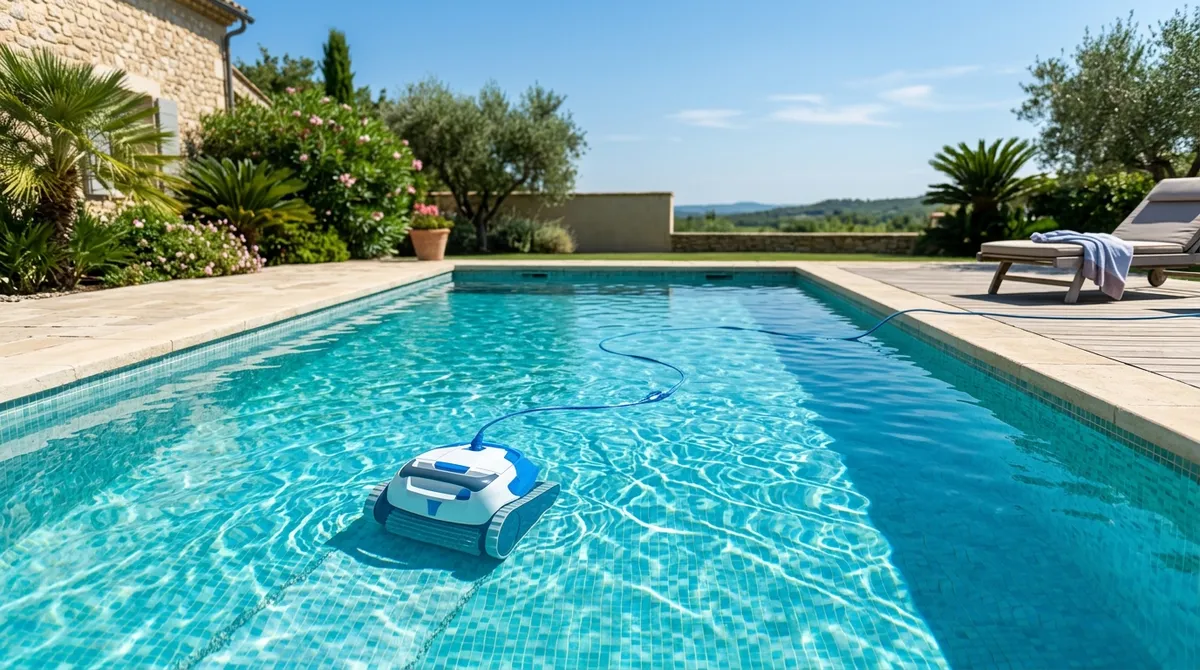
Entry-level cordless robotic cleaners are now available for $375-$400 in 2026, offering convenient automated cleaning with minimal effort for busy homeowners.
-
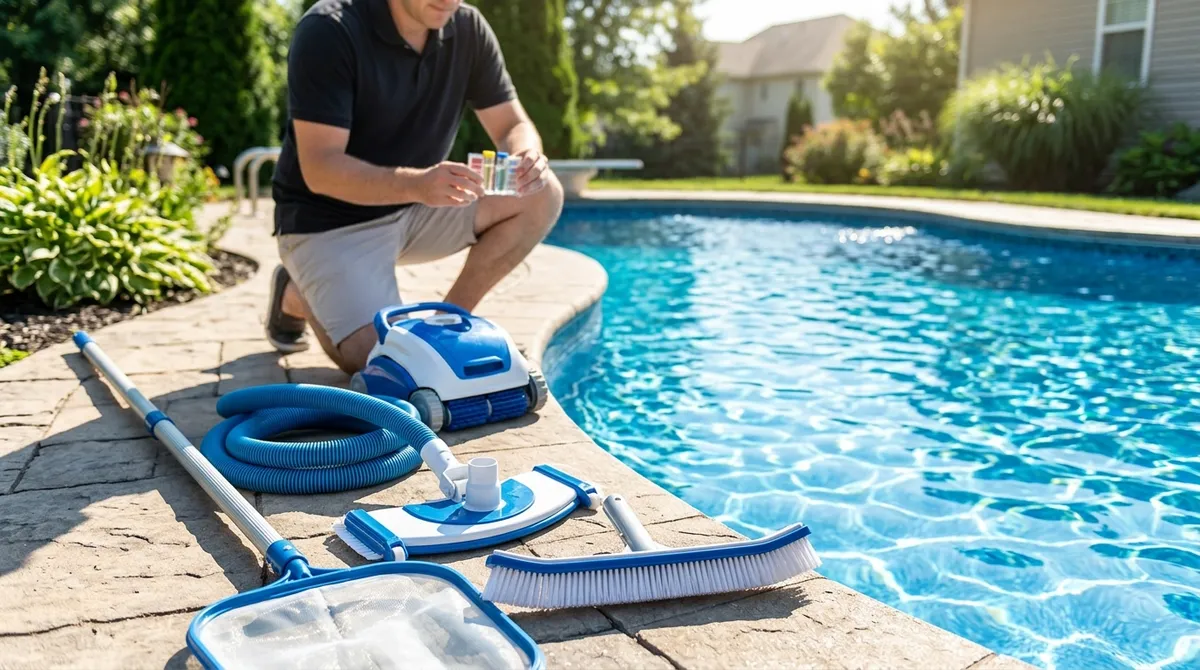
Manual vacuum heads ($30-$80) and basic tool combos like skimmer nets and brushes (under $50) provide cost-effective spot cleaning and algae prevention without electricity.
-
A hybrid approach combining budget DIY tools for routine maintenance with monthly professional service for water chemistry and equipment inspection is more cost-effective than relying solely on either option.
-
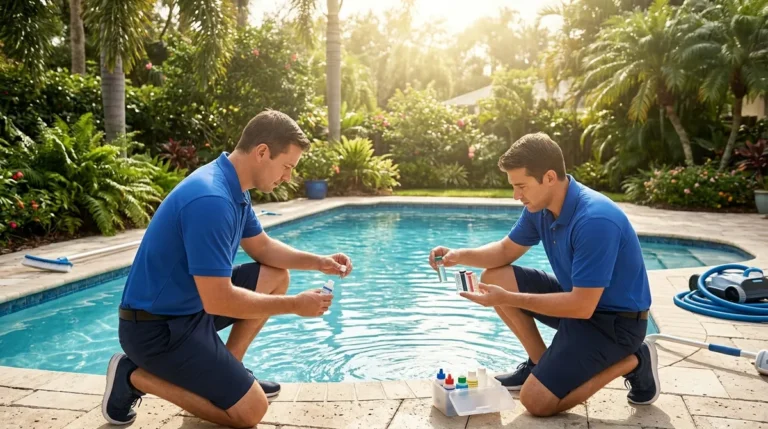
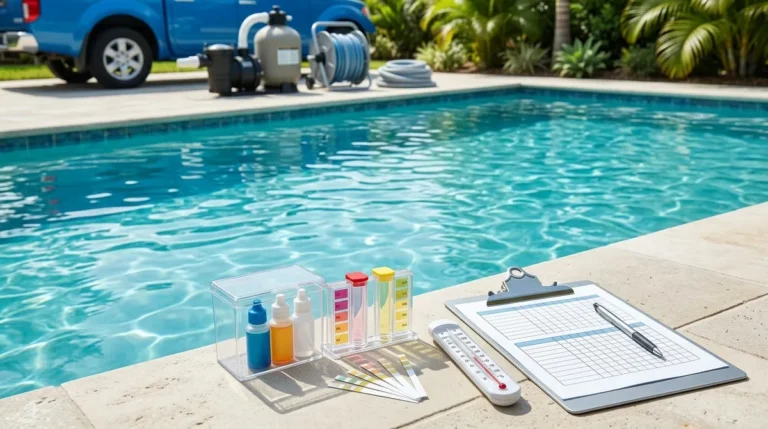
Budget cleaners handle daily debris removal and floor vacuuming well but cannot address water chemistry balancing, equipment repairs, or algae blooms—professional service is needed for these issues.
-
Running your cleaner daily, cleaning the filter after each use, and combining multiple tools (skimmer, brush, vacuum) maximizes performance and prevents costly equipment damage from debris buildup.
Keeping your pool clean doesn’t have to drain your wallet. Whether you’re a new pool owner or a seasoned Tampa homeowner looking to cut costs, finding the right budget-friendly cleaning solution can make a huge difference. The good news? There are some genuinely great inexpensive pool cleaners out there that work hard without a hefty price tag.
In this guide, we’re breaking down nine of the best affordable pool cleaning options — from manual tools to entry-level automatic cleaners — so you can make a smart choice for your pool and your budget. We’ll also share some tips on when it makes more sense to call in the pros. Let’s dive in!
Understanding Your Budget Pool Cleaner Options
Before you start shopping, it helps to understand the three main types of automatic pool cleaners. Each one has its own price range, strengths, and trade-offs. Knowing the difference makes it easier to find the right fit for your pool size, shape, and budget.
Here’s a quick comparison to help you get started:
| Cleaner Type | Typical Price Range | Best For | Maintenance Level |
|---|---|---|---|
| Manual Vacuum | $30 – $100 | Small pools, spot cleaning | High (hands-on) |
| Suction-Side Cleaner | $100 – $300 | Debris-heavy pools | Medium |
| Pressure-Side Cleaner | $200 – $500 | Larger pools with lots of debris | Medium |
| Entry-Level Robotic Cleaner | $375 – $575 | Convenience seekers | Low |
As you can see, suction-side cleaners and manual tools offer the lowest entry point. Entry-level cordless robotic cleaners have become more affordable in 2026, with some models priced around $375 to $400. For a deeper look at how inground pool cleaning actually works, that resource is a great starting point.
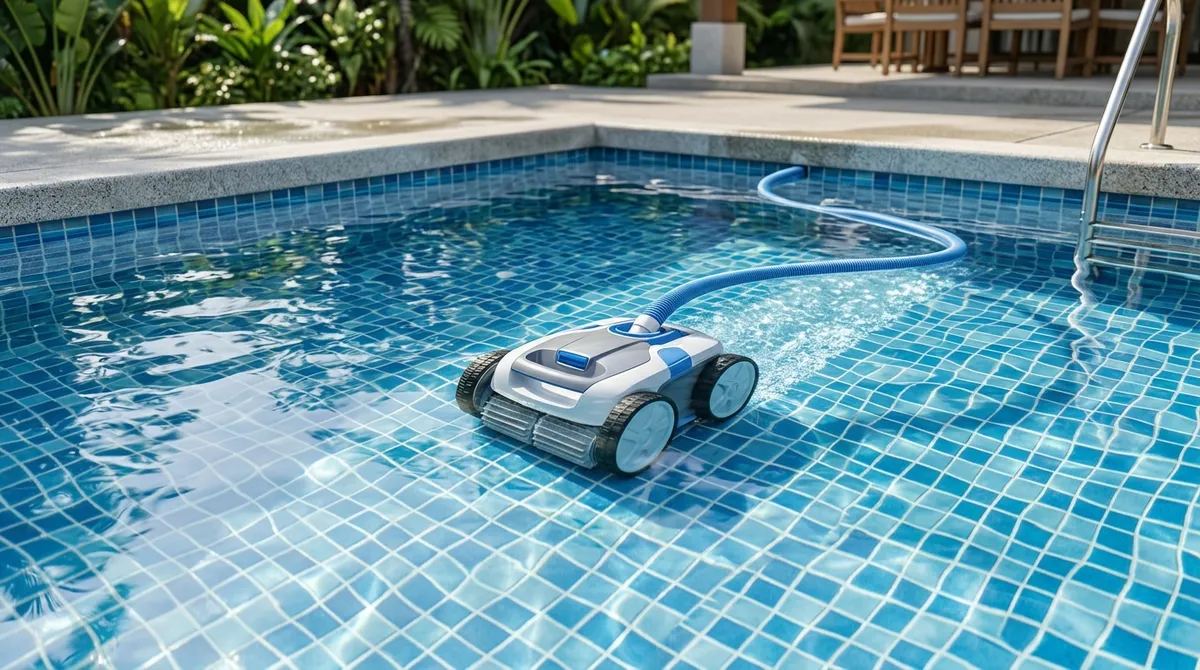
The 9 Best Inexpensive Pool Cleaners to Consider
1. Manual Vacuum Head with Telescoping Pole
This is the most affordable option on the market — and it’s surprisingly effective for spot cleaning. A basic manual vacuum head attached to a telescoping pole lets you target specific dirty areas of your pool floor or walls. It’s a hands-on approach, but it gets the job done.
- Very low upfront cost ($30 – $80)
- No electricity or extra equipment needed
- Great for quick touch-ups between cleanings
- Works with your existing pump and filter
2. Basic Suction-Side Pool Cleaner
Suction-side cleaners are widely considered the least expensive automatic pool cleaner option. They connect to your pool’s skimmer or a dedicated suction port and use your existing pump to move around the pool. They’re simple, reliable, and a solid pick for budget-conscious pool owners.
The right automatic pool cleaner can save you hours of manual work each week. Suction-side models are a great starting point for first-time buyers.
- Affordable upfront cost ($100 – $250)
- Uses your pool’s existing pump system
- Handles leaves, dirt, and fine debris well
- Easy to install and maintain
3. Leaf Bagger or Leaf Canister
Tampa pools deal with a LOT of leaves and organic debris — especially during storm season. A dedicated leaf bagger or canister attachment is an inexpensive add-on that dramatically reduces how often you need to empty your filter basket. It pairs perfectly with a suction-side cleaner.
For more tips on dealing with organic debris, check out these pool leaf removal tips every Tampa owner needs.
4. Pool Skimmer Net and Brush Combo
Don’t overlook the basics! A high-quality skimmer net and wall brush combo is one of the most cost-effective tools you can own. Brushing your pool walls weekly prevents algae buildup, and skimming the surface keeps debris out of your filter. These two tools cost less than $50 combined.
- Essential tools every pool owner should have
- Helps prevent algae and staining on pool walls
- Extends the life of your filter and pump
- Lightweight and easy to use for all ages
If you want to avoid common mistakes with wall maintenance, this guide on pool wall brushing mistakes that damage your pool is worth a read.
5. Pressure-Side Cleaner (Entry-Level)
Entry-level pressure-side cleaners use the water pressure from your pool’s return jets to move around and collect debris into a built-in bag. They’re a step up from suction-side cleaners in terms of debris capacity, and budget-friendly versions can be found in the $200 – $350 range.
- Collects debris in its own bag (less stress on your filter)
- Handles larger debris like twigs and leaves
- Good for pools near trees or shrubs
- Works without a booster pump at the entry level
6. Robotic Cleaner Under $400
The robotic pool cleaner market was estimated at USD 1.18 billion in 2025 and is forecast to grow at a 23.7% CAGR from 2026 to 2035. That growth is partly driven by more affordable entry-level models hitting the market. In 2026, you can find cordless robotic cleaners priced around $375 – $400 that handle basic floor and wall cleaning with minimal effort on your part.
These cleaners are a game-changer for busy families and retirees who want clean pools without the manual labor. They run independently, filter water as they clean, and most have simple one-button operation. For a broader look at pool automation systems every Tampa owner needs, that’s a fantastic resource.
7. Cordless Handheld Pool Vacuum
Cordless handheld vacuums have become a popular budget option for above-ground and smaller inground pools. They run on rechargeable batteries and require no hose connections. They’re perfect for spot-cleaning steps, corners, and benches that bigger cleaners often miss.
- No cords or hoses to deal with
- Great for tight spaces and corners
- Easy to store and transport
- Typically priced between $60 – $150
8. Pool Vacuum Plate and Skimmer Adapter
A vacuum plate is a small, inexpensive accessory (often under $15) that fits over your skimmer basket and connects to your vacuum hose. It allows you to vacuum your pool through the skimmer without losing suction. It’s a must-have tool if you’re using a manual vacuum or want to boost your suction-side cleaner’s performance.
Making sure your pool’s filtration system is running well is just as important as vacuuming. This article on maintaining your pool’s filters walks you through the key steps.
9. Algae Brush with Stainless Steel Bristles
For pools that battle recurring algae — which is common in Florida’s warm, humid climate — a stainless steel algae brush is a powerful and inexpensive tool. It scrubs away stubborn algae patches from pool walls, steps, and floors far more effectively than a standard nylon brush. These run $20 – $40 and can save you from expensive chemical treatments down the line.
If algae is already a problem in your pool, this guide on how to remove pool algae and restore crystal-clear water is incredibly helpful.
How to Choose the Right Budget Pool Cleaner for Your Pool
With so many options available, it’s easy to feel overwhelmed. Here’s a simple step-by-step process to narrow things down:
- Assess your pool size and shape. Larger, irregularly shaped pools may need a more capable cleaner than a basic suction-side model.
- Identify your biggest cleaning challenge. Is it leaves? Dirt? Algae? Choose a cleaner that specifically addresses your main problem.
- Set a realistic budget. Decide how much you’re comfortable spending upfront vs. ongoing maintenance costs.
- Check compatibility. Make sure any automatic cleaner works with your existing pump and filter system.
- Read the warranty terms. Even budget cleaners should come with at least a one-year warranty from the manufacturer.
The Independent Pool and Spa Service Association (IPSSA) is a great resource for understanding pool maintenance standards and best practices as you research your options.
What Inexpensive Pool Cleaners Can (and Can’t) Do
Budget pool cleaners are fantastic tools, but it’s important to have realistic expectations. Here’s a clear breakdown:
| Task | Budget Cleaner Handles It? | Notes |
|---|---|---|
| Removing leaves and debris | ✅ Yes | Suction-side and pressure-side cleaners do this well |
| Vacuuming pool floor | ✅ Yes | Manual and suction-side cleaners handle this |
| Scrubbing pool walls | ⚠️ Partially | Entry-level robots may struggle on steep walls |
| Balancing water chemistry | ❌ No | Requires separate testing and chemicals |
| Repairing equipment | ❌ No | Needs professional service |
| Deep cleaning after algae bloom | ❌ No | Requires shock treatment and professional help |
Understanding these limits is key. A budget cleaner handles day-to-day maintenance well. But for deeper issues — like water chemistry, equipment repair, or algae remediation — you’ll want professional support. The EPA’s pool water efficiency resources are also worth bookmarking for guidance on maintaining safe, efficient pools.
Smart Tips for Getting the Most From Budget Pool Cleaners
Want your inexpensive pool cleaner to work its hardest? Follow these tips:
- Run your cleaner regularly. Daily or near-daily use prevents debris buildup and keeps your filter from getting overwhelmed.
- Clean the filter after each use. Empty the filter bag or basket after every cleaning cycle to maintain suction and efficiency.
- Brush walls before vacuuming. Loosen algae and debris from walls first, then let your vacuum pick it up.
- Check for wear and tear. Replace worn hoses, wheels, or brushes promptly to keep your cleaner performing well.
- Combine tools for best results. Use a skimmer net, brush, and automatic cleaner together for a comprehensive clean.
For a complete routine, this guide on weekly pool maintenance to keep your pool clean all year is a fantastic companion resource.
When DIY Cleaning Isn’t Enough
Inexpensive pool cleaners are great for routine upkeep, but some situations genuinely require professional expertise. Knowing when to call in the pros can save you significant time, money, and headaches in the long run.
Consider calling a professional pool service when you notice:
- Persistent green or cloudy water that won’t clear up
- Strange noises or reduced performance from your pump
- Visible cracks, stains, or damage to pool surfaces
- Consistent chemical imbalances despite regular testing
- Equipment failures like broken filters or heaters
The Florida Swimming Pool Association (FSPA) sets industry standards for pool service professionals in Florida, ensuring homeowners receive quality, trustworthy care.
That’s where Panther Pools’ professional pool cleaning services in Tampa truly shine. As Tampa’s premier pool cleaning company, Panther Pools brings certified expertise, reliable technicians, and comprehensive service packages to keep your pool in top condition — no matter what your pool throws at you. Their team holds a Certified Pool Operator credential (CPO 648855) and offers free estimates with seven-days-a-week customer support.
If you’re weighing the cost of DIY vs. professional care, this article on why professional pool cleaning is worth it in 2026 lays out the full picture clearly.
Combining Budget Tools With Professional Service
The smartest approach for most Tampa pool owners isn’t all-or-nothing. You can absolutely use inexpensive pool cleaners for routine day-to-day maintenance, while scheduling professional service monthly for a deeper clean, equipment inspection, and water chemistry management. This hybrid approach keeps costs down without sacrificing water quality or pool longevity.
Many homeowners who work with neighbors like the team at Smile District know that investing wisely in your home’s upkeep — whether it’s dental health or pool health — pays off in the long run. The same principle applies here: smart, consistent maintenance beats costly emergency repairs every time.
For a comprehensive look at what a professional service covers, this resource on pool maintenance services every Tampa pool owner needs to know is a great read. And if you’re curious about service packages and pricing, explore what pool service really costs to find the best fit for your needs.
Homeowners who partner with services like BluHalo for home comfort solutions understand that keeping your living environment clean and well-maintained — indoors and out — creates a better quality of life. Your pool is no different.
Final Thoughts on Inexpensive Pool Cleaners
Finding the right inexpensive pool cleaner doesn’t mean settling for less. It means being smart about where you spend your money and matching the right tool to the right job. From a simple manual vacuum to an entry-level cordless robot, there are excellent budget-friendly options available in 2026 that can keep your pool looking beautiful all season long.
That said, even the best budget cleaner has its limits. Pairing your DIY tools with expert professional care — especially for water chemistry, equipment health, and deep cleaning — is the ultimate winning combination for any Tampa pool owner.
Ready to take your pool care to the next level? Get in touch with the Panther Pools team today for a free estimate and find out how our service packages can complement your cleaning routine. Your pool deserves the best — and so do you!
FAQs
Q: What is the cheapest type of automatic pool cleaner?
A: Suction-side pool cleaners are generally the least expensive automatic option, often ranging from $100 to $250. They connect to your pool’s existing pump and filter system, which means no extra equipment needed — just plug in and let it work!
Q: Are inexpensive pool cleaners good enough for inground pools?
A: Absolutely — many budget-friendly suction-side and entry-level robotic cleaners work great on inground pools for routine debris removal and floor vacuuming. Just make sure you choose a model rated for your pool’s size and shape for the best results.
Q: How much should I expect to spend on a budget robotic pool cleaner in 2026?
A: In 2026, you can find solid entry-level cordless robotic pool cleaners priced around $375 to $400, with mid-range cordless models running $500 to $575. They offer a great balance of convenience and affordability compared to premium robotic units.
Q: Do budget pool cleaners require a lot of maintenance?
A: Most inexpensive pool cleaners require basic upkeep like emptying the filter bag or basket after each use, checking hoses for wear, and rinsing components regularly. It’s simple stuff that takes just a few minutes and keeps your cleaner running strong!
Q: When should I hire a professional pool cleaner instead of relying on a budget cleaner?
A: If your pool has persistent green water, equipment issues, stubborn algae, or chemical imbalances that won’t resolve with regular cleaning, it’s time to call in a professional. Budget cleaners handle routine maintenance well, but deeper problems need expert hands and professional-grade solutions.