
Key Takeaways
-
Never mix different pool chemicals together as this creates toxic fumes, violent reactions, or fire hazards; always add each chemical separately and wait for circulation before adding the next one.
-
Always add chemicals to water, never water to chemicals, and never mix chlorine products from different brands or types to prevent dangerous splashing, heat reactions, and toxic gas formation.
-
Maintain proper chemical levels: chlorine 1-3 ppm, pH 7.2-7.8, total alkalinity 80-120 ppm, calcium hardness 200-400 ppm, and cyanuric acid 30-50 ppm to keep water safe and balanced.
-
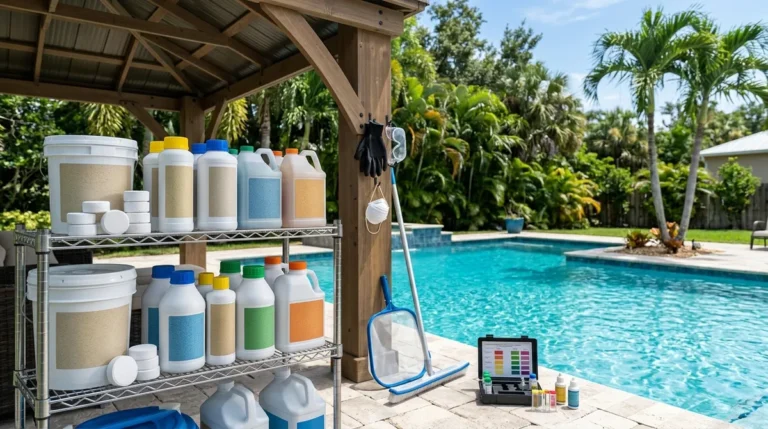
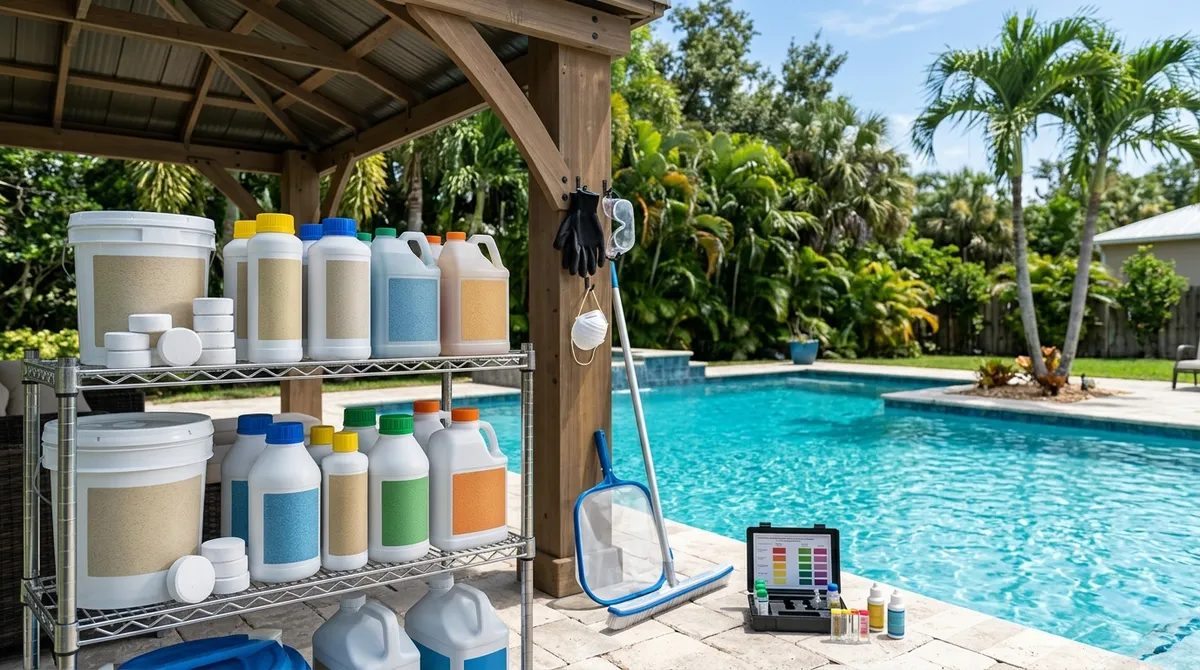
Store all pool chemicals separately in cool, dry, ventilated areas away from heat, moisture, and each other—especially keep oxidizers and chlorine products in different locations to prevent fires.
-
Wear full protective gear including gloves, goggles, and face shield when handling muriatic acid, and always dilute it by adding it slowly to water rather than adding water to the acid.
-
Test pool water 2-3 times weekly, especially during hot months, and consider hiring a certified professional pool technician to eliminate guesswork and safety risks associated with chemical management.
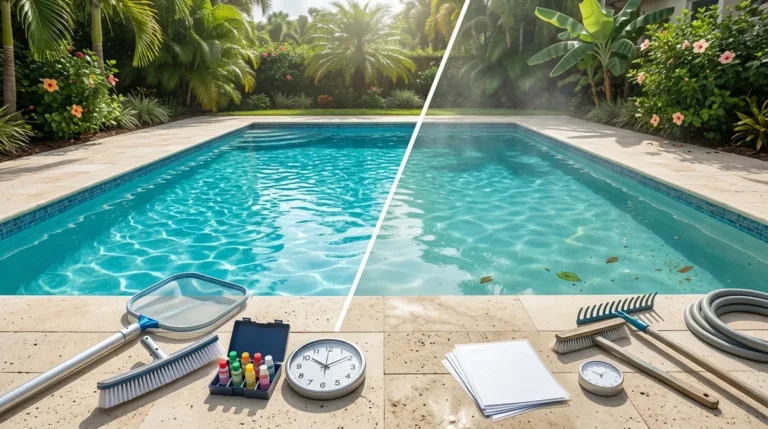
Owning a pool in Tampa is one of life’s great pleasures. But keeping that water sparkling clean and safe? That’s where things can get a little tricky. Safe pool chemicals are the backbone of a healthy swimming pool. They protect your family from harmful bacteria, keep the water balanced, and make every swim a joy. But handling them the wrong way can cause real problems — from skin irritation to dangerous chemical reactions.
Whether you’re a busy parent, a proud new homeowner, or managing a commercial property, understanding the basics of pool chemical safety is a must. This guide walks you through the seven most important safe pool chemicals, how they work, and how to use them without putting yourself or your swimmers at risk. Let’s dive in!
Why Pool Chemical Safety Matters So Much
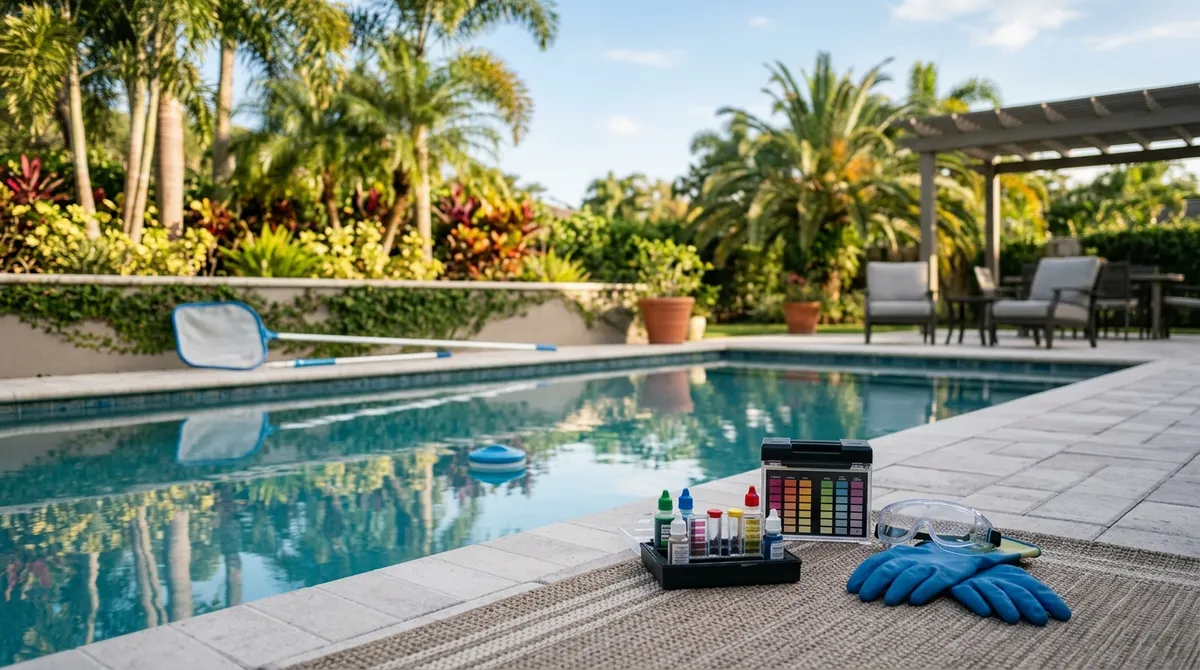
Pool chemicals do an amazing job of keeping water clean. But they can also be hazardous when mishandled. The CDC’s pool chemical safety guidelines note that improper storage, mixing, or handling is the leading cause of pool-related chemical injuries. Burns, toxic fumes, and even fires can result from simple mistakes.
The good news? Most accidents are completely preventable. With the right knowledge and care, you can maintain a beautiful, healthy pool safely. For homeowners who’d rather leave the chemistry to the pros, the Pool Cleaning Services Tampa team at Panther Pools handles all of this for you — safely, professionally, and on schedule.
1. Chlorine: The Foundation of Safe Pool Sanitization
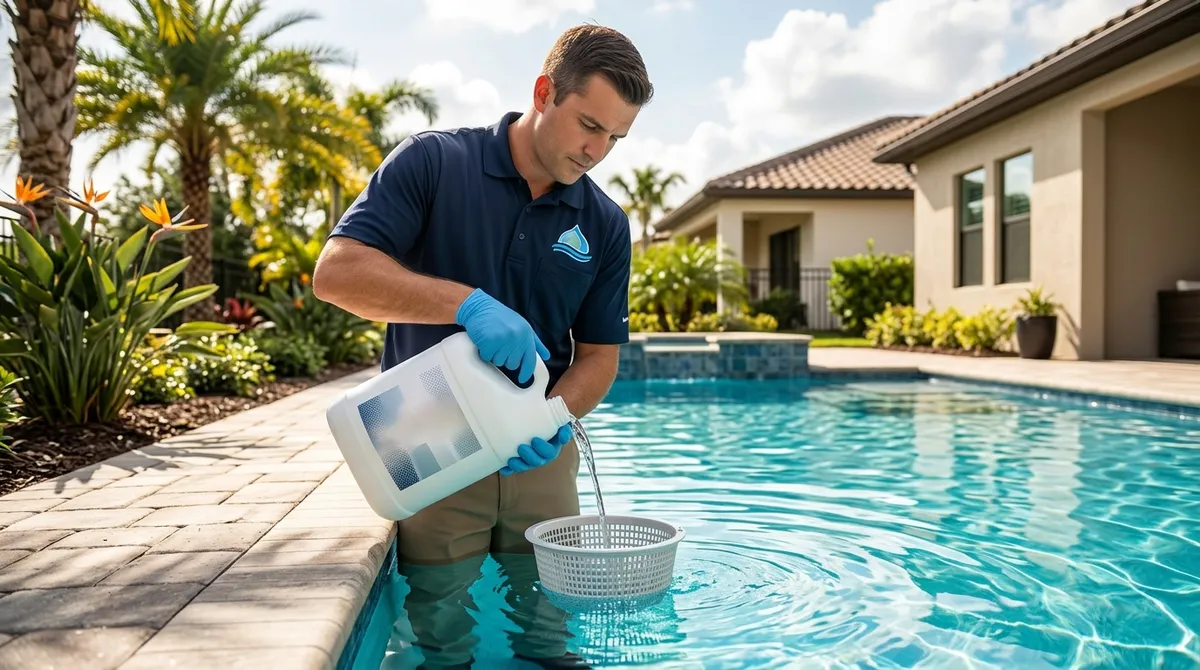
Chlorine is the most widely used pool sanitizer in the world — and for good reason. It kills bacteria, viruses, and algae that can make swimmers sick. It comes in several forms, including liquid, granules, and slow-dissolving tablets.
Here’s what you need to know about using chlorine safely:
- Always add chlorine to water — never add water to chlorine
- Store in a cool, dry place away from heat and direct sunlight
- Never mix chlorine products from different brands or types
- Wear gloves and eye protection when handling
- Keep chlorine levels between 1–3 parts per million (ppm) for safe swimming
If you’re unsure about your chlorine levels, check out this guide on why chlorine pool maintenance matters so much to get up to speed quickly.
2. Bromine: A Gentler Alternative for Sensitive Swimmers
Bromine works a lot like chlorine, but it’s often easier on eyes and skin. It’s a popular choice for hot tubs and heated pools. It still sanitizes effectively and handles bacteria and algae with ease.
Safe handling tips for bromine include:
- Store in a sealed container away from moisture
- Keep away from chlorine products — mixing the two can create toxic gases
- Wear gloves and avoid breathing in the vapors
- Test water regularly to maintain proper levels (2–4 ppm for pools)
The Independent Pool and Spa Service Association (IPSSA) recommends regular training on chemical handling for anyone managing pool care — whether at home or commercially.
3. pH Adjusters: Keeping Your Water Balanced
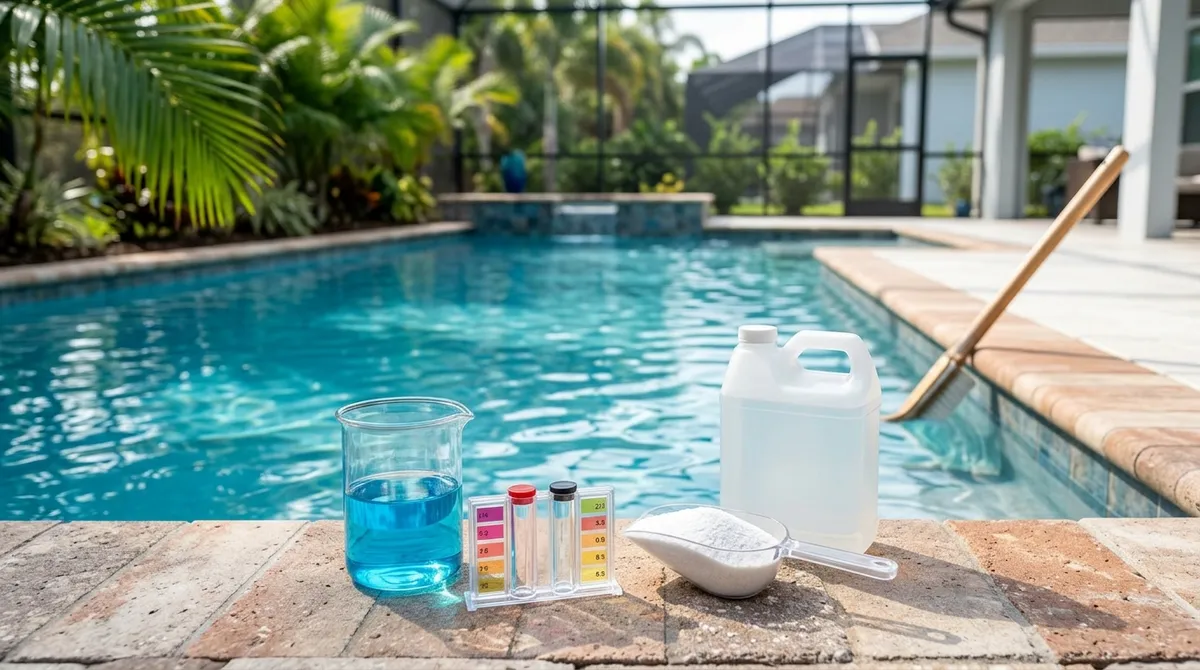
pH is a measure of how acidic or basic your pool water is. The ideal range is 7.2 to 7.8. When pH is off, chlorine stops working properly, swimmers get irritated eyes, and your pool equipment can corrode or scale up.
There are two main pH adjusters you’ll use:
- pH Increaser (Sodium Carbonate / Soda Ash) — raises pH when water is too acidic
- pH Reducer (Muriatic Acid or Sodium Bisulfate) — lowers pH when water is too basic
Muriatic acid is the one that deserves the most respect. It’s highly corrosive and must be handled with full protective gear — gloves, goggles, and a face shield. Always dilute it first by adding it slowly to water. Never add water to the acid. For a deeper look at water balance, visit our guide on 10 pool water balancing tips every Tampa owner needs.
4. Alkalinity Adjusters: The Buffer That Stabilizes pH
Total alkalinity acts as a buffer for your pH. It keeps your pH from swinging wildly up and down. Without the right alkalinity, maintaining balanced water becomes a frustrating guessing game.
The ideal total alkalinity range is 80–120 ppm. To raise it, you use sodium bicarbonate (baking soda). To lower it, you use muriatic acid. Here’s a quick comparison:
| Chemical | Purpose | Target Range | Safety Note |
|---|---|---|---|
| Sodium Bicarbonate | Raise alkalinity | 80–120 ppm | Low hazard; avoid breathing dust |
| Muriatic Acid | Lower alkalinity/pH | Varies | Highly corrosive; use PPE always |
| Soda Ash | Raise pH | 7.2–7.8 pH | Irritant; avoid contact with skin |
| Sodium Bisulfate | Lower pH | 7.2–7.8 pH | Irritant; dilute before adding |
Keeping these in check helps your sanitizer work at full strength. It also protects your pool surfaces and equipment from damage. Learn more about preventing chemistry mistakes in our guide on 11 pool water chemistry mistakes you must stop making.
5. Calcium Hardness Increasers: Protecting Your Pool Shell
Calcium hardness refers to the amount of dissolved calcium in your pool water. Too little and the water becomes “hungry” — it will actually pull calcium from your pool walls, tiles, and equipment. Too much and you get cloudy water and scaly deposits.
The ideal calcium hardness range is 200–400 ppm. Calcium chloride is the go-to product for raising calcium levels. Here’s how to use it safely:
- Pre-dissolve in a bucket of water before adding to the pool
- Add slowly around the perimeter of the pool while the pump runs
- Wear gloves — calcium chloride generates heat when it dissolves
- Test water 24 hours later to confirm levels
If your pool is showing signs of scale or surface damage, it could be a calcium hardness issue. Get a professional assessment through our pool maintenance services guide to find out what your pool really needs.
6. Cyanuric Acid: Protecting Chlorine From the Sun
Florida’s sunshine is amazing — but it’s brutal on chlorine. UV rays from the sun can break down free chlorine in your pool within just a few hours. That’s where cyanuric acid (also called a chlorine stabilizer or conditioner) comes in. It acts like sunscreen for your chlorine, helping it last much longer in the water.
The recommended level for cyanuric acid is 30–50 ppm for most residential pools. Going too high (above 100 ppm) actually weakens chlorine’s effectiveness — a problem known as “chlorine lock.”
Safe use tips for cyanuric acid:
- Add slowly through the skimmer or pre-dissolve in a bucket
- Avoid breathing the powder; wear a dust mask
- Don’t over-add — levels can only be reduced by diluting with fresh water
- Test levels monthly as part of your regular water testing routine
For saltwater pool owners, cyanuric acid management is especially important. Check out our guide on 12 saltwater pool maintenance tips for the full picture. The Florida Swimming Pool Association (FSPA) also offers excellent resources on chemical management for Florida pool owners.
7. Algaecides: Your Last Line of Defense Against Green Water
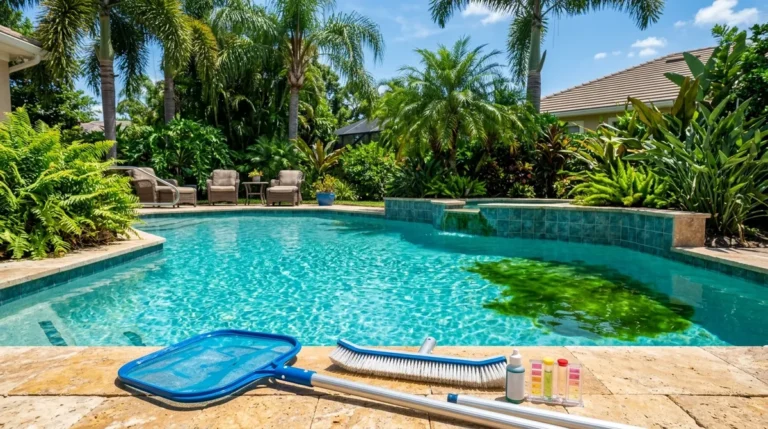
Even with perfect chlorine and pH levels, algae can sometimes take hold — especially in Tampa’s warm, humid climate. That’s where algaecides come in. They’re a backup weapon that kills and prevents algae growth in your pool.
Common types of algaecides include:
- Quaternary ammonium compounds (quats) — good for prevention; may cause foaming
- Polyquat algaecides — non-foaming and very effective for regular maintenance
- Copper-based algaecides — powerful but can stain pool surfaces if overused
Always follow label directions when using algaecides. Adding too much can cause foaming, staining, or water discoloration. If you’re already dealing with a green pool, our step-by-step guide on how to remove pool algae and restore crystal clear water walks you through the full recovery process.
Essential Pool Chemical Safety Rules Everyone Should Follow
Before you work with any pool chemicals, keep these golden rules in mind. They apply whether you’re a first-time pool owner or a seasoned pro.
- Read the label every time. Product formulas change. Never assume you know the directions by heart.
- Store chemicals separately. Oxidizers and chlorine products stored together can ignite. Keep them in different, ventilated areas.
- Never mix chemicals together. Even “compatible” chemicals should be added to the pool separately.
- Add chemicals to water, not water to chemicals. This prevents dangerous splashing and heat reactions.
- Use protective gear. Gloves, goggles, and old clothes are always a good idea.
- Keep kids and pets away. Wait the recommended time after adding chemicals before allowing anyone in the pool.
- Dispose of chemicals properly. Follow local guidelines — never pour unused chemicals down the drain or in the trash.
The EPA’s pool water resources provide additional guidance on responsible chemical use and water efficiency for pool owners. For homeowners who’d prefer a totally hands-off approach, professional pool chemical service from a trusted local team is a smart, stress-free option.
How to Store Pool Chemicals Safely at Home
Safe storage is just as important as safe application. Here’s a quick reference table for storing the most common pool chemicals properly:
| Chemical Type | Storage Location | Key Precautions |
|---|---|---|
| Chlorine tablets/granules | Cool, dry, ventilated area | Keep away from heat, flames, and oxidizers |
| Muriatic acid | Locked cabinet, well-ventilated | Store upright; keep away from metals |
| Algaecides | Cool, dry location | Keep sealed; away from children and pets |
| Cyanuric acid | Dry area in original container | Avoid moisture; wear dust mask when handling |
| pH adjusters | Separate from chlorine products | Never store acids near chlorine |
Proper storage protects your family, your home, and the environment. If you’re looking to better understand the differences between DIY and professional chemical management, our article on DIY vs. Pro Pool Chemical Storage: Which Is Safer? is a great read. And for homes where overall home maintenance matters, companies like Bucheli Trim can help keep the surrounding structures and spaces in great shape too.
When to Let the Professionals Handle Pool Chemicals
Let’s be honest — pool chemistry can feel overwhelming. There are multiple chemicals to track, levels to test, and timing to manage. For busy families, luxury homeowners, and commercial property managers, handing this off to a professional is often the smartest move.
At Panther Pools, our certified technicians (CPO 648855) handle all chemical testing, balancing, and treatment as part of our regular service plans. We take the guesswork out of pool care so you can simply enjoy the water. Whether you need pool maintenance in West Chase or full-service commercial pool care across Tampa, our team is available seven days a week.
Not sure what service is right for you? Our article on what pool service costs breaks down your options clearly and simply.
Wrapping Up: Safe Pool Chemicals Keep Everyone Happy
Safe pool chemicals aren’t scary — they just need to be respected. When used, stored, and handled correctly, they keep your pool water healthy, clear, and inviting for everyone. The seven chemicals covered in this guide — chlorine, bromine, pH adjusters, alkalinity adjusters, calcium hardness increaser, cyanuric acid, and algaecides — are the core tools for a safe and sparkling pool.
Whether you’re a DIY enthusiast or someone who prefers professional help, the most important thing is that your pool water stays safe and balanced. If you’re ready to take the stress out of pool chemical management, reach out to our friendly team at Panther Pools for a free estimate and let Tampa’s most trusted pool professionals take care of everything.
FAQs
Q: What are the safest pool chemicals for families with young children?
A: Chlorine at the correct level (1–3 ppm) is very safe for children when the pool water is properly balanced. The key is making sure pH stays between 7.2 and 7.8 so the chlorine works effectively without irritating little eyes and skin. Always wait the recommended re-entry time after adding chemicals before letting kids back in the pool!
Q: Can I mix different pool chemicals together to save time?
A: Please don’t — mixing pool chemicals is one of the most dangerous things you can do! Even products that seem similar can create toxic fumes, violent reactions, or fire hazards when combined. Always add each chemical to the pool separately and wait for it to circulate before adding the next one.
Q: How often should I test my pool water for safe chemical levels?
A: For most residential pools, testing two to three times per week is ideal — especially during Tampa’s hot summer months when water chemistry can shift quickly. If you’re using a professional pool service like Panther Pools, we handle all the testing and adjustments for you during every visit so you never have to worry!
Q: What should I do if I accidentally mix pool chemicals?
A: Get away from the area immediately and get fresh air — don’t try to clean it up yourself. Call 911 or Poison Control (1-800-222-1222) right away and let the professionals handle it. Prevention is always the best policy, so store all chemicals separately and read labels before every use.
Q: Is it better to hire a professional for pool chemical maintenance or do it myself?
A: Both options can work well, but hiring a professional takes away all the guesswork and safety risks! A certified pool technician knows exactly what chemicals your pool needs, in the right amounts, at the right time. For busy homeowners in Tampa, professional service from a team like Panther Pools is often the safest and most convenient choice.