
Key Takeaways
-
Maintain pH between 7.2-7.8 and free chlorine at 1-3 ppm simultaneously, as high pH reduces chlorine effectiveness even with correct chlorine levels.
-
Tampa’s intense heat and UV rays cause rapid chlorine breakdown, requiring frequent adjustments and careful cyanuric acid monitoring (20-50 ppm) that DIY approaches often miss.
-
Professional-grade testing equipment provides significantly more accurate readings than home test strips, preventing costly errors from misreading results and chemical interactions.
-
Exceeding 50 ppm cyanuric acid requires draining and refilling portions of the pool—a frustrating consequence of DIY miscalculation that professionals avoid through precision dosing.
-
Watch for warning signs like cloudy water, green walls, strong chemical smell, or visible scaling; catching these early prevents expensive equipment damage and health risks.
-
Test pool water 2-3 times weekly minimum in Tampa’s climate, or hire professionals for consistent weekly balancing to guarantee safety and water clarity without personal time investment.
Picture this: it’s a sunny Saturday in Tampa, your pool looks inviting, and your family is ready to jump in. But when you dip your hand in the water, something feels off. Maybe it’s cloudy, or your eyes start stinging after a quick swim. The culprit? Unbalanced pool chemistry. Pool water chemistry mistakes are more common than most people think, and they can turn your backyard paradise into a headache fast. The big question Tampa pool owners keep asking is simple: should you tackle pool chemical balancing yourself, or leave it to the pros? Let’s break it down clearly so you can make the best choice for your pool, your family, and your peace of mind.
What Is Pool Chemical Balancing?
Pool chemical balancing is the process of keeping your water’s key chemical levels within safe, healthy ranges. Think of it like keeping your car’s engine properly tuned. When everything is in balance, your pool runs smoothly. When it’s not, problems pile up fast.
There are several key measurements every pool owner needs to understand. These numbers determine whether your water is safe, comfortable, and properly sanitized. According to the Independent Pool and Spa Service Association (IPSSA), proper water chemistry is the foundation of every healthy swimming pool.
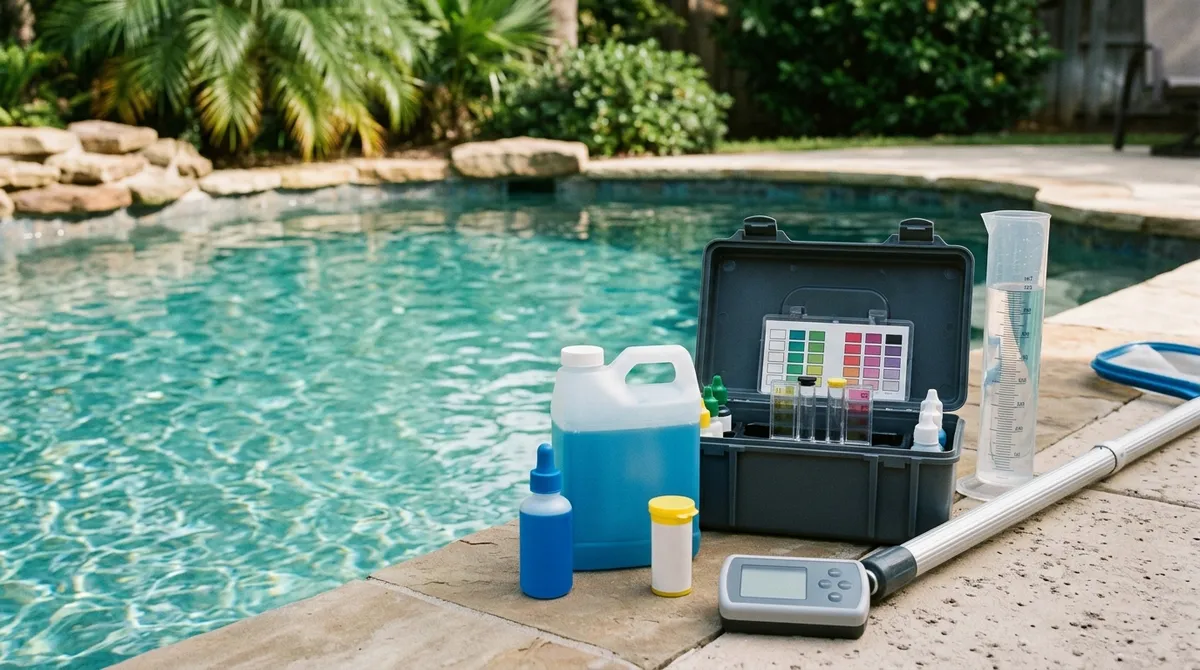
The Key Numbers Behind a Balanced Pool
Let’s look at the core chemical levels that matter most. Each one plays a specific role in keeping your pool safe and clean.
| Chemical Parameter | Ideal Range | What Happens If Off? |
|---|---|---|
| pH Level | 7.2 – 7.8 | Eye irritation, corroded equipment, cloudy water |
| Total Alkalinity | 80 – 120 ppm | pH swings, scaling, or surface etching |
| Free Chlorine | 1 – 3 ppm | Bacteria growth or skin and eye irritation |
| Calcium Hardness | 200 – 400 ppm | Surface damage, cloudy water, or equipment scaling |
| Cyanuric Acid (Stabilizer) | 20 – 50 ppm | Chlorine breaks down in sunlight, reduced sanitizing |
Each of these parameters works together. For example, pH directly affects how well your chlorine sanitizes the water. Even if your chlorine reads perfectly at 2 ppm, a high pH above 7.8 can make that chlorine far less effective. That’s why pool water balancing isn’t just about one number — it’s about all of them working in harmony.
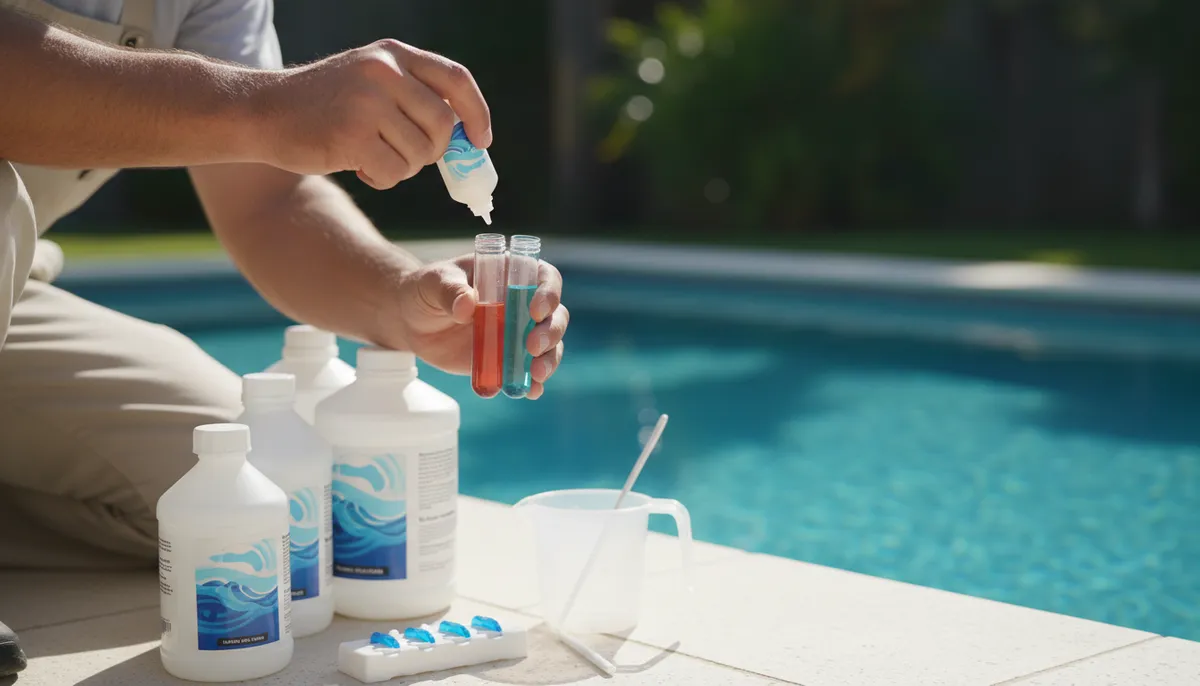
DIY Pool Chemical Balancing: The Honest Pros and Cons
Many Tampa pool owners start out handling their own chemical balancing. It’s understandable. You want control, and you want to save money. Here’s a fair look at what DIY really involves.
The Pros of Going DIY
- You’re in full control of your schedule and testing frequency
- You learn your pool’s unique chemistry patterns over time
- It can feel rewarding to maintain something yourself
- You can test the water anytime you notice an issue
The Cons of Going DIY
- Misreading test results is easy without proper training
- Buying and storing pool chemicals can be costly and hazardous
- One wrong adjustment can throw off multiple other levels
- Tampa’s heat and sun require more frequent adjustments than cooler climates
- Missing subtle signs of imbalance can lead to expensive repairs
The EPA’s pool water efficiency resources highlight how improper chemical use can also impact the environment and your pool’s water efficiency. This is worth keeping in mind when handling chemicals at home.
One of the biggest DIY pitfalls is not understanding how chemicals interact. For example, adding too much cyanuric acid — the stabilizer that protects chlorine from UV rays — can actually make your chlorine less effective. If it climbs above 50 ppm, you’ll need to drain a portion of the pool and refill it to bring levels back down. That’s a frustrating and time-consuming fix. DIY pool chemical storage also carries safety risks that many homeowners underestimate.
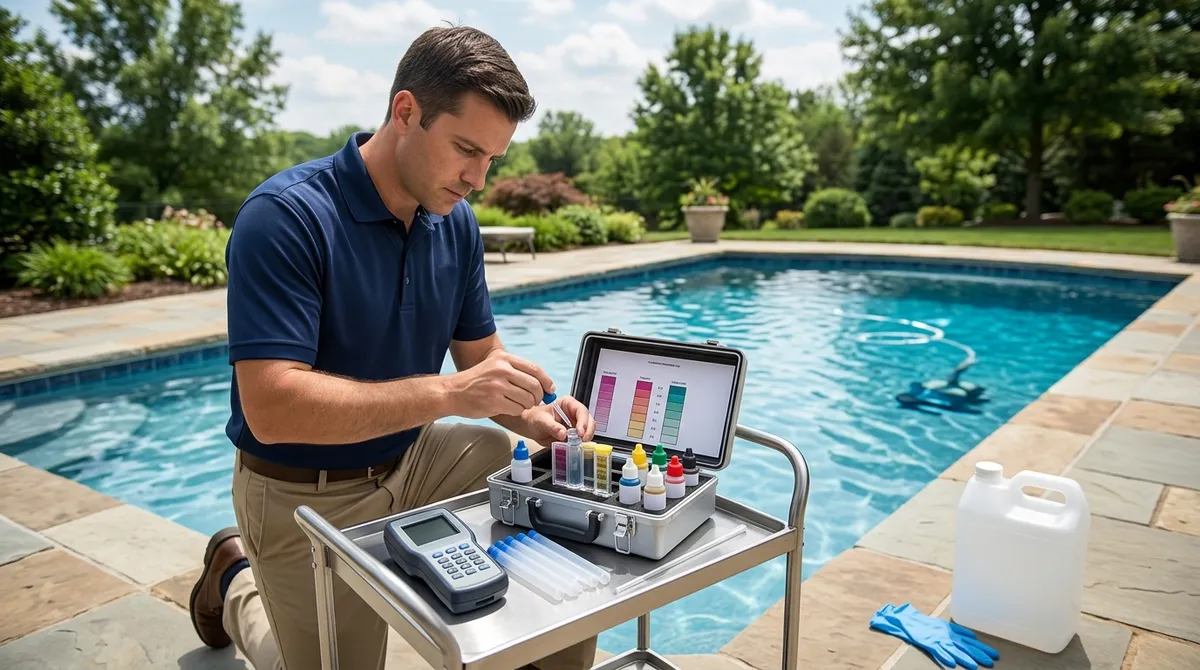
Professional Pool Chemical Balancing: Why It’s a Game-Changer
Now let’s talk about what happens when a trained pool technician takes over your chemical balancing. The difference is significant, especially here in Tampa’s climate.
What a Professional Does That You Might Miss
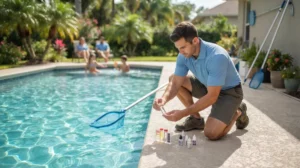
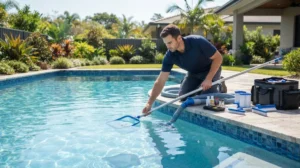
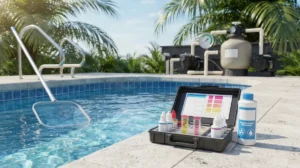
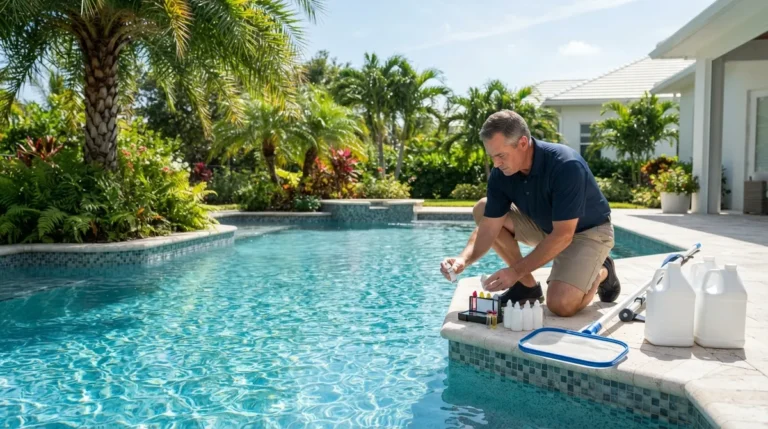
- Precision Testing: Pros use professional-grade testing equipment that gives more accurate readings than basic home test strips.
- Full Water Analysis: They test all five key parameters at once, not just chlorine and pH.
- Correct Dosing: They calculate the exact amount of each chemical needed based on your pool’s volume and current readings.
- Spotting Hidden Problems: Trained eyes catch early signs of algae, scaling, or equipment issues before they become costly repairs.
- Consistent Scheduling: Regular professional visits keep your chemistry stable week after week, regardless of weather changes or heavy pool use.
Tampa’s intense sunshine and high temperatures mean your pool chemistry changes faster than it would in cooler states. Chlorine breaks down quickly under strong UV rays, which is why cyanuric acid levels and chlorine dosing need careful, regular attention. A professional understands these local conditions and adjusts their approach accordingly. You can explore more about what proper professional care involves at what proper swimming pool maintenance really involves.
DIY vs. Pro: A Side-by-Side Comparison
Still on the fence? Here’s a direct comparison to help you visualize the difference between handling pool chemical balancing yourself versus hiring a professional service.
| Factor | DIY Balancing | Professional Balancing |
|---|---|---|
| Testing Accuracy | Moderate (test strips or basic kits) | High (professional-grade tools) |
| Time Required | Several hours per week | None — the pro handles everything |
| Chemical Knowledge | Self-taught, trial and error | Certified and experienced technicians |
| Consistency | Depends on your schedule | Reliable, scheduled visits |
| Risk of Errors | Higher without training | Low with certified professionals |
| Equipment Detection | Often missed until damage occurs | Caught early during routine checks |
This comparison makes one thing clear: professional pool chemical balancing gives you more accuracy, less stress, and better long-term results. If your pool is used regularly by children, guests, or family members, the stakes are even higher. The Florida Swimming Pool Association (FSPA) consistently emphasizes that proper water chemistry is a core safety standard for all Florida pools.
How to Know When Your Pool Chemistry Is Off
Whether you’re doing it yourself or hiring a pro, you should know the warning signs of an unbalanced pool. Catching these early saves money and keeps your water safe.
Common Warning Signs to Watch For
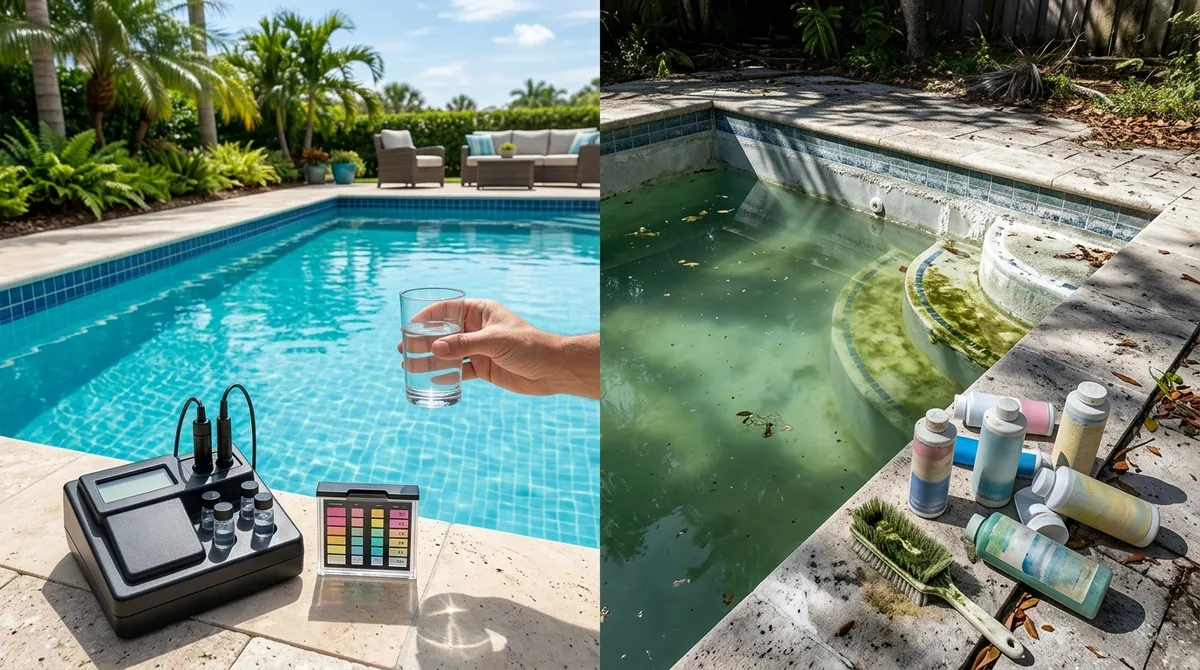
- Cloudy or murky water — often a sign of pH or alkalinity being off
- Green or slimy walls — algae growing due to low chlorine levels
- Strong chemical smell — usually caused by chloramines, not excess chlorine
- Eye and skin irritation — pH is likely too high or too low
- Visible scaling on tiles or equipment — calcium hardness is likely too high
- Faded or etched pool surfaces — water may be too acidic
If you’re seeing any of these signs, it’s time to test your water right away. You can learn more about testing your pool’s water to get a clearer picture of what’s happening with your chemistry. And if the numbers are way off, it’s wise to call in a professional rather than guessing at corrections.
Step-by-Step: How Professionals Balance Pool Chemicals
Curious about what a professional pool technician actually does during a chemical balancing visit? Here’s the process broken down in simple terms.
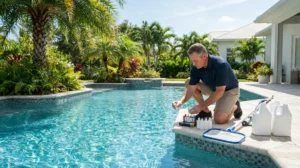
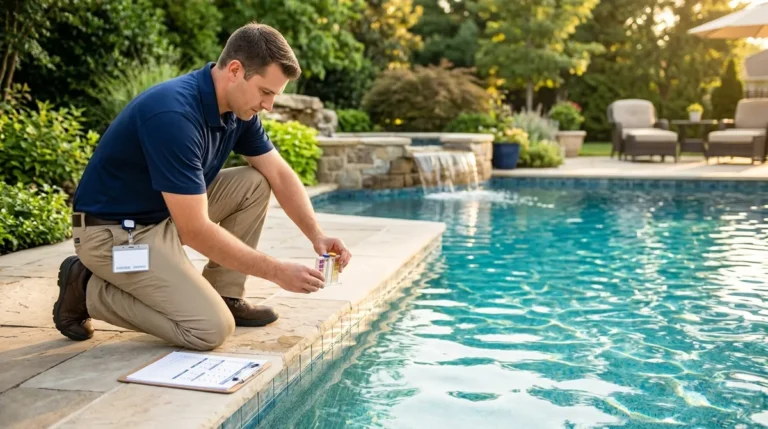
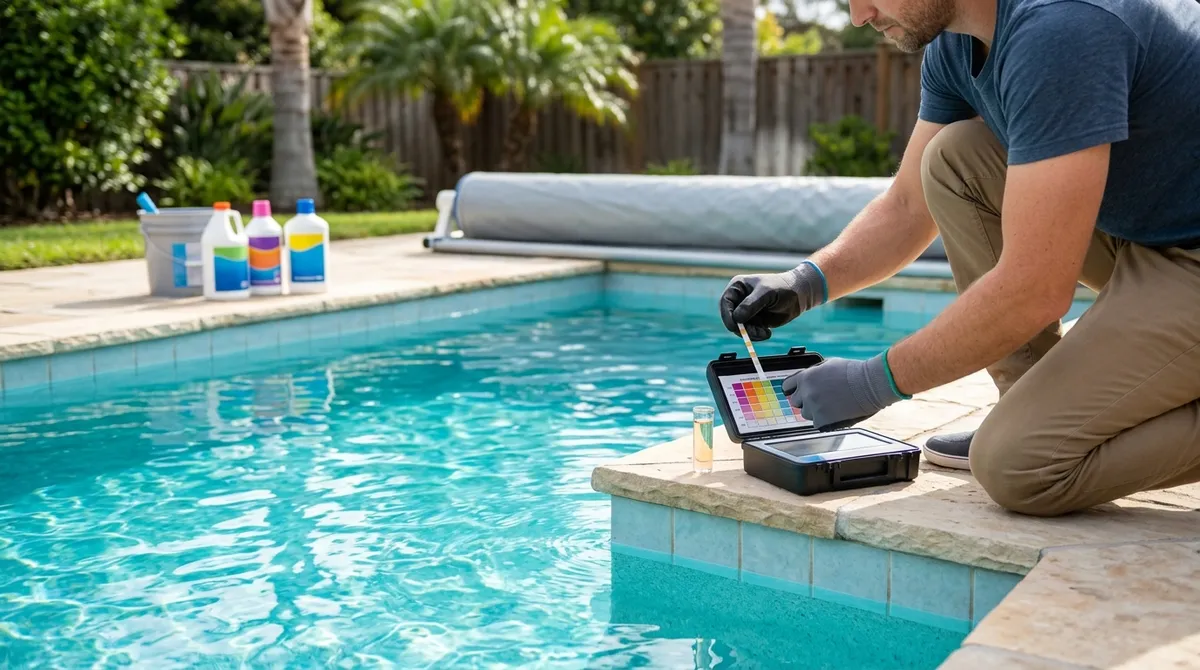
- Collect a water sample from the deep end of the pool, away from return jets and skimmers.
- Test all key parameters — pH, alkalinity, chlorine, calcium hardness, and cyanuric acid.
- Analyze the results and determine which levels need adjustment and by how much.
- Adjust total alkalinity first using sodium bicarbonate (baking soda) to raise it or muriatic acid to lower it.
- Balance pH next using soda ash to raise it or muriatic acid to lower it toward the ideal 7.2–7.8 range.
- Sanitize with chlorine to ensure free chlorine sits between 1–3 ppm for effective bacteria control.
- Check stabilizer levels and add cyanuric acid if needed to protect chlorine from UV degradation.
- Retest the water after adjustments to confirm everything is within the ideal range before leaving.
This methodical approach is what separates a professional’s results from a DIY attempt. Each step builds on the last, and skipping or rushing any of them can create new imbalances. Professional pool cleaning services in Tampa follow this careful process every single visit.
Panther Pools: Tampa’s Trusted Choice for Chemical Balancing
When it comes to pool chemical balancing in Tampa, Panther Pools brings certified expertise, professional equipment, and genuine care to every pool they service. As a family-owned company with a Certified Pool Operator credential (CPO 648855), they understand the unique demands of Florida’s climate. Their technicians follow a thorough, step-by-step balancing process that keeps your water safe, clear, and comfortable all year long.
Panther Pools offers residential and commercial pool services, flexible monthly service packages, free estimates, and seven-days-a-week customer support. Whether you’re a busy parent who just wants a safe pool for the kids, a luxury homeowner maintaining a premium property, or a commercial property manager keeping a community pool compliant, Panther Pools has you covered. For more about their approach to local pool care, explore why choosing the right Tampa pool company matters.
If you’re pairing pool care with a beautiful outdoor space, the team at Wayne & Sons Landscaping & Junk Removal is a trusted local partner for keeping your entire backyard looking its best alongside your sparkling pool.
The Verdict: Which Option Actually Wins?
Here’s the honest answer. DIY pool chemical balancing works as a temporary or supplemental solution if you have the time, knowledge, and commitment to do it consistently. But for most Tampa pool owners — especially those with families, busy schedules, or premium pools — professional chemical balancing is simply the smarter, safer choice.
The risks of getting the chemistry wrong are real. The CDC warns that excessive chlorine above recommended levels can irritate skin, eyes, and lungs, and even corrode pool equipment. On the flip side, too little chlorine allows harmful bacteria to grow. Getting that balance right every single week requires consistency and expertise. Check out 6 reasons professional pool cleaning is worth it in 2026 for even more perspective.
Professionals win on accuracy, consistency, safety, and long-term pool health. And when you factor in the time savings and the peace of mind that comes with knowing your pool is always balanced and safe, the value becomes undeniable. Explore pool maintenance services every Tampa pool owner needs to know to see the full picture of what professional care offers.
Conclusion
Pool chemical balancing is not just a nice-to-have — it’s essential for a safe, enjoyable swimming experience. Whether you’re a first-time pool owner still figuring things out or a seasoned homeowner looking for a more reliable solution, understanding the difference between DIY and professional balancing helps you make the best decision for your pool and your family.
Tampa’s sunshine and heat make proper chemical management even more critical than in most parts of the country. Don’t wait until your water turns green or someone complains of burning eyes to take action. Start with the right foundation and keep your pool healthy all year long.
Ready to stop guessing and start swimming worry-free? Reach out to the Panther Pools team today for a free estimate and discover why so many Tampa homeowners trust them to keep their pools perfectly balanced, clean, and safe every single week.
FAQs
Q: What are the ideal chemical levels for a balanced swimming pool?
A: Great question! A balanced pool should have a pH of 7.2–7.8, total alkalinity of 80–120 ppm, free chlorine of 1–3 ppm, calcium hardness of 200–400 ppm, and cyanuric acid (stabilizer) of 20–50 ppm. Keeping all five of these in range at the same time is the key to sparkling, safe water.
Q: How often should I test my pool water chemistry?
A: For the best results, testing your pool water at least two to three times per week is a smart habit — especially in Tampa where heat and sunlight cause chemical levels to shift quickly. If your pool gets heavy use or experiences rain, testing more frequently is always a good idea.
Q: What happens if pool chemicals are not properly balanced?
A: Unbalanced pool chemistry can lead to cloudy water, algae growth, skin and eye irritation, and even damage to your pool’s surfaces and equipment. It’s one of those things that’s easy to overlook until it becomes a bigger (and costlier!) problem — so regular testing and balancing really pays off.
Q: Can I balance pool chemicals myself, or should I hire a professional?
A: You can certainly handle basic testing and adjustments at home, but professional pool chemical balancing offers greater accuracy, consistency, and peace of mind. For busy families, luxury pool owners, or anyone who wants to guarantee their water is always safe, hiring a certified pro is absolutely worth it.
Q: What is cyanuric acid, and why does it matter for pool maintenance?
A: Cyanuric acid, also called a stabilizer or conditioner, protects chlorine from breaking down under UV rays from the sun. Without it, chlorine can degrade rapidly in strong sunlight — a real concern in sunny Tampa! Keeping stabilizer levels at 20–50 ppm helps your chlorine last longer and work more effectively.