
Key Takeaways
-
Use the bucket test to confirm you have a leak: fill a bucket with pool water, mark water levels in both the bucket and pool, and compare after 24 hours—if the pool lost significantly more water, you have a leak.
-
DIY-friendly repairs include vinyl liner patches using underwater patch kits, replacing skimmer gaskets, and minor plaster cracks under 1/8 inch with epoxy putty—these are quick, affordable fixes most homeowners can handle.
-
Call a professional immediately for underground plumbing leaks, large structural cracks, tile damage, pump seal failures, and leaks you cannot locate—these require specialized equipment and training to prevent costly mistakes.
-
Chemical leak sealers like Fix-A-Leak work as temporary solutions for minor plumbing leaks at 1 quart per 20,000 gallons, but require 48 hours before restarting the pump and should not replace permanent repairs.
-
Ignoring even small leaks escalates costs quickly through wasted water, soil erosion, chemical imbalances, and structural damage—early action, whether DIY or professional, always wins over waiting.
-
Tampa’s heat, humidity, and frequent rain require professional expertise to identify local-specific wear patterns; licensed technicians with proper certifications ensure repairs are done correctly the first time with warranties.
You notice the water level in your pool keeps dropping. You top it off, and a few days later — same thing. Sound familiar? A pool leak is one of those problems that sneaks up on you, and before you know it, you’re losing hundreds of gallons of water every week. For Tampa homeowners, that’s not just frustrating — it’s expensive and potentially damaging to your property.
The big question most pool owners face is this: do you roll up your sleeves and tackle the repair yourself, or do you call in a professional? Both options have real merit, but choosing the wrong one can cost you time, money, and a whole lot of stress. In this guide, we’re breaking down DIY versus professional pool leak repair so you can make the smartest choice for your situation. Let’s dive in!
How to Know You Actually Have a Pool Leak
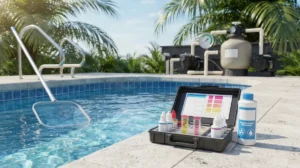
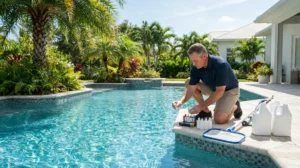
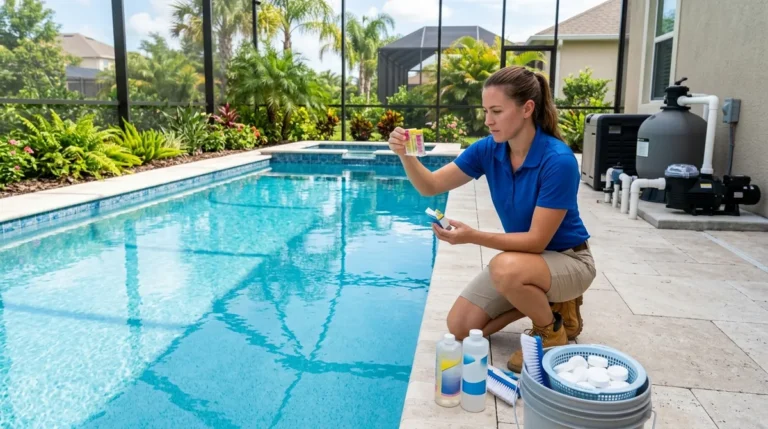
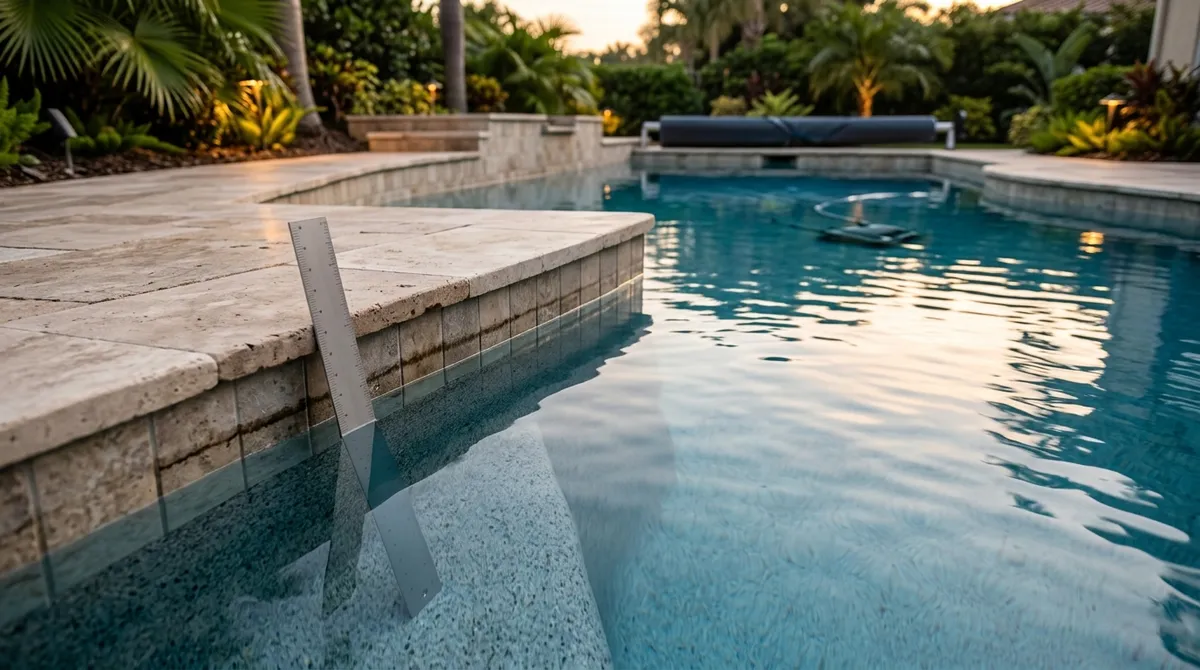
Before you can fix a pool leak, you need to confirm you actually have one. Pools naturally lose some water to evaporation — especially in Florida’s heat. A helpful trick is the bucket test. Fill a bucket with pool water, set it on a step, and mark both the bucket water level and the pool water level. After 24 hours, compare the two. If your pool lost significantly more water than the bucket, you likely have a leak.
Common signs of a pool leak include:
- Water level drops more than ¼ inch per day
- Wet or soggy spots around the pool equipment area
- Cracks or gaps in the pool shell, tile, or coping
- Unusually high water bills
- Pool chemicals constantly going out of balance
- Air bubbles coming through the return jets
Once you’ve confirmed a leak, the next step is figuring out where it’s coming from. This makes a huge difference in deciding whether to DIY or call a pro. For more help spotting issues early, check out our guide on pool leak detection mistakes that cost Tampa homeowners thousands.
Where Pool Leaks Commonly Happen
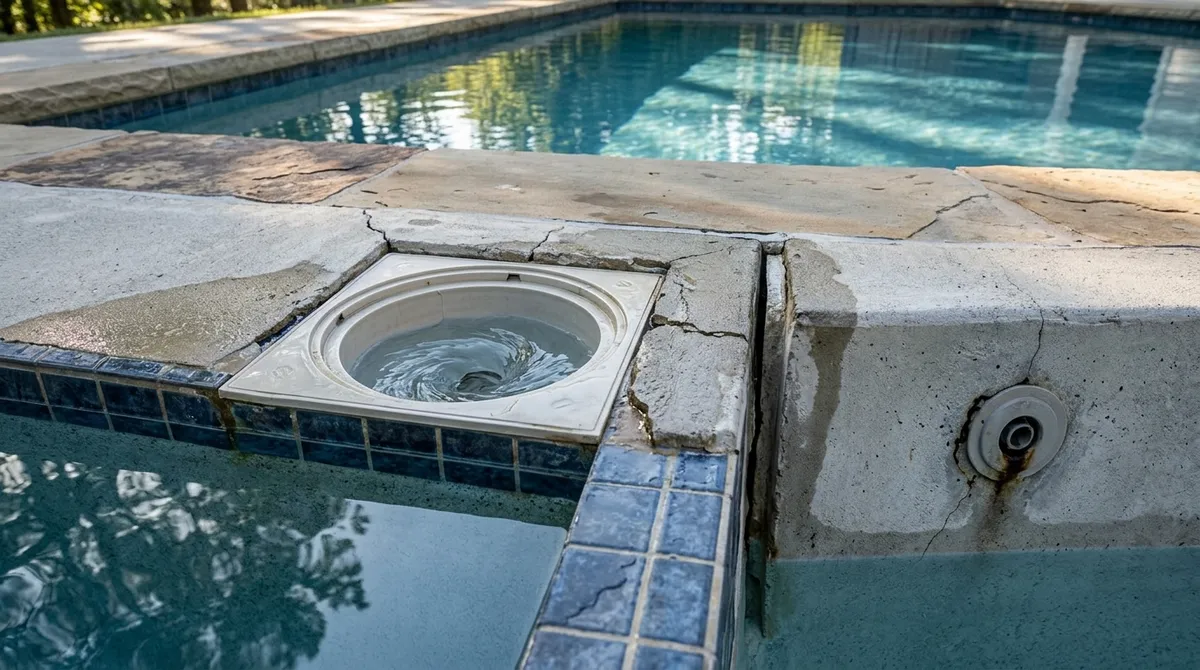
Pool leaks show up in several different spots. Knowing the most common locations helps you plan your repair approach. Here’s a quick look at where leaks tend to hide:
- Vinyl liners: Small punctures or tears, especially near steps and corners
- Plaster or concrete shell: Hairline cracks or larger fractures
- Skimmers and return fittings: Worn gaskets or loose connections
- Underground plumbing: Broken or separated PVC pipes beneath the deck
- Equipment (pump, filter, heater): Failed seals, o-rings, or loose unions
- Tile and coping: Gaps or cracks allowing water behind the shell
Each location requires a different fix. That’s why proper leak detection always comes before repair. If you’re curious about pool repairs every Tampa homeowner should know, we’ve got a full breakdown to help you stay ahead of problems.
DIY Pool Leak Repair: What You Can Handle at Home
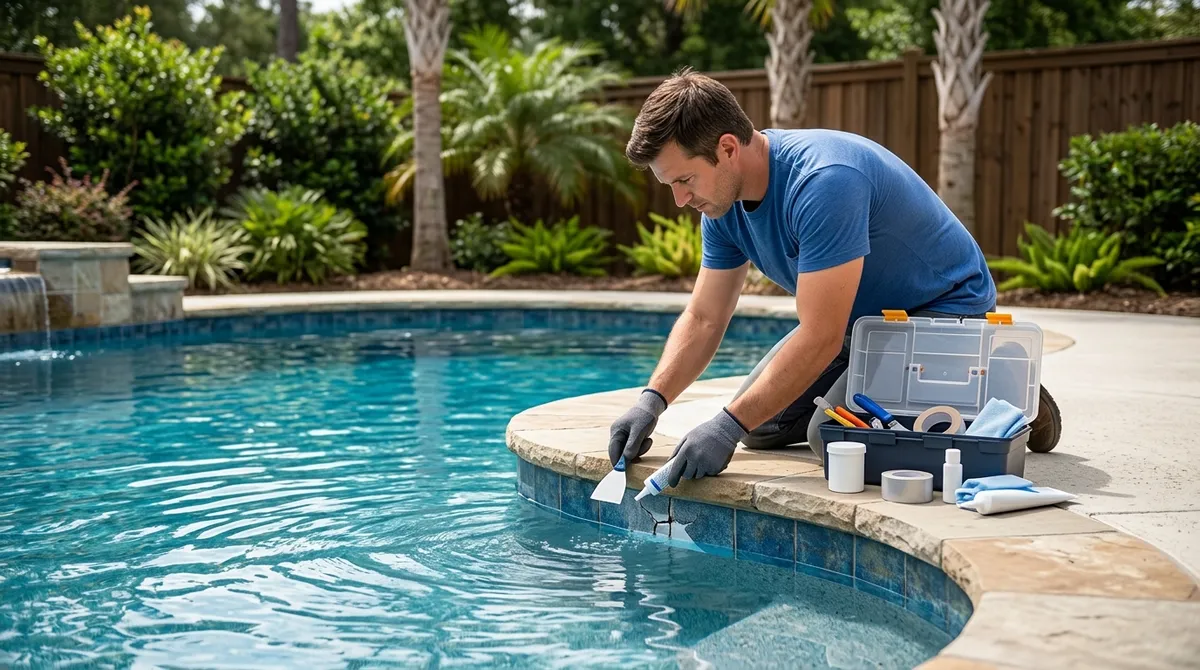
Good news — some pool leaks are genuinely manageable as DIY projects. If you’re comfortable with basic home repairs and the leak is in an accessible, visible location, you may be able to fix it yourself and save some money. Here’s a look at the most common DIY-friendly repairs.
Patching a Vinyl Liner Leak
Vinyl liner leaks are among the easiest fixes available to homeowners. The great part? You don’t even need to drain the pool. Underwater vinyl patch kits work incredibly well and can seal small punctures in minutes. Here’s how the process typically goes:
- Locate the tear or puncture using a dye test (squeeze dye near suspected areas and watch for movement)
- Cut a vinyl patch slightly larger than the damaged area
- Apply underwater adhesive to the patch
- Fold the patch in half, submerge, unfold it directly over the leak, and press firmly
- Monitor for 24–48 hours to confirm the patch is holding
This is a quick, affordable fix that most homeowners can handle with confidence.
Sealing Minor Plaster Cracks
For concrete or plaster pools, small cracks under 1/8 inch wide can sometimes be temporarily sealed with waterproof epoxy putty or hydraulic cement. This is a stopgap solution — not a permanent one — but it can buy you time while you arrange a professional assessment.
- Clean the crack area thoroughly
- Mix and apply the epoxy putty or hydraulic cement per the product instructions
- Smooth the surface and allow it to cure as directed
- Monitor the area closely over the next 48 hours
Using Chemical Leak Sealers
Products like Fix-A-Leak work by circulating through the pool system and “clotting” at the point of a minor leak. The dosage is 1 quart (32 oz) per 20,000 gallons of pool water. After treatment, you’ll need to wait 48 hours before turning the pump back on. These sealers work best for minor plumbing leaks and should be treated as temporary solutions, not permanent fixes.
Replacing Skimmer and Return Fitting Gaskets
Leaky skimmers and return fittings are very common — and often very easy to fix. Worn gaskets or o-rings are usually the culprit, and replacing them requires minimal tools. Turn off the pump, remove the fitting, swap the old gasket for a new one, and reassemble. This quick fix can stop a surprising amount of water loss.
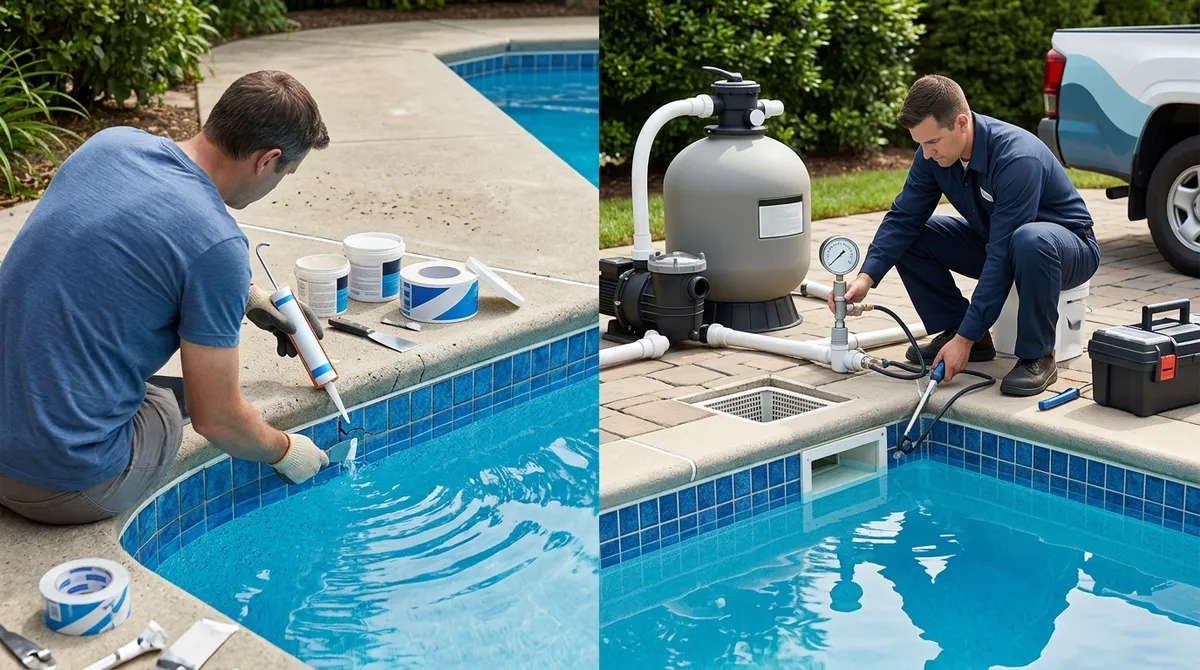
DIY vs. Professional Pool Leak Repair: A Side-by-Side Comparison
| Factor | DIY Repair | Professional Repair |
|---|---|---|
| Cost | Lower upfront cost | Higher upfront, often lower long-term |
| Leak Detection | Visual only (limited) | Advanced equipment (pressure testing, dye tests) |
| Repair Permanence | Often temporary | Long-lasting, warrantied repairs |
| Underground Leaks | Not recommended | Expert excavation and pipe replacement |
| Epoxy Injection | Not suitable for DIY | Pressure-injected, stronger than original material |
| Risk of Damage | Higher if inexperienced | Minimized with licensed technicians |
| Time Required | Variable, research-heavy | Efficient, scheduled service |
When to Call a Professional for Pool Leak Repair
Some pool leaks are simply beyond the scope of DIY. Attempting a complex repair without the right training and tools can make the problem worse — or create entirely new ones. Here are the situations where professional help is the clear winner:
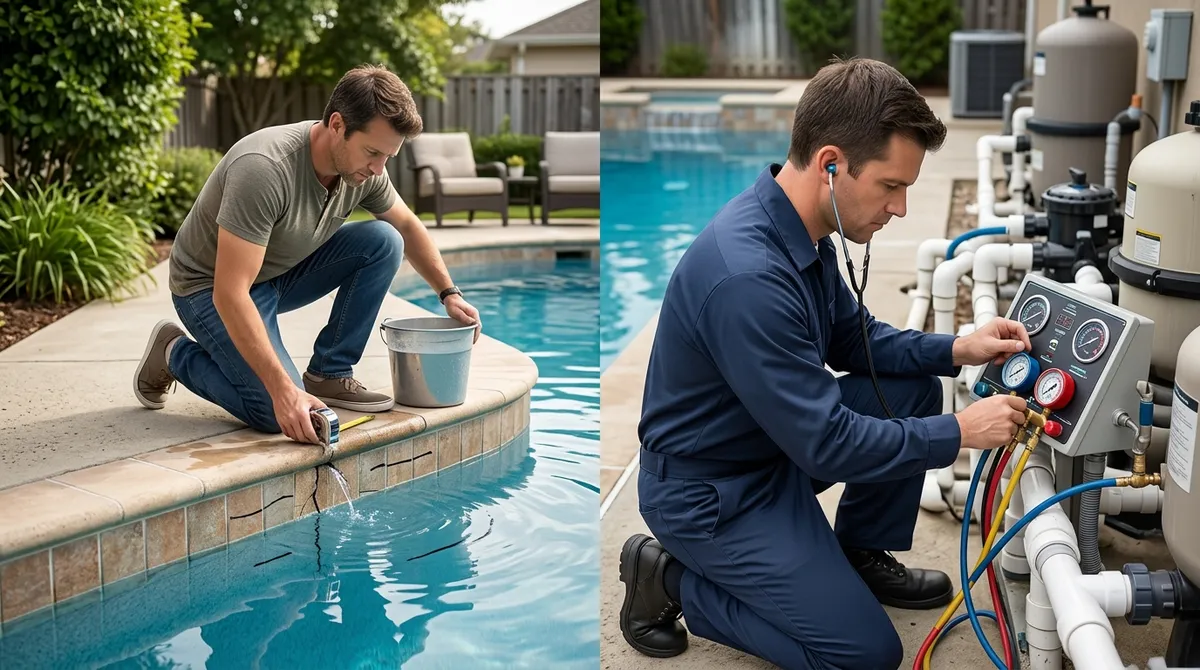
- Underground plumbing leaks: These require specialized pressure testing equipment to locate, followed by excavation and PVC pipe replacement. This is not a weekend project.
- Large plaster or structural cracks: Professional epoxy injection creates repairs that are often stronger than the original pool material. The epoxy is pressure-injected starting from the lowest point of the crack.
- Tile and coping leaks: Water infiltrating behind the pool shell through damaged tile or coping requires professional tile replacement, regrouting, or coping work. Learn more about handling pool tile repair the right way.
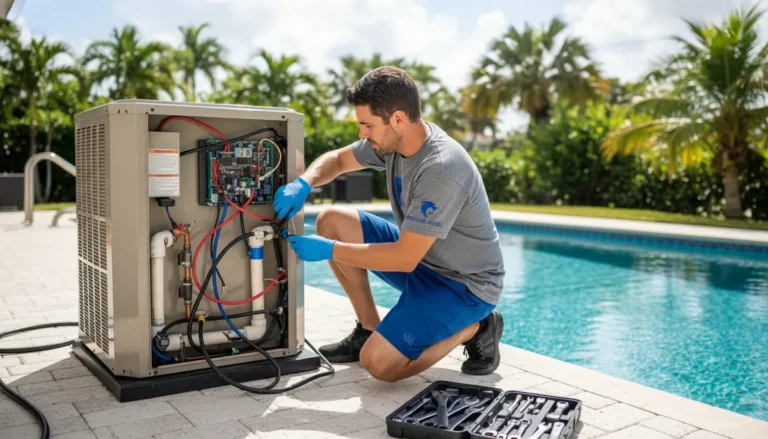
- Equipment seal failures: Pump seal replacements and complex equipment leaks need a trained technician to diagnose and repair safely.
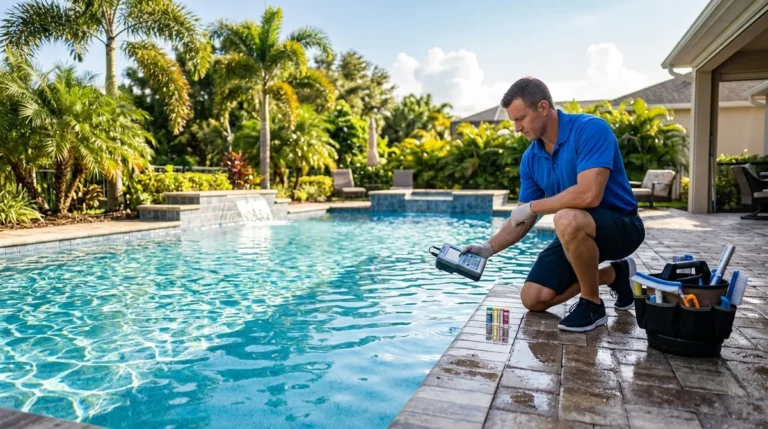
- Leaks you simply can’t find: If you’ve tried the bucket test and visual inspection and still can’t pinpoint the source, pros use advanced dye testing and electronic detection methods.
The Independent Pool and Spa Service Association (IPSSA) recommends that homeowners seek certified professionals for any structural pool repair to ensure safety and long-term durability. Similarly, the Florida Swimming Pool Association (FSPA) sets industry standards that licensed professionals follow — giving you peace of mind that repairs are done right.
The Real Cost of Ignoring a Pool Leak
Let’s be honest — it’s tempting to put off a pool repair, especially when the leak seems small. But even a minor leak can escalate quickly. Wasted water drives up utility bills, and the EPA’s WaterSense program highlights that pool leaks are one of the most significant sources of residential water waste. Beyond the water bill, untreated leaks can cause:
- Soil erosion and deck damage around the pool
- Chemical imbalances that make the pool unsafe to swim in
- Structural damage to the pool shell over time
- Damage to nearby landscaping and foundations
- Higher repair costs as the problem worsens
Early action — whether DIY or professional — always wins over waiting. If you want to stay on top of your pool’s health year-round, take a look at our pool cleaning services in Tampa to see how regular maintenance keeps problems from getting out of hand.
What Makes Professional Pool Leak Repair Worth It in Tampa
Tampa’s climate is tough on pools. The heat, humidity, and frequent rain all contribute to faster wear and tear on pool surfaces, plumbing, and equipment. Professional pool technicians understand local conditions and know exactly what to look for. They come equipped with the right tools and the right training to get your leak fixed correctly the first time.
At Panther Pools, our team handles everything from minor equipment fixes to full structural repairs — all backed by our Certified Pool Operator credential (CPO 648855) and CPC License (CPC1461336). We serve homeowners and commercial properties throughout Tampa, seven days a week, so help is never far away. For those managing apartment complexes, hotels, or community pools, reliable leak repair is critical to keeping your facility compliant and operational.
Whether you’re a busy family in the suburbs, a luxury homeowner who demands perfection, or a young pool owner still learning the ropes, knowing when to call in the experts is one of the smartest moves you can make. You can also explore 7 pool cleaning service benefits every Tampa homeowner needs to see how professional support pays off in every season.
Quick Reference: DIY-Friendly vs. Call-a-Pro Repairs
| Repair Type | DIY-Friendly? | Recommended Action |
|---|---|---|
| Small vinyl liner patch | ✅ Yes | Use underwater vinyl patch kit |
| Minor plaster crack (under 1/8 inch) | ⚠️ Temporary only | Epoxy putty for now, pro assessment later |
| Skimmer gasket/o-ring replacement | ✅ Yes | Replace with matching gasket |
| Chemical leak sealer (minor plumbing) | ✅ Temporary | Fix-A-Leak at correct dosage |
| Underground pipe leak | ❌ No | Call a professional immediately |
| Large structural crack | ❌ No | Professional epoxy injection required |
| Tile and coping repair | ❌ No | Professional tile/coping replacement |
| Pump seal failure | ❌ No | Licensed technician repair |
Conclusion: Which Pool Leak Fix Wins?
So — DIY or professional pool leak repair? The honest answer is: it depends on the leak. For small, visible, and accessible repairs like vinyl liner patches, skimmer gaskets, or chemical sealers, DIY is a perfectly reasonable first step. But for anything structural, underground, or equipment-related, professional repair is the clear winner every single time.
Don’t let a small leak become a big (and expensive) problem. Whether you need a quick fix or a full repair, getting the right help at the right time makes all the difference. Our team at Panther Pools is here to help Tampa pool owners keep their pools leak-free, safe, and sparkling clean. Take a look at pool repairs every Tampa homeowner should know in 2026 for more expert tips, and when you’re ready for professional support, don’t hesitate to reach out to our team for a free estimate — we’re just a call away, seven days a week!
FAQs
Q: Can you fix a pool leak without draining the pool?
A: Great news — yes, you can! Vinyl liner leaks are a perfect example. Underwater patch kits let you seal small tears and punctures without losing a drop of extra water. For other leak types like plaster cracks, though, some situations may require at least a partial drain for the repair to work properly.
Q: How do you detect a pool leak before attempting repairs?
A: The bucket test is your best friend here! Place a water-filled bucket on a pool step, mark both water levels, and check again after 24 hours. If your pool lost noticeably more water than the bucket, you’ve got a leak. For pinpointing the exact location, a dye test or professional pressure testing works wonders.
Q: What is the difference between a temporary and permanent pool leak repair?
A: Temporary fixes — like chemical sealers or epoxy putty — are great for slowing or stopping a leak quickly while you arrange a more thorough repair. Permanent fixes, like professional epoxy injection or full pipe replacement, address the root cause and are built to last for years. Think of temporary repairs as a bandage and permanent repairs as the actual cure!
Q: When should you hire a professional to fix a pool leak?
A: Call a pro anytime you’re dealing with underground plumbing leaks, large structural cracks, tile or coping damage, or equipment failures like pump seal issues. If you’ve done the bucket test and visual inspection but still can’t find the leak source, professionals have the specialized detection tools to track it down fast.
Q: How long does it take to fix a pool leak?
A: It really depends on the type of leak! A simple vinyl liner patch can be done in under an hour, while chemical sealers need about 48 hours to do their job. Professional epoxy injection cures in anywhere from a few hours to a couple of days depending on the product and temperature. Underground pipe repairs can take longer due to the excavation required.