
Key Takeaways
-
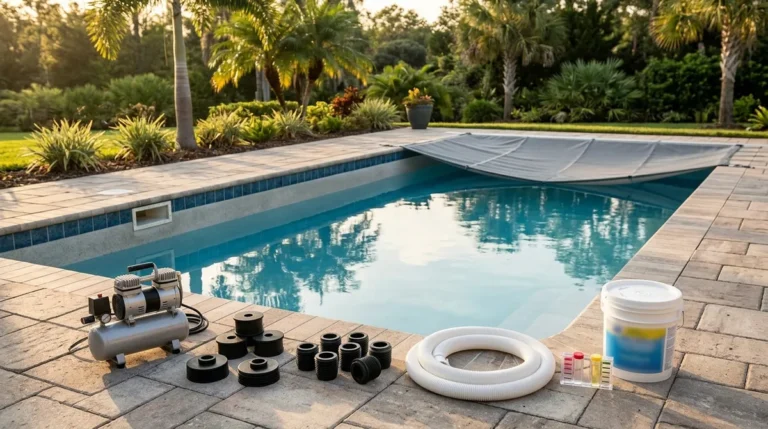
Skim your pool daily, brush walls and floors weekly, and vacuum at least once per week to prevent algae buildup and costly damage to equipment in warm climates.
-
Test water chemistry at least twice weekly during swimming season, checking pH, alkalinity, and chlorine levels to keep water safe, clear, and comfortable for swimmers.
-
Shock your pool every 1-2 weeks during swim season and immediately after heavy use, storms, or when water appears cloudy—always apply shock at night so sun doesn’t break down chlorine.
-
Clean your pool filter regularly: sand filters every other week, cartridge filters every 4-6 weeks, and DE filters a few times per season when pressure rises 10-15 psi above normal.
-
Run your pool pump 8-12 hours daily and maintain a weekly cleaning schedule to prevent algae formation and reduce chemical usage, saving money and energy long-term.
-
Consider robotic pool cleaners or alternative sanitizers like saltwater or UV systems if you have limited time, sensitive skin, or want to reduce harsh chemical exposure.
There is nothing quite like jumping into a sparkling clean pool on a hot Tampa day. Whether you are a busy parent, a new homeowner, or managing a commercial property, keeping your pool clean is one of the most important things you can do. A clean pool is not just beautiful — it is safe, healthy, and ready to enjoy whenever you are.
But swimming pool cleaning can feel overwhelming if you do not know where to start. What do you clean first? How often? What chemicals do you need? Do not worry — we have got you covered. This guide breaks everything down into simple, easy steps so your pool stays crystal clear all year long.
Why Regular Swimming Pool Cleaning Matters
A neglected pool turns green fast. Algae, bacteria, and debris build up quickly, especially in Florida’s warm climate. Regular swimming pool cleaning protects the health of everyone who swims. It also protects your investment by keeping your equipment running longer.
The EPA Pool Resources page highlights how proper pool maintenance also conserves water and energy. When your pool is clean and balanced, you use fewer chemicals and your pump works more efficiently. That is a win for your wallet and the environment.
Consistent cleaning also prevents costly repairs. Algae and dirty water can damage your filter, pump, and pool surfaces over time. A little effort each week saves a lot of money in the long run.
The Essential Pool Cleaning Tasks You Need to Know
Swimming pool cleaning involves several key tasks. Each one plays an important role in keeping your water safe and clear. Here is a look at the core tasks every pool owner should understand.
1. Skimming the Surface
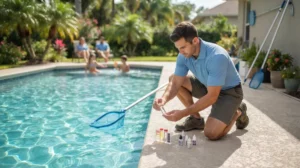
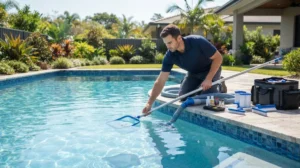
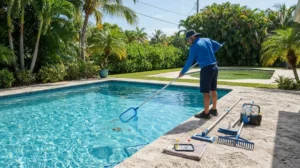
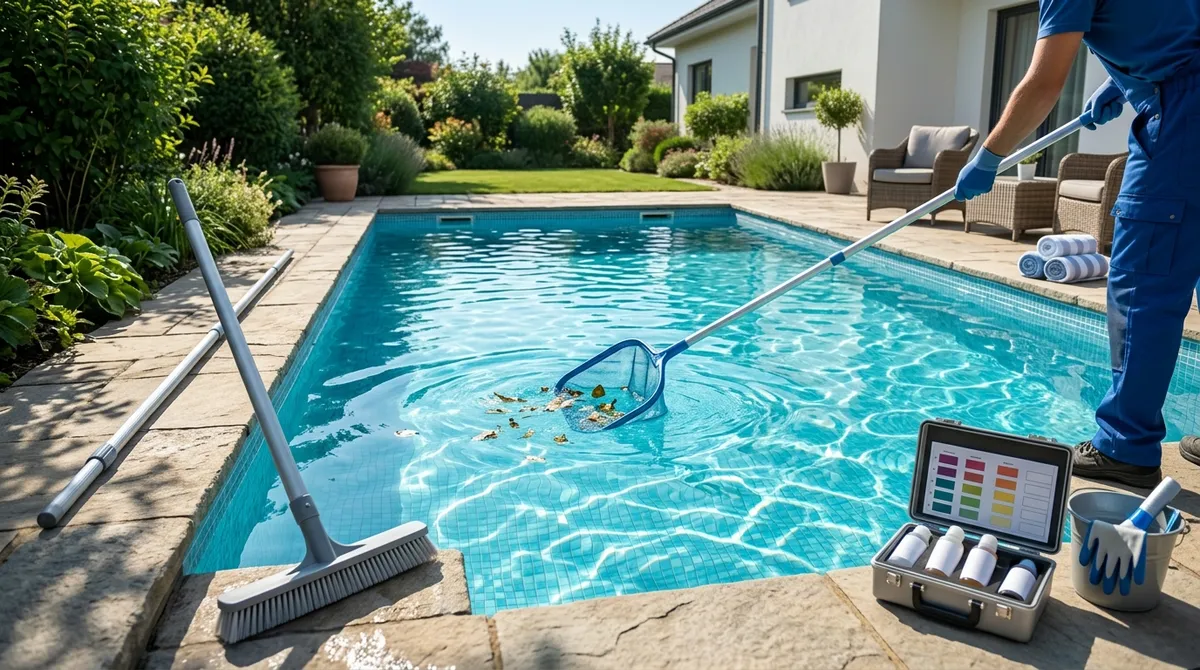
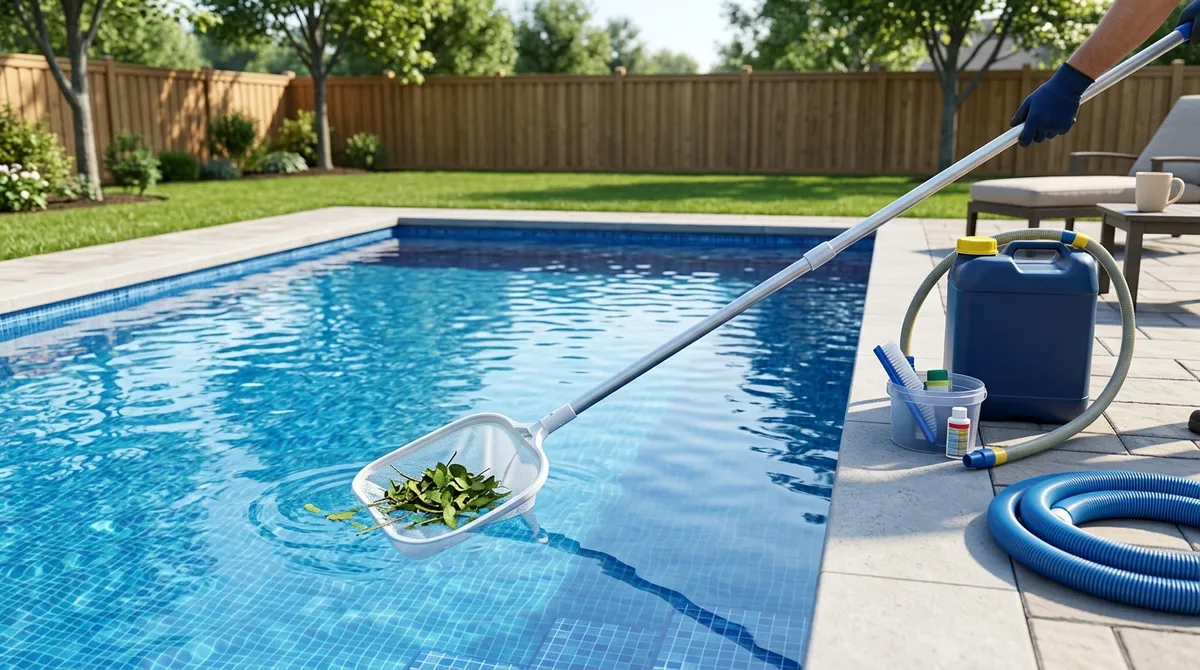
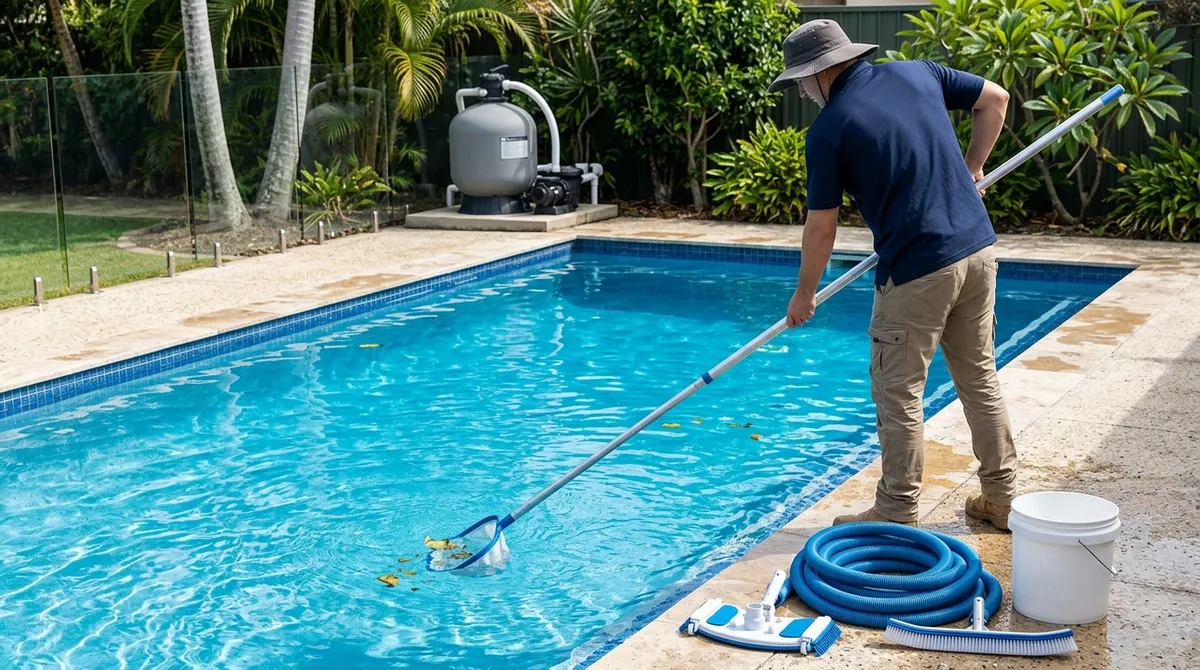
Skimming is the quickest and easiest cleaning task. Use a hand skimmer or net to remove floating leaves, bugs, and debris daily if possible. This keeps debris from sinking and making bigger messes on the pool floor. The whole process takes just a few minutes and makes a huge difference.
2. Brushing the Walls and Floor
Brush your pool walls, floor, and steps at least once a week. This loosens algae and dirt before it can take hold. Use a brush that matches your pool surface — nylon for vinyl liners and stainless steel for plaster or concrete. Brushing takes about 15 to 30 minutes and keeps surfaces looking fresh.
3. Vacuuming the Pool Floor
After brushing, vacuum the pool floor to pick up settled debris. You can choose from manual vacuums, suction-side vacuums, pressure-side vacuums, or robotic cleaners. Vacuuming once a week is ideal and usually takes 30 to 60 minutes depending on your pool size.
4. Emptying Skimmer and Pump Baskets
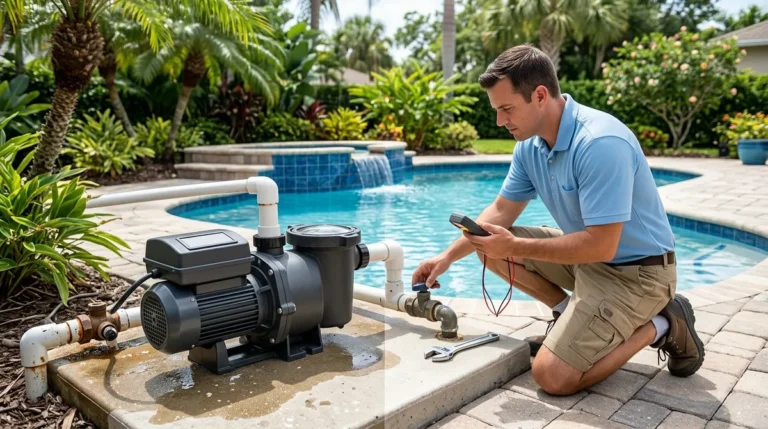
Empty your skimmer and pump baskets at least once a week. After a storm or heavy pool use, check them more often. Clogged baskets restrict water flow and put stress on your pump. This simple step protects your equipment and keeps water circulating properly.
5. Testing and Balancing Water Chemistry
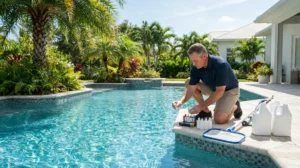
Test your water at least twice a week during swimming season. Check pH, alkalinity, and chlorine levels. Balanced water is clear, comfortable, and safe. Unbalanced water can irritate skin and eyes and damage pool surfaces over time.
Weekly Swimming Pool Cleaning Schedule
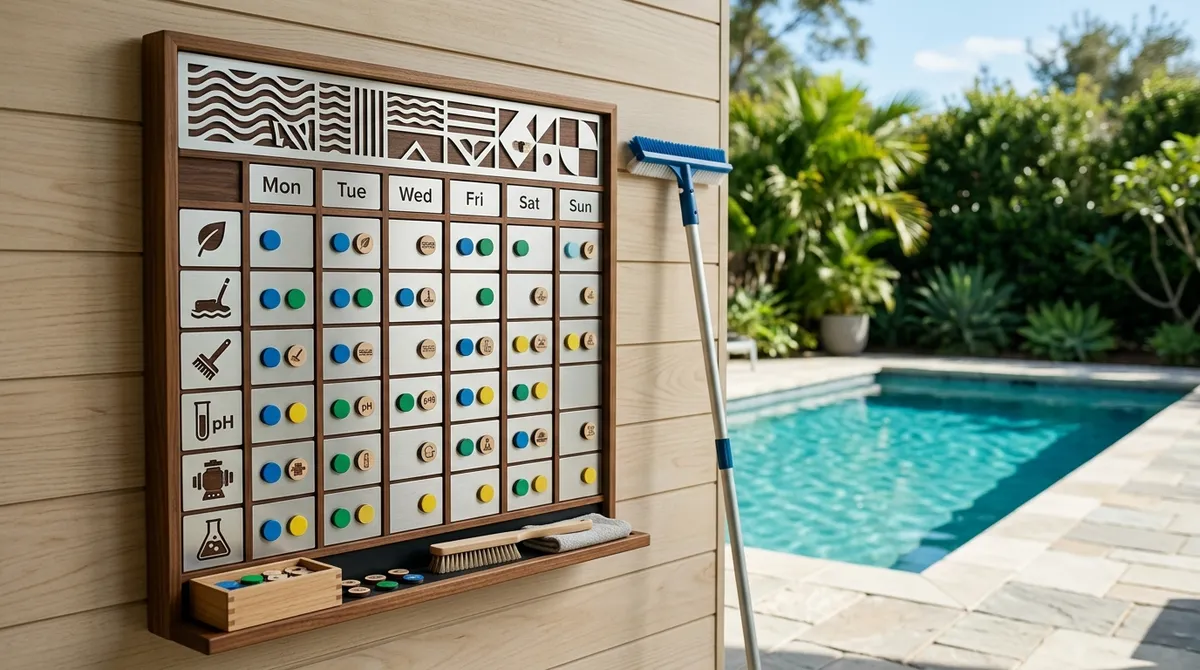
Staying on a schedule makes pool cleaning much easier. Here is a simple weekly routine to follow:
- Day 1: Skim the surface and empty skimmer baskets
- Day 2: Brush walls, steps, and floor surfaces
- Day 3: Vacuum the pool floor thoroughly
- Day 4: Test water chemistry and add chemicals as needed
- Day 5: Check pump baskets and inspect equipment
- Day 6: Shock the pool if needed (especially after heavy use)
- Day 7: Do a quick skim and visual check of the whole pool
Following this routine keeps your pool in great shape without any single task feeling too big. You can adjust based on your schedule, but consistency is key.
Understanding Pool Filters and How to Clean Them
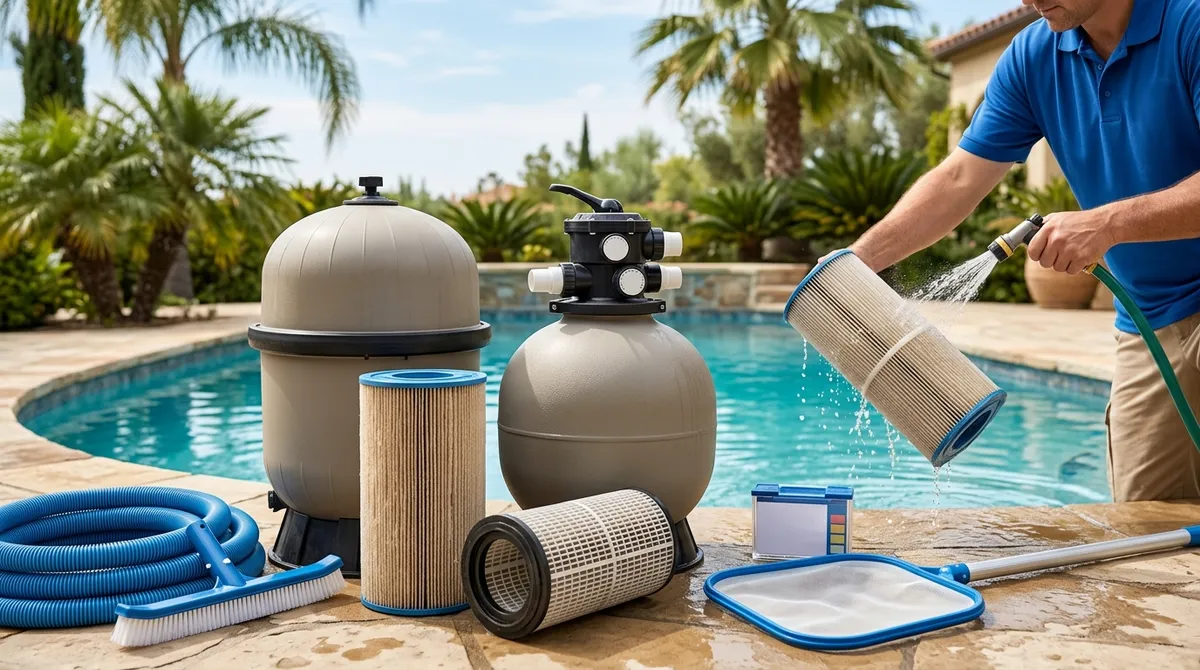
Your pool filter is the heart of your cleaning system. It removes tiny particles from the water and keeps things clear. There are three main types of pool filters, and each one needs different care.
| Filter Type | Cleaning Method | Cleaning Frequency |
|---|---|---|
| Sand Filter | Backwash | Every other week or when pressure rises 8-10 psi above normal |
| Cartridge Filter | Remove and rinse cartridge | Every 4-6 weeks or when pressure exceeds 10-15 psi above normal |
| DE (Diatomaceous Earth) Filter | Backwash and recharge with DE powder | A few times per season or as pressure requires |
Running your pool pump 8 to 12 hours per day ensures all the water gets filtered regularly. This keeps the water clean and prevents algae from forming. A well-maintained filter is one of your best defenses against a green pool.
Pool Shocking: What It Is and When to Do It
Pool shocking means adding a large dose of chlorine to kill bacteria, algae, and other contaminants quickly. It is like a deep reset for your pool water. Most pool owners should shock their pool every one to two weeks during swim season.
You should also shock your pool after these situations:
- After a big pool party or heavy swimmer use
- After a heavy rainstorm
- When you notice cloudy or discolored water
- When algae start to appear
- After a pet swims in the pool
For yellow or mustard algae, use about 3 pounds of Calcium Hypochlorite per 10,000 gallons of pool water. Always shock at dusk or at night so the sun does not break down the chlorine before it can work. The Florida Swimming Pool Association (FSPA) offers great local resources for Florida pool owners on proper chemical use and safety.
Pool Cleaning Tools You Should Have
Having the right tools makes swimming pool cleaning much easier and faster. Here are the essentials every pool owner needs:
- Telescopic pole: Attaches to brushes, nets, and vacuums for easy reach
- Wall and floor brush: Loosens algae and dirt from surfaces
- Leaf skimmer net: Removes floating debris quickly
- Manual or automatic vacuum: Cleans the pool floor effectively
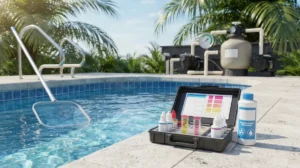
- Water test kit or test strips: Checks chemical balance regularly
- Chemical dispenser or floater: Delivers chlorine tablets slowly and evenly
A deep cleaning session using all these tools takes about 2 to 3 hours. But weekly maintenance with these tools usually only takes 30 to 60 minutes total. Staying consistent means you rarely need a full deep clean.
Robotic Pool Cleaners: Are They Worth It?
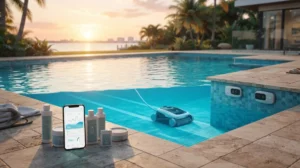
Robotic pool cleaners have become very popular in 2026. These smart devices move around your pool on their own, scrubbing surfaces and vacuuming debris without any effort from you. They plug into a standard outlet and do most of the heavy lifting automatically.
Here are the pros and cons of robotic pool cleaners:
| Pros | Cons |
|---|---|
| Saves time and effort | Higher upfront cost |
| Cleans walls, floor, and waterline | Requires occasional maintenance |
| Works independently of pool pump | May miss tight corners |
| Reduces strain on main filter | Not a substitute for full maintenance |
| Great for busy homeowners | Needs safe storage when not in use |
For busy families, luxury homeowners, and commercial property managers, robotic cleaners are a fantastic investment. They handle the routine vacuuming while you focus on water chemistry and filter care. Smart chemical monitors are also available now to automate water testing and dosing.
Alternative Pool Sanitizers to Consider
Chlorine is the most common pool sanitizer, but it is not the only option. Some swimmers are sensitive to high chlorine levels and prefer gentler alternatives. Here is a quick overview of popular choices:
- UV Systems: Use ultraviolet light to kill bacteria and algae. UV lamps last between 4,000 and 9,000 hours and significantly reduce the need for chemicals. Great for families with sensitive skin.
- Saltwater Systems: Generate chlorine naturally from salt, creating softer water with less harsh chemical smell. Very popular with Florida pool owners.
- Hydrogen Peroxide: A chlorine-free option that is gentler on skin and eyes. Best for people with chlorine sensitivities and smaller pools.
The Independent Pool and Spa Service Association (IPSSA) is a great resource for learning more about sanitizer options and industry best practices. Always consult a pool professional before switching sanitizer systems to make sure it is right for your setup.
Cleaning a Green or Algae-Filled Pool
A green pool can feel discouraging, but it is fixable! Here is a step-by-step process to bring your pool back to life:
- Remove large debris with a net or leaf rake
- Brush all surfaces thoroughly — walls, floor, and steps
- Shock the pool heavily with a large chlorine dose
- Run the pump and filter continuously for 24-48 hours
- Backwash the filter frequently during this time
- Test the water and balance the chemistry once it clears
- Vacuum the dead algae off the pool floor
Some severe cases may take 3 to 5 days to fully clear. If your pool keeps turning green despite your best efforts, it may be time to call in the professionals. Sometimes a deeper issue like a failing filter or broken pump is causing the problem.
Why Professional Pool Cleaning Is Worth It
DIY pool cleaning is possible, but it takes consistent time and effort every single week. Life gets busy. Kids have activities, work gets hectic, and the last thing you want to worry about is whether your pool is safe to swim in. That is where a professional pool service makes all the difference.
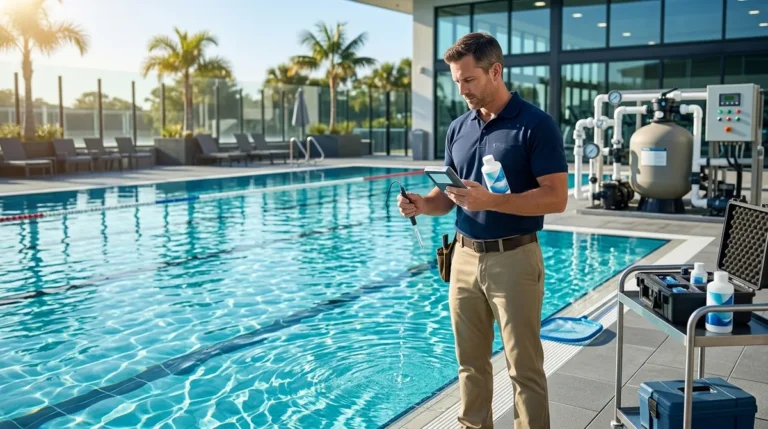
At Panther Pools’ pool cleaning services in Tampa, our trained technicians handle every aspect of swimming pool cleaning for you. From skimming and brushing to chemical balancing and equipment checks, we take care of it all so you can simply enjoy your pool. Our team shows up on time, every time, with no rush jobs and no shortcuts.
We serve residential and commercial customers throughout Tampa, with pool maintenance in West Chase and surrounding neighborhoods. Whether you have a backyard oasis or a commercial facility, we offer reliable weekly service plans and seven-day customer support. Learn more about Panther Pools and why so many Tampa families and businesses trust us with their pools.
Quick Pool Cleaning Tips for Every Pool Owner
No matter how you handle your pool cleaning, these tips will help keep things running smoothly:
- Never skip a week of skimming — debris sinks and becomes harder to clean
- Always brush before you vacuum so loosened dirt gets picked up
- Shock at night to get the most out of your chemicals
- Keep a pool cleaning log to track chemical levels and maintenance tasks
- Rinse swimsuits before swimming to reduce chemical demand
- Shower before entering the pool to reduce contaminants
- Trim nearby trees and shrubs to reduce leaf and debris fall into the pool
These small habits make a big difference over time. A well-maintained pool is cleaner, safer, and more enjoyable for everyone who uses it.
Your Clean Pool Is Just a Call Away
Swimming pool cleaning does not have to be a chore you dread. With the right routine, the right tools, and the right team behind you, your pool can stay beautiful and safe all year long. Tampa’s warm weather means pool season never really ends — so staying on top of maintenance is especially important here.
Whether you want to handle cleaning yourself with a solid routine or hand it off to a trusted professional, the key is consistency. A clean pool is a happy pool, and a happy pool means more fun, more relaxation, and more unforgettable moments with family and friends.
Ready to take the stress out of pool maintenance? Get in touch with our team at Panther Pools today for a free estimate and find out how easy it can be to keep your pool sparkling clean every single week.
FAQs
Q: How often should I skim, brush, and vacuum my swimming pool?
A: Skimming ideally happens daily to keep floating debris from sinking, while brushing and vacuuming should be done at least once a week. Staying consistent with this routine keeps your pool looking great and prevents bigger cleaning headaches down the road!
Q: What is pool shocking and when should I do it?
A: Pool shocking means adding a high dose of chlorine to quickly kill bacteria, algae, and contaminants in your water. It is a great idea to shock your pool every one to two weeks during swim season, and especially after heavy use, storms, or any time the water looks cloudy or discolored.
Q: How do robotic pool cleaners work and are they worth it?
A: Robotic pool cleaners are self-contained devices that scrub and vacuum your pool automatically without connecting to your main pump system. They are absolutely worth considering if you want to save time — especially for busy families or commercial property managers who need their pools maintained with minimal effort.
Q: How do I clean different types of pool filters?
A: Sand filters are backwashed every other week, cartridge filters are removed and rinsed every 4 to 6 weeks, and DE filters are backwashed and recharged with DE powder a few times per season. Always clean your filter when the pressure gauge reads 10 to 15 psi above its normal baseline for the best results.
Q: When should I hire a professional for swimming pool cleaning?
A: If your pool keeps turning green despite regular maintenance, your equipment is making strange noises, or life is simply too busy for weekly cleaning, it is a great time to bring in a professional! A trusted local service like Panther Pools can handle everything for you so your pool stays safe and beautiful without the stress.