
Key Takeaways
-
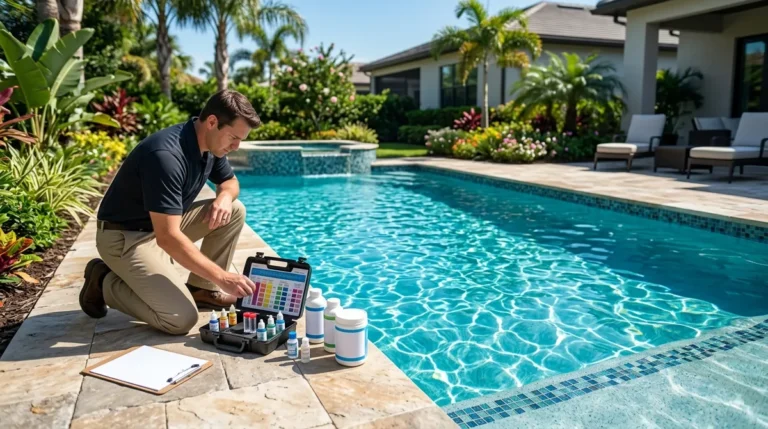
Test your pool water chemistry weekly to maintain safe pH (7.4-7.6) and chlorine (1-3 ppm) levels; out-of-balance water causes eye irritation, equipment damage, and algae growth.
-
Run your pool filter 8-12 hours daily in Tampa’s summer heat to ensure complete water circulation; consider variable speed pumps that save energy while improving cleaning efficiency.
-
Skim daily and brush pool walls, steps, and corners weekly to prevent algae buildup; pay extra attention to shaded spots where algae thrives in Florida’s heat.
-
Shock your pool weekly or after heavy use by adding a large chlorine dose at dusk to eliminate bacteria and organic waste; wait at least 8 hours before allowing swimmers.
-
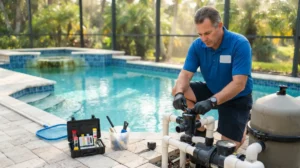
Backwash sand filters every 1-2 weeks or when pressure rises 8-10 PSI, and rinse cartridge filters every 2-4 weeks to prevent poor circulation and cloudy water.
-
Schedule professional pool maintenance service to catch equipment problems early, access accurate water testing, and receive digital reports tracking your pool’s condition over time.
Owning a pool in Tampa is one of life’s great pleasures. The warm Florida sun, the backyard splashing, the weekend cookouts — it’s all pure joy. But keeping that water sparkling clean? That’s where things can get tricky. Whether you’re a busy parent juggling school schedules, a retiree enjoying the good life, or a new homeowner figuring it all out, solid pool maintenance habits make all the difference. Skip them, and you’ll be staring at a murky green swamp instead of a refreshing oasis. In this guide, we’ll walk you through nine practical, easy-to-follow tips that will keep your pool swim-ready all year long. From chemical balancing to equipment care, these strategies are built for real Tampa pool owners — not just professionals. Let’s dive in!
1. Skim and Brush Regularly (Yes, Every Week)
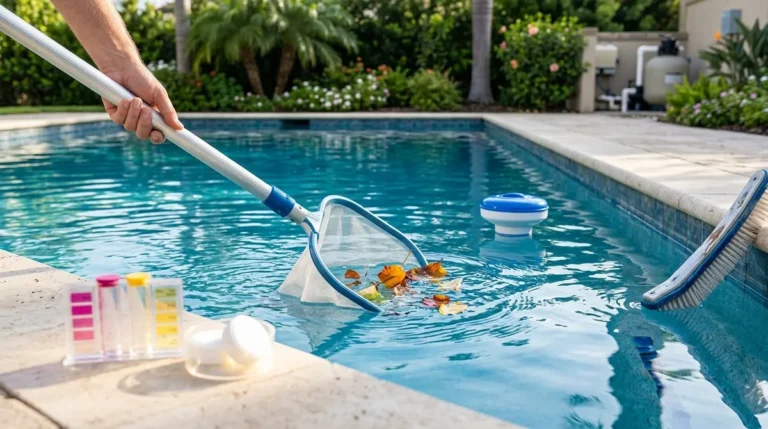
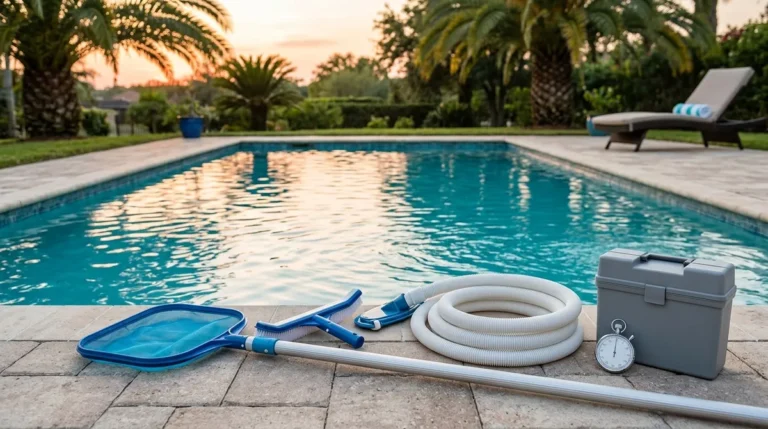
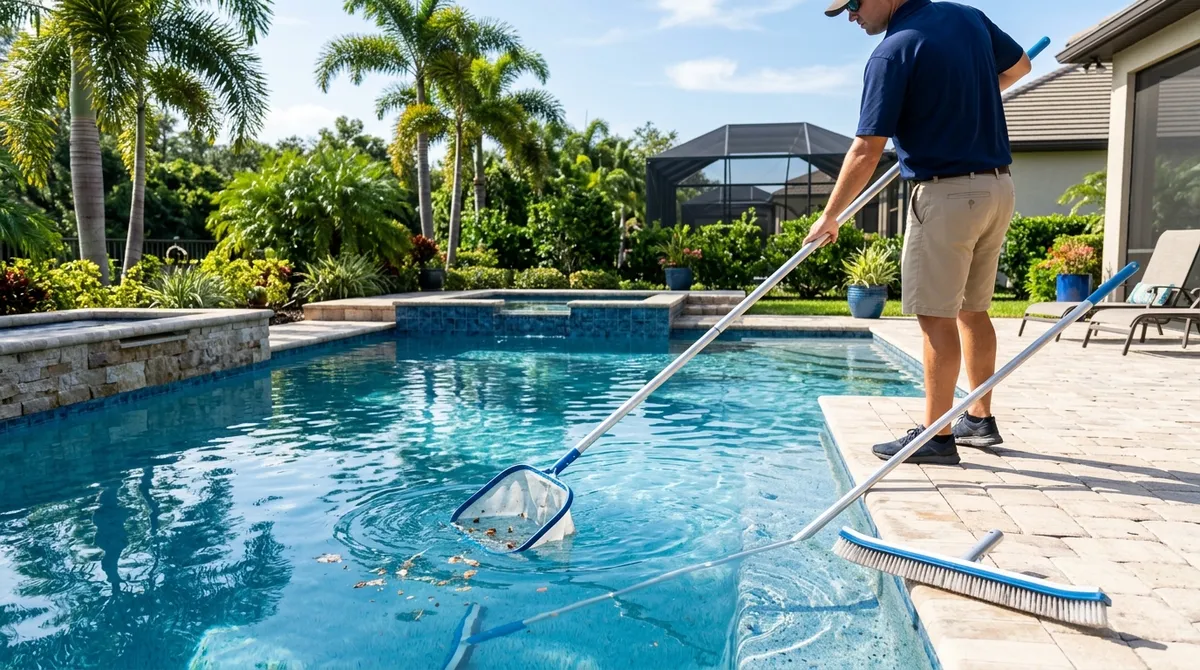
This one sounds simple, but it’s the backbone of great pool maintenance. Skim the surface daily to remove leaves, bugs, and debris before they sink. Then, every week, brush your pool walls and floor to prevent algae from taking hold. Algae loves to cling to rough surfaces, especially in Tampa’s heat.
Brushing also helps your chemicals work more effectively. When you break up any early algae growth, your sanitizers don’t have to work as hard. It’s a small habit with a big payoff.
- Use a telescoping pole with a skimmer net for easy reach
- Brush walls, steps, and corners every week
- Pay extra attention to shaded spots where algae grows fastest
- Empty your skimmer baskets at least twice a week in summer
2. Test Your Water Chemistry Weekly
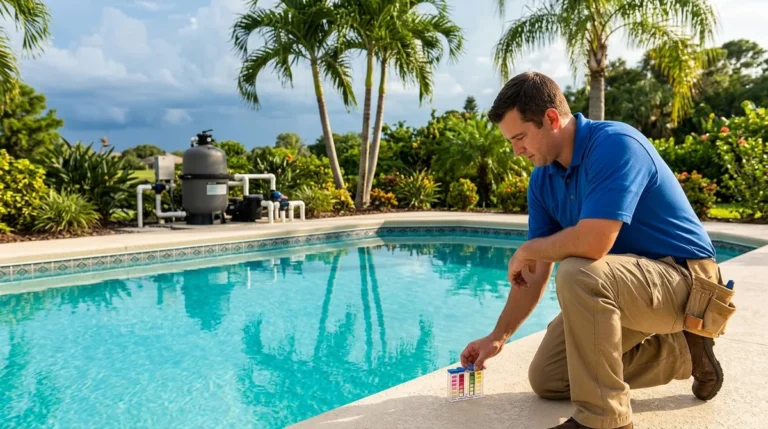
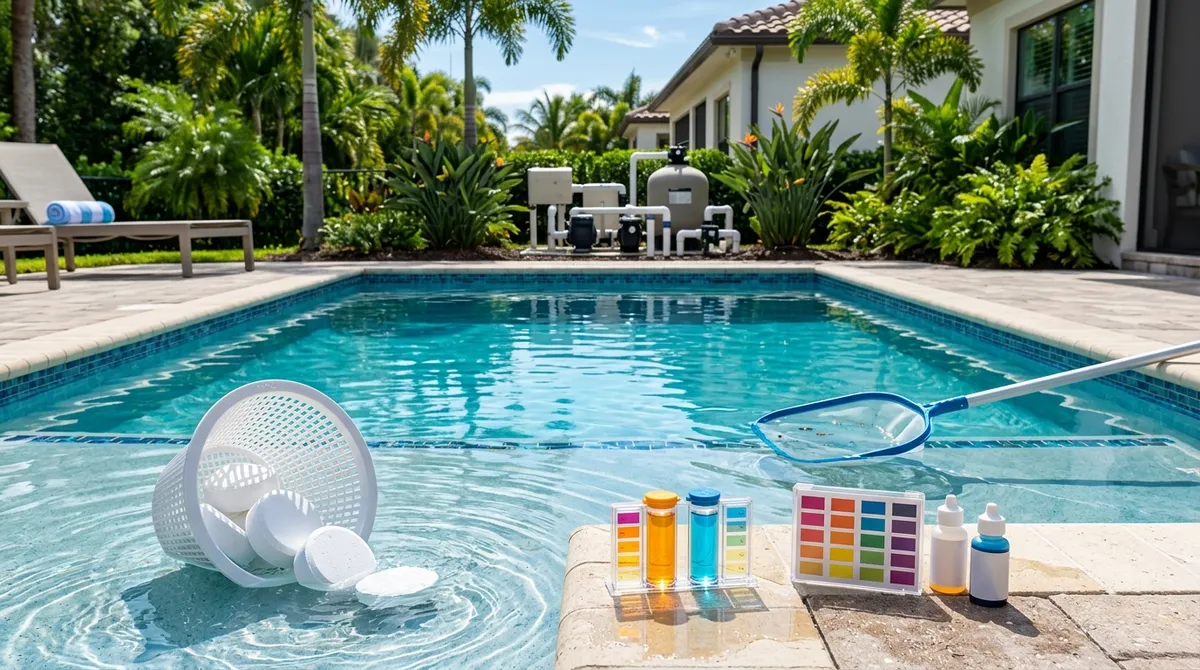
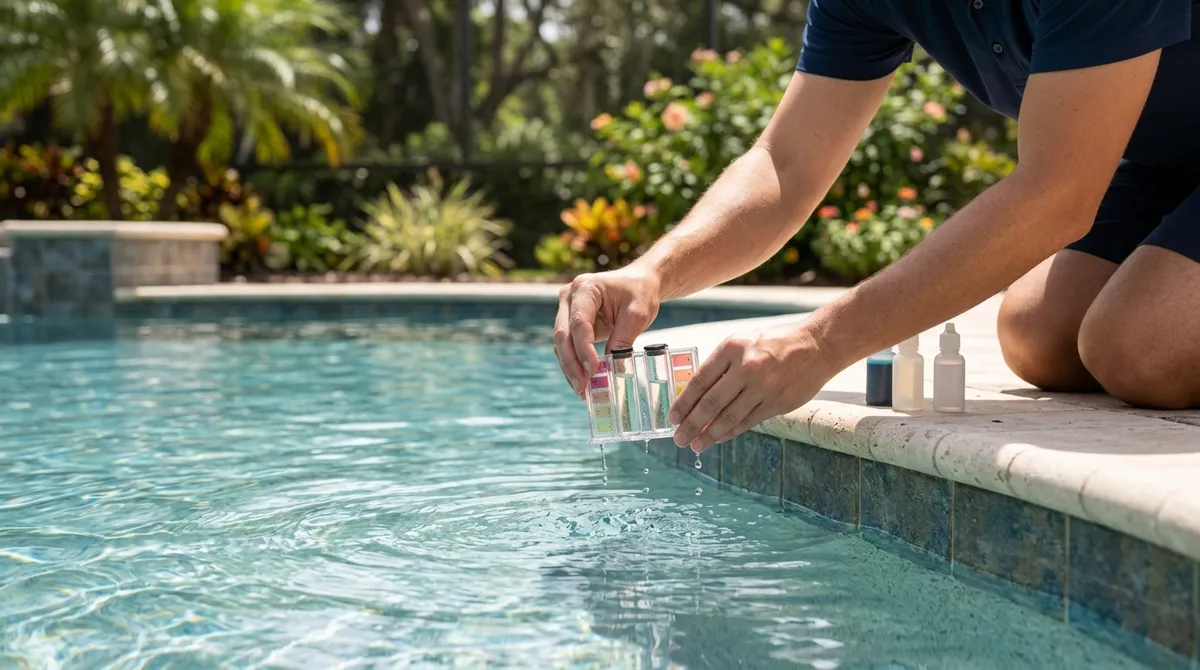
Balanced water is safe water. Testing your pool chemistry every week keeps pH, chlorine, and alkalinity levels in the right range. Out-of-balance water can irritate eyes and skin, damage your equipment, and turn your pool green almost overnight.
Here’s what you’re aiming for with each test:
| Chemical | Ideal Range | Why It Matters |
|---|---|---|
| pH | 7.4 – 7.6 | Prevents irritation and corrosion |
| Free Chlorine | 1 – 3 ppm | Kills bacteria and contaminants |
| Total Alkalinity | 80 – 120 ppm | Stabilizes pH levels |
| Calcium Hardness | 200 – 400 ppm | Protects pool surfaces and equipment |
| Cyanuric Acid | 30 – 50 ppm | Shields chlorine from UV rays |
Test strips are easy for quick checks, but a liquid test kit gives you more accuracy. For the most reliable results, consider having a professional service test your water monthly.
3. Run Your Filter the Right Amount of Time
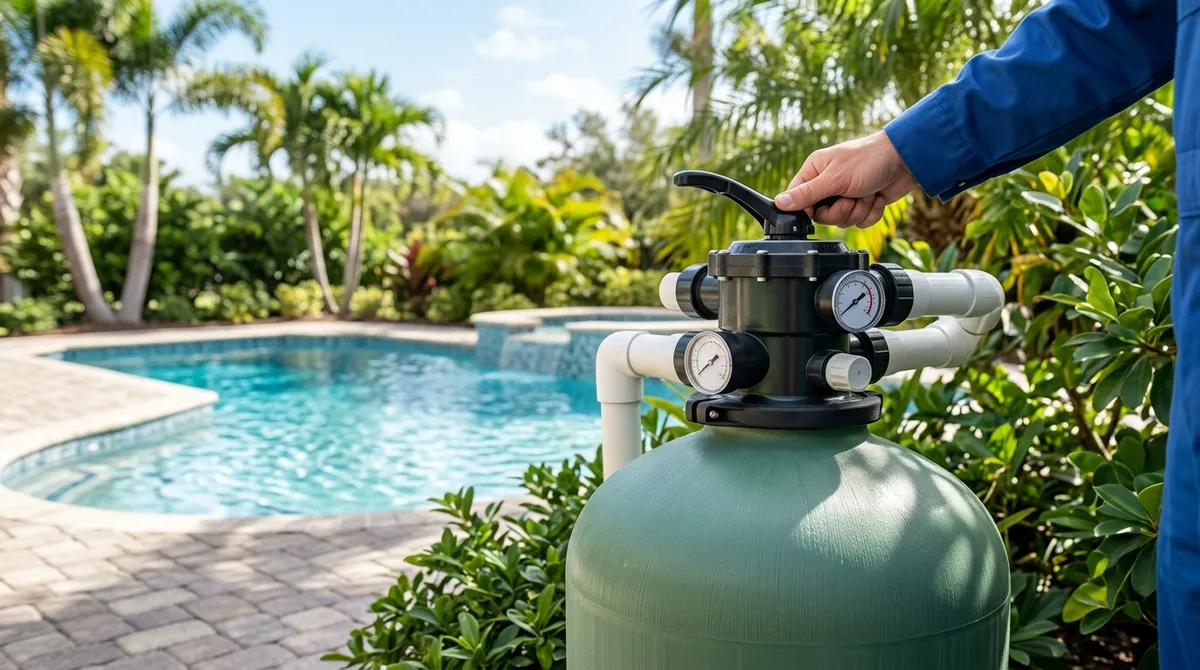
Your pool filter is your best friend. It removes dirt, debris, and tiny particles that make your water cloudy. But you have to run it long enough for it to actually do the job. In Tampa’s hot summers, aim to run your filter 8 to 12 hours per day. This ensures your entire pool volume gets filtered at least once — or even twice — each day.
To save energy, consider a variable speed pump like a Pentair SuperFlo VSP. These models run at lower speeds for longer periods, which actually cleans better and uses significantly less electricity. It’s a smart upgrade for any Tampa pool. You can also learn more about energy-efficient options through the EPA Pool Resources page, which covers water and energy efficiency for pools.
- Run filters 8–12 hours daily in summer months
- Split run times into two sessions for better circulation
- Lower speeds on variable pumps save energy without sacrificing cleanliness
- Check your pump basket weekly for clogs
4. Backwash and Clean Your Filter Regularly
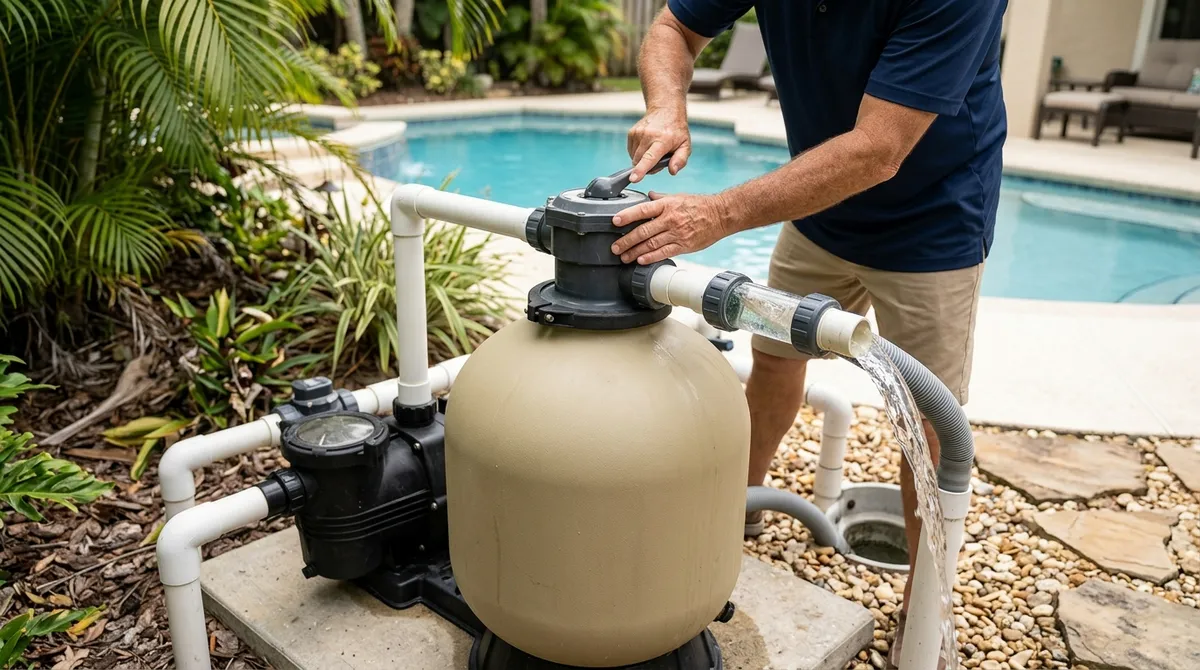
Running your filter is great. But a dirty filter can’t do its job. You need to backwash sand filters and rinse or replace cartridge filters on a regular schedule. A clogged filter causes poor circulation, which leads to cloudy water and algae growth.
Here’s a quick guide to filter maintenance schedules:
- Sand filters: Backwash every 1–2 weeks, or when pressure rises 8–10 PSI above normal. Replace sand every 5–7 years.
- Cartridge filters: Rinse every 2–4 weeks and replace every 3–5 years depending on use.
- DE filters: Backwash monthly and recharge with fresh DE powder after each backwash.
Keeping to this schedule makes a noticeable difference in your water clarity. It also protects your pump from working too hard against a dirty filter.
5. Shock Your Pool Every Week (or After Heavy Use)
Shocking your pool means adding a large dose of chlorine to eliminate bacteria, algae, and organic waste. Think of it as a deep reset for your water. In Tampa, where the heat is intense and pools get heavy use, weekly shocking is a smart practice.
You should also shock your pool after:
- A big pool party with lots of swimmers
- A heavy rainstorm that dilutes your chemicals
- Any visible algae growth or discoloration
- A long period of non-use
Shock at dusk or night so the sun doesn’t burn off the chlorine before it can work. Always follow product instructions carefully and keep swimmers out for at least 8 hours after shocking.
6. Prevent Algae Before It Starts
Algae is every pool owner’s nightmare, and Tampa’s warm, sunny climate is basically algae paradise. The best strategy? Prevent it before it shows up. Regular brushing, consistent chlorine levels, and weekly shocking go a long way. But you can also add an algaecide to your routine for extra protection.
Non-foaming polyquat algaecides are a popular choice in 2026 because they work without creating foam or leaving residue. They’re especially effective during summer heatwaves when algae grows fast. The FSPA (Florida Swimming Pool Association) is a great resource for Florida-specific pool care guidelines and licensed professionals in your area.
Here’s a simple algae prevention checklist:
- Maintain chlorine levels between 1–3 ppm at all times
- Brush your pool walls and floor weekly
- Shock weekly or after heavy use
- Add algaecide as a monthly preventive treatment
- Keep your filter clean and running long enough
7. Keep an Eye on Your Pool Equipment
Your pump, filter, heater, and other equipment need regular attention. Small problems become expensive repairs if you ignore them. Knowing the lifespan of your equipment helps you plan ahead and avoid unexpected breakdowns.
| Equipment | Average Lifespan | Maintenance Tip |
|---|---|---|
| Pump Motor | 8–12 years | Inspect seals and bearings annually |
| Sand Filter | 5–7 years (sand) | Replace sand on schedule |
| Cartridge Filter | 3–5 years | Rinse regularly, replace when worn |
| Pool Heater | 7–10 years | Flush annually, check burners |
| Saltwater Chlorinator | 3–7 years (cell) | Clean cell quarterly |
Listen for unusual noises from your pump. Watch for drops in water pressure. Check for leaks around fittings and valves. Catching issues early saves you a lot of money and headaches down the road.
If you’re in the West Chase area, you can get reliable help from Westchase Pool Service professionals who handle equipment checks as part of regular service visits.
8. Consider Robotic Cleaners and Smart Tools
Technology has made pool maintenance a whole lot easier in 2026. Robotic pool cleaners are one of the best investments you can make. Models like the Dolphin Nautilus CC scrub your pool floor and walls automatically, picking up dirt and debris while you relax. They’re energy-efficient and work independently from your main filter system.
Saltwater chlorinators from trusted brands like Hayward and Pentair are also gaining popularity. They generate chlorine from dissolved salt, which means softer water, fewer chemicals to handle, and a gentler swim experience. It’s a great option for families with young kids or those with sensitive skin.
- Robotic cleaners save hours of manual vacuuming each week
- Saltwater systems reduce chlorine handling and chemical costs
- Digital service reports help you track your pool’s health over time
- Smart timers automate your pump and filter schedules
For homeowners curious about digital reporting and advanced equipment options, the IPSSA (Independent Pool and Spa Service Association) provides excellent industry standards and consumer guidance.
9. Schedule Professional Pool Maintenance Service
Even the most dedicated DIY pool owner benefits from professional help. A trained technician spots problems you might miss. They test water more accurately, clean equipment properly, and keep detailed records of your pool’s condition. In 2026, more pool service companies are offering digital photo and video reports so you can see exactly what was done during each visit.
For Tampa homeowners, Pool Cleaning Services Tampa from a trusted local team makes pool care stress-free. Whether you need weekly cleaning, equipment repairs, or a full green-to-clean transformation, having a professional in your corner is worth every penny.
Professional services also stay current with the latest tools, eco-friendly chemicals, and industry best practices. This means your pool benefits from expertise you simply can’t get from YouTube tutorials alone. Digital marketing specialists like Brain Buzz Marketing help pool companies like Panther Pools maintain a strong local presence, making it easier for Tampa homeowners to find the quality service they need. And just as you invest in skilled home services, companies like Bucheli Trim show how quality craftsmanship and attention to detail — in any home service — makes all the difference in the long run.
If you’re in the West Chase area specifically, the team at Pool Maintenance in West Chase is ready to help you keep your pool in top shape year-round.
Making Pool Maintenance Simple and Stress-Free
Great pool maintenance doesn’t have to be complicated or time-consuming. When you build a consistent routine — skimming, brushing, testing, filtering, and shocking — your pool almost takes care of itself. Add in regular equipment checks and a professional service visit, and you’re set for a season of crystal-clear swimming.
Tampa’s year-round sunshine means your pool gets used more than almost anywhere else in the country. That’s a beautiful thing. But it also means your pool needs a little extra attention to stay at its best. By following these nine tips, you’re not just maintaining a pool — you’re protecting your investment, keeping your family safe, and making sure every swim is as refreshing as the first one.
Ready to take the stress out of pool care? Reach out to Panther Pools today for a free estimate and discover why Tampa families trust us to keep their pools beautiful, safe, and swim-ready all year long. We’re here seven days a week to help you enjoy your pool — not stress about it.
FAQs
Q: How often should I test my pool water chemistry?
A: We recommend testing your pool water at least once a week — and more often during heavy use or after rainstorms. Keeping pH between 7.4–7.6 and chlorine between 1–3 ppm is your sweet spot for safe, comfortable swimming. When in doubt, a professional test from your local pool service team gives you the most accurate picture!
Q: How long should I run my pool filter in Tampa’s summer heat?
A: In Tampa’s hot summer months, running your filter 8 to 12 hours per day is the way to go. This ensures your entire pool volume gets properly filtered at least once a day, keeping the water clear and fresh. Splitting that runtime into two sessions — morning and evening — gives you even better circulation throughout the day.
Q: What’s the easiest way to prevent algae in a Florida pool?
A: The best algae defense is a consistent routine: brush your walls weekly, maintain proper chlorine levels, shock your pool regularly, and add a monthly algaecide treatment. Florida’s heat and sunshine speed up algae growth, so staying ahead of it is much easier than trying to fix a full-blown bloom. A professional pool service can help you stay on top of this with zero hassle!
Q: When should I replace my pool pump or filter?
A: Pool pump motors typically last 8–12 years, while cartridge filters need replacing every 3–5 years and sand filter media every 5–7 years. If your pump is making unusual noises, losing pressure, or running hot, those are early warning signs it’s time for a check-up. Catching these issues early saves you money and keeps your pool running smoothly all season long.
Q: Is it worth hiring a professional pool maintenance service?
A: Absolutely — and especially in Florida where pools get heavy use year-round! A professional pool service catches small problems before they become expensive repairs, keeps your water perfectly balanced, and saves you hours of weekend work. Many Tampa pool owners find that a weekly service plan gives them total peace of mind so they can just relax and enjoy the water.