
Key Takeaways
-
Perform the bucket test to distinguish between normal evaporation and actual pool leaks by comparing water level drops inside a weighted bucket and pool over 24-48 hours.
-
Recognize early warning signs like water level drops, cracks in pool deck, soggy yard spots, and unexpectedly high water bills to catch leaks before they cause major damage.
-
Use professional acoustic and infrared detection technologies that can identify hidden leaks with 90% accuracy, instead of relying on imprecise DIY methods.
-
Understand that equipment leaks, even small drips, can indicate serious component failures that require systematic professional inspection and replacement.
-
Chemical imbalances and unexplained chemical consumption often signal undetected leaks, with potential monthly waste of 500 gallons and $100-200 in chemical costs.
-
Always call professionals immediately for suspected underground plumbing leaks, structural cracks wider than hairline thickness, or water loss exceeding one inch per day.
Discovering water mysteriously disappearing from your pool can feel like watching money drain away—literally. Every day a leak goes undetected, you’re not just losing water; you’re wasting chemicals, increasing your utility bills, and potentially causing serious structural damage to your pool and property. The worst part? Many Tampa homeowners make critical mistakes during the leak detection process that turn a fixable problem into a financial nightmare.
Whether you’ve noticed your pool level dropping faster than usual or spotted wet spots around your deck, understanding proper leak detection techniques can save you thousands in unnecessary repairs. Let’s walk through the most common mistakes people make when trying to find pool leaks and how you can avoid them while keeping your backyard oasis safe and sound.
Assuming All Water Loss Means You Have a Leak
One of the biggest mistakes Tampa pool owners make is jumping to conclusions about water loss. You check your pool one morning and notice the water level has dropped—panic sets in, and you immediately assume there’s a leak. But here’s the truth: not all water loss indicates a leak problem.
Florida’s climate means evaporation is a real factor in pool water loss. During hot summer months, pools can lose a quarter to a half-inch of water daily through evaporation alone. Wind, humidity levels, and direct sunlight exposure all affect how much water naturally evaporates from your pool.
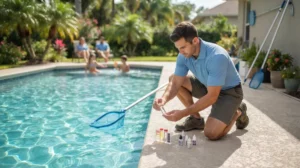
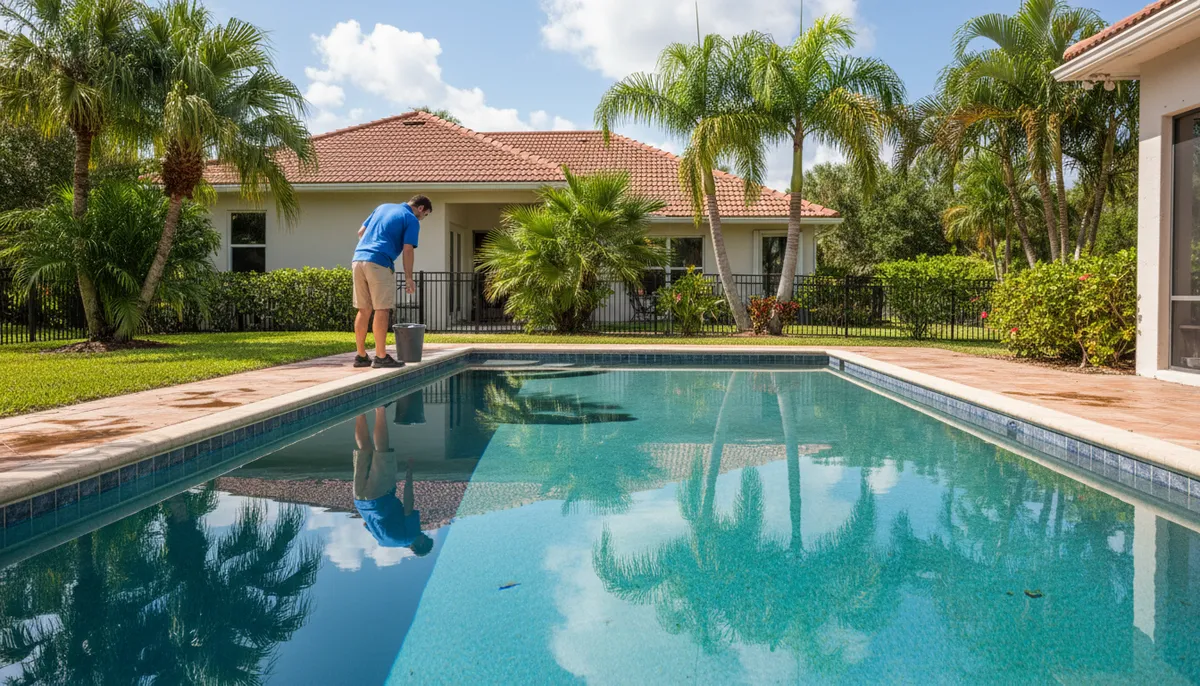
Before calling in professionals or attempting repairs, perform the simple bucket test to distinguish between evaporation and actual leaks:
- Fill a plastic bucket three-quarters full with pool water
- Place the bucket on your pool step (weighted down so it doesn’t float)
- Mark the water level inside the bucket and the pool level outside the bucket
- Turn off your pool equipment and wait 24-48 hours
- Compare the two water levels after the waiting period
If both levels dropped equally, you’re dealing with evaporation. If your pool water dropped significantly more than the bucket water, you likely have a leak. This straightforward test has a clear advantage over guessing and can save you from unnecessary service calls.
Ignoring the Early Warning Signs
Many homeowners wait until a small leak becomes a major problem before taking action. This delay often transforms a simple repair into extensive damage requiring thousands in restoration work. Recognizing early warning signs means catching leaks when they’re still manageable.
Watch for these telltale indicators that your pool might be leaking:
- Water level dropping more than a quarter-inch per day (after accounting for evaporation)
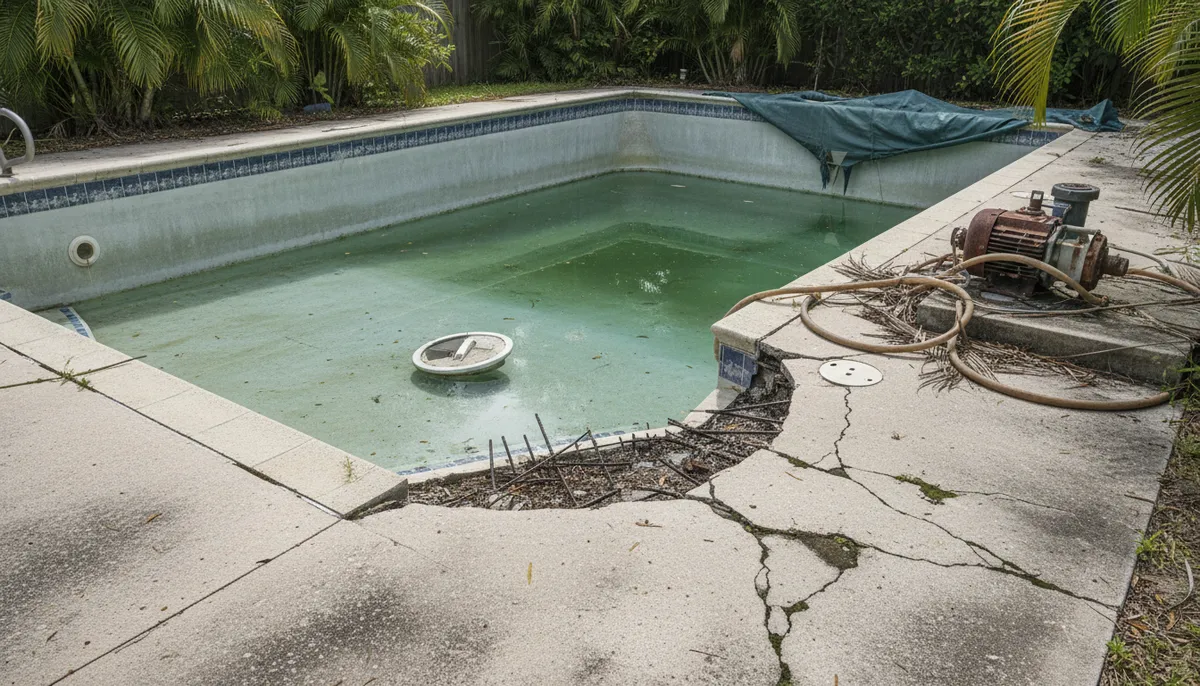
- Cracks appearing in the pool deck or surrounding concrete
- Soggy or sinking spots in your yard near the pool
- Excessive algae growth despite proper chemical treatment
- Air bubbles in return lines or reduced water pressure
- Unexpectedly high water bills
The mistake here isn’t just missing these signs—it’s dismissing them as minor inconveniences. That small crack in your pool liner? It’s getting bigger every day water flows through it. Those wet spots near your equipment pad? They could indicate underground plumbing leaks that are eroding your foundation.
Taking immediate action when you notice these warning signs prevents minor issues from escalating into major structural problems. The sooner you address potential leaks, the less damage your pool and property will sustain.
DIY Detection Without Proper Knowledge
YouTube tutorials and online guides make DIY pool leak detection look easy, but attempting repairs without understanding the process leads to costly mistakes. While some basic detection methods work well for homeowners, others require specialized knowledge and equipment.
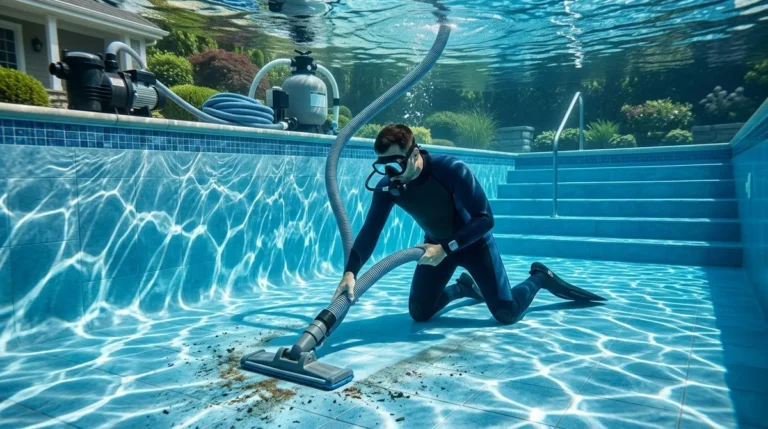
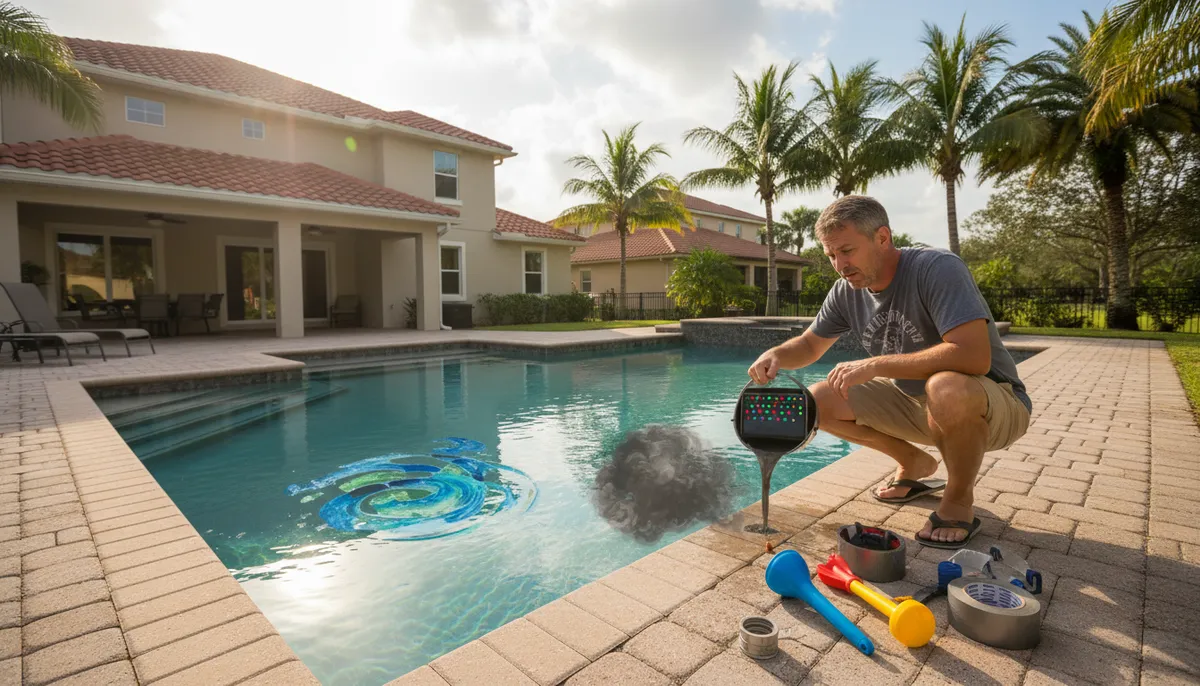
The dye test is one technique many people attempt incorrectly. This method involves adding food coloring or specialized dye near suspected leak areas and watching how the water moves. When done properly, dye gets pulled toward the leak location, making it visible. However, inexperienced testers often perform this test while the pool pump is running, creating water movement that makes accurate detection impossible.
Here’s how to properly conduct a dye test:
- Turn off all pool equipment and let water become completely still (wait at least 30 minutes)
- Put on goggles and get in the pool near the suspected leak area
- Squeeze dye slowly near cracks, fittings, or suspicious spots
- Watch carefully—if there’s a leak, dye will be pulled steadily toward it
- Mark any confirmed leak locations for repair
Another common DIY mistake involves pressure testing without understanding how pool plumbing works. Pressure testing can identify leaks in underground pipes, but applying too much pressure or testing incorrectly can actually create new leaks or damage existing plumbing. Professional equipment monitors pressure precisely, something homeowners typically can’t replicate safely.
Companies like Panther Pools have specialized training and equipment that makes leak detection both accurate and safe. Their technicians understand pool hydraulics, plumbing layouts, and structural components—knowledge that prevents the trial-and-error approach that often worsens problems.
The Technology Gap in Professional Detection
Professional leak detection has advanced significantly beyond basic visual inspection and dye testing. Acoustic sensors can detect tiny leaks with 90% accuracy by listening for the sound of water escaping under pressure—far more effective than dye testing’s 45% success rate or pressure testing’s 60% accuracy rate.
Infrared leak detection technology identifies temperature differences as small as 4°F, revealing hidden leaks under concrete, behind walls, or in underground pipes. According to data from Florida pool companies, infrared scanning has solved 85% of difficult leak cases in half the time traditional dye testing requires. Professional infrared inspections cost between $400-800 but find leaks within two hours while avoiding unnecessary demolition.
Attempting detection without this technology means you’re working with limited information. You might find obvious leaks but miss hidden problems that continue damaging your pool infrastructure. The Independent Pool and Spa Service Association recommends professional detection for any suspected underground or structural leaks.
Delaying Professional Help Too Long
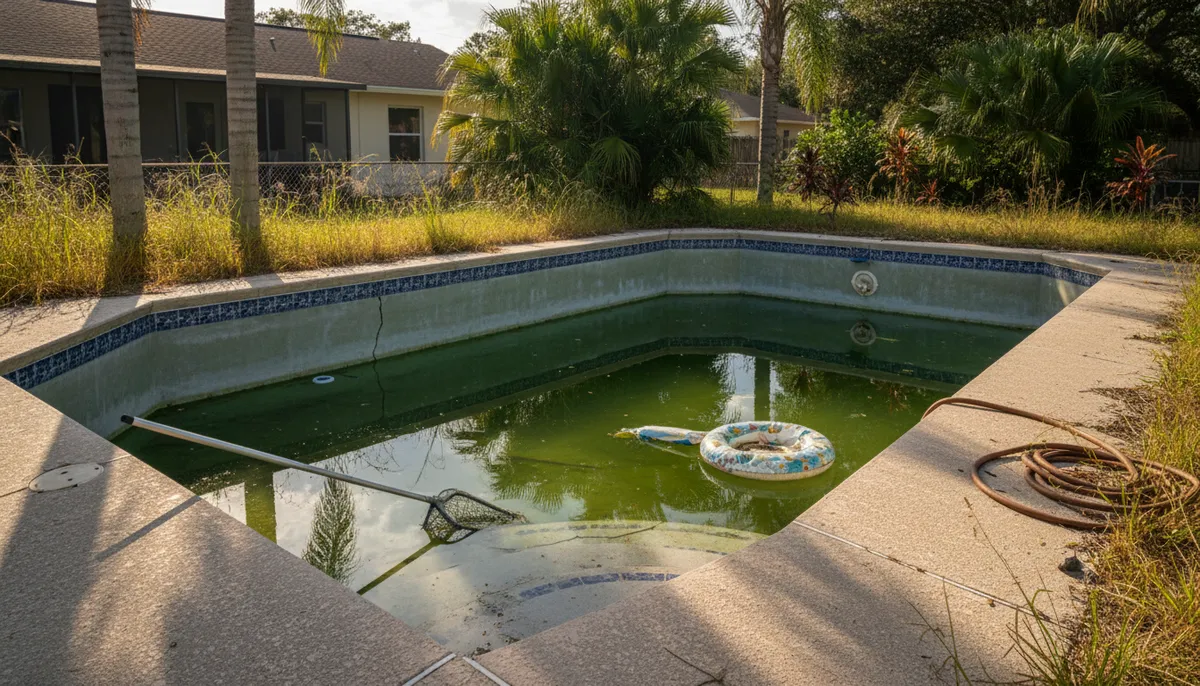
Perhaps the most expensive mistake Tampa homeowners make is waiting too long to call professionals. There’s a natural tendency to want to solve problems yourself and save money, but when it comes to pool leaks, delays often cost far more than professional services.
Consider what happens when a small liner tear goes unrepaired. Water seeps behind the liner, eroding the pool base and creating voids. Eventually, the liner separates further, the base material washes away, and what could have been a simple patch job becomes a complete liner replacement costing thousands of dollars.
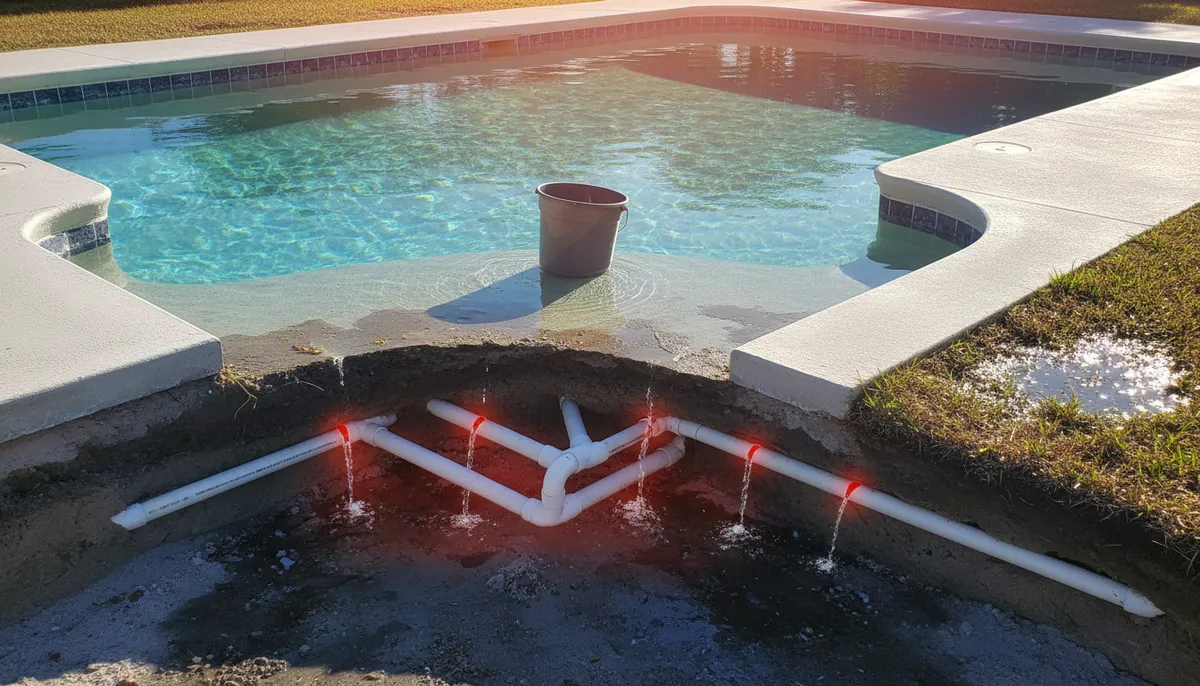
Underground plumbing leaks present even greater risks. A small leak in a return line might seem manageable, but it’s constantly washing away soil around your pool structure. Over months, this erosion can undermine your pool deck, damage nearby landscaping, and even threaten your pool’s structural integrity. What starts as a $300 repair becomes a $5,000 reconstruction project.
The financial math is clear: professional leak detection services typically cost $200-500, while delayed repairs from undetected leaks can run into thousands or tens of thousands of dollars. Early professional intervention always costs less than late-stage damage control.
When to Call the Experts Immediately
Certain situations demand immediate professional attention rather than DIY attempts:
- Suspected leaks in underground plumbing or main drains
- Structural cracks wider than hairline thickness
- Water loss exceeding one inch per day
- Visible settlement or sinking around your pool area
- Equipment malfunctions accompanied by water loss
- Failed bucket tests with no visible leak location
Professional pool service companies have experience identifying leak sources quickly and accurately. They understand how different pool types develop leaks and where problems commonly occur. This expertise means they’ll find your leak in hours rather than the days or weeks you might spend investigating.
Focusing Only on the Obvious Areas
When searching for pool leaks, most homeowners check the obvious spots—visible cracks in the pool surface, worn areas around the skimmer, or loose fittings they can see. While these areas certainly develop leaks, focusing exclusively on visible problems means missing hidden leak sources that cause the most damage.
Pool leaks commonly occur in locations you can’t easily see or access. Underground return lines develop cracks from ground movement or tree root pressure. Main drain connections fail from years of chemical exposure. The pool’s structural shell develops stress cracks beneath the waterline where constant pressure creates weak points.
Here are the most common leak locations that homeowners overlook:
- Return line fittings behind pool walls where plumbing connects to jets
- Skimmer throat connections where the skimmer box meets the pool shell
- Main drain piping running underneath the pool structure
- Light niches and conduit penetrations through pool walls
- Expansion joints that separate pool decking from the coping
- Hydrostatic relief valve locations in the pool floor
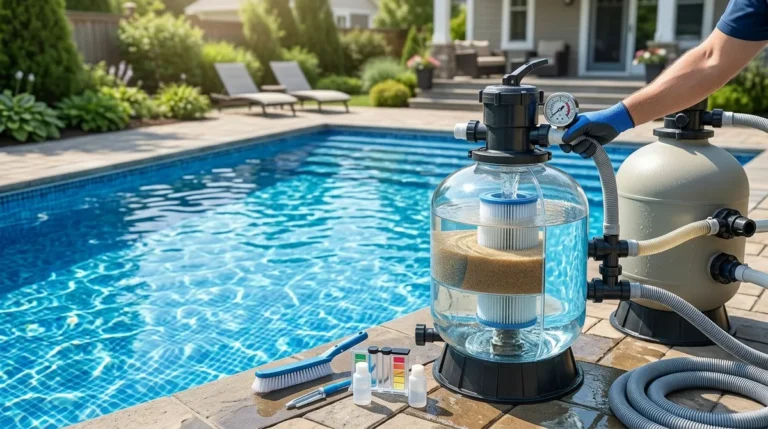
Pool equipment also develops leaks that many owners miss during visual inspections. Pump seals wear out and leak water at the base of the pump housing. Filter tank O-rings deteriorate, allowing water to seep around the filter head. Multiport valves develop internal leaks that send water directly to waste.
The mistake isn’t just missing these locations—it’s assuming that because you don’t see water, there isn’t a problem. Many serious leaks occur in locations where water immediately soaks into the ground or evaporates before you notice it. Only thorough inspection of all potential leak points reveals the true source.
The Equipment Leak Challenge
Equipment leaks deserve special attention because they’re often dismissed as minor drips when they actually indicate failing components. A pump losing a few drops per minute might not seem concerning, but it signals seal failure that will worsen rapidly. That small puddle under your filter? It means your O-ring has compressed beyond its service life and needs replacement.
Professional pool technicians inspect equipment systematically during pool cleaning services in Tampa, catching these problems before they escalate. They understand that equipment leaks often indicate multiple failing components that need coordinated replacement for reliable operation.
Misunderstanding Leak Repair Options
Once you’ve identified a leak, choosing the wrong repair approach can waste money and leave you with recurring problems. The pool service industry offers various repair options, but not all solutions work for every leak type. Understanding your repair choices prevents disappointment and repeated expenses.
Temporary patch products appeal to budget-conscious homeowners looking for quick fixes. Peel-and-stick vinyl patches, underwater epoxy, and sealant products promise easy repairs without draining your pool. While these products can temporarily fix small liner tears or minor surface cracks, they’re not permanent solutions for structural problems.
The reality is that proper leak repair requires addressing the underlying cause, not just covering the symptom. A crack in your pool shell results from structural stress, ground movement, or freeze damage. Applying epoxy over the crack doesn’t resolve why the crack formed—it simply hides the problem temporarily until the stress creates another failure point.
Professional leak repair considers the leak source, severity, and structural implications:
- Liner leaks may require patching, partial liner replacement, or complete liner installation depending on damage extent
- Structural cracks need proper preparation, compatible repair materials, and sometimes reinforcement to prevent recurrence
- Underground plumbing leaks often require excavation, pipe replacement, and proper backfilling to restore soil stability
- Equipment leaks demand component replacement with proper parts rather than makeshift fixes
Choosing the cheapest repair option usually means paying twice—once for the temporary fix and again for the proper repair when the quick solution fails. Quality repairs from experienced professionals cost more initially but provide lasting solutions that protect your pool investment.
Neglecting the Relationship Between Leaks and Chemistry
Here’s a mistake that surprises many pool owners: ignoring how leaks affect water chemistry and how chemistry problems can indicate leaks. These two factors connect in ways that impact both leak detection and pool maintenance.
When your pool leaks, you’re constantly adding fresh water to maintain proper levels. This dilutes your carefully balanced chemicals, making it nearly impossible to maintain stable chemistry. You add chlorine, but it seems to disappear faster than normal. pH levels swing wildly despite regular adjustments. Calcium hardness drops unexpectedly.
These chemistry challenges aren’t just annoying—they’re expensive. You’re purchasing and adding chemicals that literally flow out of your pool through the leak. Depending on leak severity, you might be wasting 25-50% of your chemicals treating water that will be gone within days.
The relationship works in reverse too. Persistent chemistry problems can signal leaks you haven’t detected yet. If you’re constantly fighting to maintain chlorine levels despite proper filtration and circulation, you might be losing water faster than evaporation accounts for. Unexplained chemical consumption often indicates a leak that hasn’t become visually obvious yet.
According to the EPA’s pool water efficiency resources, undetected leaks can waste thousands of gallons monthly, taking dissolved chemicals with them. This environmental and financial impact makes leak detection an essential part of responsible pool ownership.
The Hidden Cost of Chemical Waste
Let’s put some numbers to this problem. A pool losing one inch of water daily to leaks loses approximately 500 gallons per week (for an average 15×30 pool). That’s 2,000 gallons monthly—equivalent to completely replacing half your pool water.
With that much water loss, you’re also losing:
- Chlorine that cost $20-40 to add over the month
- pH balancers and alkalinity adjusters worth $15-25
- Stabilizers and conditioners adding another $10-20
- Salt (for saltwater pools) costing $50-100 to replace
The chemical waste alone can cost $100-200 monthly, not counting the water expense. Over a season, leak-related chemical loss might exceed $1,000—money literally draining from your pool. Professional leak detection and repair quickly pays for itself through eliminated chemical waste.
Skipping Regular Leak Inspections
The final major mistake is treating leak detection as a reactive process rather than preventive maintenance. Most homeowners only think about leaks when they notice obvious problems, but by then, damage is already occurring. Regular leak inspections catch problems early when repairs are simplest and least expensive.
Professional pool services include leak inspection as part of comprehensive pool maintenance in West Chase and throughout Tampa. Technicians trained to spot early warning signs can identify developing problems before they become emergencies.
During routine maintenance visits, experienced technicians check for:
- Unusual water loss patterns between service appointments
- New cracks or deterioration in pool surfaces
- Equipment showing signs of seal failure or component wear
- Plumbing connections developing drips or moisture
- Changes in water chemistry suggesting increased dilution
- Settling or movement in deck areas surrounding the pool
These inspections take minutes but provide enormous value. Finding a developing liner weakness during routine service means scheduling a simple patch. Discovering the same problem months later after water has washed away base material means expensive structural repairs.
The Florida Swimming Pool Association recommends annual professional leak inspections even for pools showing no obvious problems. This proactive approach identifies hidden issues and prevents the emergency situations that disrupt your summer plans and strain your budget.
The Value of Professional Relationships
Building a relationship with a trusted pool service provider creates continuity in your pool care. When the same technicians service your pool regularly, they become familiar with its normal operation and quickly notice changes that might indicate developing problems.
This familiarity is invaluable for early leak detection. Your regular technician knows your pool’s typical water loss, chemical consumption, and equipment performance. They’ll recognize when something changes before problems become visible to you. This personalized attention catches issues at the earliest, most affordable stage.
Companies offering Westchase pool service and throughout Tampa provide this consistent care that builds expertise about your specific pool. Rather than calling different companies for different problems, having one trusted partner means someone always knows your pool’s history and can spot unusual patterns immediately.
Moving Forward: Protecting Your Pool Investment
Avoiding these common pool leak detection mistakes protects both your wallet and your pool’s longevity. The key is shifting from reactive problem-solving to proactive pool care. Regular inspections, prompt attention to warning signs, and professional expertise when needed create a maintenance strategy that prevents expensive emergencies.
Remember that your pool represents a significant investment in your home and lifestyle. Protecting that investment means taking leaks seriously from the first sign of trouble. Water loss isn’t just an inconvenience—it’s actively damaging your pool structure, wasting resources, and costing money every single day it continues.
The good news is that modern leak detection technology and experienced pool professionals make finding and fixing leaks more efficient than ever. Services that once required days of investigation now take hours. Repairs that once meant major reconstruction can often be completed with minimally invasive techniques.
Your Tampa pool deserves expert care that keeps it beautiful, functional, and leak-free for years to come. Whether you’re dealing with a suspected leak right now or simply want to prevent future problems, professional guidance makes all the difference. Don’t let common mistakes turn a manageable repair into a major crisis—take action at the first sign of trouble and trust experienced professionals to protect your backyard oasis.
Ready to ensure your pool stays leak-free and properly maintained? Get in touch with our team for expert leak detection services and comprehensive pool care that keeps your water where it belongs—in your pool, not in the ground. With seven-day-a-week support and certified technicians who understand Tampa pools inside and out, you’ll have peace of mind knowing your pool is in capable hands.
FAQs
Q: How can I tell if my pool is leaking or if it’s just normal evaporation?
A: The bucket test is your best friend here. Fill a bucket with pool water, place it on your pool step, and mark both water levels. After 24-48 hours with your equipment off, compare the levels. If your pool dropped more than the bucket, you’ve got a leak. In Tampa’s climate, losing a quarter to half-inch daily from evaporation is normal, so don’t panic at small drops.
Q: What are the most common places where pool leaks occur?
A: Leaks love hiding in spots you can’t easily see. The usual suspects include return line fittings behind walls, skimmer connections where the box meets your pool shell, underground main drain pipes, light fixtures, and equipment seals on pumps and filters. Don’t forget to check expansion joints between your deck and coping—they’re sneaky leak locations that many people overlook.
Q: Can I fix a small pool leak myself or should I call a professional?
A: Small, visible liner tears can sometimes be patched with DIY kits as temporary fixes, but most leaks need professional attention. Underground plumbing leaks, structural cracks, and equipment failures require specialized tools and knowledge to repair properly. Attempting complex repairs yourself often makes problems worse and costs more in the long run, so it’s wise to call experts for anything beyond surface-level patches.
Q: How much does professional pool leak detection cost in Tampa?
A: Professional leak detection typically runs $200-500 for basic services, with advanced methods like infrared scanning costing $400-800. This might seem pricey, but consider that undetected leaks cause thousands in structural damage, waste hundreds in chemicals monthly, and drive up water bills. The detection cost pays for itself quickly by catching problems before they become expensive disasters.
Q: How do pool leaks affect my water chemistry?
A: Leaks constantly dilute your pool chemicals as you add fresh water to maintain levels, making stable chemistry nearly impossible. You’ll burn through chlorine, pH adjusters, and other chemicals faster than normal because they’re literally flowing out of your pool. If you’re fighting constant chemistry problems despite proper maintenance, an undetected leak might be the culprit stealing your chemicals and your money.