
Key Takeaways
-
Professional installation ensures proper hydraulic flow matching your pool’s volume and layout, preventing energy waste and equipment strain from incorrectly sized pumps or connections.
-
Florida law requires a contractor’s license for pool equipment installation exceeding $500, and many manufacturers void warranties on DIY installations, protecting you legally and financially.
-
Licensed technicians perform complete system assessments, safe disconnection, proper installation with code compliance, startup testing, and water balancing in a single visit.
-
Tampa’s humid, hot climate accelerates equipment wear on salt systems, pumps, and heaters, making annual inspections and professional maintenance more critical than in cooler regions.
-
A full-service pool company bundling cleaning, maintenance, and installation spots problems early during routine visits, eliminating the need to juggle multiple contractors.
-
Watch for warning signs like grinding pump noises, poor circulation, rust, leaks, or increased energy bills; equipment over 8-10 years old typically needs replacement soon.
Your pool is only as good as the equipment running it. Pumps, filters, heaters, salt systems — these are the workhorses behind every clean, clear, and refreshing swim. But when something breaks down or needs upgrading, it raises a big question: what does pool equipment installation actually involve, and who should handle it?
Whether you are a busy Tampa family wanting more weekend fun and less pool stress, a luxury homeowner protecting a serious investment, or a commercial property manager keeping a facility running smoothly, understanding pool equipment installation puts you in the driver’s seat. You will know what to expect, when to call a pro, and how to avoid costly mistakes.
This guide breaks it all down in plain, simple terms — no jargon, no confusion. Let’s dive in!
What Is Pool Equipment Installation?
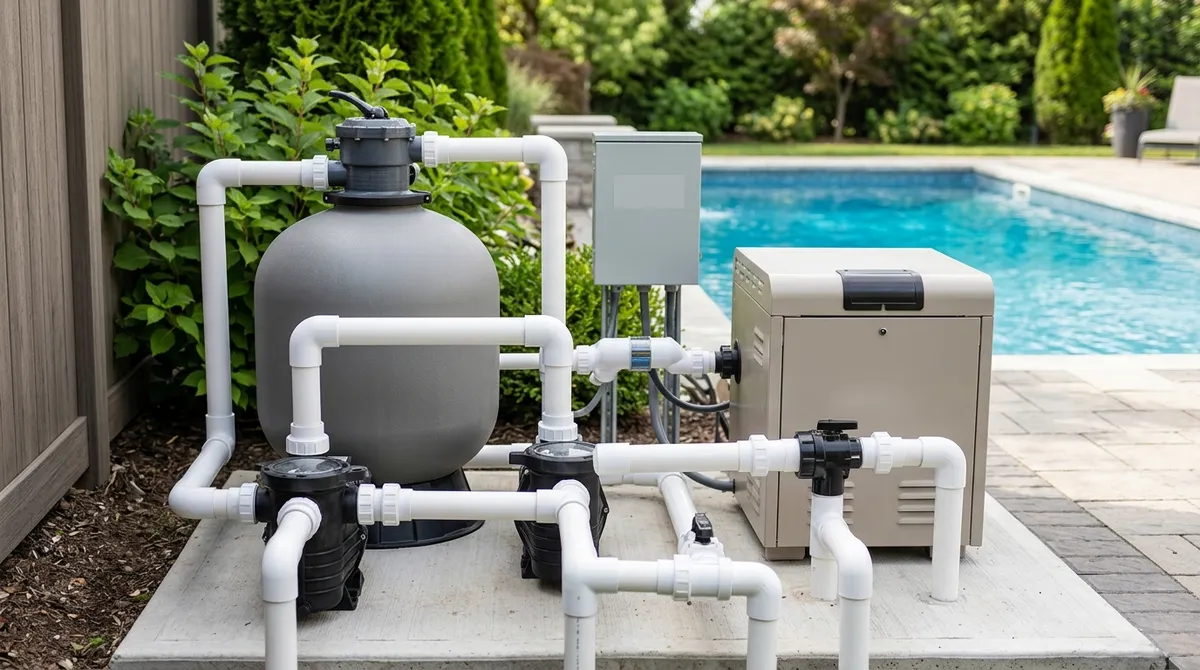
Pool equipment installation is the process of setting up, replacing, or commissioning the mechanical and electrical systems that keep your pool functioning. It goes well beyond routine cleaning. It involves hands-on work with the core systems that control water flow, filtration, heating, and sanitation.
For pool service companies like Panther Pools, offering equipment installation alongside regular maintenance allows them to serve as a one-stop solution for Tampa pool owners. That means fewer contractors to juggle and faster turnaround when something goes wrong.
If you want to understand the full scope of what professional pool care covers, check out this overview of pool maintenance services every Tampa pool owner needs to know.
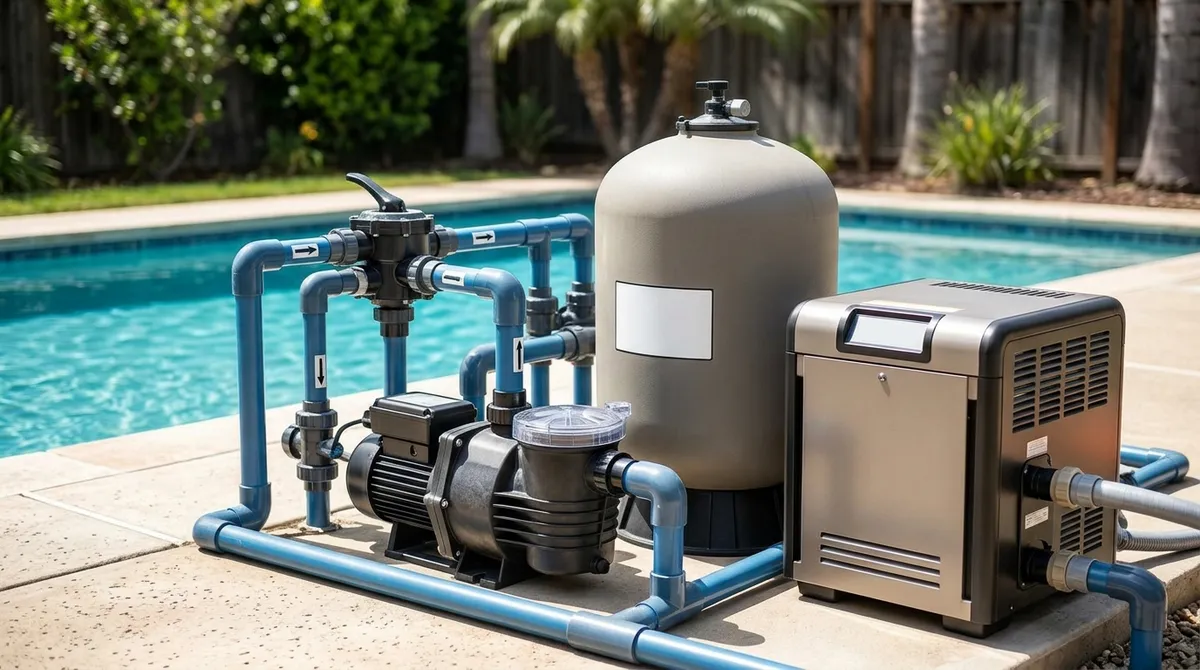
Common Types of Pool Equipment That Get Installed
Not all pool equipment is the same. Here is a quick look at the most common systems that require professional installation or replacement:
- Pool pumps — the heart of your circulation system, moving water through filtration and back into the pool
- Pool filters — sand, cartridge, or DE filters that trap debris and contaminants
- Pool heaters — gas, electric, or heat pump models that extend your swim season
- Salt chlorine generators — systems that produce chlorine naturally from salt for a gentler swim experience
- Pool automation systems — smart controls that manage pumps, lights, and heaters from your phone
- Ladders and handrails — safety hardware installed at pool openings and closings
- Skimmer baskets and return fittings — essential components for water flow and surface cleaning
- Pool lighting — underwater LED or fiber optic lights for safety and ambiance
Each of these systems needs to be placed and connected correctly for proper hydraulic flow, filtration, and sanitation. A wrong connection can reduce efficiency, damage equipment, or even create safety risks.
Want to learn more about keeping your filtration system in top shape? Read our guide on maintaining your pool’s filters.
Why Professional Pool Equipment Installation Matters
It is tempting to watch a tutorial video and handle an installation yourself. But pool equipment is more complex than it looks. Here are the key reasons why professional installation is the smarter choice:
1. Proper Hydraulic Flow
Every pool system is designed around a specific flow rate. Pumps, filters, and heaters must be matched correctly. A pump that is too powerful or too weak will strain your system and waste energy. Professionals know how to size and connect equipment for your pool’s exact volume and layout.
2. Safety and Code Compliance
In Florida, repair and construction work exceeding $500 — including pool equipment installation — may require a contractor’s license. This includes plumbing and electrical connections. Working with a licensed company protects you from liability and ensures the work meets local building codes. The Florida Swimming Pool Association (FSPA) provides industry guidance on standards and licensing requirements for pool professionals in the state.
3. Warranty Protection
Many equipment manufacturers require professional installation to honor product warranties. A DIY install could void the warranty on a heater or pump that costs thousands of dollars.
4. Efficiency and Longevity
Correctly installed equipment runs more efficiently and lasts longer. A pump installed with proper plumbing connections will use less electricity and experience far less wear and tear over time.
Curious about the real difference between DIY and professional pool care? Here’s a helpful breakdown: DIY pool care vs. pool technicians — who really wins?
Pool Equipment Installation vs. Pool Cleaning: What Is the Difference?
Many pool owners wonder how installation relates to their regular cleaning service. Here is a simple comparison:
| Service Type | What It Includes | How Often? |
|---|---|---|
| Pool Cleaning | Skimming, vacuuming, brushing, chemical balancing, filter checks | Weekly or bi-weekly |
| Pool Maintenance | All cleaning tasks plus equipment inspection, backwashing, water testing | Weekly or monthly |
| Pool Equipment Installation | Replacing or installing pumps, heaters, filters, salt systems, automation | As needed / scheduled |
| Pool Opening / Closing | Installing ladders, handrails, return fittings, starting systems for the season | Seasonally |
A full-service pool company bundles these together, which saves you time and creates a consistent experience. You never have to call three different contractors for one pool problem.
Step-by-Step: What Happens During a Pool Equipment Installation Visit
Wondering what to expect when a technician shows up to install or replace your pool equipment? Here is the typical process:
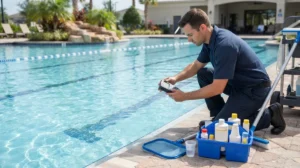
- Assessment and diagnosis — The technician inspects your existing system, identifies what needs replacing, and checks for any related plumbing or electrical issues.
- Equipment selection — Based on your pool size and needs, the right equipment is selected or ordered. Your technician will walk you through your options.
- Safe disconnection — Existing equipment is safely powered down and disconnected before removal.
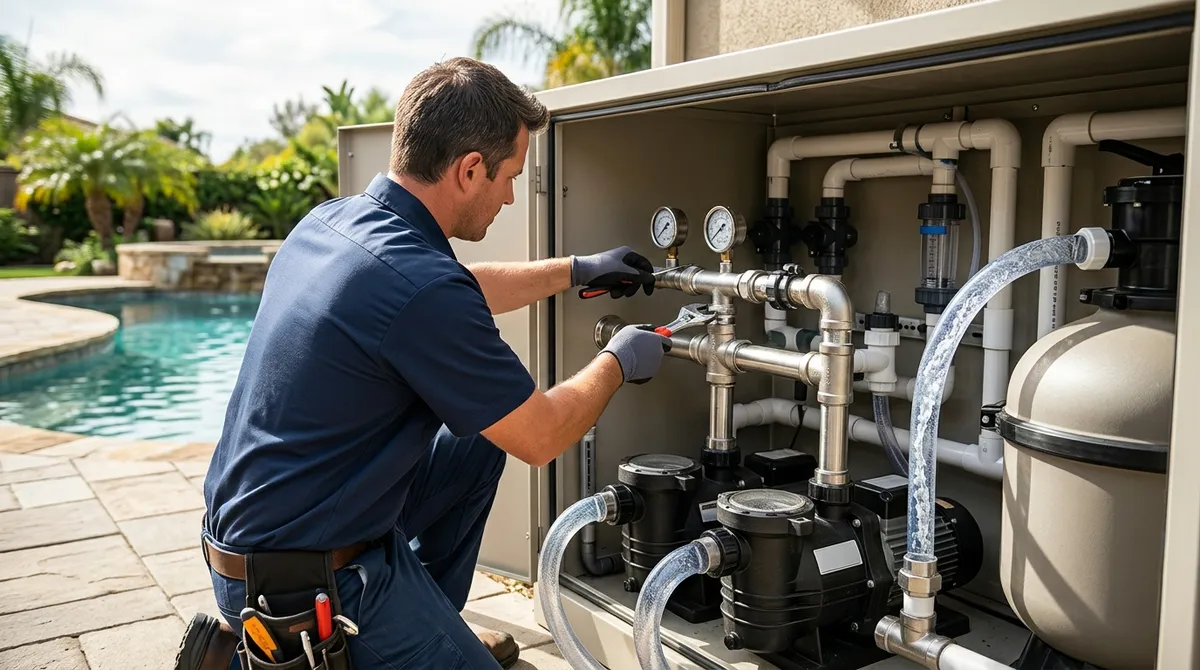
- Installation and connection — New equipment is installed with proper plumbing and electrical connections, following local codes and manufacturer guidelines.
- System startup and testing — The new system is powered on and tested for leaks, flow rate, pressure, and performance.
- Water balancing check — After startup, water chemistry is tested and balanced to protect the new equipment and ensure swimmer safety.
- Technician walkthrough — You get a quick explanation of how the new system works and what to watch for.
For deeper insight into pump-specific installs, check out these 7 pool pump installation facts every Tampa owner needs.
Signs Your Pool Equipment Needs Replacing
How do you know when installation or replacement is needed? Watch for these warning signs:
- Your pump is making loud grinding or whining noises
- Water is not circulating properly despite a clean filter
- Your heater takes much longer than usual to warm the pool
- Your salt system is generating error codes or low chlorine output
- You notice visible rust, cracks, or leaks around any equipment
- Your energy bills have increased without any obvious reason
- Equipment is more than 8-10 years old and showing signs of wear
Catching these signs early prevents small problems from becoming very expensive ones. Learn more about 7 pool pump repair signs that mean you need help now.
The Independent Pool and Spa Service Association (IPSSA) also recommends annual equipment inspections as a best practice to catch failing components before they cause bigger issues.
Pool Equipment Installation and Tampa’s Climate
Tampa’s warm, humid climate is tough on pool equipment. High temperatures, UV exposure, and heavy swim seasons put extra stress on pumps, heaters, and salt systems. That means Tampa pool owners often need equipment serviced or replaced more frequently than owners in cooler climates.
Here is what Tampa pool owners should keep in mind:
- Salt systems need regular inspection because humidity and heat can accelerate cell wear
- Pumps and motors are vulnerable to heat — proper ventilation around equipment pads matters
- Pool heaters should be inspected annually before heavy use periods
- Automation systems are a smart investment in Tampa because they reduce energy waste during long swim seasons
Want to know more about heater-specific installation tips? Read 9 pool heater installation facts every Tampa owner needs.
How Pool Equipment Installation Fits Into a Service Package
The best pool service companies in Tampa offer equipment installation as part of a broader service package — not as an afterthought. When your regular pool technician also handles equipment repairs and installations, they already know your pool’s history, quirks, and needs.
Recurring maintenance visits on a weekly, bi-monthly, or monthly basis include equipment inspections as a standard part of the service. This means problems get spotted early, often before you even notice them.
Here is what a complete service relationship might include:
- Regular cleaning — skimming, vacuuming, brushing, and chemical balancing
- Equipment inspection — pumps, filters, heaters, and salt systems checked every visit
- Repairs and replacements — handled in-house without needing a separate contractor
This kind of integrated service is exactly what Panther Pools offers as Tampa’s premier pool cleaning company. With a CPO credential (CPO 648855) and a CPC License (CPC1461336), they are fully qualified to handle both routine maintenance and equipment installation work.
To explore available service options in more detail, see this guide on 12 pool service packages every Tampa owner should know.
The EPA’s pool water efficiency resources also highlight the importance of properly installed, energy-efficient equipment — another great reason to invest in professional installation.
Commercial Pool Equipment Installation: A Different Challenge
Commercial pools — at hotels, apartment complexes, and fitness facilities — face a higher standard than residential pools. The equipment is larger, the bather load is heavier, and the compliance requirements are stricter.
For commercial property managers, equipment installation is not just about convenience — it is about staying operational and compliant. A broken pump at a hotel pool during peak season is a serious business problem. Professional installation with licensed technicians keeps your facility running without interruption.
Learn more about the demands of keeping commercial pools operational in this article: why is commercial pool service essential for Tampa facilities?
How to Choose a Pool Equipment Installation Service in Tampa
Not every pool service company is qualified to handle equipment installation. Here is what to look for when choosing a provider:
- Licensed and certified — Look for a CPO credential and a contractor’s license for plumbing or electrical work
- In-house technicians — Avoid companies that outsource installation work to unknown subcontractors
- Free estimates — A good company will assess your equipment needs and provide a clear quote upfront
- Experience with your equipment type — Heater installations are different from salt system setups; make sure your technician has relevant experience
- Seven-day support — Pool problems don’t follow a Monday-to-Friday schedule; choose a company available when you need them
For more guidance on finding a trustworthy pool service provider, read how to choose a licensed pool service you can trust.
Conclusion: Keep Your Pool Running With the Right Installation Partner
Pool equipment installation is one of the most important investments you can make in your pool’s performance, safety, and lifespan. From pumps and heaters to salt systems and automation, getting the right equipment installed correctly — by a qualified professional — makes every swim better and every maintenance visit easier.
Tampa pool owners deserve a service partner who handles it all: cleaning, maintenance, repairs, and installation, backed by the right credentials and a genuine commitment to quality. That kind of service saves you time, protects your investment, and keeps your pool exactly where it belongs — ready for your next swim.
Ready to get started? Reach out to our team for a free estimate and let us show you what full-service pool care really looks like in Tampa.
FAQs
Q: What pool equipment is typically installed by a pool cleaning company?
A: A full-service pool cleaning company can install or replace pumps, filters, heaters, salt chlorine generators, automation systems, pool lighting, ladders, handrails, skimmer baskets, and return fittings. These are the core systems that keep your pool clean, safe, and running smoothly all year long!
Q: Is a license required to install pool equipment in Florida?
A: Yes! In Florida, repair or construction work exceeding $500 — including pool equipment installation that involves plumbing or electrical connections — typically requires a contractor’s license. Always choose a licensed and certified pool service company to make sure the work is done legally and safely.
Q: How often should pool equipment be inspected or replaced?
A: Most pool equipment should be professionally inspected at least once a year, with pumps and filters checked even more frequently during heavy swim seasons. In Tampa’s hot, humid climate, equipment can wear faster than average, so staying on top of regular inspections is a smart move that saves money in the long run.
Q: Can a pool service company replace a salt system or chlorinator?
A: Absolutely! A qualified pool service company with the right credentials can install and replace salt chlorine generators and chlorinators as part of their equipment services. It is always best to have a licensed technician handle this work to ensure the system is properly sized, connected, and commissioned for your pool.
Q: What is the difference between pool cleaning and pool equipment installation?
A: Pool cleaning covers routine tasks like skimming, vacuuming, brushing, and chemical balancing, while pool equipment installation involves setting up or replacing the mechanical systems that power your pool — like pumps, heaters, and filters. The best pool service companies offer both, so you get complete care from a single trusted team!