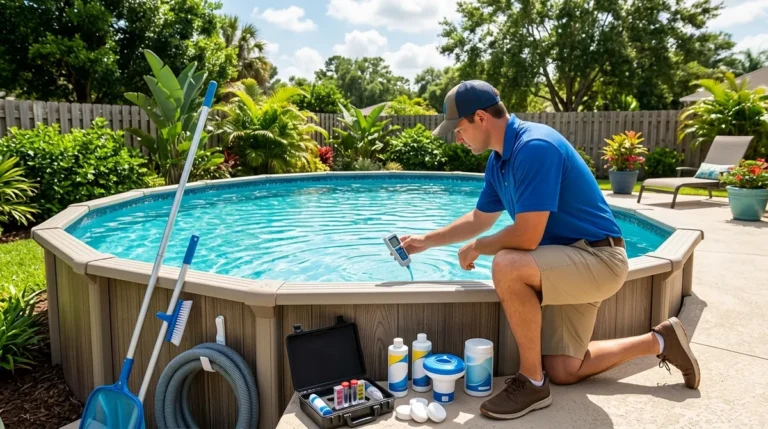

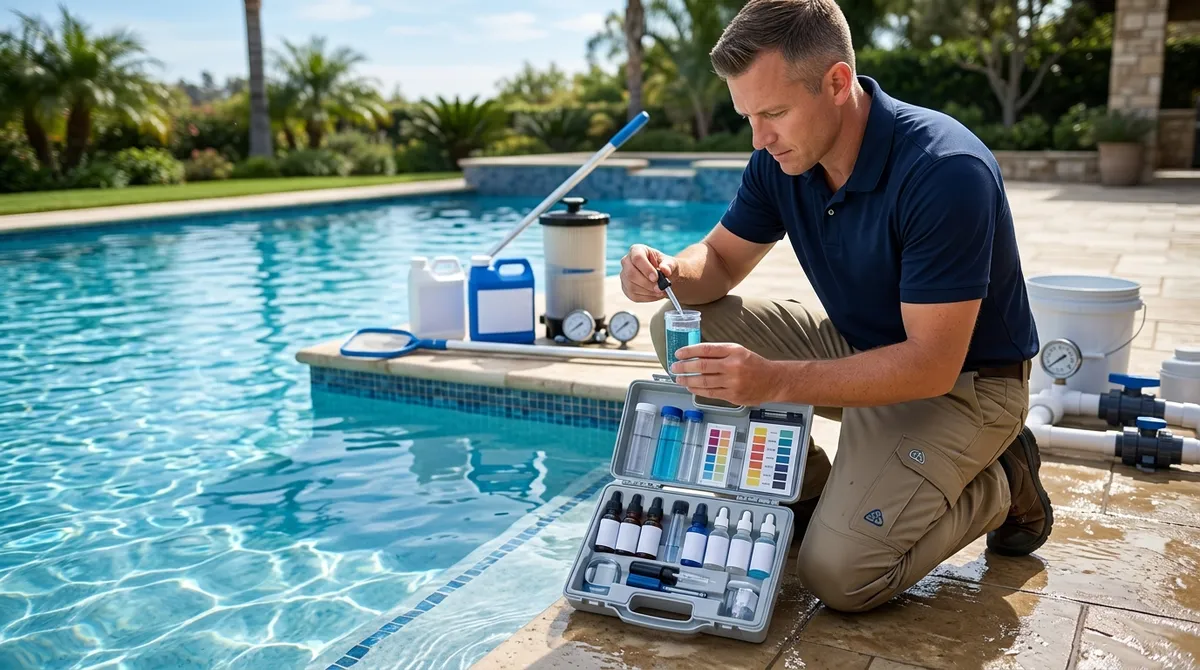
Key Takeaways
-
CPO certification is legally required in 24 states plus D.C. for commercial and public pools; health departments inspect for proof, making compliance critical for property managers to avoid facility shutdowns.
-
CPO-certified technicians complete 14-16 hours of structured training covering water chemistry, filtration systems, equipment care, safety standards, and disinfection methods—not just basic chlorine addition.
-
CPO certification is valid for 5 years and must be renewed; always ask pool service companies directly for their current CPO number and verify credentials before hiring.
-
CST (Certified Service Technician) certification goes beyond CPO to cover advanced equipment repair, hydraulics, and electrical troubleshooting; the best companies employ technicians with both certifications.
-
During each visit, certified pool service includes water chemistry testing and balancing, equipment inspection, brushing and vacuuming, and debris removal—far more comprehensive than basic maintenance.
-
Verify certification by requesting the CPO number directly from the company, checking their website for listed credentials, and confirming with local health departments for commercial pool requirements.
If you own a pool in Tampa, you’ve probably heard the phrase “certified pool service” tossed around. But what does it actually mean? And why should it matter to you? The answer is simpler than you might think — and it could make a big difference in how clean, safe, and enjoyable your pool is all year long.
Hiring a certified pool service means you’re trusting your pool to technicians who have real, verified training. They know water chemistry, equipment, safety rules, and how to keep your pool in top shape. Whether you have a backyard splash zone for the kids or a commercial pool at your Tampa business, certification matters more than most people realize.
Let’s break down everything you need to know about certified pool service — what it means, why it counts, and how to make sure you’re hiring the right team for the job.
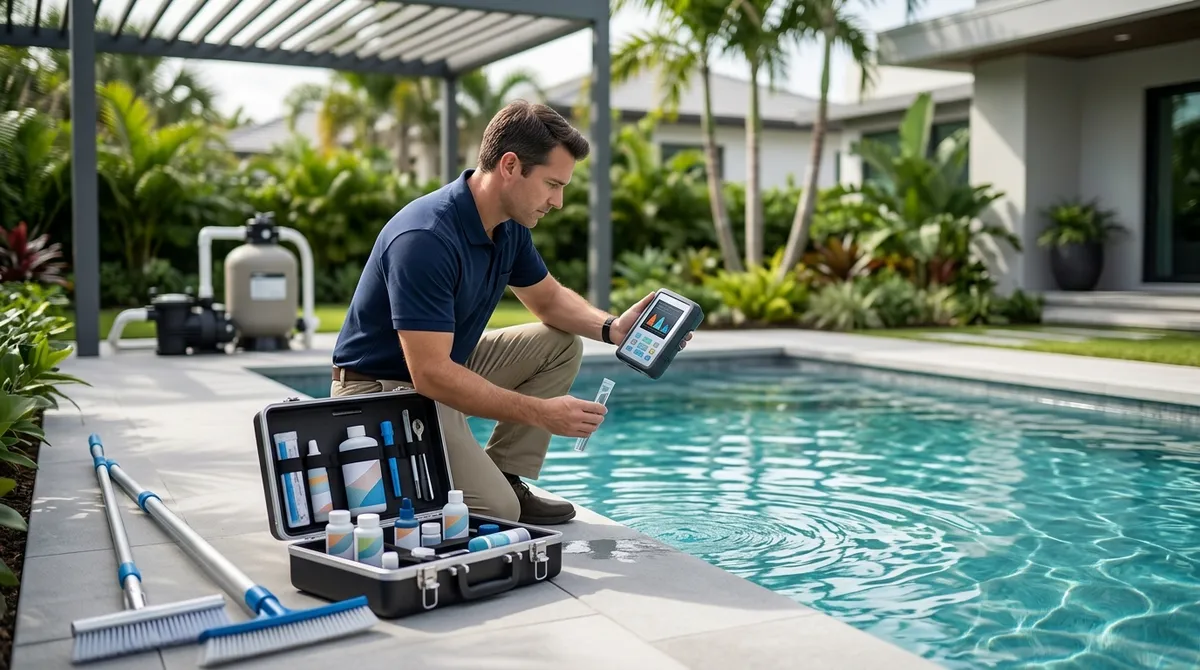
What Does Certified Pool Service Actually Mean?
When a pool company says it’s “certified,” that usually points to one very specific credential: the Certified Pool Operator (CPO). This certification is issued through the Florida Swimming Pool Association (FSPA) and the Pool & Hot Tub Alliance (PHTA). It’s the gold standard in the pool industry.
A CPO credential means the technician has completed a structured training program. They’ve been tested on topics that directly affect the safety and cleanliness of your pool. This isn’t a weekend hobbyist with a net and some chlorine. This is a trained professional.
There’s also the Certified Service Technician (CST) credential, which goes even deeper into the technical side. CST training covers pool finishes, hydraulics, filtration systems, and electrical components. It’s designed for technicians who handle more advanced troubleshooting and repairs. Together, CPO and CST represent the two most recognized certifications in the pool service world.
What Topics Does CPO Certification Cover?
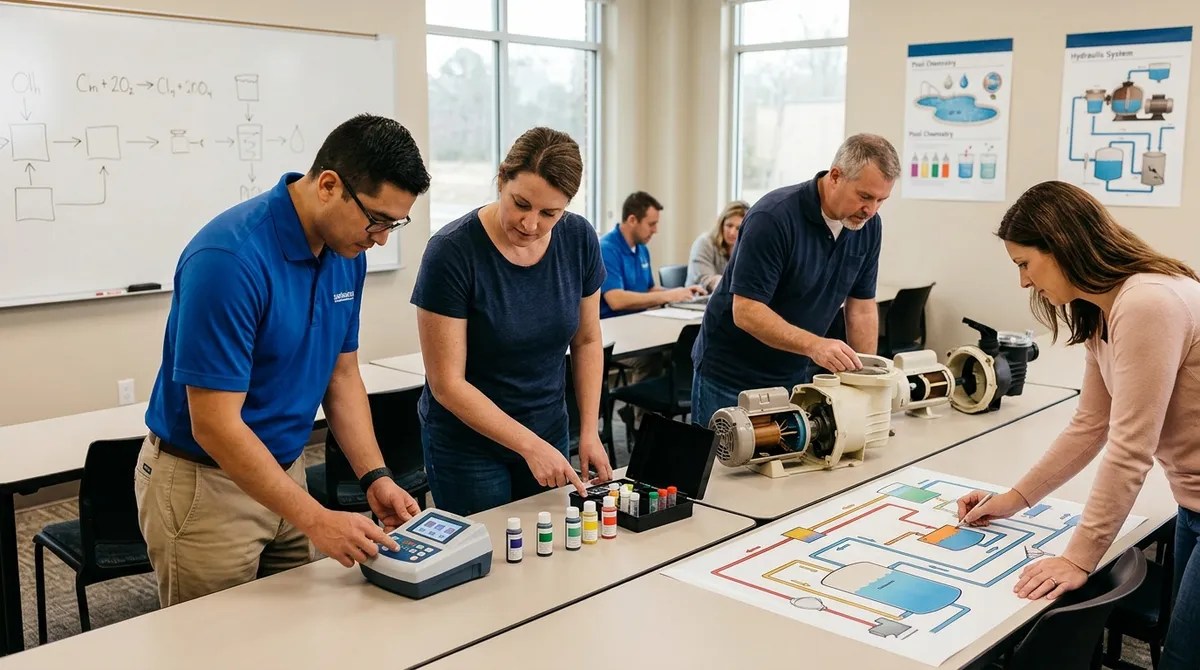
The CPO training program is thorough. Most courses run between 14 and 16 hours of instruction, often spread across two full days. That’s a serious commitment, and it covers a lot of ground that directly protects you as a pool owner.
Here’s what CPO-certified technicians learn during training:
- Water chemistry and testing — knowing the right balance of pH, chlorine, alkalinity, and more
- Filtration and circulation systems — how water moves through your pool and stays clean
- Pool equipment care — pumps, heaters, salt systems, and how to keep them running well
- Safety standards and regulations — the rules that protect swimmers, especially in commercial settings
- Record keeping and documentation — tracking water tests, chemical additions, and maintenance history
- Disinfection methods — understanding different sanitizing systems and how to use them correctly
All of that training adds up to a technician who doesn’t just skim the surface (pun intended). They understand the why behind every task, not just the how. If something looks off with your water or your equipment, a certified technician knows what to look for and what to do about it.
CPO vs. CST: Understanding the Difference
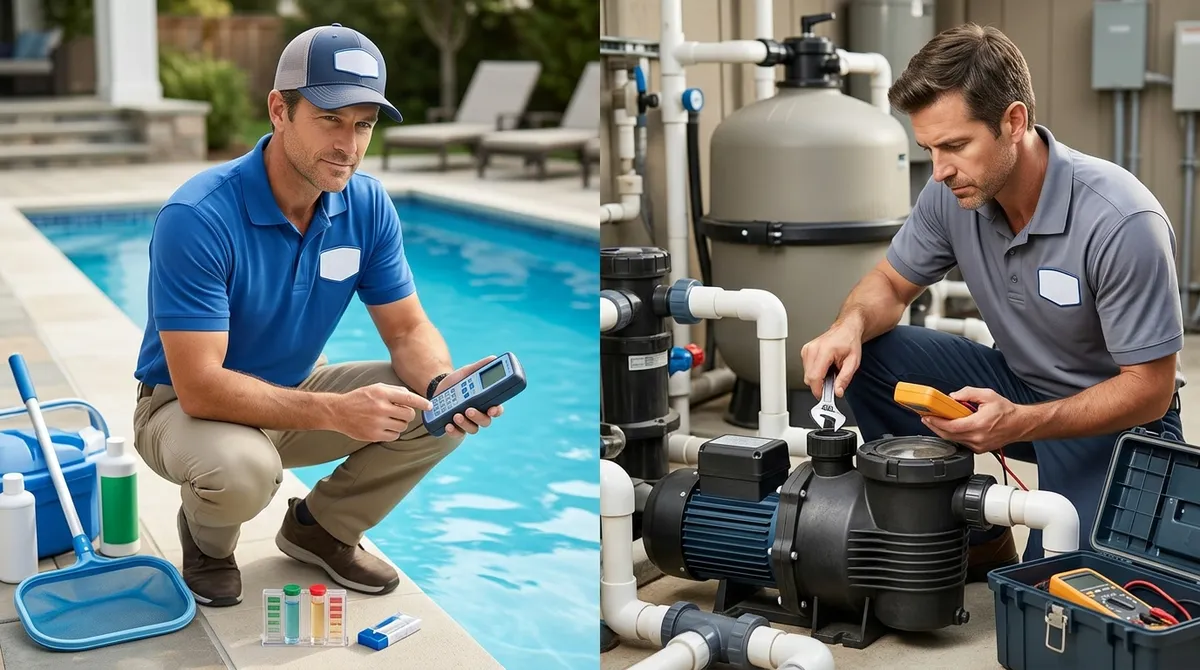
You might come across both CPO and CST when researching certified pool service. Here’s a simple breakdown of how they differ and why both matter:
| Certification | Issued By | Focus Area | Best For |
|---|---|---|---|
| Certified Pool Operator (CPO) | Pool & Hot Tub Alliance (PHTA) | Water chemistry, safety, regulations, filtration | All pool types — residential and commercial |
| Certified Service Technician (CST) | Pool & Hot Tub Alliance (PHTA) | Equipment repair, hydraulics, electrical, troubleshooting | Advanced repairs and technical service |
Think of CPO as the foundation. Every professional who maintains a pool should have it. CST is the advanced layer — it’s for technicians who dig deeper into repairs and equipment issues. The best pool service companies have technicians trained at both levels.
Why CPO Certification Matters for Commercial Pool Owners
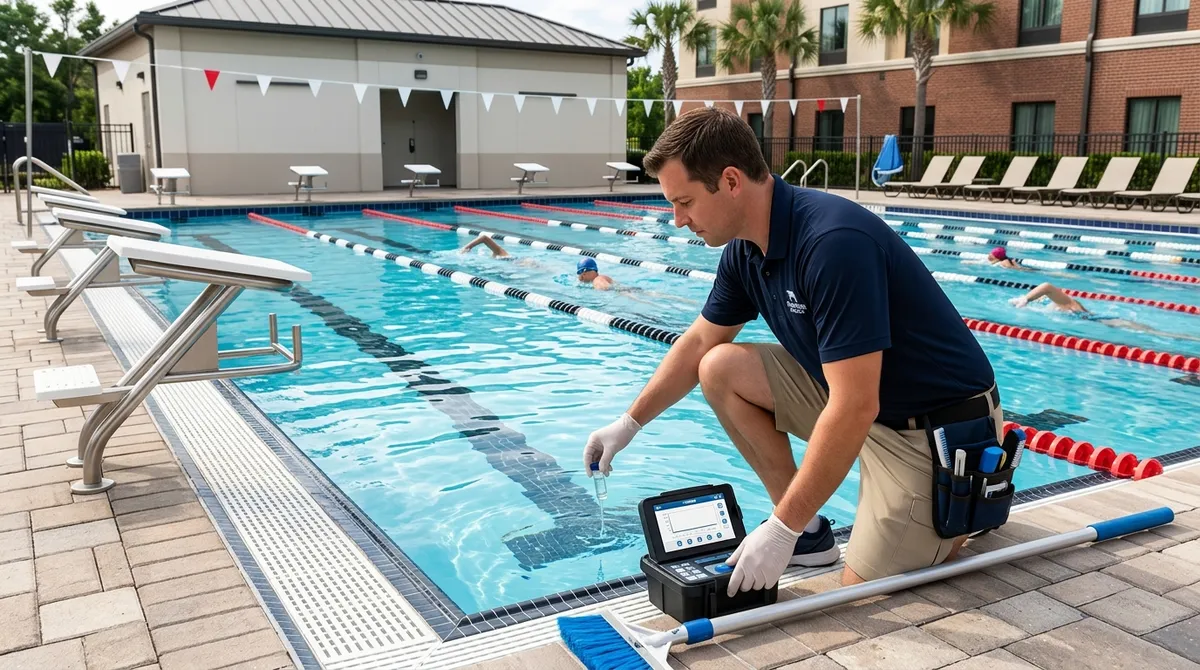
If you manage a commercial property in Tampa — a hotel, apartment complex, HOA, or gym — CPO certification isn’t just a nice-to-have. In many cases, it’s the law. According to industry data, CPO certification is legally required in 24 states plus the District of Columbia for people responsible for maintaining public or semi-public aquatic facilities. Local health departments can check for proof of certification during routine inspections.
The risks of non-compliance go beyond fines. An uncertified team maintaining a public pool can miss chemical imbalances, filtration failures, or safety hazards that put swimmers at risk. That’s a liability no commercial property manager wants to face.
If you’re a commercial property manager looking for dependable, certified support, check out our guide on why commercial pool service is essential for Tampa facilities. It covers everything you need to know about staying compliant and keeping your facility running smoothly.
How Long Is CPO Certification Valid?
CPO certification is valid for five years before it needs to be renewed. That means your pool service provider should be able to show you current, valid credentials — not a certificate from ten years ago that was never renewed.
When you’re vetting a pool service company, don’t be shy about asking for their certification details. A legitimate, professional team will be happy to share that information with you.
3 Key Reasons to Always Choose a Certified Pool Service
- Safety for your family or guests. Certified technicians know how to keep water chemistry in a safe range. Improperly balanced water can cause eye and skin irritation, illness, or worse. This is especially important for families with young children or pools used by many swimmers.
- Proper equipment care that saves money long-term. Certified service pros understand pool equipment deeply. They catch small problems before they become expensive breakdowns. Learn more about how pool filter repairs can save you money when handled correctly.
- Compliance with health and safety regulations. Especially for commercial pools, staying compliant keeps your facility open and operating. Non-compliant pools can be shut down by health inspectors — a costly outcome for any business.
What to Look for When Hiring a Certified Pool Service
Not every company that claims to be “certified” is telling the full story. Here’s a checklist to help you evaluate any pool service company before you sign up:
- Ask for their CPO certification number. A real certified pool service will have a current, verifiable CPO credential on file. Panther Pools, for example, holds CPO Credential #648855 and is fully licensed with CPC License CPC1461336.
- Check for industry memberships. Reputable companies often belong to professional organizations. The Independent Pool and Spa Service Association (IPSSA) is one example of an organization that supports professional standards across the pool industry.
- Ask about their service range. A certified pool service should handle more than just skimming and adding chemicals. They should offer equipment diagnostics, filter cleaning, water testing, and repairs.
- Look for transparent communication. Great pool service companies keep you informed about what they’re doing and why. If a company can’t explain your water test results, that’s a red flag.
- Read reviews and testimonials. Social proof matters. Look for reviews that mention technician professionalism, reliability, and quality of results.
You can also explore our full guide on how to choose a licensed pool service you can trust for even more tips on making the right call.
What a Certified Pool Service Does on Every Visit
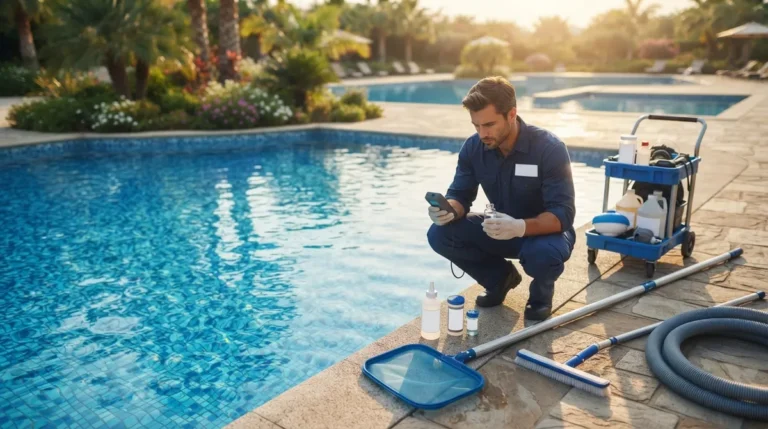
You might be wondering what a certified team actually does when they show up at your pool. A quality pool cleaning service in Tampa covers a lot more than you might expect during each scheduled visit.
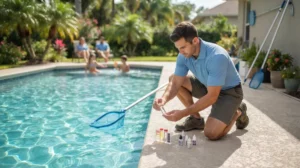
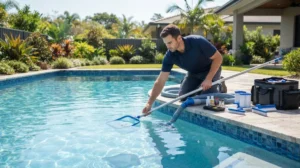
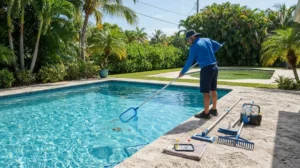
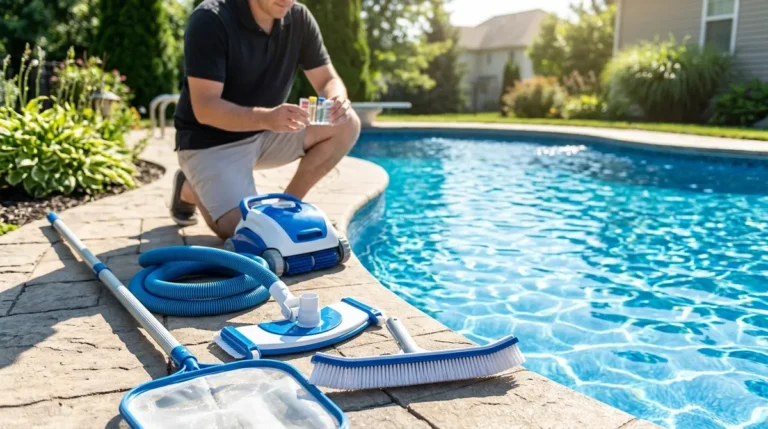
Here’s a typical list of tasks during a professional pool service visit:
- Testing and balancing water chemistry (pH, chlorine, alkalinity, calcium hardness)
- Skimming the surface to remove leaves and debris
- Brushing pool walls and steps to prevent algae buildup
- Vacuuming the pool floor
- Emptying skimmer and pump baskets
- Inspecting pool equipment for signs of wear or malfunction
- Checking water circulation and filter pressure
- Adding chemicals as needed to keep water balanced
That’s a comprehensive visit — and it’s what separates a certified pool service from someone just tossing in a chlorine tab and calling it a day. You can learn more about what each visit should include in our article on what pool services you really need.
Does Certification Matter for Residential Pools?
Certification is absolutely required for many commercial pools — but what about your backyard pool? The honest answer is: yes, it still matters. Even though residential pools aren’t held to the same legal standards as public pools, the principles behind proper pool care are identical.
A certified technician brings the same level of knowledge to your backyard that they’d bring to a hotel pool. They understand pool water chemistry deeply. They know how to spot equipment issues early. And they follow established standards that protect your family’s health and safety every time they visit.
For new pool owners especially, this knowledge gap is significant. If you’re not sure where to start, the EPA’s pool water efficiency resources offer helpful background on responsible pool management and water use. Having a certified team handle your pool means you’re in good hands from day one.
Panther Pools: Tampa’s Certified Pool Service Team
When it comes to finding a certified pool service in Tampa, Panther Pools checks every box. As a family-owned company, they hold CPO Credential #648855 and CPC License CPC1461336. Their technicians are trained, courteous, and genuinely care about the pools they service.
From residential pool maintenance to full commercial pool care, Panther Pools offers service packages, free estimates, and seven-day-a-week customer support. They don’t rush jobs, and they don’t cut corners. Every visit is handled with the kind of professionalism that only comes with real training and real experience.
Whether you need weekly cleaning, equipment repairs, or a full pool renovation, the Panther Pools team has the skills and certification to back it up. You can explore what sets them apart by visiting their about page and seeing the full range of services they offer across Tampa.
How to Verify a Pool Service Company’s Certification
Verifying certification is easier than most people think. Here are a few simple steps you can take:
- Ask directly. Any certified company should be able to give you their CPO number right away.
- Check their website. Professional companies typically list their credentials and license numbers online.
- Call your local health department. For commercial pool compliance, your county health department can confirm what certifications are required in your area.
- Look for industry affiliations. Membership in professional associations is another sign of a company that takes its work seriously.
Taking a few minutes to verify credentials before hiring can save you a lot of headaches down the road. For a deeper look at signs you’ve found a great team, check out our article on 5 signs you’ve found the best pool cleaning service.
Ready to Experience Certified Pool Service in Tampa?
Your pool deserves more than guesswork. It deserves a team with verified training, real experience, and a genuine commitment to keeping your water clean and safe. Certified pool service isn’t just a marketing term — it’s a promise that the people caring for your pool actually know what they’re doing.
Whether you’re a busy parent wanting a safe pool for your kids, a luxury homeowner protecting your investment, or a commercial property manager keeping your facility compliant, certified service is the smart choice every time. Don’t leave something as important as pool safety in uncertified hands.
Ready to get started with a team you can trust? Reach out to the Panther Pools team today for a free estimate and discover why Tampa pool owners keep coming back to the area’s premier certified pool service.
FAQs
Q: What does certified pool service mean in the pool cleaning industry?
A: A certified pool service is one where the technicians hold recognized credentials — most commonly the Certified Pool Operator (CPO) certification issued by the Pool & Hot Tub Alliance (PHTA). This means they’ve completed structured training in water chemistry, safety, filtration, and equipment care, so your pool is in truly knowledgeable hands!
Q: Is CPO certification required for pool service companies?
A: For commercial and public pools, CPO certification is legally required in 24 states plus Washington D.C., and health inspectors may check for proof during visits. For residential pools, it isn’t always legally mandated — but it’s still a great sign that your service team knows exactly what they’re doing and takes their work seriously.
Q: What is the difference between CPO and CST certification?
A: The CPO (Certified Pool Operator) credential covers water chemistry, safety, filtration, and day-to-day pool management — it’s the foundational certification for pool pros. The CST (Certified Service Technician) goes a step further into advanced equipment repair, hydraulics, and electrical troubleshooting. Both together represent a well-rounded, highly skilled pool service team!
Q: How long is CPO certification valid before it needs to be renewed?
A: CPO certification is valid for five years before renewal is required. When hiring a pool service company, it’s always a good idea to ask for their current credential number and confirm the certification is up to date — a trustworthy team will be happy to share that information with you.
Q: How can I verify whether a pool service company is certified?
A: Simply ask the company directly for their CPO certification number and contractor license — any reputable company will provide this without hesitation. You can also check their website for listed credentials, or for commercial pools, reach out to your local health department to confirm what certifications are required in your area.