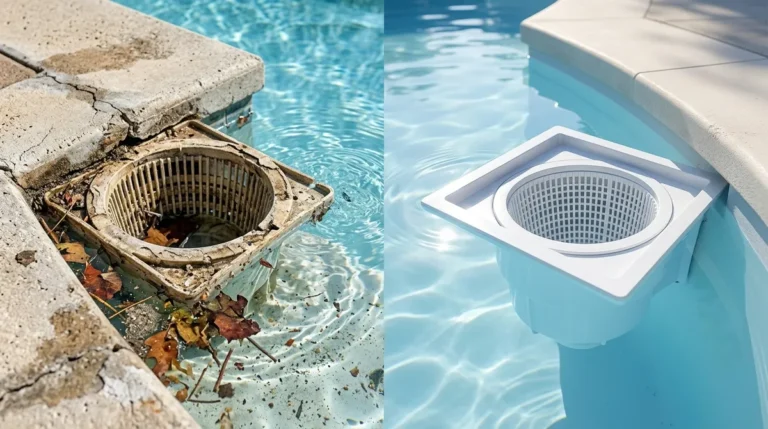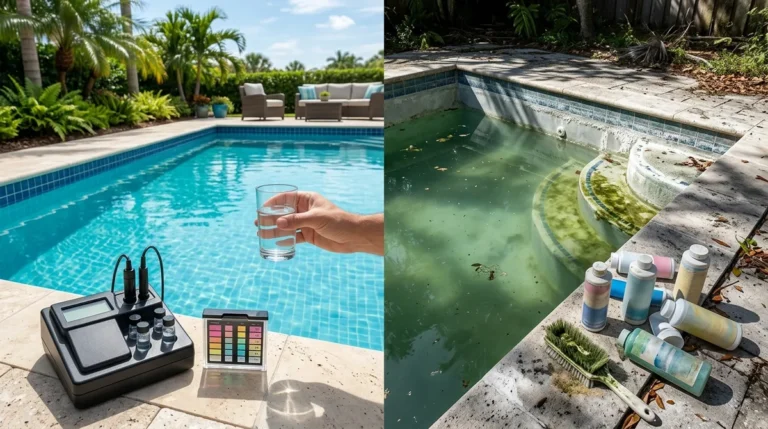

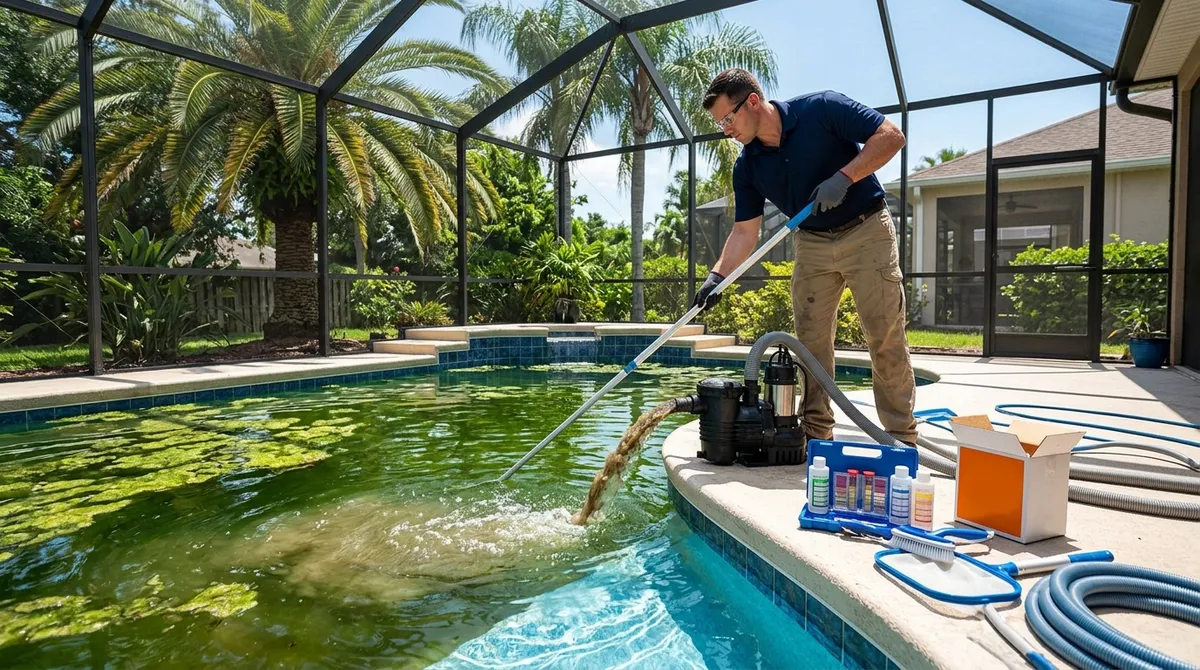
Key Takeaways
-
Algae blooms can take over a pool within 24-48 hours in Tampa’s warm weather, requiring immediate professional shock treatment and multiple follow-up visits to fully restore clear water.
-
Emergency pool cleaning involves high-dose shock treatment, debris removal, surface brushing, chemical balancing, and equipment inspection—typically requiring 2-3 follow-up visits to confirm water safety.
-
Before the professional arrives, keep people and pets out of the water, remove large debris by hand, avoid adding random chemicals, and take photos to help the technician assess severity.
-
Tampa’s intense heat, humidity, and frequent storms create ideal conditions for rapid algae growth and water quality emergencies—making twice-weekly chemical testing essential during peak season.
-
Choosing an emergency pool service requires verifying seven-day availability, certified technicians (CPO credential), same-day response capability, and full-service repair options to handle both cleaning and equipment issues.
-
Consistent weekly professional maintenance and regular equipment checks are the most effective way to prevent pool emergencies and avoid costly emergency restoration services.
Imagine walking outside on a warm Tampa morning, ready for a swim, only to find your pool looking like a swamp. Green water, floating debris, or a strange odor can stop pool plans cold. These situations call for emergency pool cleaning — fast, professional service that restores your pool to safe, swimmable condition quickly. Whether it’s after a Florida storm, an algae bloom, or a broken pump, knowing how to respond makes all the difference. This guide walks you through everything you need to know about handling pool emergencies, what the process looks like, and how to protect your investment for the long haul.
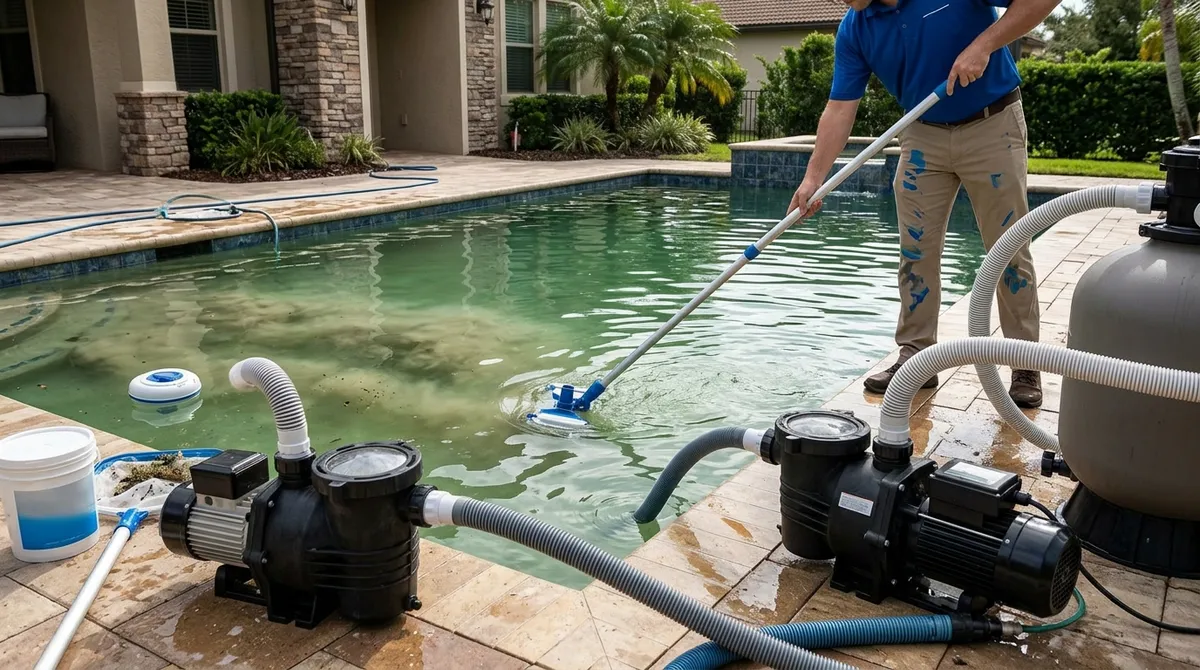
What Is Emergency Pool Cleaning?
Emergency pool cleaning is urgent, rapid-response service designed to restore a pool that has become unsafe or unusable. Unlike routine weekly maintenance, it addresses sudden and severe problems that need immediate attention. Think of it as the “911 call” for your backyard oasis.
These situations can happen to anyone — even well-maintained pools. Tampa’s intense heat, frequent storms, and humidity make local pools especially vulnerable to sudden water quality issues. The good news? With the right response, most pool emergencies can be resolved quickly. You can learn more about what professional care involves by visiting our page on Pool Maintenance Services: What Every Tampa Pool Owner Needs to Know.
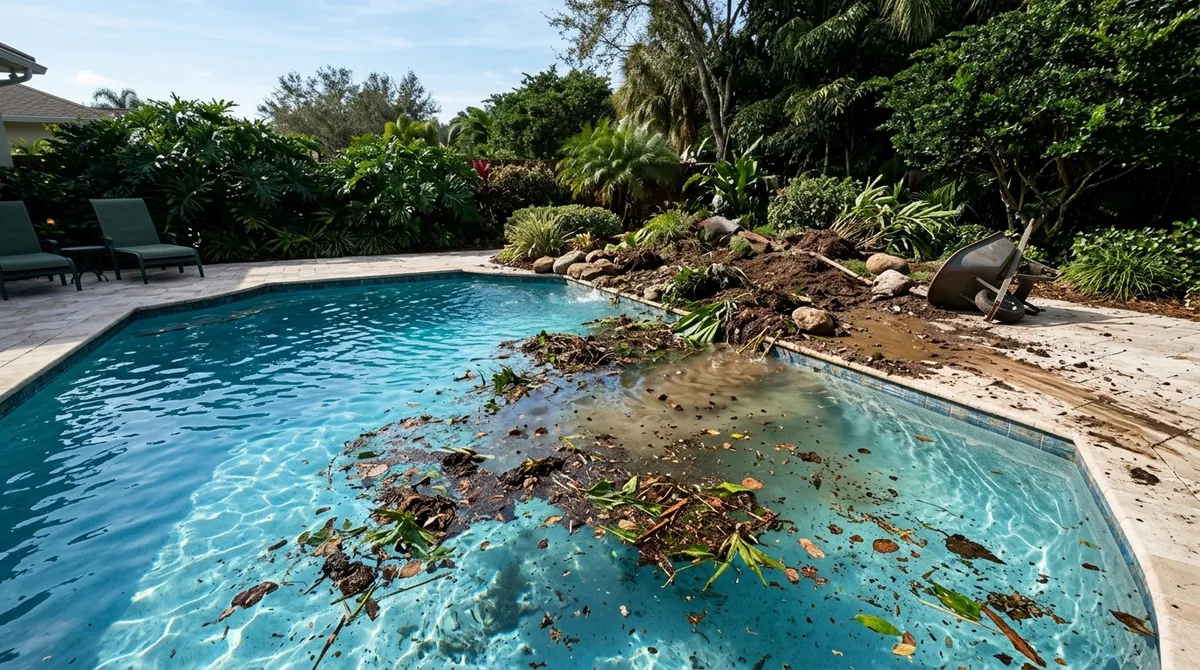
Common Situations That Require Emergency Pool Cleaning
Understanding what triggers a pool emergency helps you act fast. Here are the most common scenarios that call for urgent service:
- Algae blooms: Green, yellow, or black algae can take over a pool within 24–48 hours in warm weather.
- Storm damage: Heavy rain and wind dump debris, dirt, and contaminants into your pool rapidly.
- Flooding: Stormwater runoff can introduce bacteria, metals, and organic matter that destabilize water chemistry.
- Equipment failure: A broken pump or filter stops water circulation, allowing bacteria and algae to thrive.
- Accidental contamination: Fecal matter, animal waste, or chemical spills require immediate shock treatment and cleanup.
- Cloudy or foamy water: Sudden changes in water clarity can indicate dangerous chemical imbalances.
- Foul odors: Strong chloramine smells often signal bacteria growth or dangerously low sanitizer levels.
If you notice any of these warning signs, don’t wait. Water quality can deteriorate fast — especially in Tampa’s warm climate. For related red flags, check out 7 Signs You Need Pool Service Near Me in Tampa 2026.
Step-by-Step: How Emergency Pool Cleaning Works
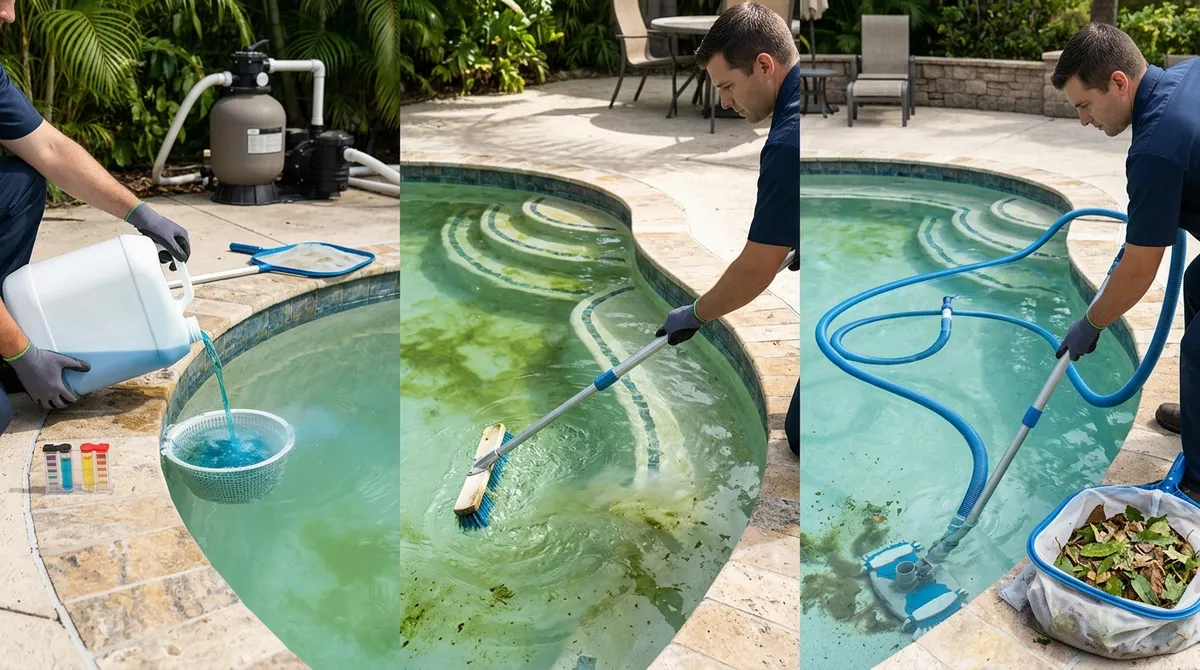
When a professional team arrives for an emergency pool cleaning, they follow a structured process to stabilize and restore your pool safely. Here’s what to expect:
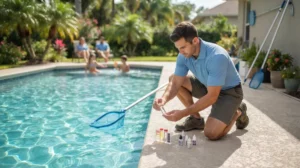
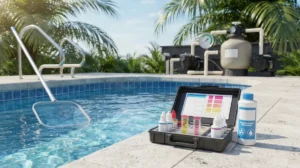
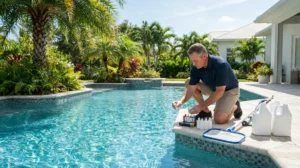
- Initial Water Assessment: The technician tests pH, chlorine, alkalinity, and other chemical levels to understand the extent of the problem.
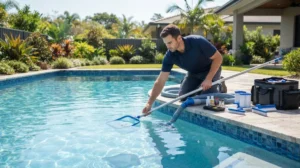
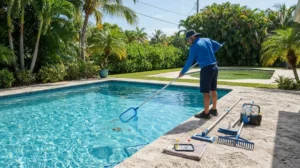
- Debris Removal: Skimming, netting, and vacuuming remove leaves, dirt, insects, and any large contaminants from the water and surfaces.
- Brushing Surfaces: Walls, steps, and the floor are brushed to break up algae, biofilm, and buildup before treatment.
- Shock Treatment: A high dose of chlorine or non-chlorine shock is added to kill bacteria, algae, and harmful organisms fast.
- Chemical Balancing: pH adjusters, alkalinity enhancers, and stabilizers are added to bring the water back into safe, swimmable range.
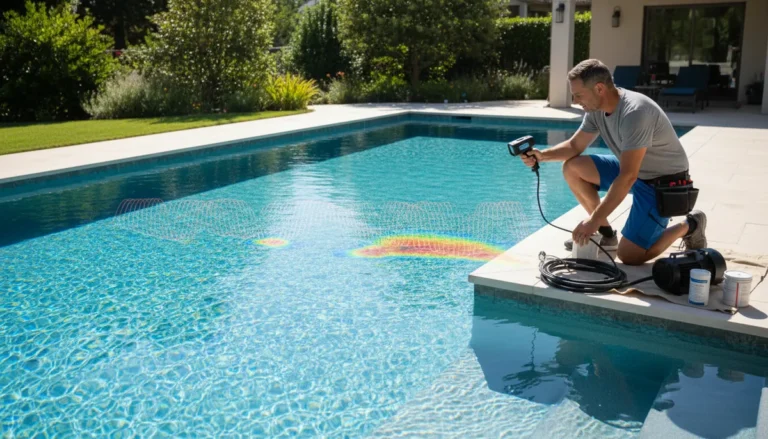
- Filter and Pump Inspection: The technician checks and cleans filters, confirms circulation is working, and identifies any equipment issues.
- Follow-Up Plan: Most emergency cleanings require a second or third visit to confirm the water is fully clear and chemically safe.
It’s worth noting that emergency cleaning often reveals underlying maintenance gaps. A broken pump, for example, is frequently the root cause of a water quality emergency. For guidance on pump issues, see 7 Pool Pump Repair Signs You Need Help Now 2026 Guide.
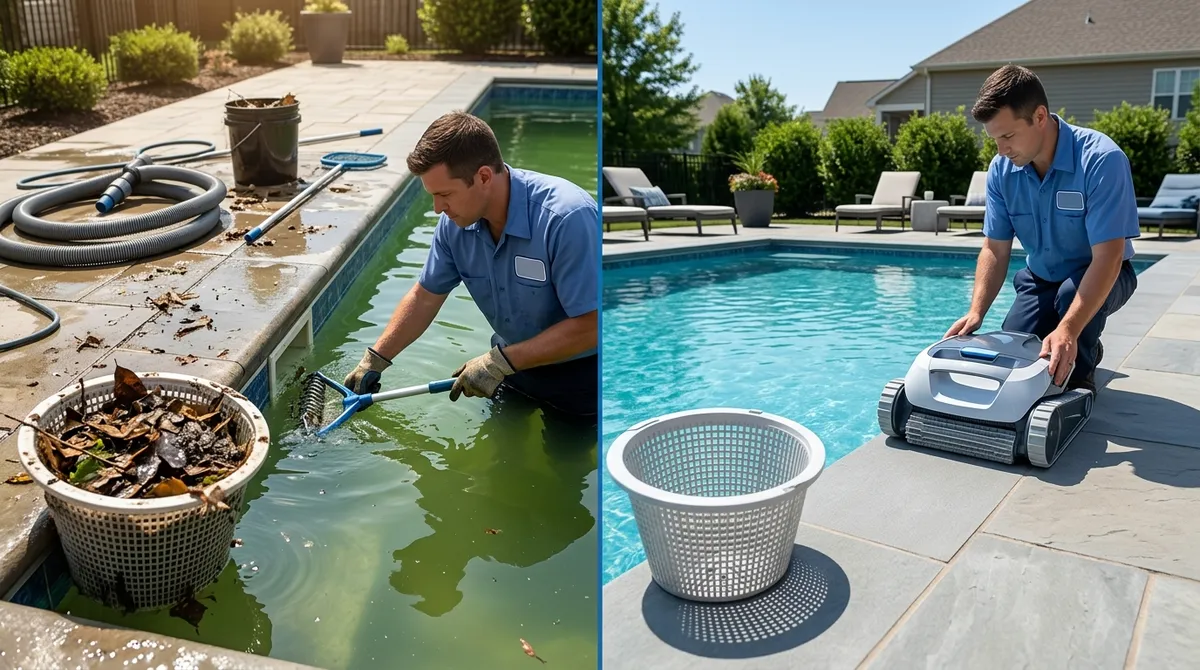
Emergency Pool Cleaning vs. Regular Pool Cleaning
It’s easy to wonder how emergency service differs from your normal weekly visit. The table below breaks it down clearly:
| Feature | Regular Pool Cleaning | Emergency Pool Cleaning |
|---|---|---|
| Frequency | Weekly or bi-weekly scheduled visits | On-demand, same-day or rapid response |
| Purpose | Routine maintenance and prevention | Urgent restoration of unsafe conditions |
| Chemical Treatment | Standard balancing doses | High-dose shock and rapid rebalancing |
| Equipment Check | Routine inspection | Diagnostic check for failures |
| Follow-Up Needed | Standard next scheduled visit | Usually 2–3 follow-up visits to confirm safety |
| Ideal For | All pool owners on a maintenance plan | Storms, algae blooms, equipment failures, contamination |
The best way to avoid emergency situations is consistent routine service. Explore the benefits of staying ahead with 5 Reasons Weekly Pool Service Is Worth It in 2026.
What to Do Before the Pool Pro Arrives
While waiting for a professional to arrive, there are a few smart steps you can take. These won’t fix the problem, but they can slow deterioration and make the technician’s job easier.
- Keep people and pets out of the water. Green or cloudy water may contain harmful bacteria or algae toxins. Safety first, always.
- Remove large debris by hand or net. If it’s safe to do so, skim out obvious leaves, branches, or trash floating on the surface.
- Do NOT add random chemicals. Adding the wrong chemicals without testing can make the imbalance worse and complicate the professional’s work.
- Check if the pump and filter are running. If you notice they’ve stopped, note this for the technician — equipment failure is often the root cause.
- Take photos of the water. A quick snapshot helps the technician assess severity before arrival and plan the right treatment approach.
Good preparation makes the entire process faster and smoother for everyone involved. If filter maintenance has been a concern, our guide on Maintaining Your Pool’s Filters is a helpful read.
Who Needs Emergency Pool Cleaning Most?
While any pool owner can face a sudden problem, some situations make emergency service especially critical. Here’s who benefits most:
- Families with young children: Kids are more vulnerable to waterborne bacteria and chemical imbalances. A contaminated pool is a health risk that can’t wait.
- Luxury homeowners: A green or debris-filled pool dramatically impacts curb appeal and property value. Fast restoration protects your investment.
- Vacation rental and Airbnb hosts: Guest complaints or cancellations can hurt your reviews and revenue. Same-day response keeps guests happy.
- Commercial property managers: Hotels, apartment complexes, and community pools face health code requirements. An unusable pool can mean fines and forced closures.
- Retired homeowners: Pool enjoyment is a key part of Tampa retirement living. Getting back to relaxing poolside shouldn’t take weeks.
Commercial pool managers, in particular, rely on rapid-response service to stay compliant with local health regulations. The Florida Swimming Pool Association (FSPA) provides guidance on Florida’s pool safety and sanitation standards that apply to commercial facilities. For more on keeping commercial pools operational, see Why Is Commercial Pool Service Essential for Tampa Facilities?.
Why Tampa Pools Face More Emergencies
Tampa’s climate is beautiful — but it’s also tough on pools. High temperatures, intense UV exposure, and frequent afternoon thunderstorms create the perfect conditions for rapid water quality changes. Here’s why local pool owners face more emergencies than many other regions:
- Heat accelerates algae growth: Algae doubles in just hours at Tampa’s summer temperatures. A single day without proper sanitation can trigger a full bloom.
- Storm season is intense: Florida’s rainy season brings heavy downpours that dilute pool chemicals and introduce organic contaminants.
- Year-round pool use: Tampa pools are used 12 months a year, meaning they’re under constant demand and have no true off-season to recover.
- High bather loads: Busy summer pools — especially community and hotel pools — deplete sanitizer levels rapidly.
The Independent Pool and Spa Service Association (IPSSA) recommends pool owners in warm climates test water chemistry at least twice per week during peak season to catch problems early. The EPA’s Pool Water Efficiency resources also offer valuable insight on maintaining water quality and minimizing waste during clean-up situations.
How Algae Emergencies Are Handled
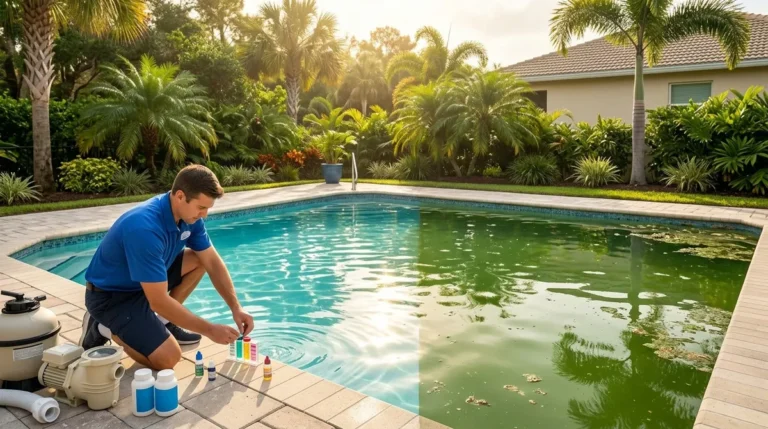
Algae is the most common pool emergency in Tampa. A pool can go from clear to green almost overnight. Here’s how professionals tackle an algae emergency specifically:
- Assess the algae type: Green algae responds to shock treatment. Black algae requires aggressive brushing and targeted algaecide. Yellow algae is stubborn and needs multiple treatments.
- Brush all surfaces thoroughly: Breaking algae off walls and floors exposes it to chemicals. This step is non-negotiable for effective treatment.
- Super-shock the pool: A heavy dose of chlorine shock is applied to overwhelm and kill the algae colony.
- Run the filter continuously: Circulation helps distribute the shock and captures dead algae particles. Filters may need backwashing or cleaning mid-treatment.
- Follow up with algaecide: A preventive algaecide dose helps ensure the bloom doesn’t return.
It’s worth noting that algae emergencies rarely clear up overnight. Most require two to three professional visits to fully restore crystal-clear water. For a deeper look, visit How to Remove Pool Algae and Restore Crystal Clear Water. And if things have gotten seriously out of hand, an acid wash may be the best path forward to reset your pool’s surfaces entirely.
Prevention: How to Avoid Future Pool Emergencies
The best emergency pool cleaning is the one you never need. Consistent, proactive maintenance is the single most effective way to protect your pool. Here are the key habits that prevent most emergencies:
- Stick to a weekly professional cleaning schedule
- Test water chemistry twice a week during summer
- Keep your pump and filter running properly at all times
- Shock the pool after heavy use or a major storm
- Trim nearby trees and shrubs to reduce organic debris
- Address equipment issues immediately before they cause water quality problems
Panther Pools offers professional pool cleaning services in Tampa with seven-days-a-week support, so help is always close when you need it. Staying on a regular service plan is the most reliable way to keep your pool out of emergency territory. If you’re curious about what routine service looks like, explore What Does Proper Swimming Pool Maintenance Really Involve?
Choosing the Right Emergency Pool Cleaning Service in Tampa
Not all pool companies offer true emergency response. When evaluating your options, look for these qualities:
- Seven-day availability: Pool emergencies don’t follow a Monday–Friday schedule. Your service provider should be reachable on weekends.
- Certified technicians: A Certified Pool Operator (CPO) credential ensures your technician understands water chemistry, equipment, and safety standards.
- Fast response time: Same-day or next-day service is essential for true emergencies, especially for commercial properties.
- Full-service capability: The best providers handle both cleaning and equipment repairs, so you don’t need two separate companies.
- Clear communication: A good company explains what they found, what they did, and what follow-up is needed — no guessing games.
Panther Pools checks every one of these boxes. As Tampa’s premier pool cleaning company with a CPO credential (CPO 648855) and a licensed contractor status, we’re built to handle whatever your pool throws at you. Learn more about who we are and what we stand for.
Conclusion: Don’t Wait When Your Pool Needs Help
A pool emergency can feel stressful, but it doesn’t have to stay that way for long. With the right team responding quickly, most pool problems are fully resolved within a few days. The key is acting fast — the longer you wait, the worse the water quality gets and the harder it becomes to restore. Whether it’s a post-storm mess, a surprise algae bloom, or a failed pump, emergency pool cleaning gets you back to enjoying your pool safely and quickly. If you’re ready to put a trusted team in your corner, reach out to Panther Pools today for a fast, free estimate — because your pool deserves expert care, and so do you.
FAQs
Q: What is emergency pool cleaning?
A: Emergency pool cleaning is urgent, same-day or rapid-response service to restore a pool that’s become unsafe or unusable. It typically includes debris removal, shock treatment, chemical balancing, and filter inspection to get your water back to a healthy, swimmable state as quickly as possible.
Q: What problems require emergency pool cleaning?
A: The most common triggers are algae blooms, storm or flood damage, broken pumps or filters, accidental contamination, and sudden cloudy or foul-smelling water. In Tampa’s warm climate, these issues can escalate fast — so the sooner you call a pro, the better!
Q: Can emergency pool cleaning remove algae overnight?
A: Unfortunately, most algae emergencies take two to three professional visits to fully resolve — not just one. The first visit stabilizes the pool with shock treatment and brushing, but follow-up visits are needed to verify the water is completely clear and chemically balanced.
Q: Do I need emergency cleaning after a storm or flooding?
A: Yes, absolutely! Heavy rain and flooding introduce bacteria, metals, and organic debris that quickly throw off your pool’s chemistry. After a major Florida storm, it’s smart to have a professional test and rebalance your water right away, even if the pool looks okay on the surface.
Q: Is emergency pool cleaning different from regular pool cleaning?
A: Yes, they’re quite different! Regular cleaning is routine and preventive, using standard chemical doses on a scheduled visit. Emergency cleaning is reactive and intensive — involving high-dose shock treatments, diagnostic equipment checks, and usually multiple follow-up visits to fully restore safe swimming conditions.