
Key Takeaways
-
Different filter types (cartridge, sand, DE) require distinct cleaning methods—cartridge filters need chemical soaks, sand filters require backwashing every 1-2 weeks during heavy use, and DE filters need grid cleaning plus fresh powder recharge.
-
Professional filter cleaning service prevents costly equipment damage by catching problems early; neglected filters force pumps to overwork, leading to higher energy bills, algae outbreaks, and expensive repairs that far exceed routine maintenance costs.
-
Clean your cartridge filters every 3-6 months and monitor sand/DE filters with pressure gauges—when pressure rises 8-10 PSI above baseline, cleaning is needed; Tampa’s year-round pool use requires more frequent service than most climates.
-
A professional filter cleaning includes full equipment inspection, pressure testing, and checks of related components like pumps and valves, which DIY cleaning cannot match and helps detect problems before they become emergencies.
-
Skipping filter maintenance causes cloudy water, algae growth, reduced water flow, and pump failure; including filter service in a regular maintenance plan ensures consistent cleaning without tracking schedules yourself.
-
Professional technicians can quickly identify your filter type and recommend the right service plan; if unsure whether your filter needs cleaning or replacement, watch for cloudy water, reduced jet flow, or high pressure gauge readings.
Your pool filter is quietly working hard every single day. It traps dirt, oils, debris, and other nasties so your water stays crystal clear. But what happens when the filter itself gets dirty? That’s where a professional filter cleaning service comes in — and it’s one of the most important things you can do for your pool. Whether you’re a busy parent managing a backyard oasis, a new homeowner just getting started, or a commercial property manager keeping guests happy, understanding pool filter maintenance can save you time, money, and a lot of headaches. Let’s break down the three most essential things every Tampa pool owner should know about keeping their filtration system in top shape.
Why Your Pool Filter Deserves More Attention
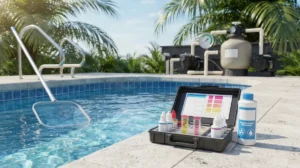
Most pool owners think about skimming, vacuuming, and balancing chemicals. The filter? It often gets overlooked — until something goes wrong. Your pool’s filtration system is the backbone of clean water. It cycles water through a filtering medium, removing particles that would otherwise make your water cloudy, unsafe, or just plain gross.
A neglected filter doesn’t just underperform. It actively causes problems. Poor filtration can lead to algae growth, cloudy water, strained pumps, and higher energy bills. You can learn more about the downstream effects in this helpful guide on maintaining your pool’s filters. The good news is that regular professional service keeps all of these issues at bay.
The Florida Swimming Pool Association (FSPA) recognizes proper filtration maintenance as a cornerstone of pool health and safety. And in Tampa’s warm climate, where pools are used year-round, that maintenance matters even more.
Fact 1: Not All Pool Filters Are Cleaned the Same Way
This is probably the biggest thing pool owners get wrong. There’s no one-size-fits-all approach to a filter cleaning service. The method depends entirely on what type of filter your pool uses. Getting this wrong can damage your equipment or leave your filter just as dirty as before.
There are three main types of residential pool filters, each requiring a different cleaning approach:
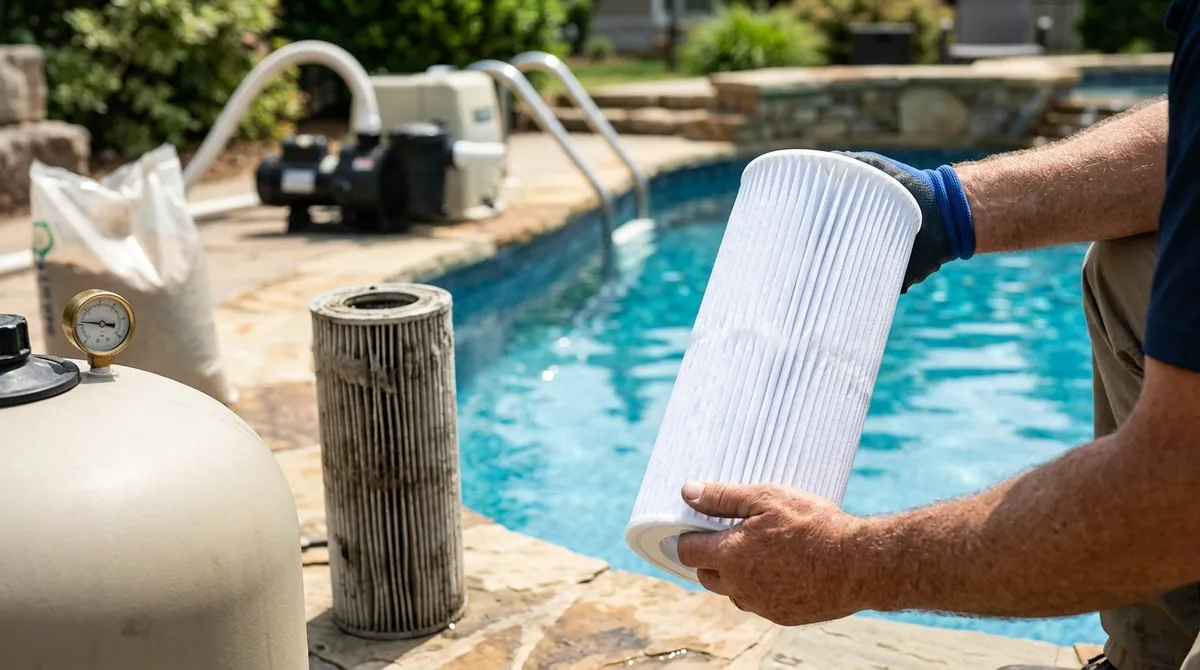
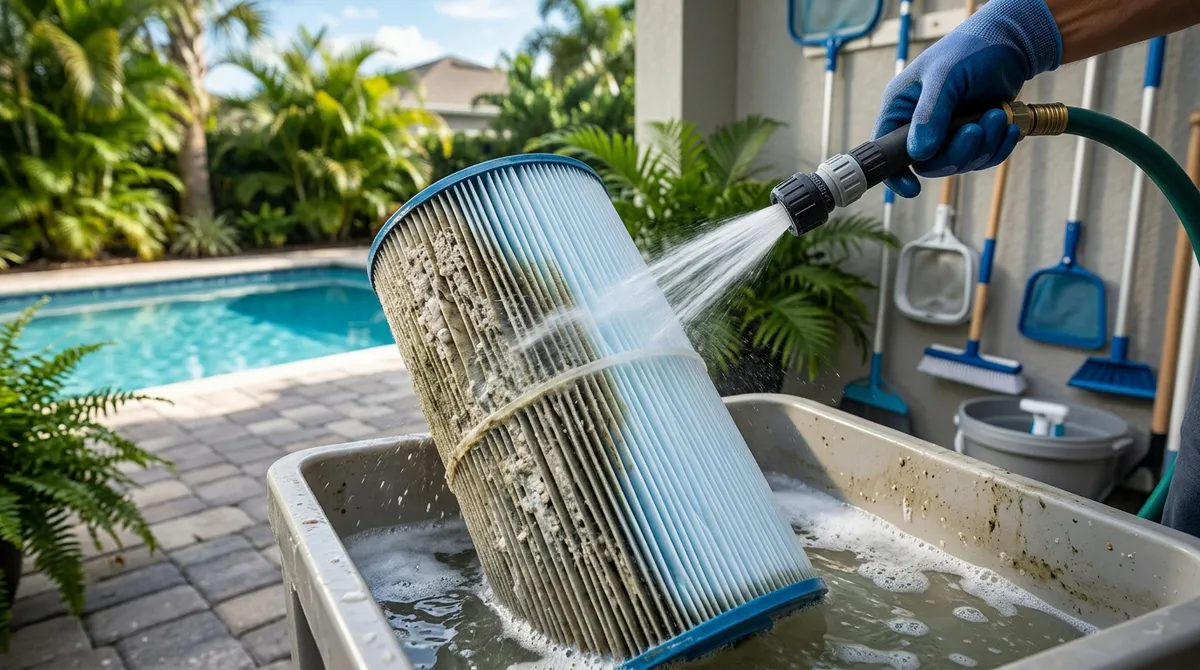
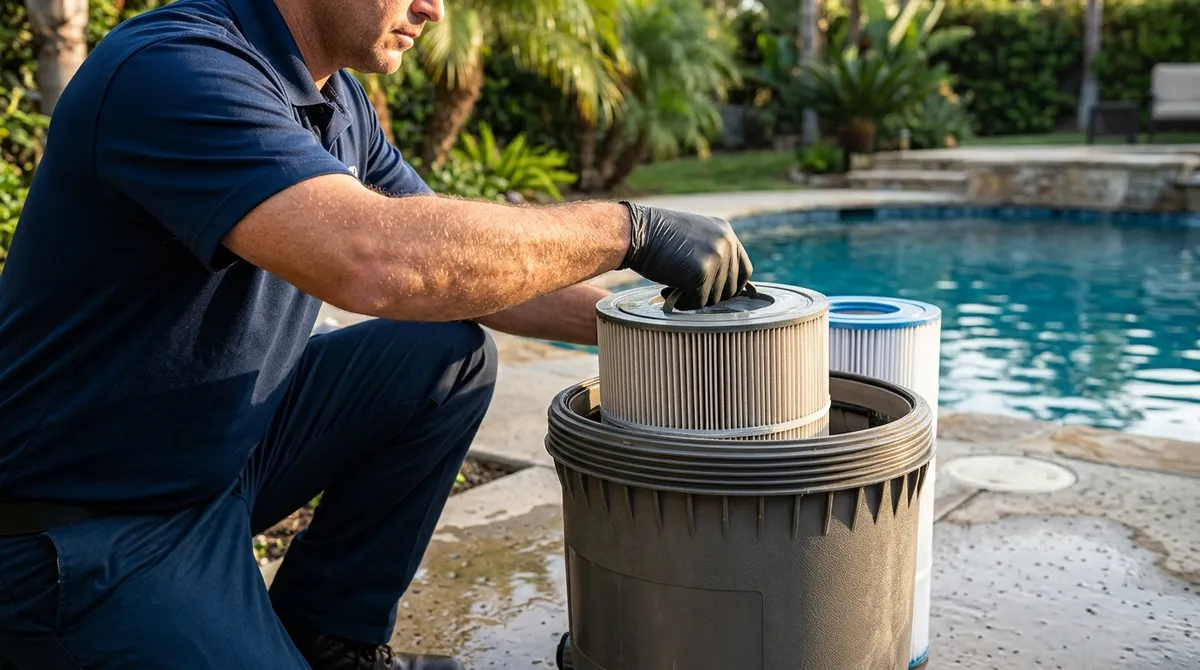
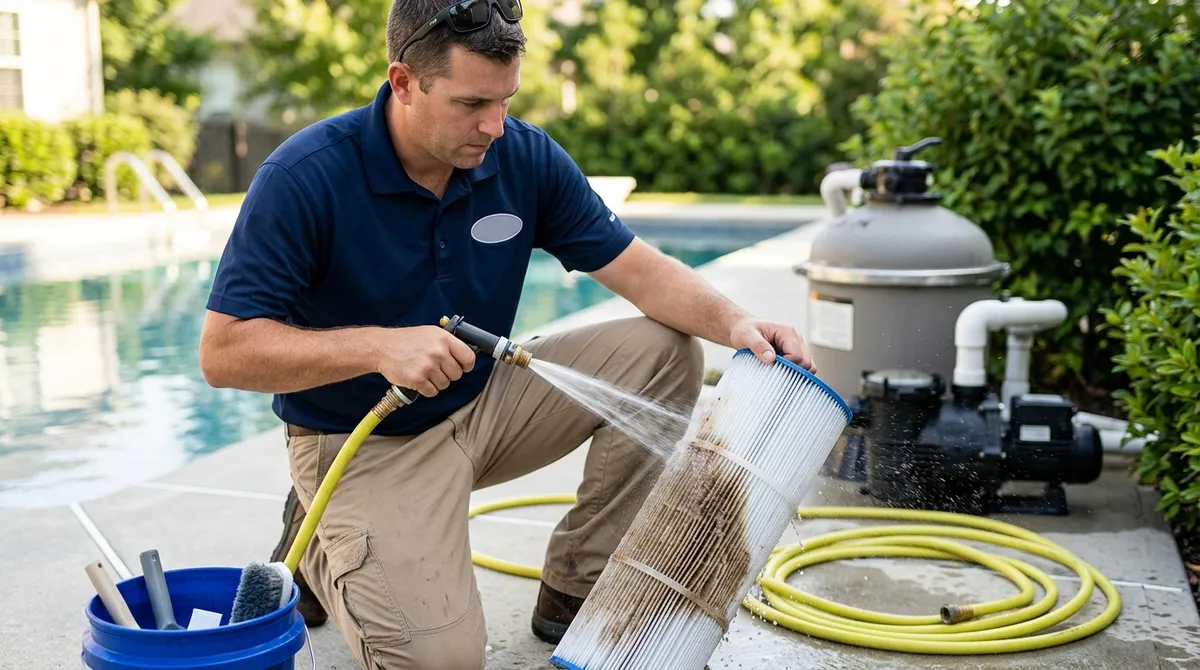
- Cartridge Filters: These contain a pleated paper or fabric element that traps debris. Pros remove the cartridge, rinse it thoroughly with a hose, and may use a chemical soak to break down oils and scale. Worn-out cartridges are replaced entirely.
- Sand Filters: These use a bed of silica sand to filter water. The primary cleaning method is backwashing — reversing water flow to flush trapped debris out of the sand and into a waste line. Over time, the sand itself breaks down and needs replacing.
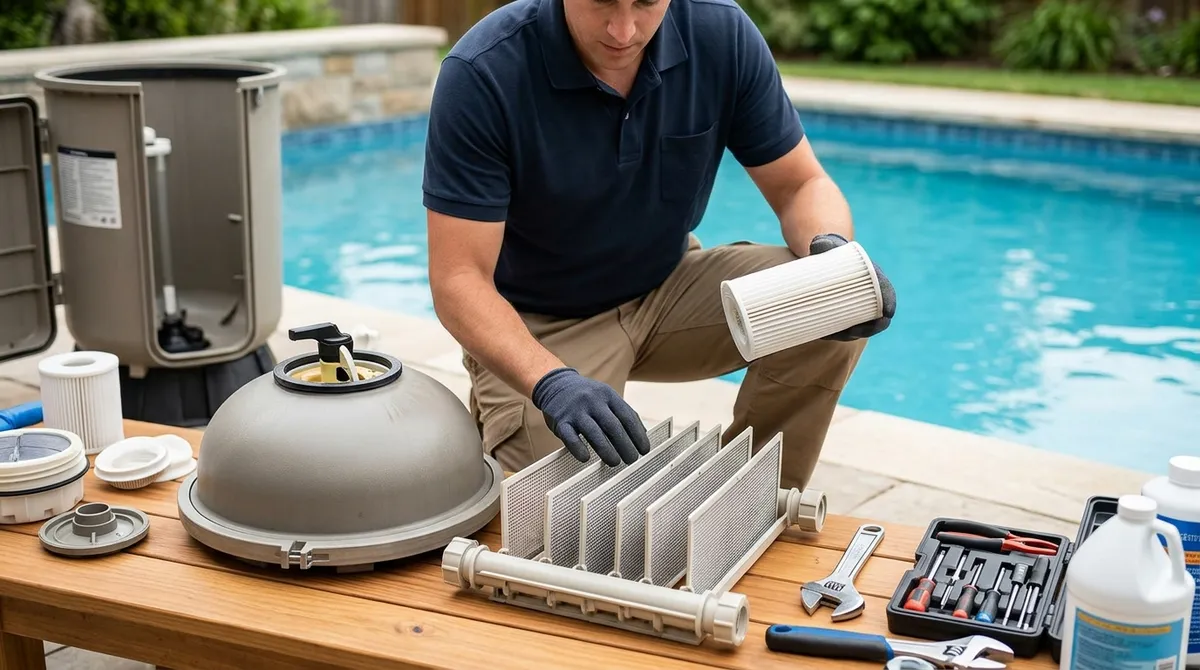
- DE (Diatomaceous Earth) Filters: These offer the finest filtration of the three. Grids inside the tank are coated with diatomaceous earth powder. Cleaning involves backwashing, disassembling the filter, and manually cleaning the grids, then adding fresh DE powder.
Each type has its own service rhythm too. To dig deeper into the differences, check out this guide on sand vs. DE pool filter backwashing and which approach might work best for your pool. If you’re not sure what type of filter you have, a professional technician can identify it quickly and recommend the right service plan.
Common Filter Cleaning Methods at a Glance
| Filter Type | Primary Cleaning Method | Media Replacement Needed? | Best For |
|---|---|---|---|
| Cartridge | Rinse and chemical soak | Yes, when worn out | Low-maintenance setups |
| Sand | Backwashing | Every 5–7 years | High-volume pools |
| DE (Diatomaceous Earth) | Backwash + grid cleaning + DE recharge | DE powder after each service | Crystal-clear water precision |
Understanding your filter type is step one. Step two is making sure it gets cleaned on the right schedule — which brings us to our next key fact.
Fact 2: How Often You Clean Your Filter Really Matters
Timing isn’t just important — it’s everything when it comes to filter maintenance. Clean it too rarely, and you’ll deal with reduced water flow, higher energy use, and poor water quality. Clean it too aggressively, and you can actually disrupt the filter’s efficiency (especially with sand and DE filters, which benefit from a little buildup to improve filtration).
Here’s a simple guide to how often each filter type typically needs professional attention:
- Cartridge Filters: A full cleaning is recommended every 3 to 6 months, depending on pool usage and the surrounding environment. High-traffic pools or those near trees may need more frequent service.
- Sand Filters: Backwashing is typically needed every 1 to 2 weeks during heavy use seasons. The filter pressure gauge is your best friend here — when pressure rises 8–10 PSI above the clean baseline, it’s time to backwash.
- DE Filters: Backwashing when pressure rises is also the rule here. A full breakdown cleaning of the grids is usually done once or twice a year, with fresh DE added after each backwash.
In Tampa’s climate, pools are used heavily for most of the year. That means your filter is working overtime. Regular pool cleaning services in Tampa typically include filter inspections and cleaning as part of a complete maintenance routine, which is the smartest way to stay on schedule without having to track it yourself.
Signs that your filter needs attention right now include:
- Cloudy or murky pool water that won’t clear up
- Noticeably reduced water flow from the return jets
- The filter pressure gauge reading higher than normal
- Algae appearing even when chemicals are balanced
- The pool pump running louder or working harder than usual
If you’re noticing any of these warning signs, it’s worth reading up on pool filter cleaning mistakes you must avoid to make sure small problems don’t become expensive ones. The Independent Pool and Spa Service Association (IPSSA) also offers great educational resources for pool owners who want to understand filtration best practices.
What Happens When You Skip Filter Cleaning
Let’s be real for a second. Life gets busy, and pool maintenance can slip down the priority list. But skipping your filter cleaning service has real consequences:
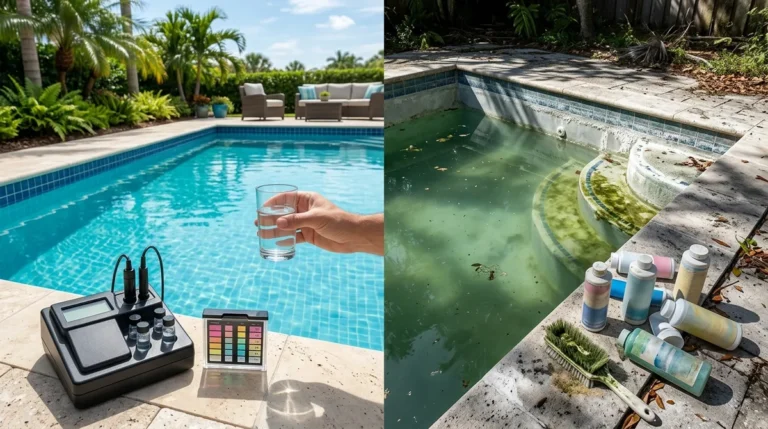
- Cloudy water: Particles that should be trapped stay in the pool, making water look dull and uninviting.
- Algae outbreaks: Poor circulation creates the perfect conditions for algae to thrive. You can learn how to tackle this in our guide on how to remove pool algae and restore crystal-clear water.
- Pump damage: A clogged filter forces your pump to work much harder, which shortens its lifespan significantly.
- Higher energy bills: An overworked pump uses more electricity — and that cost adds up fast.
- Costly repairs: Equipment failure from neglect is far more expensive than routine maintenance.
The EPA’s pool water efficiency resources reinforce this point — well-maintained filtration systems also reduce water waste and chemical usage, making regular service good for your wallet and the environment.
Fact 3: Professional Filter Cleaning Service Is Worth Every Penny
Some pool owners try to handle filter cleaning on their own. And while it’s possible to do basic backwashing yourself, a professional filter cleaning service goes much further. It’s not just about cleaning — it’s about inspection, diagnosis, and prevention.
Here’s what a professional filter cleaning service typically includes:
- Full filter inspection: A trained technician examines the filter housing, seals, valves, and internal components for any signs of wear, cracking, or damage.
- Proper cleaning for your filter type: Whether it’s a cartridge rinse, sand backwash, or DE grid cleaning, the right method is applied safely and effectively.
- Pressure testing: After cleaning, the system is checked to ensure water flow and pressure have returned to healthy levels.
Beyond the filter itself, pros also check related equipment. A good technician will look at your pump, valves, and plumbing while they’re there. This is why bundling filter service with regular pool maintenance services is such a smart move — problems get caught early, before they turn into expensive emergencies.
You might also be interested in how pool filter repairs can save you money in the long run. Small fixes handled early are almost always cheaper than major replacements down the road.
DIY vs. Professional Filter Cleaning: A Quick Comparison
| Factor | DIY Cleaning | Professional Service |
|---|---|---|
| Equipment inspection | Limited | Comprehensive |
| Correct cleaning method | Varies by knowledge | Always correct |
| Early problem detection | Unlikely | Standard practice |
| Time investment | High | None for the owner |
| Risk of damage | Moderate to high | Very low |
At Panther Pools, our certified technicians (CPO 648855) handle every type of filter cleaning service for Tampa homeowners and commercial properties. We include filter care as part of our comprehensive pool cleaning services in Tampa, giving you complete peace of mind every visit. Our team shows up on time, does the job right, and never cuts corners — because your pool deserves the best.
If you’re managing a commercial pool — a hotel, apartment community, or fitness facility — the stakes are even higher. Consistent filter performance directly impacts guest safety and regulatory compliance. Find out more about why commercial pool service is essential for Tampa facilities.
Making Filter Cleaning Part of Your Routine
The easiest and most effective approach is to make filter maintenance part of a recurring pool service plan. When you schedule regular visits, filter inspections happen automatically. You don’t have to remember, track pressure readings, or wonder if something is wrong.
Here’s a simple routine that keeps your filter — and your whole pool — in great shape:
- Schedule regular professional pool service visits that include filter checks
- Keep an eye on your filter pressure gauge between visits
- Report anything unusual (reduced jets, cloudy water) to your service tech right away
- Ask your technician to walk you through the filter type and condition on each visit
Want to understand the full picture of what good pool care looks like? Read up on what proper swimming pool maintenance really involves. It’s a great starting point for new pool owners and a helpful refresher for experienced ones.
You can also explore our article on how to clean a pool filter the right way for a deeper dive into the process. And if you’re curious about what to look for when choosing a service provider, this guide on how to choose a local pool cleaning service you can trust covers all the key questions to ask.
Your Pool Filter Works Hard — Treat It That Way
Your pool filter is doing the heavy lifting every single day. Giving it the professional attention it deserves isn’t a luxury — it’s smart pool ownership. Regular filter cleaning service protects your water quality, extends the life of your equipment, and keeps your pool ready for a swim anytime you want one.
Whether you have a cartridge, sand, or DE filter, the most important thing is staying consistent. And the easiest way to stay consistent is to partner with a team you can trust. Reach out to our team at Panther Pools for a free estimate and find out how we can keep your filter — and your entire pool — running beautifully all year long.
FAQs
Q: What is included in a professional pool filter cleaning service?
A: A professional filter cleaning service typically includes a full inspection of the filter housing and internal components, the correct cleaning method for your filter type (cartridge rinse, sand backwash, or DE grid cleaning), and a pressure test to confirm everything is flowing properly. Many technicians also check related equipment like the pump and valves while they’re at it — which is a great bonus!
Q: How often should I schedule a pool filter cleaning service?
A: It depends on your filter type! Cartridge filters generally need a full cleaning every 3 to 6 months, while sand and DE filters may need backwashing every 1 to 2 weeks during heavy use periods. In Tampa’s warm climate where pools get heavy year-round use, sticking to a regular professional service schedule is the easiest way to stay on track.
Q: Can a dirty pool filter cause cloudy water or algae?
A: Absolutely — and it’s one of the most common causes of both! When your filter is clogged or overloaded, it can’t remove particles effectively, which leads to murky water and poor circulation. That stagnant, poorly filtered water becomes the perfect breeding ground for algae. A timely filter cleaning service can clear things up quickly and prevent bigger problems down the road.
Q: How do I know if my pool filter needs cleaning or replacement?
A: Watch for a few key signs: the filter pressure gauge reading 8–10 PSI above normal, reduced water flow from your jets, cloudy water that won’t clear despite balanced chemicals, or visible wear and damage on cartridge folds or filter grids. A professional technician can quickly assess whether your filter needs a good cleaning or if it’s time for a replacement.
Q: Should pool filter cleaning be part of my regular pool service plan?
A: Yes, and it’s honestly one of the smartest decisions you can make as a pool owner! When filter maintenance is built into your recurring service plan, you never have to worry about tracking schedules or missing important cleanings. It keeps your water cleaner, your equipment healthier, and gives you one less thing to think about — so you can just enjoy your pool!