
Key Takeaways
-
Test your pool water at least once weekly during swimming season, focusing on pH and free chlorine; increase to 2-3 times per week during hot months or heavy use to prevent chemical imbalances.
-
Maintain these critical chemical ranges: free chlorine 1.0-4.0 ppm, pH 7.4-7.6, total alkalinity 80-120 ppm, and calcium hardness 200-400 ppm to prevent algae, equipment damage, and swimmer irritation.
-
Liquid test kits provide significantly more accurate results than test strips and are better for diagnosing complex water chemistry issues, though they require 5-10 minutes versus seconds for strips.
-
Collect water samples from 12-18 inches below the surface after running your pump for one hour, away from return jets, using a clean container to ensure accurate test results.
-
Digital pool testers offer the highest precision without color-matching guesswork, making them ideal for frequent users, retirees, and commercial managers willing to invest more upfront for consistent accuracy.
-
Call a professional pool service if your water looks cloudy, green, or foamy despite regular testing, as pros use advanced tools to diagnose issues that DIY methods may miss, like total dissolved solids or combined chlorine.
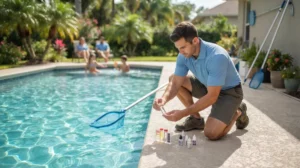
Imagine inviting the neighbors over for a pool day, only to discover your water looks a little cloudy or smells a bit too much like chemicals. Not exactly the vibe you were going for, right? That’s exactly why pool water testing is such a big deal. Keeping your water balanced isn’t just about looks — it’s about safety, comfort, and protecting your pool equipment from wear and tear.
But here’s the thing: not all pool water testing methods are created equal. Two of the most popular options are test strips and liquid test kits. Both get the job done, but they differ quite a bit in accuracy, ease of use, and cost. Whether you’re a new pool owner figuring things out, a busy parent keeping the family safe, or a commercial property manager juggling multiple facilities, choosing the right testing method can make your pool care routine a whole lot easier.
In this article, we’ll break down both methods side by side, share key chemical targets to aim for, and help you decide which option fits your lifestyle best. Let’s dive in!
Why Pool Water Testing Matters So Much
Regular pool water testing is the foundation of good pool maintenance. Without it, you’re essentially flying blind when it comes to your water chemistry. Unbalanced water can cause skin and eye irritation, damage your pool equipment, and even create an environment where harmful bacteria and algae thrive.
According to the EPA Pool Resources, maintaining proper water chemistry helps conserve water and reduce the need for excessive chemical treatments. That’s a win for your wallet and the environment!
Here’s a quick look at why balanced pool water is so important:
- Prevents algae growth and green water
- Protects your pool equipment and surfaces from corrosion
- Keeps the water safe and comfortable for swimmers
- Reduces the need for costly chemical overhauls
- Extends the life of your pool liner and filtration system
The Florida Swimming Pool Association (FSPA) recommends testing pool water at least once a week during swimming season, with pH and free chlorine being the most critical parameters to monitor. During high-use periods, testing chlorine and pH two to three times per week is even better.
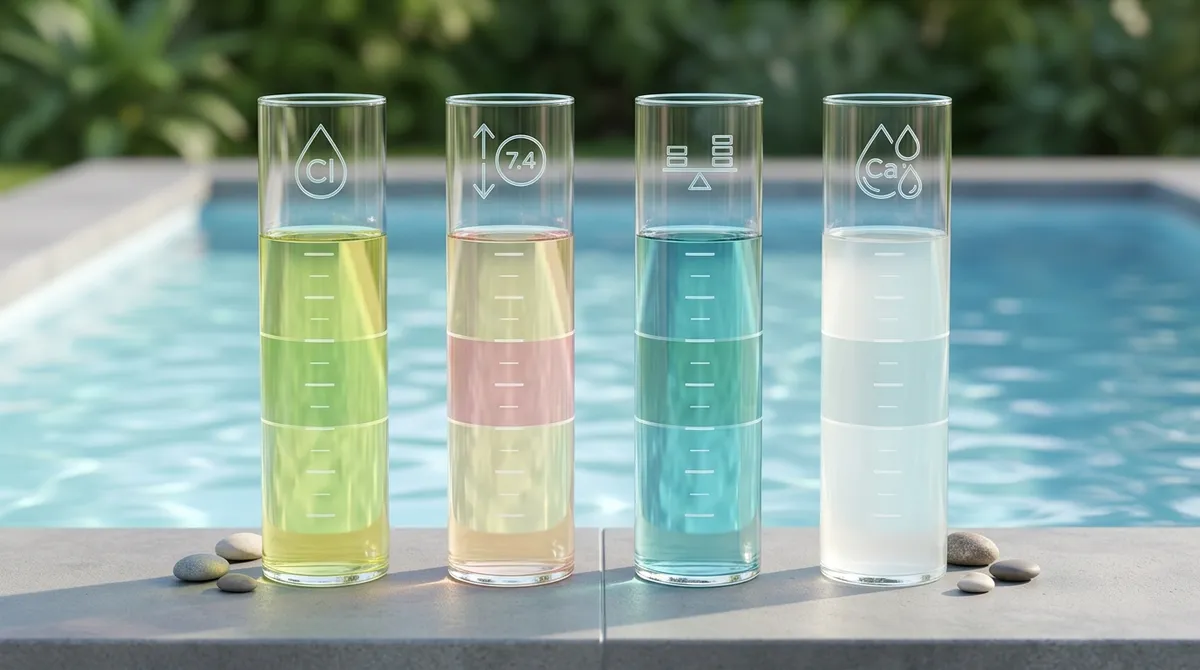
Key Chemical Levels You Should Know
Before comparing testing methods, let’s make sure we’re all on the same page about what ideal pool water looks like. Here are the target ranges every pool owner should keep in mind:
| Chemical Parameter | Ideal Range | Why It Matters |
|---|---|---|
| Free Chlorine | 1.0 – 4.0 ppm | Sanitizes water and kills bacteria |
| pH Level | 7.4 – 7.6 | Affects swimmer comfort and chemical effectiveness |
| Total Alkalinity | 80 – 120 ppm | Stabilizes pH levels |
| Calcium Hardness | 200 – 400 ppm | Prevents corrosion and scaling |
| Cyanuric Acid | 30 – 50 ppm | Protects chlorine from sunlight |
| Total Dissolved Solids | 0 – 2,500 ppm | Indicates overall water quality |
Keeping these levels in the right range helps your pool stay sparkling clean and safe for everyone who jumps in. Now, let’s look at the two most common ways to measure them.
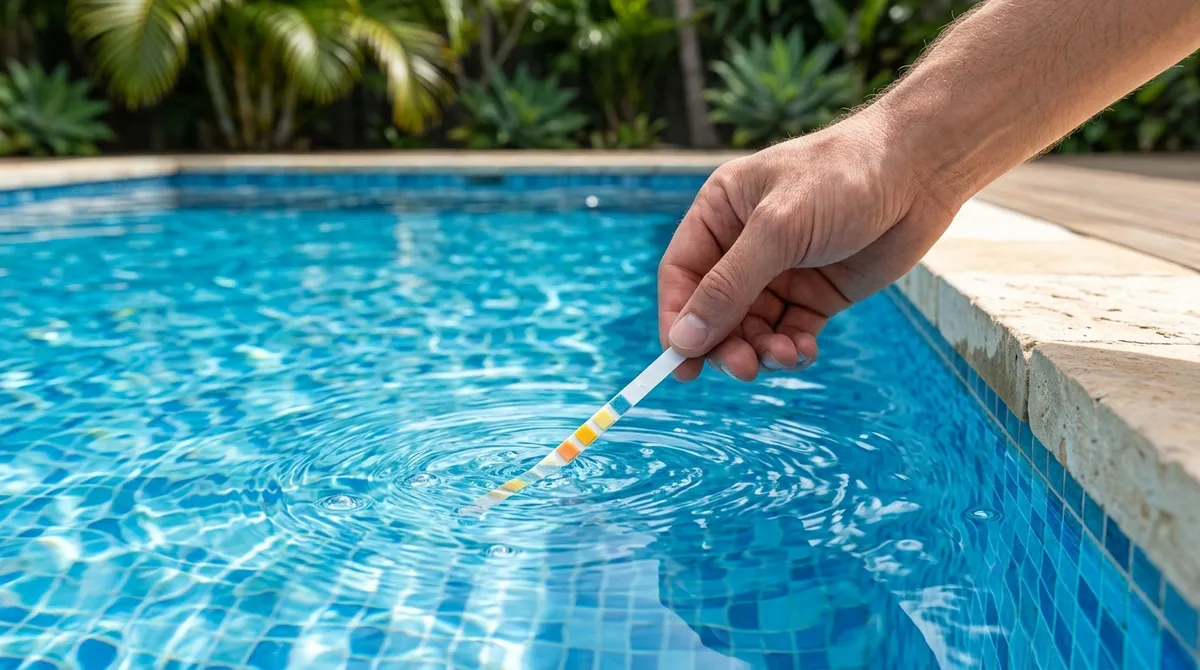
Test Strips: Fast, Easy, and Beginner-Friendly
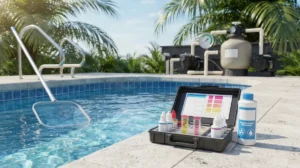
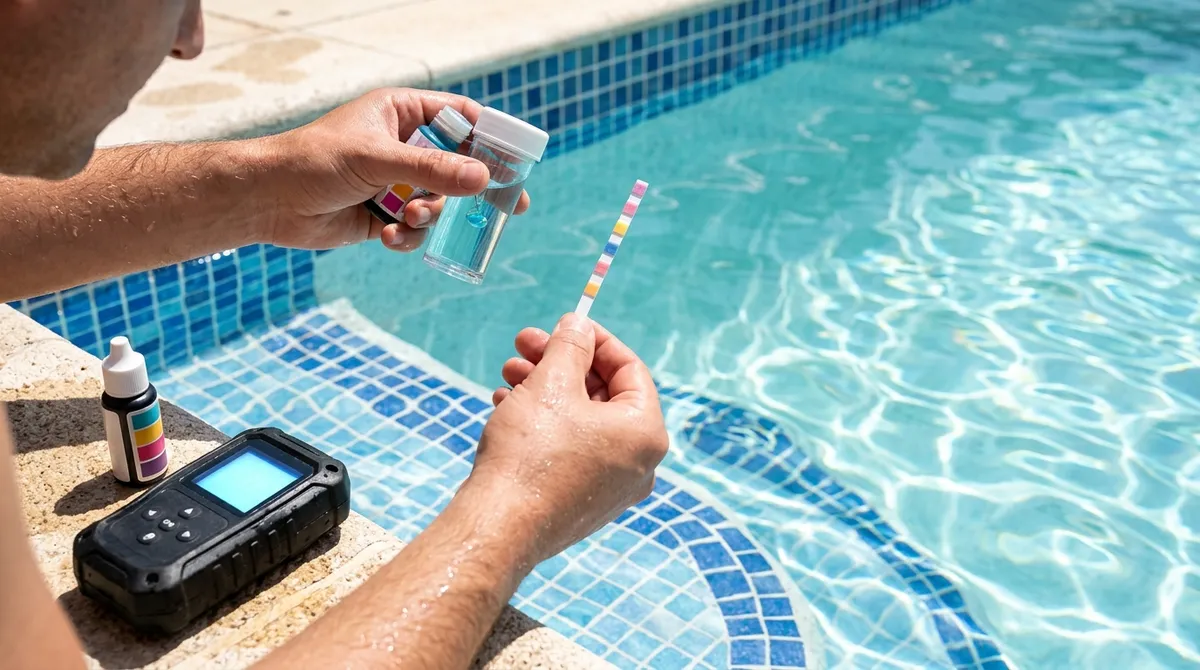
Test strips are probably the most popular pool water testing tool among everyday pool owners — and it’s easy to see why. They’re quick, affordable, and require zero chemistry knowledge to use. Products like the AquaChek 7-Way strip can check free and total chlorine, pH, alkalinity, hardness, and cyanuric acid in seconds.
How to Use Test Strips
- Run your pool pump for at least one hour to circulate the water evenly.
- Collect a water sample from 12 to 18 inches below the surface.
- Dip the strip into the water for the time specified on the package (usually a few seconds).
- Hold the strip still and compare the color changes to the chart on the bottle.
- Adjust chemicals as needed based on the results.
Pros and Cons of Test Strips
- Pro: Super fast — results in seconds
- Pro: Very affordable and widely available
- Pro: No mixing chemicals or counting drops
- Pro: Great for quick weekly checks
- Con: Can be less accurate than liquid kits
- Con: Color matching can be tricky in bright sunlight
- Con: Strips can degrade if exposed to moisture or heat
Test strips are a fantastic starting point, especially for young pool owners and busy families who just want a fast answer before the kids jump in on a Saturday afternoon. They’re not perfect, but for routine weekly checks, they do a solid job.
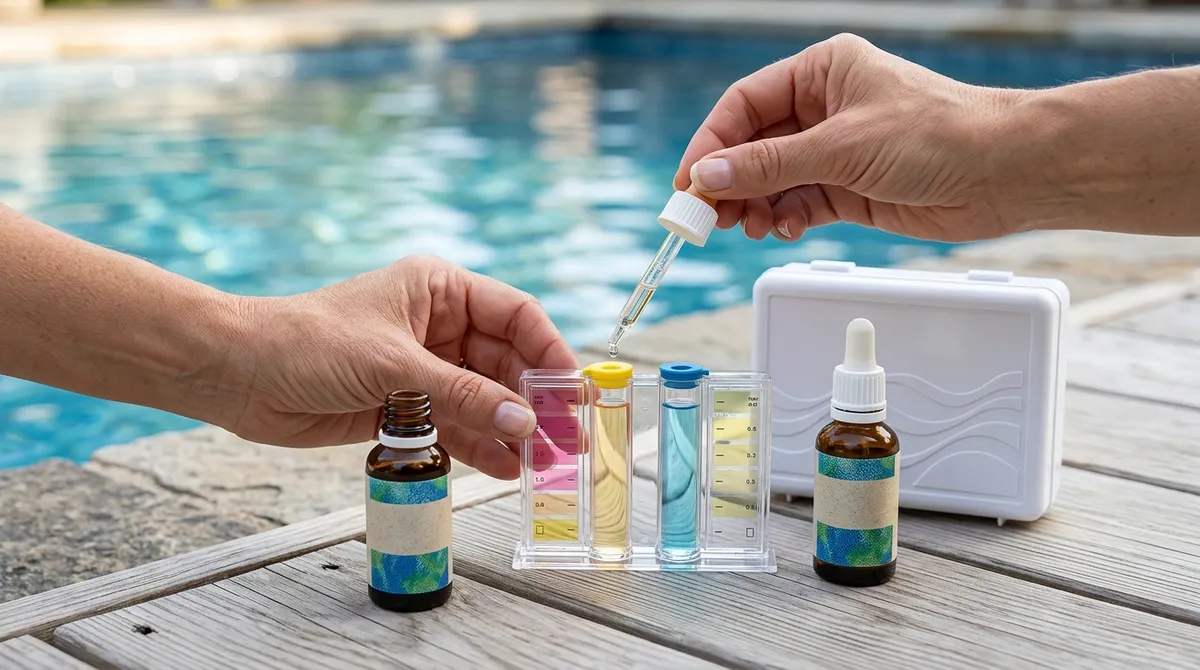
Liquid Test Kits: More Accurate and Detailed
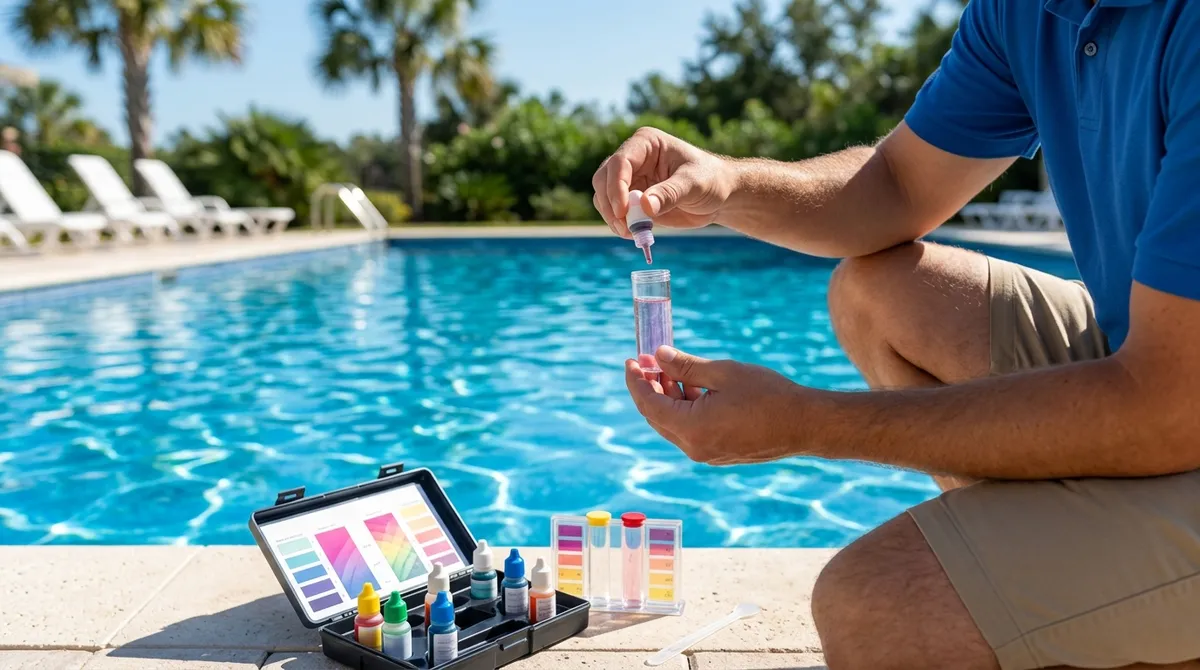
Liquid test kits, like the popular DPD or FAS-DPD kits, take a bit more time and effort than strips — but they reward you with much more precise results. These kits use liquid reagents that you add to a water sample, and the color change tells you exactly where your levels stand.
Professional pool technicians and experienced pool owners often prefer liquid kits for their reliability. The Independent Pool and Spa Service Association (IPSSA) supports thorough, accurate water testing as part of best practices for professional pool maintenance.
How to Use a Liquid Test Kit
- Run the pool pump for at least one hour before collecting your sample.
- Fill the test chamber with water from 12 to 18 inches below the surface.
- Add the specified number of reagent drops to each test chamber.
- Gently swirl or mix the sample as directed.
- Compare the resulting color to the reference chart to read your results.
- Record your readings and make any necessary chemical adjustments.
- After adding chemicals, circulate the water for 4 to 8 hours, then retest.
Pros and Cons of Liquid Test Kits
- Pro: More accurate and reliable readings
- Pro: Better for diagnosing tricky water chemistry issues
- Pro: Preferred by professional pool cleaners
- Con: Takes more time and effort
- Con: Requires careful handling of liquid reagents
- Con: Slightly more expensive upfront
For luxury homeowners, commercial property managers, and anyone who wants the best possible data on their pool’s chemistry, liquid kits are a great investment. The extra few minutes you spend testing could save you hundreds in chemical corrections down the line.
Test Strips vs. Liquid Kits: A Side-by-Side Comparison
| Feature | Test Strips | Liquid Test Kits |
|---|---|---|
| Ease of Use | Very easy | Moderate |
| Accuracy | Good | Excellent |
| Speed | Seconds | 5 to 10 minutes |
| Cost | Very affordable | Moderate upfront cost |
| Parameters Tested | 5 to 7 (depending on brand) | Up to 10 |
| Best For | Quick routine checks | Detailed diagnostics |
| Ideal User | Beginners, busy families | Experienced owners, professionals |
What About Digital Pool Testers?
There’s a third option worth mentioning: digital pool water testers. Tools like the AccuBlue system can analyze up to 10 parameters with no color matching required. They’re incredibly precise and remove all guesswork from the equation.
Here’s how digital testers stack up:
- No color interpretation needed — the device reads results for you
- Great for people with color vision differences
- Highly accurate, comparable to professional lab testing
- Higher upfront cost than strips or liquid kits
- Best suited for frequent users who want maximum precision
Digital testers are gaining popularity in 2026, especially among retired homeowners and commercial property managers who want reliable, consistent results without the hassle. They’re a worthy upgrade if you’re serious about keeping your pool in top shape.
How to Collect the Perfect Water Sample
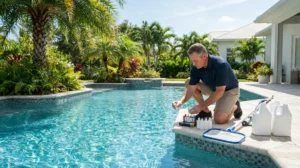
No matter which pool water testing method you choose, collecting your sample correctly is key. A bad sample leads to inaccurate results — and that can throw your whole chemical balance off.
- Run your pump first. Let the pump run for at least one hour to circulate and mix the water evenly.
- Go deep. Collect your sample from 12 to 18 inches below the surface. Surface water doesn’t give you an accurate picture.
- Stay away from return jets. Sample from the middle of the pool or the opposite side from where water returns.
- Use a clean container. Rinse your sample bottle with pool water before collecting the final sample.
When to Call in the Professionals
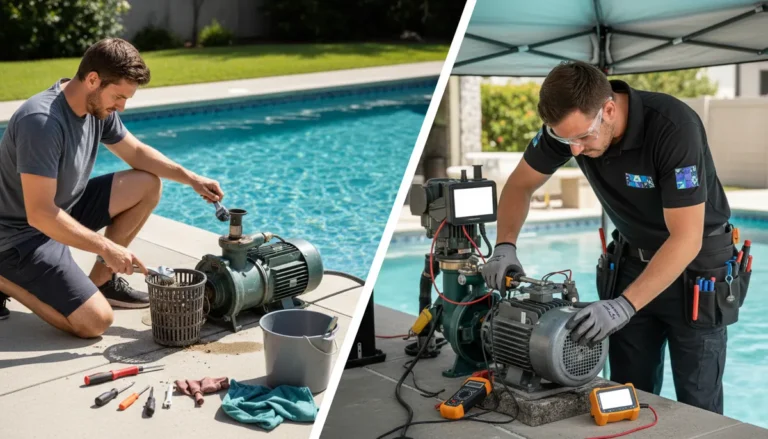
DIY pool water testing is fantastic for routine maintenance — but sometimes things get more complicated. If your water looks green, cloudy, or foamy despite your best efforts, it might be time to bring in a professional pool cleaning service.
The team at Panther Pools’ pool cleaning services in Tampa brings expert knowledge and professional-grade testing tools to every visit. Our certified technicians use comprehensive testing methods to diagnose and correct water chemistry issues quickly, so you can get back to enjoying your pool without the headaches.
Whether you need pool maintenance in West Chase or regular service throughout Tampa, having a trusted pro in your corner makes all the difference. Professional testing often catches issues that DIY methods can miss — especially when it comes to parameters like total dissolved solids or combined chlorine levels.
If you’re located in the area, our Westchase pool service team is ready to help keep your water perfectly balanced week after week.
Tips for Staying on Top of Pool Water Testing
Consistency is the secret to great pool water. Here are some simple habits that make a big difference:
- Test weekly during swimming season, especially pH and free chlorine
- Test chlorine and pH two to three times per week during hot summer months or heavy use
- Always retest after adding chemicals — wait 4 to 8 hours for full mixing
- Keep a simple log of your test results to spot trends over time
- Store test strips and reagents in a cool, dry place to prevent degradation
- Schedule a professional water analysis at least once a month for added peace of mind
Which Pool Water Testing Method Is Right for You?
So, what’s the verdict? The truth is, the best pool water testing method depends on your lifestyle, experience level, and how hands-on you want to be.
Choose test strips if: You want quick, easy weekly checks without a lot of fuss. They’re perfect for busy families and new pool owners who want a reliable snapshot of their water chemistry in seconds.
Choose liquid test kits if: You want detailed, accurate results and don’t mind spending a few extra minutes. They’re the go-to for experienced owners and anyone dealing with stubborn water chemistry issues.
Consider a digital tester if: You want the highest level of precision with minimal effort. Great for retirees, luxury homeowners, and commercial managers who need consistent, dependable data.
Of course, combining methods works well too. Many pool owners use test strips for quick daily or weekly checks and rely on a liquid kit or professional service for monthly deep-dives. Learn more about what’s involved in keeping a pool in great shape by visiting our About page — we’re happy to share our passion for clean, healthy pools!
Keep Your Pool Sparkling with Panther Pools
Whether you’re a strip-and-go kind of person or a detail-oriented liquid kit user, regular pool water testing is the single best habit you can develop as a pool owner. It keeps your water safe, your equipment happy, and your backyard pool the place everyone wants to be.
And when you want the confidence that comes with professional-grade pool care, the friendly team at Panther Pools is here for you. We offer expert pool cleaning, water chemistry management, and 7-days-a-week support throughout Tampa — because we believe every pool deserves to be at its best, every single day.
Ready to take the guesswork out of pool maintenance? Get in touch with our team today for a free estimate and discover what it feels like to have a perfectly balanced pool without lifting a finger!
FAQs
Q: How often should I test my pool water?
A: During swimming season, aim to test your pool water at least once a week — focusing on pH and free chlorine, which change most frequently. During hot months or heavy pool use, bumping that up to two to three times a week is a great idea to stay ahead of any imbalances!
Q: What are the ideal chemical levels for pool water?
A: Great question! You’ll want free chlorine between 1.0 and 4.0 ppm, pH between 7.4 and 7.6, total alkalinity between 80 and 120 ppm, calcium hardness between 200 and 400 ppm, and cyanuric acid between 30 and 50 ppm. Keeping these in range keeps your water safe, clear, and comfortable for everyone.
Q: Are test strips accurate enough for regular pool maintenance?
A: Test strips are absolutely reliable for routine weekly pool water testing and give you a solid snapshot of your water chemistry in seconds. For a deeper, more detailed analysis — especially if you’re troubleshooting an issue — a liquid test kit or professional water test will give you even more precise results.
Q: How do I collect a proper pool water sample for testing?
A: The key is to run your pump for at least an hour first, then collect your sample from 12 to 18 inches below the surface, away from return jets. Use a clean container rinsed with pool water, and you’ll have a representative sample that gives you accurate, trustworthy results every time!
Q: When should I call a professional for pool water testing?
A: If your water looks cloudy, green, or foamy despite your best DIY efforts, it’s a great time to call in a pro. Professional pool cleaners use advanced testing tools to diagnose and correct complex water chemistry issues quickly — saving you time, money, and a lot of frustration!