
Key Takeaways
-
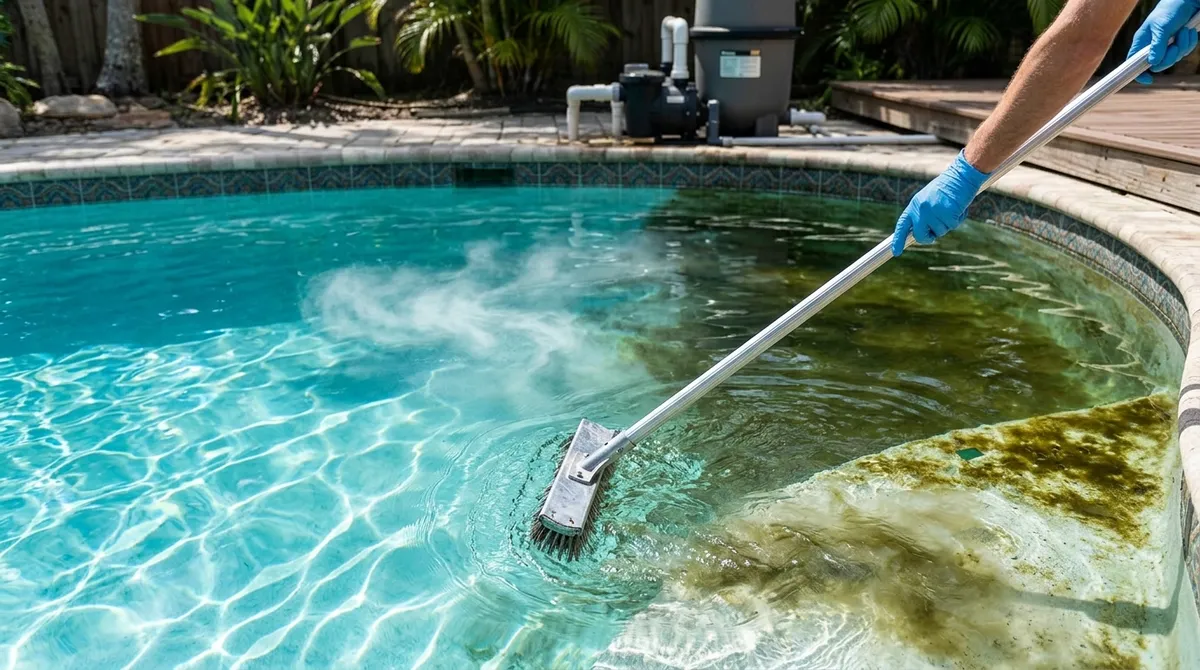
Brush all pool surfaces thoroughly before adding chemicals—this critical step breaks up algae colonies and exposes them to treatment, preventing regrowth if skipped.
-
Shock your pool at night with calcium hypochlorite at double or triple the normal dose (depending on severity) to achieve 10-20 ppm chlorine levels, then run pump continuously for 24-48 hours.
-
Test and balance water chemistry first with pH at 7.2-7.8 (lowering to mid-6s during treatment), alkalinity at 80-100 ppm, and free chlorine at 1-3 ppm for maintenance.
-
Black algae requires aggressive treatment: physically scrape with steel brush, apply chlorine directly to spots, triple-shock the pool, and repeat every 3-4 days until completely gone.
-
Prevent algae return by maintaining consistent chlorine levels, testing water weekly, brushing/vacuuming regularly, and running your pump 8-12 hours daily during warm months.
-
Call a professional if algae persists beyond a week despite treatment, black algae returns repeatedly, or your pump/filter isn’t working properly—expert intervention saves time and frustration.
You walk outside to enjoy your pool, and the water looks green, cloudy, or slimy. Sound familiar? Pool algae is one of the most frustrating problems Tampa pool owners face — especially during our warm, sunny months. The good news is that pool algae removal is totally manageable when you know the right steps. Whether you’re a busy parent, a new homeowner, or someone who just wants their pool looking great again, this guide is for you. We’ll walk through exactly how to identify, treat, and prevent pool algae so you can get back to splashing around without worry.
What Is Pool Algae and Why Does It Happen?
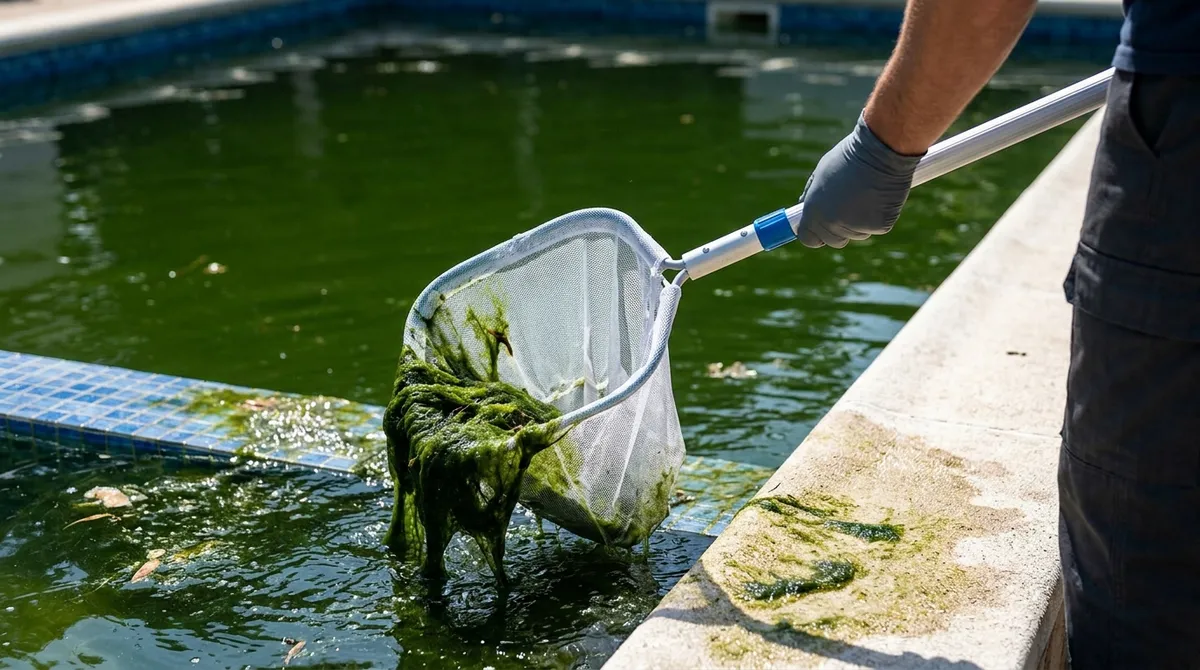
Algae are tiny plant-like organisms that love warm, sunny water. They grow fast when your pool’s chemistry gets out of balance. Low chlorine levels, poor circulation, or skipping regular cleaning are the most common causes. In Tampa’s year-round heat, algae can take hold in just a day or two if conditions are right.
Understanding what type of algae you’re dealing with is the first step. Different types need slightly different treatments. Here’s a quick breakdown:
| Algae Type | Color/Appearance | Difficulty to Remove | Common Location |
|---|---|---|---|
| Green Algae | Green, cloudy water or walls | Easy to Moderate | Walls, floor, water |
| Mustard (Yellow) Algae | Yellow or brownish patches | Moderate | Shaded areas, walls |
| Black Algae | Dark blue-green spots | Difficult | Cracks, grout lines |
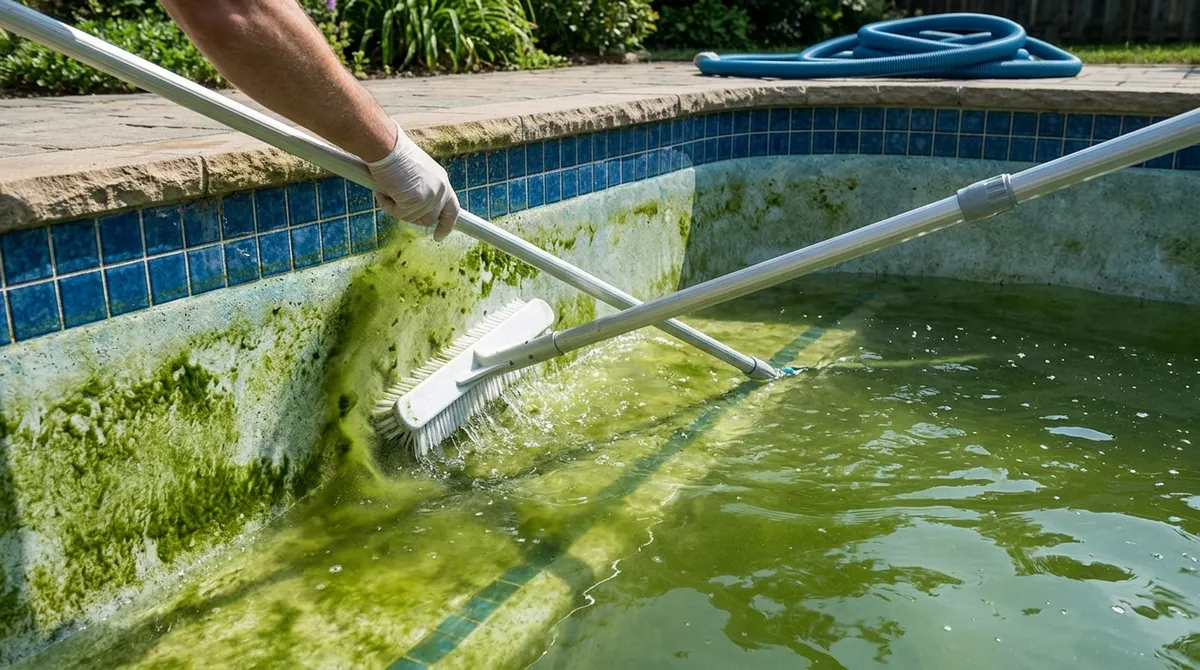
Step-by-Step Pool Algae Removal Process
Ready to tackle that algae? Follow these steps in order for the best results. Skipping steps can leave algae behind and cause it to come right back.
Step 1: Test and Balance Your Water Chemistry
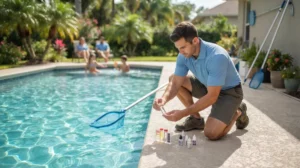
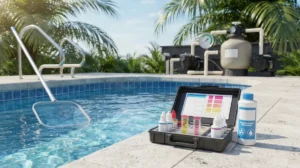
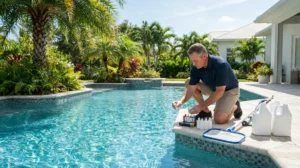
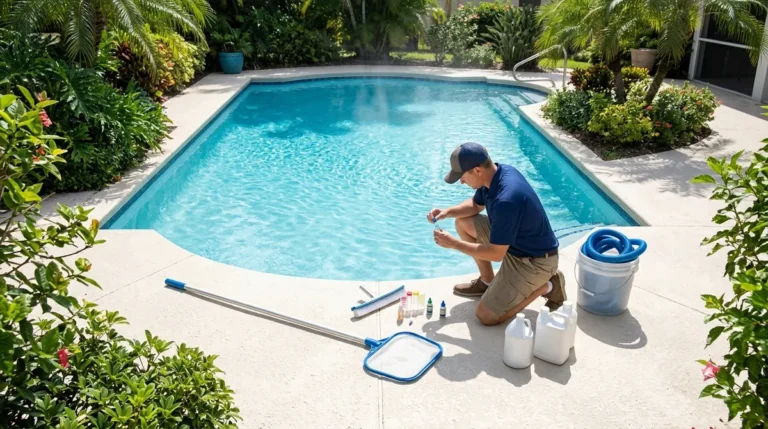
Before adding any chemicals, test your water first. Your pH should sit between 7.2 and 7.8 for normal operation. During treatment, lowering pH to the mid-6 range can actually make your shock treatment work more effectively. Check these levels before you start:
- pH: 7.2–7.8 (lower to mid-6s during treatment)
- Total Alkalinity: 80–100 ppm
- Cyanuric Acid: 25–75 ppm
- Free Chlorine: At least 1–3 ppm for maintenance
Balanced water chemistry is not just about treatment — it’s your best long-term defense. The EPA Pool Resources also highlights proper water management as key to a healthy, efficient pool system.
Step 2: Brush All Pool Surfaces Thoroughly
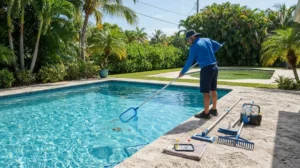
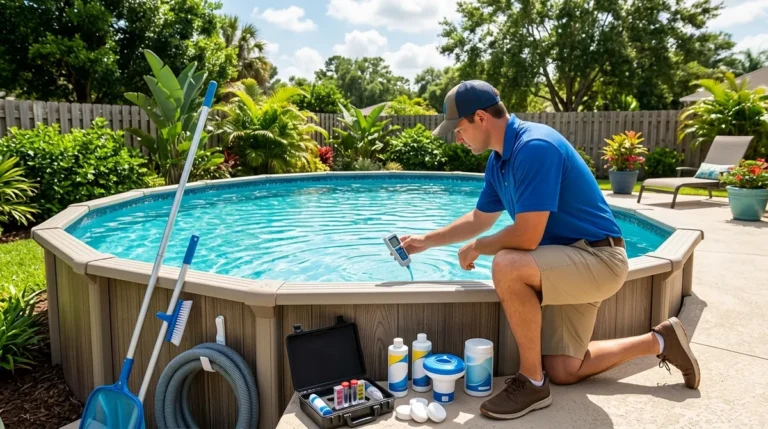
This step is absolutely critical and one that many people skip. Brushing breaks up the algae colonies and exposes them to the chemicals you’ll add next. Use a stiff-bristle brush and scrub every surface — walls, floor, steps, and corners.
- Use a steel-bristle brush for black algae on plaster or concrete surfaces
- Use a nylon-bristle brush for vinyl liners to avoid damage
- Pay extra attention to shaded corners and behind ladders
- Brush toward the main drain to help move debris toward filtration
Step 3: Add Algaecide
Apply an algaecide after brushing but before shocking. This one-two punch helps break down the algae on a deeper level. Choose a metallic-free algaecide for general use, as these are gentler on your pool equipment and won’t stain surfaces. Follow the label instructions carefully for dosing based on your pool’s gallonage.
Step 4: Shock the Pool
Shocking is the powerhouse of pool algae removal. Calcium hypochlorite (cal-hypo) is the go-to shock product for algae treatment. The standard dose is 1 lb per 10,000–15,000 gallons of water for regular shocking. For algae, you’ll likely need to double or even triple that amount depending on severity. Here’s a simple guide:
| Algae Severity | Shock Dosage (Cal-Hypo) | Expected Clearance Time |
|---|---|---|
| Light Green Tint | 1–2 lbs per 10,000 gallons | 24–48 hours |
| Moderate Green/Cloudy | 2–3 lbs per 10,000 gallons | 2–3 days |
| Dark Green/Black | 3+ lbs per 10,000 gallons | 3–5 days |
Always apply shock at night or in the evening. Sunlight breaks down chlorine quickly, so nighttime application lets the chemicals work longer. Aim for super-chlorination levels of 10–20 ppm to effectively kill all algae. You can learn more about industry-standard treatment protocols from the IPSSA, a trusted organization for pool service professionals.
Step 5: Run Your Pump and Filter Continuously
After shocking, run your pool pump and filter non-stop for 24–48 hours. This keeps the treated water circulating so the chemicals can reach every corner of your pool. Without good circulation, algae can survive in dead spots and come right back.
- Run the pump continuously for at least 24–48 hours post-treatment
- Check and clean your filter every 8–12 hours during this period
- Backwash sand or DE filters when pressure rises 8–10 psi above normal
- Rinse or replace cartridge filters as needed
Step 6: Vacuum Dead Algae From the Pool
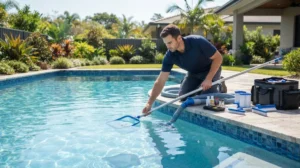
Once the algae has been killed, it will sink to the bottom of your pool as a greyish or whitish sediment. Vacuum this up carefully to avoid stirring it back into the water. Vacuum to waste if your system allows it — this sends the debris directly out of the pool rather than back through the filter.
Step 7: Retest and Rebalance
After vacuuming, test your water again. Shocking uses up a lot of your pool’s chemical balance, so things like pH and alkalinity will likely need to be adjusted. Bring everything back into proper range before swimming. If the water is still cloudy or greenish, repeat the shock treatment. With double or triple shocking and continuous filtration, most pools clear up in under 5 days.
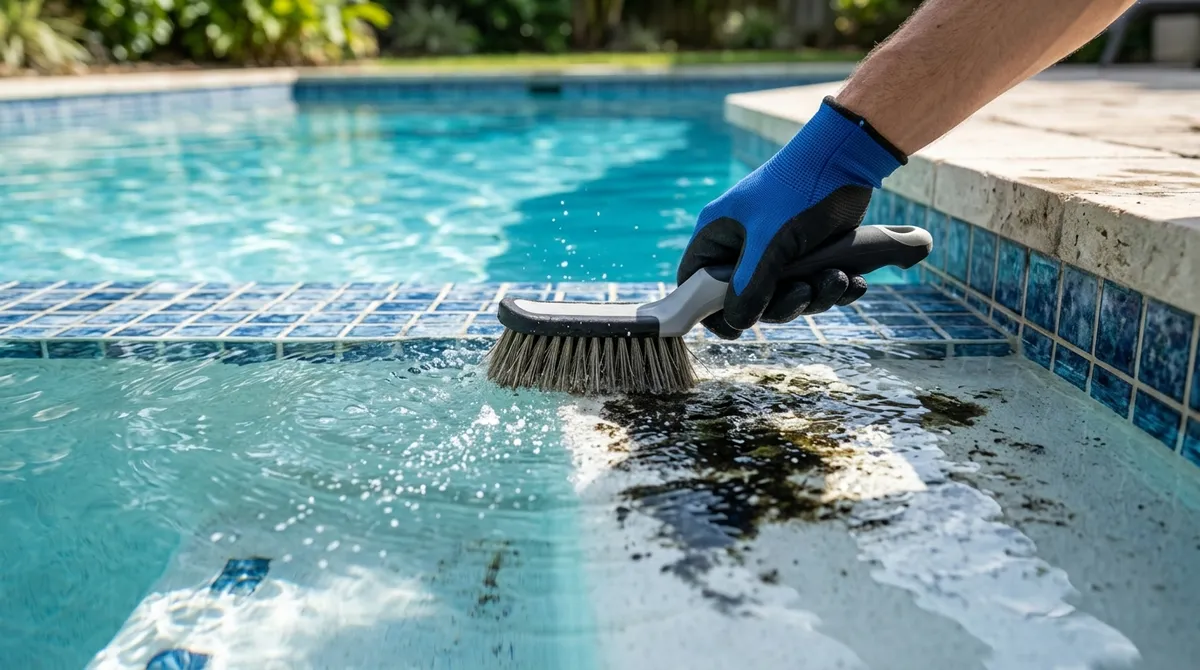
How to Deal With Black Algae Specifically
Black algae deserves its own section because it’s genuinely the toughest type to remove. It has a protective outer layer that shields it from chemicals. You need to physically scrape it off first, then saturate it with chlorine. Here are some tips specifically for black algae:
- Use a stainless steel brush or a pumice stone to scrub directly on the spots
- Apply granular chlorine or a chlorine tablet directly to the affected areas
- Shock the pool at triple the normal dosage
- Repeat treatment every 3–4 days until spots are completely gone
- Consider draining and acid washing for extreme cases
If black algae keeps coming back despite your best efforts, it may be time to call in the pros. The team at Pool Cleaning Services Tampa by Panther Pools has the equipment and expertise to handle even the most stubborn algae problems quickly and effectively.
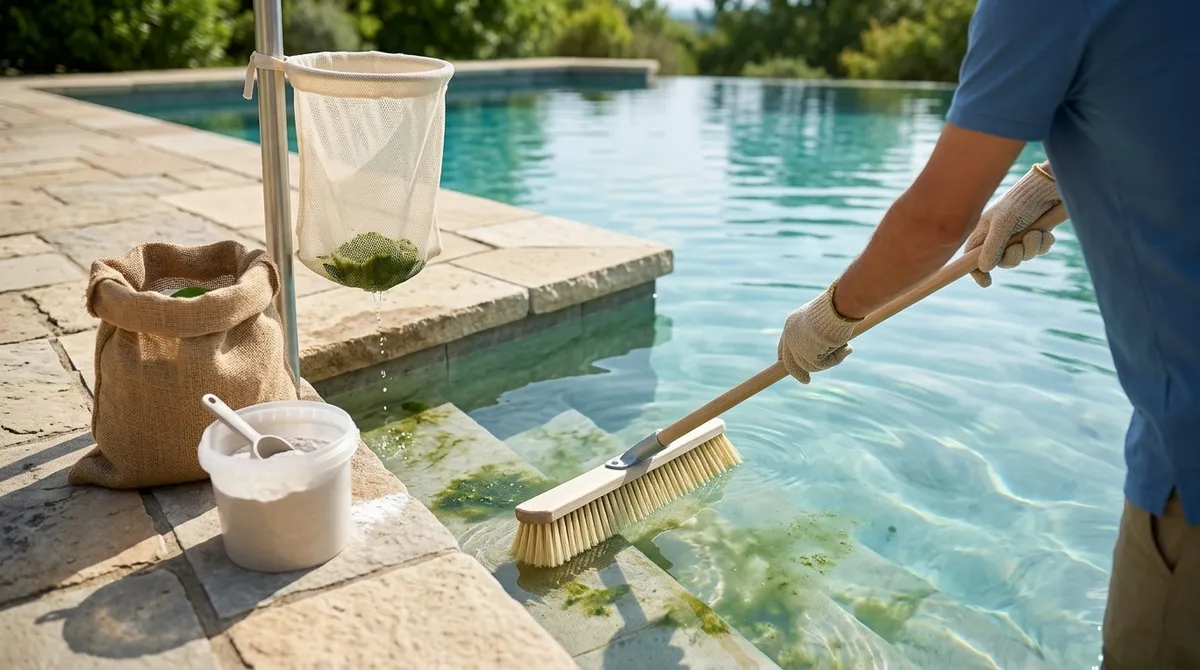
Eco-Friendly Pool Algae Removal Options
Prefer a more natural approach? There are some greener methods that work well for mild cases or as preventive tools. These won’t replace chemical shock for a serious algae bloom, but they’re great additions to your maintenance routine.
- White vinegar: Works on mild algae on surfaces and equipment
- Baking soda: Helps raise pH naturally without harsh chemicals
- Barley straw: A natural preventive that releases compounds inhibiting algae growth
- Pool covers: Block sunlight, which algae needs to thrive
- Enzyme-based cleaners: Break down organic matter that feeds algae
The FSPA (Florida Swimming Pool Association) promotes sustainable pool management practices, and incorporating eco-friendly methods where possible is a smart approach for Florida pool owners.
How to Prevent Pool Algae From Coming Back
Once you’ve won the battle against algae, keeping it from returning is all about consistent maintenance. Prevention is always easier — and cheaper — than treatment. Here are the habits that make the biggest difference:
- Maintain proper chlorine levels — Keep free chlorine between 1–3 ppm consistently
- Test your water weekly — Catch imbalances before they become big problems
- Brush and vacuum regularly — Don’t let organic debris build up
- Run your pump daily — At least 8–12 hours per day during summer months
- Shock weekly or bi-weekly — A maintenance shock dose keeps algae spores from taking hold
- Clean your filter regularly — A clogged filter means poor circulation and algae opportunity
For Tampa homeowners, the summer heat and sunshine make consistent maintenance even more important. Algae can double in population every day in warm conditions, so staying on top of your routine is key. Our pool maintenance in West Chase page has more details on what a great ongoing service plan looks like.
When to Call a Professional Pool Service
Sometimes algae gets ahead of you, and that’s completely okay. There’s no shame in calling for backup — especially when a professional service can save you time, money, and frustration. Here are clear signs it’s time to get expert help:
- The pool has been green or cloudy for more than a week despite treatment
- Black algae keeps returning in the same spots
- You’re unsure how to balance your water chemistry safely
- Your filter or pump isn’t working properly
- You don’t have the time or energy for a multi-day treatment process
Panther Pools offers reliable, professional pool care for both residential and commercial customers across Tampa. From routine weekly cleanings to full green-to-clean transformations, our certified technicians are ready to help. Check out our Westchase pool service to see how we serve your neighborhood. You can also learn more about our team and our commitment to quality pool care.
Wrapping It All Up
Pool algae removal doesn’t have to be stressful. With the right steps — brushing, balancing, shocking, filtering, and vacuuming — you can turn a green mess into sparkling clean water in just a few days. And with consistent weekly maintenance habits, you can keep algae from ever becoming a problem again.
Your pool is meant to be enjoyed, not worried about. Whether you want to tackle algae yourself or have a trusted team handle it for you, the path to clear water is well within reach. Ready to get your pool back to its best? Reach out to our team at Panther Pools for a free estimate and see why so many Tampa families trust us with their pools seven days a week.
FAQs
Q: How do I get rid of green algae in my pool fast?
A: The fastest way to clear green algae is to brush the pool walls and floor, then shock the water with calcium hypochlorite at double or triple the normal dose. Run your pump and filter continuously for 24–48 hours, and most pools will clear up within 2–5 days. Consistency is key — don’t skip the brushing step!
Q: How long does pool algae removal take?
A: It depends on how bad the algae bloom is! A light green tint can clear in 24–48 hours with proper shocking and filtration. More severe cases with dark green or black water may take 3–5 days of treatment, filtering, and vacuuming. Stick with it — the results are absolutely worth it!
Q: Is algaecide necessary for pool algae treatment?
A: Algaecide isn’t always required, but it’s a great supporting tool alongside chlorine shock. It helps prevent algae from returning and works well as part of a regular maintenance routine. Think of it as a helpful teammate, not the main player — chlorine shock does the heavy lifting.
Q: What water chemistry levels prevent pool algae from growing?
A: Keeping your free chlorine between 1–3 ppm, pH between 7.2–7.8, and total alkalinity at 80–100 ppm are your best defenses against algae. Testing your water weekly and staying consistent with those levels makes algae growth very difficult. Regular testing takes just a few minutes and saves a ton of hassle!
Q: Can I swim in my pool while treating it for algae?
A: It’s best to wait until the algae treatment is complete and your water chemistry is back in balance before swimming. High shock doses raise chlorine levels well above safe swimming range temporarily. Once your free chlorine drops back to 1–3 ppm and the water is clear, you’re good to jump back in and enjoy!