
Key Takeaways
-
Always turn off the pump and drain the filter housing before cleaning to prevent injuries, equipment damage, and debris from being pushed back into the pool.
-
Chemical soaking is essential for cartridge filters—water alone only removes surface debris; soak cartridges in TSP solution (1 cup per 5 gallons) for 6+ hours or overnight to dissolve oils from sunscreen and lotions.
-
Monitor your pressure gauge weekly and backwash sand filters or deep-clean other filter types when pressure reads 8-10 PSI above baseline, before water appears cloudy or green.
-
Use moderate water pressure and a 45-degree angle when rinsing cartridge filters to avoid tearing pleats; never use a pressure washer as excessive force damages filter media permanently.
-
Remove mineral and algae buildup with diluted muriatic acid only after removing oils first, working in a ventilated area with protective gear to prevent filter brittleness and equipment damage.
-
Deep-clean cartridge filters several times per season and DE filters 1-2 times yearly with overnight soaks; skipping chemical cleaning causes oils to embed and reduces filtration efficiency significantly.
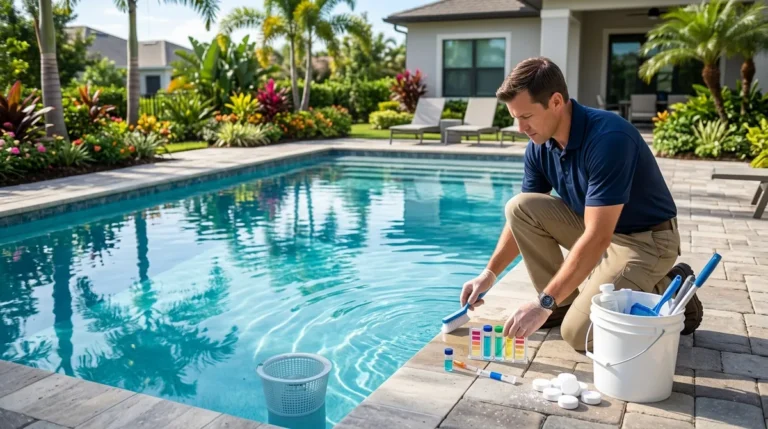
Your pool filter is the unsung hero of a clean, sparkling backyard oasis. It works hard every single day to keep your water clear and safe. But here’s the thing — many pool owners unknowingly sabotage their own filters with simple, avoidable mistakes. Whether you’re a new homeowner who just installed your first pool or a seasoned Tampa resident who’s been swimming for years, these errors can quietly shorten your filter’s lifespan and cloud up your water fast. The good news? Every mistake on this list is totally preventable. Let’s walk through the seven most common pool filter cleaning mistakes so you can stop making them today — and enjoy a cleaner, healthier pool all season long.
Why Pool Filter Cleaning Actually Matters
Before we dive into the mistakes, let’s talk about why pool filter cleaning deserves your full attention. Your filter removes dirt, debris, oils, and tiny particles that your eyes can’t even see. When it gets clogged or dirty, your pump has to work harder. That means higher energy use, more wear on your equipment, and water that just looks… off. According to the EPA Pool Resources, maintaining proper pool filtration is also key to water efficiency. A clean filter keeps your pool balanced with less chemical use, saving you money and effort in the long run.
There are three main filter types — cartridge, sand, and diatomaceous earth (DE) — and each one needs specific care. Knowing your filter type is step one. Now let’s get into the mistakes.
Mistake 1: Never Turning Off the Pump Before Cleaning
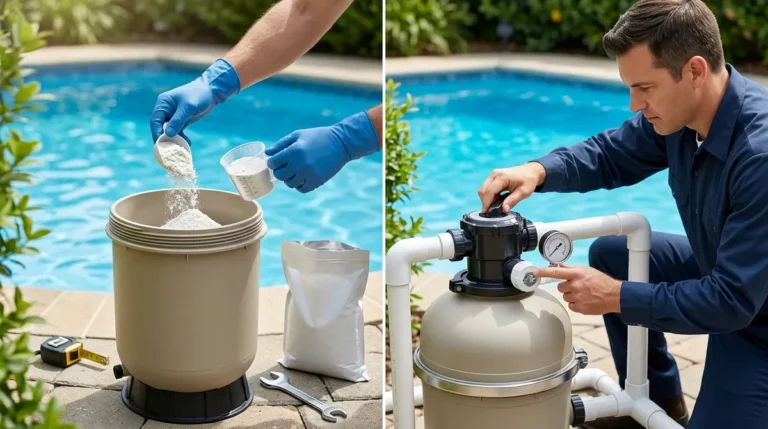
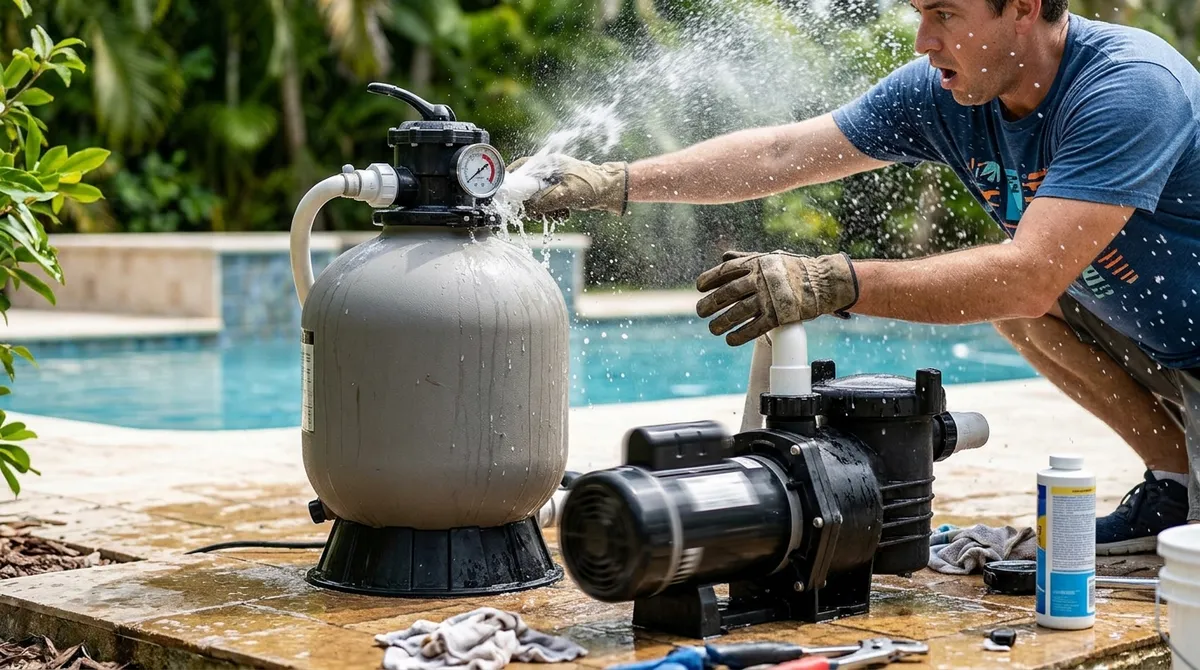
This one sounds obvious, but you’d be surprised how often it’s skipped. Always turn off your pool pump completely before you start any pool filter cleaning process. Running water through the system while you’re working on it can cause serious injuries, blow out seals, and damage your equipment. It also means water pressure could send debris flying right back into the pool you just cleaned.
Once the pump is off, make sure to drain the filter housing before opening it. Check the pressure gauge after you’re done cleaning — it should return to normal PSI levels. If it stays high, something didn’t get cleaned properly, or there may be another issue to look at.
Mistake 2: Only Rinsing Your Cartridge Filter With Water
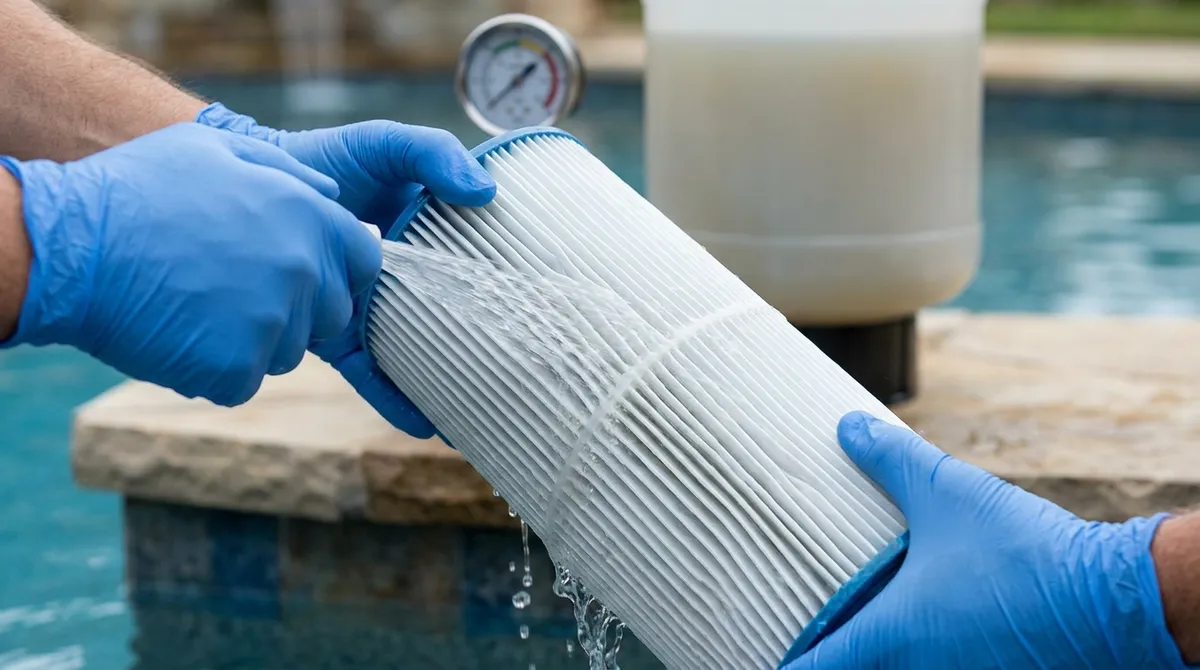
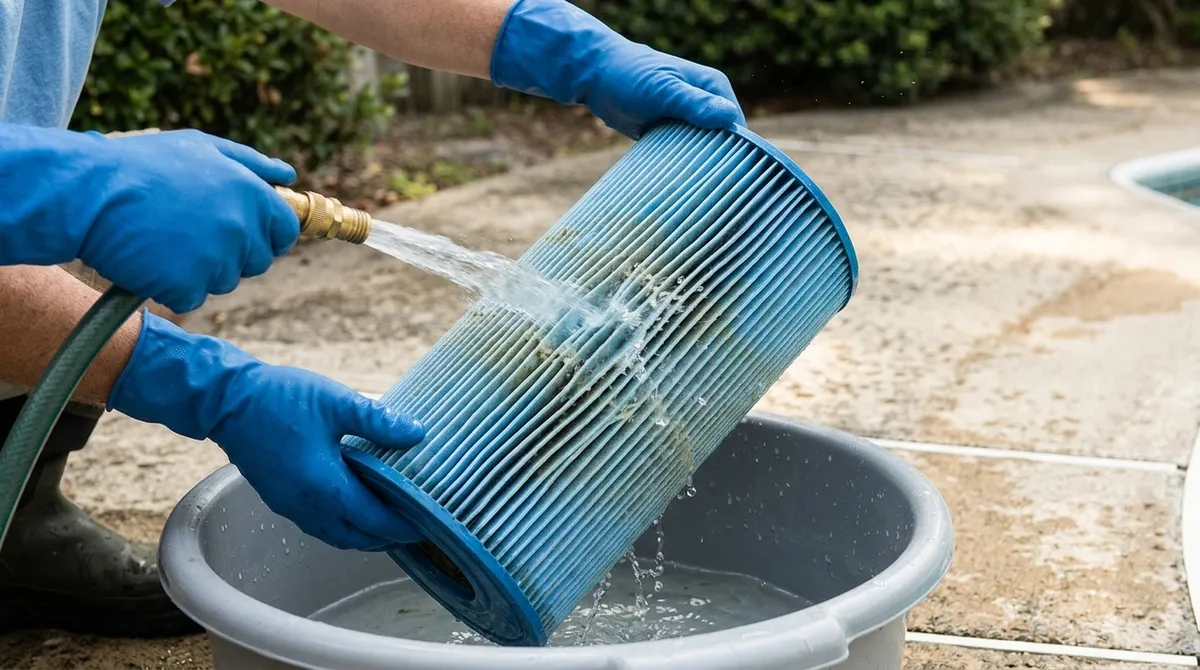
A quick rinse with a garden hose feels satisfying, but it only removes the surface layer of debris. Oils from sunscreen, body lotion, and fine particles get trapped deep inside the cartridge pleats. Water alone can’t break those down. That’s where chemical soaking comes in.
Here’s what a proper cartridge cleaning looks like:
- Remove the cartridge from the housing carefully.
- Rinse with a garden hose at a 45-degree angle using moderate pressure.
- Soak in a cleaning solution — either 1 cup of TSP per 5 gallons of water (minimum 3 hours, overnight is better) or a commercial cartridge cleaner for at least 6 hours.
- Rinse thoroughly after soaking to remove all cleaner residue.
- Reinstall and check your pressure gauge.
Deep clean your cartridge filter several times per swim season, not just once. A cartridge that only gets rinsed will underperform quickly, leaving your water looking hazy and tired.
Mistake 3: Skipping Backwashing on Sand Filters
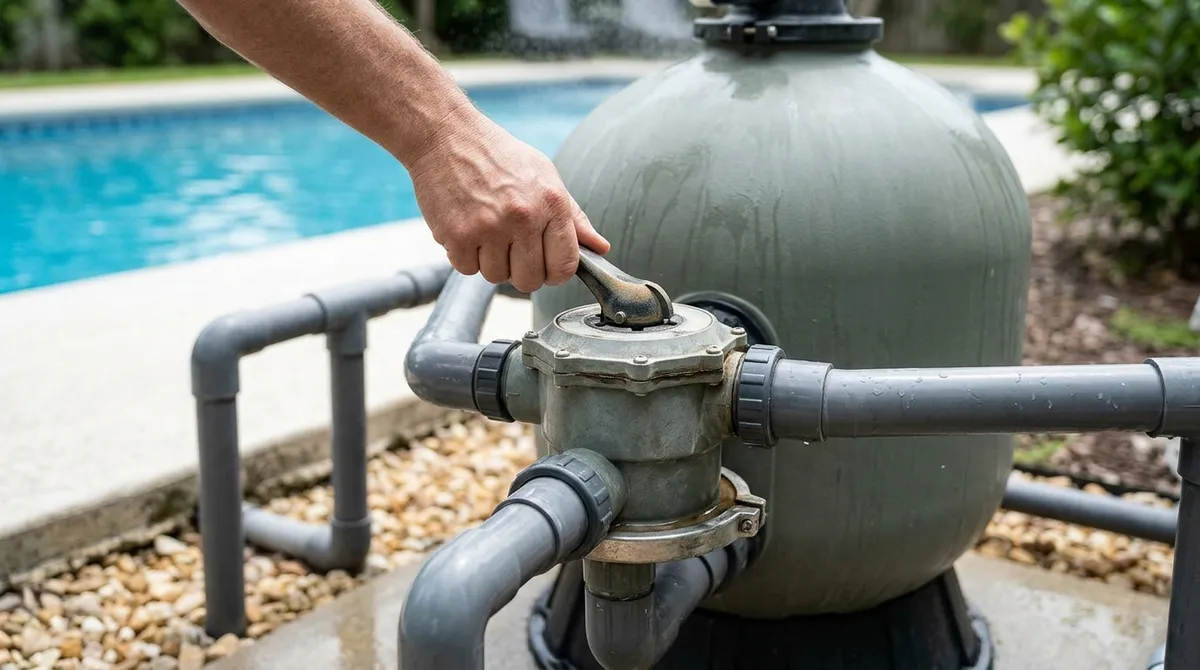
Sand filters are low-maintenance, but they’re not no-maintenance. Backwashing is the primary cleaning method for sand filters, and skipping it is a big problem. When the pressure gauge reads 8-10 PSI above its normal baseline, it’s time to backwash.
Here’s the right way to backwash a sand filter:
- Turn off the pump.
- Set the multiport valve to “Backwash.”
- Turn the pump back on and run it until the discharge water runs completely clear — usually a few minutes.
- Switch to “Rinse” for about 30 seconds to reseat the sand.
- Return the valve to “Filter” and restart normal operation.
Don’t forget that sand filters also benefit from a chemical cleaner poured into the skimmer or directly into the filter a few times per year. Let it sit for about an hour before a final backwash to break down oils and buildup that water alone can’t handle.
Mistake 4: Mishandling DE Filter Grids
Diatomaceous earth (DE) filters offer the finest filtration of all three types, but they require the most detailed cleaning process. One of the biggest mistakes DE filter owners make is not disassembling the manifolds and grids fully before cleaning — or not soaking them long enough.
Here’s what proper DE filter cleaning looks like:
- Turn off the pump and release pressure from the system.
- Disassemble the filter and remove all grids carefully.
- Rinse grids with a garden hose to remove loose DE powder and debris.
- Soak the grids overnight in a filter-cleaning solution to break down oils and fine particles.
- Rinse thoroughly the next morning.
- Reassemble the filter and add fresh DE powder per your manufacturer’s specifications.
Skipping the overnight soak or cutting it short means oils stay embedded in the grids. Over time, this reduces filtration efficiency and causes your system to work much harder than it needs to.
Filter Cleaning Quick Reference Guide
Here’s a handy comparison of how each filter type should be maintained throughout the season:
| Filter Type | Cleaning Method | Frequency | Soak Time |
|---|---|---|---|
| Cartridge | Rinse + chemical soak | Several times per season | 6 hours to overnight |
| Sand | Backwash + chemical cleaner | When PSI rises 8-10 above normal | 1 hour (cleaner in system) |
| DE (Diatomaceous Earth) | Full disassembly + soak | 1-2 times per season | Overnight if possible |
Mistake 5: Using Too Much Pressure When Rinsing
It’s tempting to blast your cartridge filter with a high-pressure hose to knock debris loose. But using too much water pressure can tear or crack the delicate filter pleats. Once those pleats are damaged, your filter can no longer trap fine particles effectively — and you’ll need to replace the cartridge much sooner than expected.
Here are the right tools for rinsing a cartridge filter:
- A standard garden hose with a spray nozzle set to moderate pressure
- A filter flosser attachment designed specifically for cartridge cleaning
- A soft brush for gently scrubbing stubborn spots between pleats
- Never use a pressure washer — the force is simply too high
Work from top to bottom and always hold the nozzle at a 45-degree angle. This lets water flush debris out of the pleats instead of pushing it deeper in.
Mistake 6: Ignoring Mineral and Algae Buildup
Regular rinsing and soaking handle oils and debris well. But mineral deposits and algae require an extra step — a diluted muriatic acid rinse. Many pool owners skip this step entirely, letting calcium and scale build up inside their filters until the cartridge or grids become stiff and brittle.
Here’s the safe order of operations for dealing with mineral buildup:
- Always remove oils first with a TSP or commercial cleaner soak
- Rinse the filter thoroughly before applying any acid
- Use a diluted muriatic acid solution (follow label directions carefully)
- Soak briefly, then rinse again with plenty of water
- Never skip the oil-removal step before using acid — combining the two causes a reaction that can damage your filter
- Work in a well-ventilated area and wear protective gloves and eyewear
Organizations like IPSSA (Independent Pool and Spa Service Association) recommend following a structured cleaning process to protect both the filter and the technician. When in doubt, leave acid treatments to the professionals.
Mistake 7: Waiting Until Your Filter Is Visibly Clogged
This is perhaps the most common mistake of all. Many pool owners wait until the water looks green or the pump is straining before they think about filter maintenance. By then, the damage is already done. Your filter has been underperforming for weeks, your water chemistry has been thrown off, and your pump has been working overtime.
Watch for these early warning signs that your filter needs attention:
- Pressure gauge reads 8-10 PSI above its normal baseline
- Water flow from returns feels weaker than usual
- Pool water looks slightly cloudy even after balancing chemicals
- You can visibly see debris or discoloration on the filter surface
- Your pump is running louder or harder than normal
Being proactive with pool filter cleaning saves you real money. It prevents costly pump repairs, extends the life of your filter media, and keeps your water consistently clean. Think of it like changing the oil in your car — skip it too long, and you’re looking at a much bigger problem. The Florida Swimming Pool Association (FSPA) emphasizes regular preventive maintenance as the foundation of safe, enjoyable pool ownership.
When to Call in the Professionals
Let’s be honest — pool filter cleaning is a hands-on job. It takes time, the right tools, and a solid understanding of your specific filter system. For many busy Tampa families, retired residents, or commercial property managers, that’s simply not realistic to manage every week. That’s where professional pool maintenance makes all the difference.
The team at Panther Pools’ Tampa pool cleaning services handles filter maintenance as part of a complete, professional care routine. Whether you need pool maintenance in West Chase or anywhere across Tampa, their certified technicians know exactly what your filter needs and when. You don’t have to guess, Google, or get your hands dirty — they’ve got you covered seven days a week.
If you manage a commercial pool or HOA facility, staying on top of filter cleaning is even more critical for compliance and guest safety. Panther Pools offers reliable Westchase pool service for both residential and commercial clients, with free estimates to get you started. Learn more about Panther Pools and why Tampa residents trust them to keep their pools pristine year-round.
Simple Pool Filter Cleaning Habits That Make a Big Difference
You don’t need to be a pool expert to take better care of your filter. Small, consistent habits go a long way toward keeping your system running smoothly between professional visits.
- Check your pressure gauge weekly — it’s the fastest indicator of filter health
- Keep a simple log of when you last rinsed, soaked, or backwashed
- Shower before swimming to reduce sunscreen and oil load on the filter
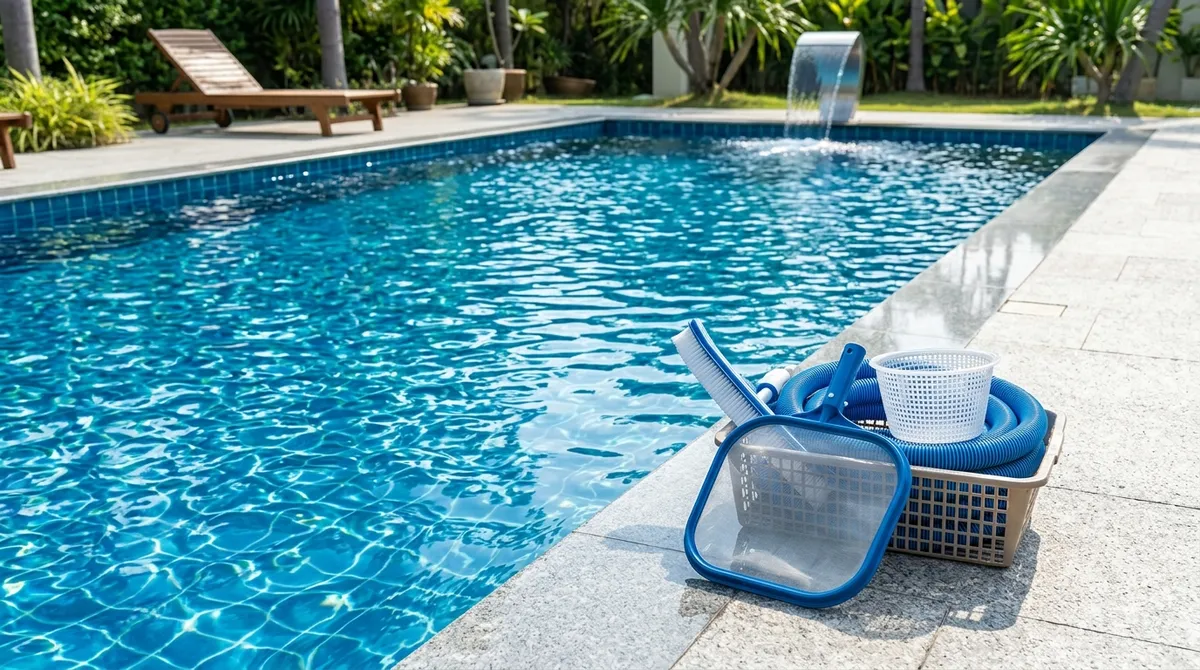
- Use a pool skimmer basket regularly to catch large debris before it reaches the filter
- Replace filter cartridges when they show visible wear, cracking, or fraying
- Store spare cartridges so you’re never caught without a clean one during peak season
Conclusion
A clean filter means a clean pool — it really is that simple. By avoiding these seven common mistakes, you’ll extend the life of your equipment, spend less on chemicals, and enjoy sparkling water every time you step outside. Pool filter cleaning doesn’t have to be complicated, but it does need to be consistent. Whether you tackle it yourself or rely on a trusted professional team, staying ahead of filter maintenance is one of the smartest things you can do for your pool. Ready to take the guesswork out of pool care completely? Reach out to the Panther Pools team today and let Tampa’s most dependable pool professionals handle everything for you.
FAQs
Q: How often should I clean my pool filter?
A: It depends on your filter type! Cartridge filters should be rinsed regularly and deep-cleaned with a chemical soak several times per swim season. Sand filters need backwashing whenever the pressure gauge reads 8-10 PSI above its normal level, plus a chemical cleaner treatment a few times per year. DE filters typically need full disassembly and deep cleaning one to two times per season.
Q: Can I use muriatic acid to clean my pool filter?
A: Yes, but with caution — and only after removing oils first with a TSP or commercial cleaner soak. Always rinse the filter thoroughly before applying diluted muriatic acid, work in a ventilated space, and wear protective gloves and eyewear. If you’re not comfortable handling acid, it’s a great idea to let a professional pool service handle this step safely.
Q: What’s the difference between cleaning a cartridge filter vs. a sand filter?
A: Cartridge filters require physical removal of the cartridge, a garden hose rinse at a 45-degree angle, and a chemical soak for 6 hours or overnight to remove oils and fine debris. Sand filters are cleaned through backwashing — running water in reverse through the filter until it runs clear — plus occasional chemical treatments poured directly into the system. No disassembly is needed for sand filters, making them a bit easier to maintain on your own!
Q: How do I know when my pool filter needs cleaning?
A: The easiest way is to watch your pressure gauge — if it reads 8-10 PSI above its normal baseline, it’s time to clean. You might also notice weaker return flow, slightly cloudy water even after chemical balancing, or your pump running louder than usual. Don’t wait until your water turns green; catching it early makes the cleaning process much easier.
Q: Is TSP safe for cleaning pool cartridge filters?
A: Yes! Trisodium phosphate (TSP) is a common and effective choice for cartridge filter cleaning. The recommended mix is 1 cup of TSP per 5 gallons of water, with a minimum soak time of 3 hours — though overnight is even better for breaking down stubborn oils and fine particles. Always rinse the cartridge thoroughly after soaking before reinstalling it in the filter housing.