
Key Takeaways
-
Recognize early pump warning signs like unusual noises or water leaks to prevent costly system breakdowns
-
Check for weak water circulation, which can indicate clogged filters, damaged impellers, or air leaks in the system
-
Unusual sounds like grinding, squealing, or rattling typically signal internal pump problems that require immediate professional attention
-
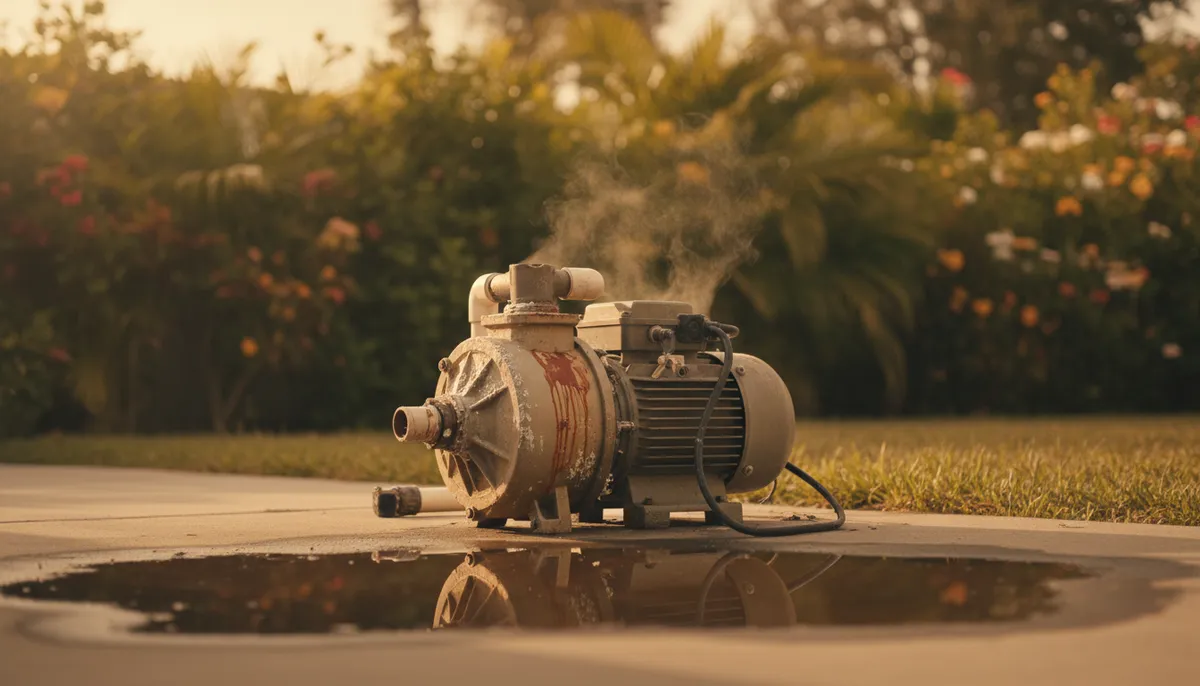
Water pooling around your pump equipment suggests potential seal failures or cracked housing that needs urgent repair
-
Electrical issues like pump failure to start can stem from tripped breakers, bad capacitors, or motor overheating
-
Higher energy bills might indicate an inefficient pump that’s working harder than necessary, potentially requiring repair or replacement
-
Most pool pumps last 8-12 years, and repair costs exceeding 50% of replacement value suggest investing in a new, more energy-efficient model
Your pool pump works hard every single day to keep your swimming pool crystal clear and safe for your family. When it starts acting up, you might feel stressed about the cost and hassle of repairs. The good news? Recognizing pump problems early can save you hundreds of dollars and prevent a complete system breakdown. Whether you hear strange noises coming from your equipment pad or notice weak water flow, understanding when to search for “pool pump repair near me” helps you protect your investment and keep your pool ready for fun.
Pool pumps are the heart of your filtration system, circulating thousands of gallons of water daily through filters and chemical dispensers. When they fail, your pool can quickly turn green, develop algae growth, or become unsafe for swimming. In Tampa’s warm climate, a broken pump means you could lose your pool for days or weeks during peak swimming season. This guide walks you through the most common warning signs that your pump needs professional attention, what you can expect during the repair process, and how to find trustworthy local technicians who will treat your pool like their own.
Understanding Your Pool Pump’s Role in Water Quality
Your pool pump does more than just move water around. It pulls water from your pool through the skimmer and main drain, pushes it through the filter to remove dirt and debris, and returns clean water back to the pool. This continuous circulation prevents stagnant water, distributes chemicals evenly, and keeps your pool sparkling clean. Without proper pump function, even the best chemicals and cleaning routines cannot maintain water clarity.
Modern pool pumps come in three main types: single-speed pumps that run at one constant speed, dual-speed pumps offering high and low settings, and variable-speed pumps that adjust flow rates for maximum efficiency. Variable-speed models have become increasingly popular because they can reduce energy costs by up to 70% compared to older single-speed units. The EPA Pool Resources recommend these energy-efficient options for both cost savings and environmental benefits.
Most residential pumps range from 0.5 to 2.5 horsepower, with larger pools requiring more powerful motors. The pump motor spins an impeller, which creates suction that draws water through the system. When any component fails—whether it’s the motor, impeller, seals, or electrical connections—your entire circulation system stops working properly. Regular maintenance and prompt repairs keep this vital equipment running smoothly year after year.
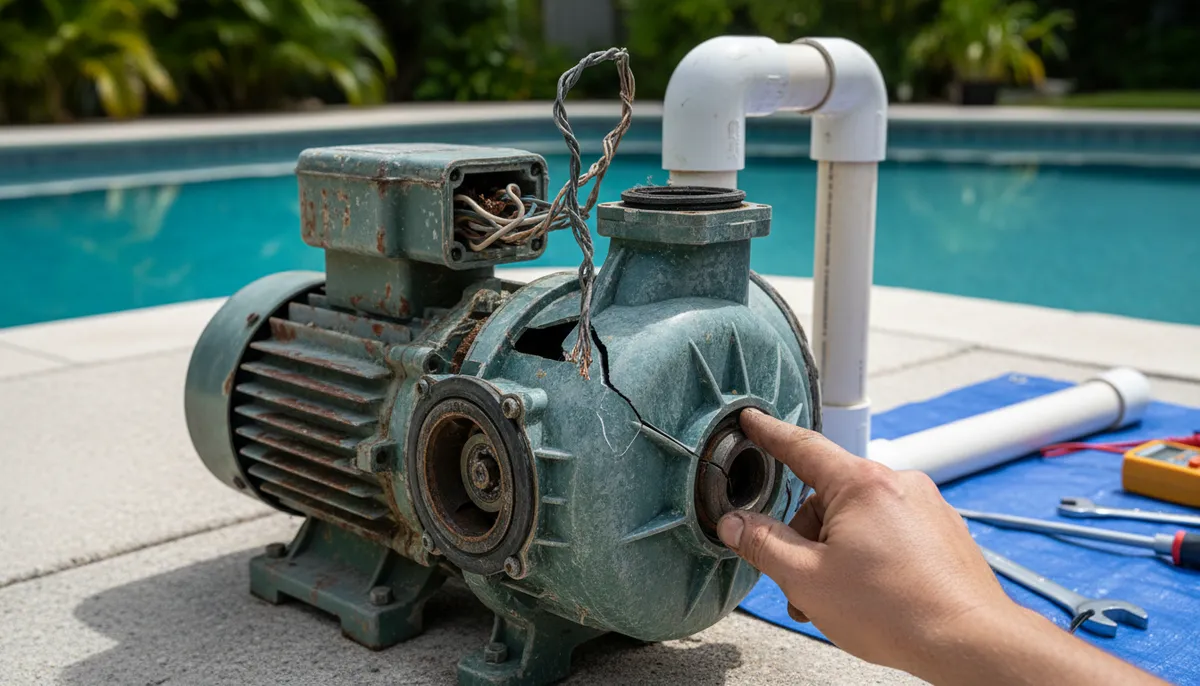
1. Unusual Noises Signal Internal Problems
A healthy pool pump runs with a steady, quiet hum that you barely notice. When you start hearing grinding, screeching, or rattling sounds, your pump is literally crying out for help. These noises usually indicate worn bearings, a damaged impeller, or debris stuck inside the pump housing. Ignoring these warning sounds can lead to complete motor failure and much more expensive repairs.
Grinding noises often mean the motor bearings are wearing out. Bearings allow the motor shaft to spin smoothly, and when they deteriorate, metal grinds against metal. This creates heat and friction that can damage other components. A high-pitched squealing sound typically points to a dry or failing seal, which can cause leaks and water damage to the motor itself.
Rattling or vibrating sounds suggest loose parts, debris in the impeller, or an unbalanced motor mount. Sometimes a simple cleaning or tightening can solve the problem, but persistent vibrations indicate more serious internal damage. If you hear any unusual sounds, turn off your pump immediately and call a professional. Companies like Panther Pools offer thorough diagnostics to identify the exact source of pump noises and recommend the most cost-effective solution.
Here are the most common pump noises and what they typically mean:
- Grinding or scraping: Worn motor bearings that need replacement before the motor seizes
- High-pitched squealing: Failing shaft seal or dry bearings requiring lubrication or replacement
- Rattling or shaking: Loose mounting bolts, debris in the impeller, or damaged fan blades
- Humming without spinning: Capacitor failure or seized motor that needs immediate attention
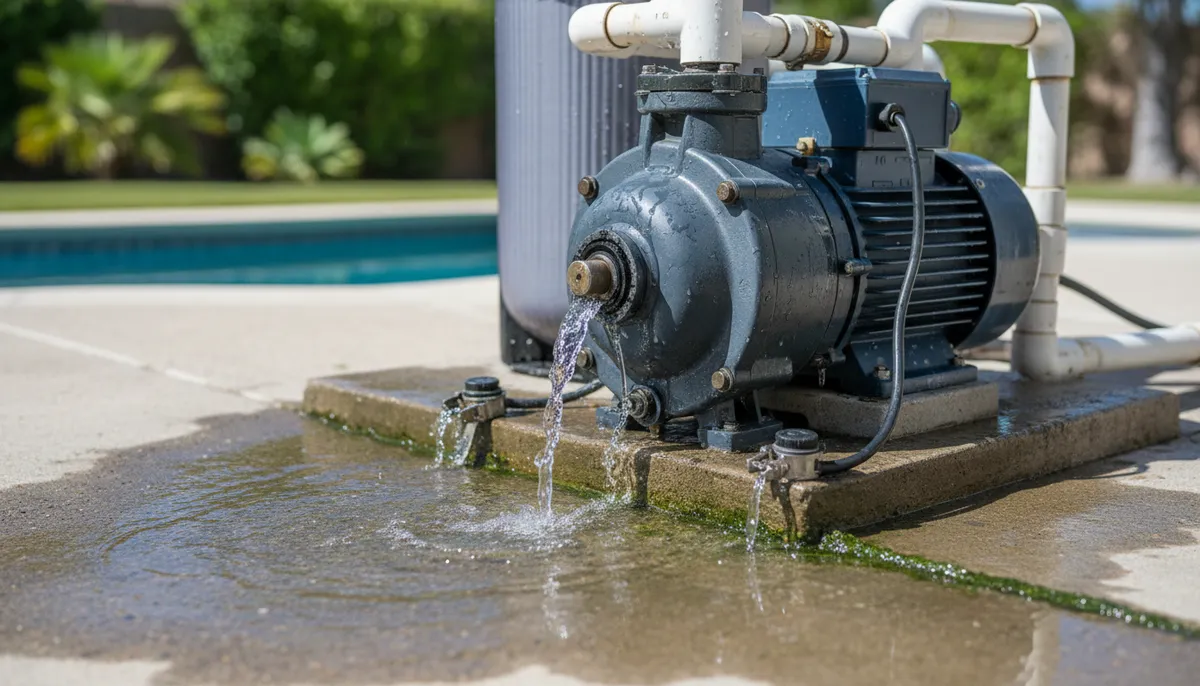
2. Water Leaks Around Your Pump Equipment
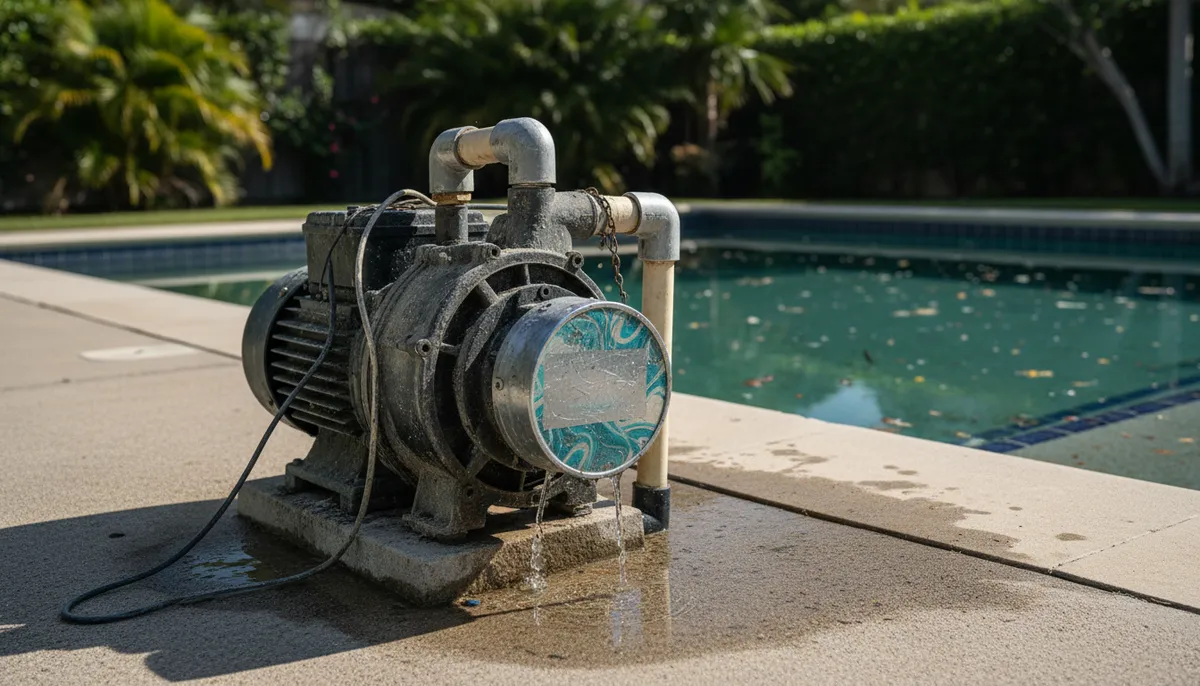
Spotting water pooling around your pump is never a good sign. While a few drops of condensation are normal in humid Florida weather, consistent puddles or dripping water indicate seal failures or cracked housing that requires immediate repair. Water and electricity are a dangerous combination, so any significant leak needs professional attention right away.
The most common source of pump leaks is the shaft seal, which prevents water from escaping where the motor shaft enters the pump housing. These seals wear out over time due to constant friction and chemical exposure. Replacing a shaft seal typically costs between $100 and $250, including labor, making it one of the more affordable repairs when caught early.
Other leak sources include cracked pump housings, loose connection fittings, or worn O-rings in the strainer basket area. Cracked housings happen when pumps are exposed to freezing temperatures or when excessive pressure builds up in the system. These cracks usually require pump replacement rather than repair. Loose fittings and worn O-rings are easier fixes that your technician can handle during a routine service call.
Never ignore pump leaks, even small ones. Water infiltration can damage electrical components, corrode metal parts, and create safety hazards. Additionally, leaking water carries pool chemicals that can kill grass and plants around your equipment area. If you notice any moisture where it shouldn’t be, schedule a repair inspection promptly.
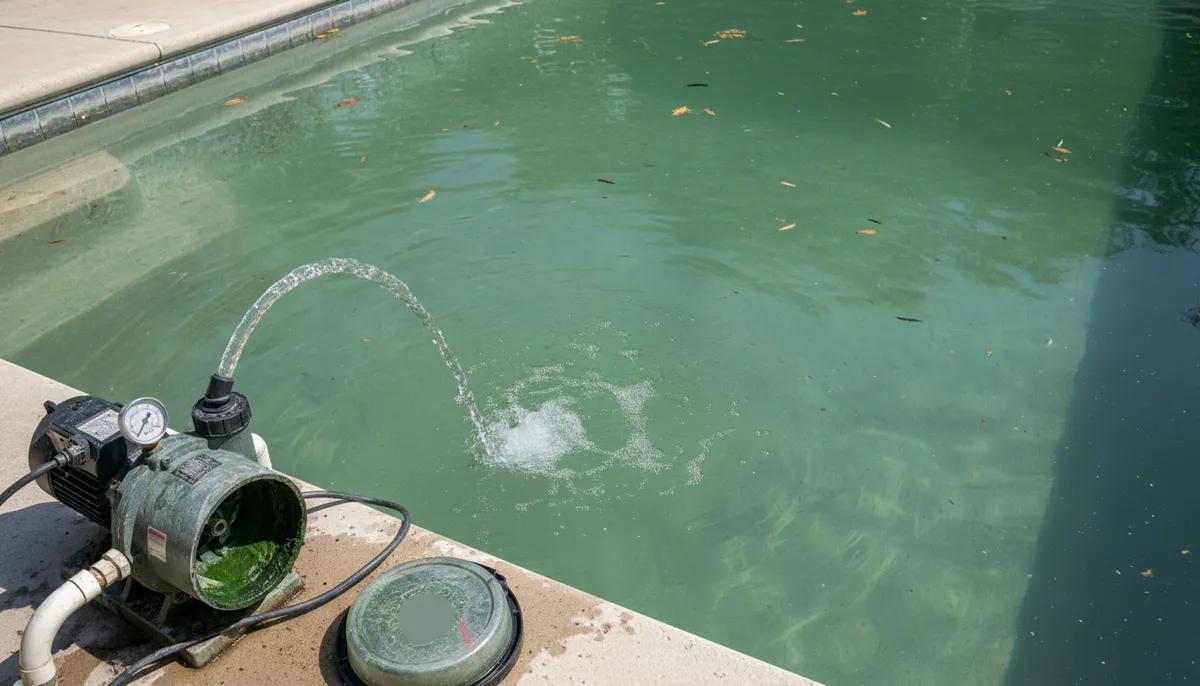
3. Weak Water Flow and Circulation Issues
When you notice your pool’s return jets barely pushing water back into the pool, or your automatic cleaner moving sluggishly, your pump may not be generating enough pressure. Weak circulation allows algae to grow in dead spots, prevents chemicals from distributing properly, and makes it harder to maintain balanced water chemistry. Several issues can cause reduced flow, from simple clogged filters to serious pump impeller damage.
Start by checking the obvious culprits: dirty filters, clogged skimmer baskets, and full pump strainer baskets. These obstructions restrict water flow and make your pump work harder than necessary. The IPSSA recommends cleaning skimmer and pump baskets weekly and backwashing or cleaning filters every 4-6 weeks during swimming season. If your baskets and filters are clean but flow remains weak, the problem lies deeper in the system.
A damaged or clogged impeller is a common cause of reduced circulation. The impeller is the spinning component inside the pump that creates water movement. Debris like leaves, pine needles, or small toys can get past the strainer basket and jam the impeller. Sometimes these blockages are easy to clear, but if the impeller blades are cracked or broken, replacement is necessary. Impeller repairs typically cost between $120 and $300.
Air leaks in the suction side of your plumbing can also reduce pump performance. When air enters the system, the pump cannot maintain proper suction pressure. You might see bubbles coming from your return jets or notice the water level in your pump strainer basket dropping. Finding and sealing air leaks requires experience and specialized knowledge, so professional diagnosis is usually necessary.
4. The Pump Won’t Start or Keeps Shutting Off
Few things are more frustrating than pressing your pump’s power button and getting no response. Electrical problems are among the most common pump failures, ranging from simple tripped breakers to burned-out motors. If your pump won’t start, first check your electrical panel to see if the breaker has tripped. Reset it once, but if it trips again immediately, you have a serious electrical fault that needs professional repair.
Capacitors are another frequent culprit when pumps fail to start. These electrical components give the motor the initial boost of power it needs to begin spinning. Capacitor failure is common in older pumps and costs between $100 and $200 to replace. Signs of a bad capacitor include a humming sound without the motor spinning, or the pump starting but failing to reach full speed.
Thermal overload switches protect your pump motor from overheating. When the motor gets too hot, the switch cuts power automatically. If your pump runs for a few minutes then shuts off, it’s likely overheating. This can happen due to inadequate ventilation, prolonged operation against closed valves, or internal motor problems. Once the motor cools down, the pump may restart, but the overheating will continue until you address the root cause.
Complete motor failure requires either rewinding the motor or replacing it entirely. Motor repairs typically cost between $200 and $500, depending on horsepower and motor type. Variable-speed pump motors tend to be more expensive than single-speed models. A qualified pool technician can test your motor and determine whether repair or replacement makes more financial sense based on the pump’s age and condition.
5. Rising Energy Bills Linked to Pump Operation
Your pool pump is likely one of the biggest electricity consumers in your home, running 6-12 hours daily during swimming season. If you notice your energy bills climbing without explanation, an inefficient or malfunctioning pump could be the culprit. Pumps with mechanical problems work harder to move the same amount of water, consuming more power and driving up costs.
Worn bearings create friction that makes the motor work harder. Partially clogged impellers force the pump to run longer to circulate adequate water. Dirty filters increase back pressure, requiring more energy to push water through the system. All these issues not only waste electricity but also accelerate wear on other pump components, leading to more expensive repairs down the road.
Older single-speed pumps are inherently inefficient, running at full power whenever they’re on. If your pump is more than 10 years old and you’re facing repair costs, consider upgrading to a variable-speed model instead. While the upfront cost is higher, variable-speed pumps can save $400-700 annually on electricity. Many utility companies offer rebates for upgrading to energy-efficient pool equipment, further offsetting the investment.
Monitoring your pump’s amp draw with a multimeter helps you catch efficiency problems early. When a pump starts drawing more current than its nameplate rating, something is wrong. Professional pool services include electrical testing as part of comprehensive maintenance visits, helping you avoid surprise failures and unnecessarily high power bills.
6. Visible Rust or Corrosion on Motor Housing
Pool equipment faces constant exposure to moisture, chemicals, and Florida’s salty air. When you see rust, corrosion, or white calcium deposits building up on your pump motor housing, it signals that moisture is reaching metal components that should stay dry. Surface rust might seem cosmetic, but it often indicates deeper problems that will worsen without intervention.
Rust typically develops when water leaks onto the motor housing or when condensation forms in humid conditions. Once rust starts, it spreads quickly, eating through metal and weakening structural integrity. Severely corroded motors can develop holes that allow water inside, causing electrical shorts and complete failure. If you catch rust early, cleaning and sealing the affected areas can extend your motor’s life significantly.
Corrosion around electrical connections is particularly dangerous. Corroded wires create resistance that generates heat, potentially causing fires or electrical failures. White or green crusty deposits on wire connections indicate active corrosion that needs immediate cleaning and protection. Professional technicians use dielectric grease and proper sealing techniques to protect electrical components from moisture damage.
The environment around your equipment pad matters too. Poor drainage that allows water to pool around your pump, sprinklers that spray directly on equipment, or inadequate ventilation all accelerate corrosion. Simple improvements like adding gravel drainage, redirecting sprinklers, or installing a protective cover can dramatically extend your pump’s lifespan. Companies like Panther Pools assess your entire equipment setup and recommend preventive measures during routine service visits.
7. Age-Related Performance Decline
Even the best-maintained pool pump eventually reaches the end of its useful life. Most pumps last 8-12 years with proper care, though variable-speed models may last longer due to their ability to run at lower speeds for routine circulation. If your pump is approaching or exceeding 10 years old and experiencing problems, replacement often makes more financial sense than expensive repairs.
As pumps age, multiple components wear simultaneously. You might fix the bearings only to have the seal fail months later, then face capacitor replacement, followed by impeller damage. These cascading failures can cost more than a new pump while leaving you with an aging motor that could fail at any time. When repair costs exceed 50% of replacement cost, most experts recommend investing in new equipment.
Newer pumps offer significant advantages beyond just reliability. Modern variable-speed pumps are dramatically more efficient than older single-speed models. Improved motor designs run quieter and require less maintenance. Many new pumps include smart features like programmable timers, diagnostic displays, and integration with pool automation systems. Some utility companies and local governments offer rebates or incentives for upgrading to energy-efficient equipment, reducing your out-of-pocket costs.
Here’s what to consider when deciding between repair and replacement:
- Current pump age and expected remaining lifespan
- Total repair costs compared to new pump prices
- Potential energy savings from upgrading to variable-speed technology
- Frequency of recent repairs and likelihood of future problems
- Available rebates or incentives for energy-efficient upgrades
- Warranty coverage on new equipment versus continued repairs on old units
Understanding Pool Pump Repair Costs in Tampa
Repair costs vary widely based on the specific problem, pump size, and local labor rates. In the Tampa area, most pool professionals charge between $75 and $150 per hour for labor, with average repair costs around $350 nationally. Simple fixes like replacing O-rings or cleaning debris from the impeller might cost $100-200, while motor repairs or seal replacements can reach $500 or more.
| Repair Type | Average Cost Range | Typical Labor Time |
|---|---|---|
| Seal Replacement | $100-$250 | 1-2 hours |
| Impeller Repair/Replacement | $120-$300 | 1.5-2.5 hours |
| Motor Bearing Replacement | $200-$400 | 2-3 hours |
| Capacitor Replacement | $100-$200 | 0.5-1 hour |
| Motor Repair/Rewind | $200-$500 | Varies |
| Complete Motor Replacement | $300-$700 | 2-4 hours |
Emergency service calls outside normal business hours typically add $50-100 to the base cost. However, addressing pump failures quickly often prevents additional damage that would be more expensive to fix later. Many pool service companies include pump inspections as part of regular maintenance packages, catching small problems before they become major repairs.
Pump size significantly affects repair costs. Smaller pumps (0.5-1 HP) typically cost $150-350 to repair, medium pumps (1.5-2 HP) run $200-500, and large commercial-grade pumps (2.5+ HP) can cost $300-700 or more. Variable-speed pump repairs are often more expensive due to specialized components and electronic controls, but their reliability and efficiency typically result in fewer repair needs overall.
When getting repair quotes, ask for detailed explanations of the problem and the proposed solution. Reputable technicians will show you the damaged parts, explain why failure occurred, and suggest preventive measures to avoid future problems. Be wary of vague diagnoses or pressure to replace equipment that might be repairable. Getting multiple opinions on major repairs helps ensure you’re receiving honest, accurate advice.
Finding Reliable Pool Pump Repair Services Near You
Not all pool service companies offer the same level of expertise or customer care. Finding a trustworthy repair technician protects you from overcharges, unnecessary replacements, and poor-quality work that fails shortly after completion. Start by looking for companies with proper licensing and insurance, verifiable references, and transparent pricing policies.
The FSPA provides resources for finding qualified pool professionals in Florida. Licensed contractors must meet specific training and insurance requirements, giving you recourse if problems arise. Ask potential repair companies about their technicians’ certifications, such as Certified Pool Operator credentials, which demonstrate knowledge of proper pool equipment operation and maintenance.
Online reviews offer valuable insights into service quality and customer satisfaction. Look for companies with consistent positive feedback about punctuality, professionalism, fair pricing, and effective repairs. Pay attention to how companies respond to negative reviews—responsible businesses address concerns and work to resolve problems. Local community groups and neighborhood forums often provide honest recommendations based on residents’ direct experiences.
Here are key questions to ask before hiring a pool pump repair service:
- Are you licensed and insured for pool equipment repair in Florida?
- What specific experience do you have with my pump brand and model?
- Do you offer free diagnostics or estimates before starting repairs?
- What warranty or guarantee covers your repair work?
- Can you provide references from recent customers?
- What is your typical response time for service calls?
- Do you stock common replacement parts or need to order them?
For Tampa residents, Panther Pools offers comprehensive pool pump repair services backed by their Certified Pool Operator credentials. Their family-owned business provides seven-day-a-week customer support, ensuring you’re never left without help when pump problems arise. Free estimates and transparent pricing help you make informed decisions about repairs versus replacement.
Preventive Maintenance That Extends Pump Life
The best pump repair is the one you never need. Regular maintenance dramatically extends equipment lifespan while reducing the frequency and severity of failures. Simple tasks like cleaning strainer baskets weekly, monitoring water levels, and keeping the equipment area clear of debris can prevent many common pump problems.
Your pump strainer basket catches large debris before it reaches the impeller. When this basket fills up, water flow decreases and the pump works harder. Checking and emptying the basket every few days during heavy leaf fall or after storms takes just minutes but prevents impeller damage and reduces strain on the motor. Always turn off the pump before opening the strainer lid to avoid injury.
Proper water chemistry protects all your pool equipment, including the pump. Highly acidic or basic water corrodes seals, O-rings, and metal components. Calcium buildup from hard water can clog small passages and reduce efficiency. Testing and balancing your water weekly during swimming season prevents chemical damage to expensive equipment. Professional pool services include water testing and chemical adjustment as part of regular maintenance visits.
Here’s a simple maintenance schedule to keep your pump running smoothly:
- Weekly: Clean skimmer and pump strainer baskets, check for leaks or unusual noises
- Monthly: Clean or backwash filters, inspect pump for rust or corrosion, verify proper water flow
- Quarterly: Lubricate O-rings with silicone-based lubricant, check electrical connections
- Annually: Professional pump inspection including motor amp draw, seal condition, and impeller wear
- Before winter: Drain pump if temperatures may freeze, protect from weather if pump remains operational
Professional maintenance visits catch developing problems before they cause breakdowns. Experienced technicians notice subtle changes in pump sound, vibration, or performance that indicate emerging issues. They can adjust, lubricate, or replace minor components during routine service, preventing emergency repairs that cost far more. Many homeowners find that monthly service packages actually save money compared to periodic emergency calls.
Taking Action on Your Pool Pump Repair Needs
Your pool pump doesn’t give warnings forever. Ignoring early signs of trouble leads to complete failures, expensive emergency repairs, and days without a functioning pool. Whether you’re hearing strange noises, seeing leaks, or noticing weak circulation, addressing pump problems promptly protects your investment and keeps your pool ready for enjoyment year-round.
Professional diagnosis is worth the service call cost. What seems like a major problem might be a simple fix, while seemingly minor issues can indicate serious underlying damage. Qualified technicians have the tools, experience, and replacement parts to accurately diagnose problems and complete repairs efficiently. Attempting DIY repairs on complex pump components often makes problems worse and can void manufacturer warranties on newer equipment.
When choosing between repair and replacement, consider the total cost of ownership. An old pump that requires frequent repairs may cost more annually than a new energy-efficient model, especially when you factor in higher electricity consumption. Modern variable-speed pumps typically pay for themselves within 2-4 years through energy savings alone, while providing quieter operation and more reliable performance.
Don’t wait for a complete breakdown during the hottest weeks of summer. If your pump is showing any of the warning signs discussed in this guide, schedule an inspection now. Companies like Panther Pools offer free estimates that help you understand your options without pressure or obligation. Their technicians can assess your pump’s condition, explain necessary repairs, and provide honest recommendations about whether repair or replacement makes the most sense for your situation.
Ready to get your pool pump running perfectly again? Contact the Tampa pool professionals at Panther Pools for a free diagnostic visit and transparent repair estimate. Their certified technicians provide same-week service with the expertise and customer care that keeps Tampa pools sparkling clean all year long.
FAQs
Q: How much does pool pump repair typically cost in Tampa?
A: Most pool pump repairs in Tampa range from $150 to $500, depending on the problem. Simple fixes like seal replacements cost $100-$250, while motor repairs run $200-$500. Local technicians typically charge $75-$150 per hour for labor. Getting a free estimate helps you understand costs before committing to repairs.
Q: Can I fix my pool pump myself or should I hire a professional?
A: While simple tasks like cleaning strainer baskets are DIY-friendly, most pump repairs require professional expertise. Working with electrical components and pressurized plumbing can be dangerous without proper training. Professional technicians have specialized tools and experience to diagnose problems accurately and complete repairs safely, often saving you money by avoiding costly mistakes.
Q: How do I know if my pool pump needs repair or replacement?
A: If your pump is less than 8 years old and repair costs are under 50% of replacement cost, repair usually makes sense. However, pumps older than 10 years with multiple problems often cost more to keep repairing than replacing. Your technician can assess the motor’s condition and help you decide which option provides the best long-term value.
Q: What are the warning signs that my pool pump is failing?
A: Common warning signs include unusual noises like grinding or squealing, water leaks around the pump, weak water circulation from return jets, the pump not starting or shutting off unexpectedly, rising energy bills, visible rust or corrosion on the motor housing, and frequent problems if the pump is older than 8-10 years. Any of these symptoms warrant a professional inspection.
Q: How often should I have my pool pump professionally serviced?
A: Most pool professionals recommend annual pump inspections as part of comprehensive pool maintenance. However, if your pump is older than 8 years or you’ve had previous problems, semi-annual checks help catch issues early. Monthly full-service pool maintenance packages typically include pump monitoring, which helps identify problems before they cause breakdowns.